



10 Things Officers Want to Tell Dispatchers
Previously, POLICE Magazine shared some things that dispatchers always wanted officers to know. This time, the shoe is on the other foot, and we allow field units to give dispatchers some advice.

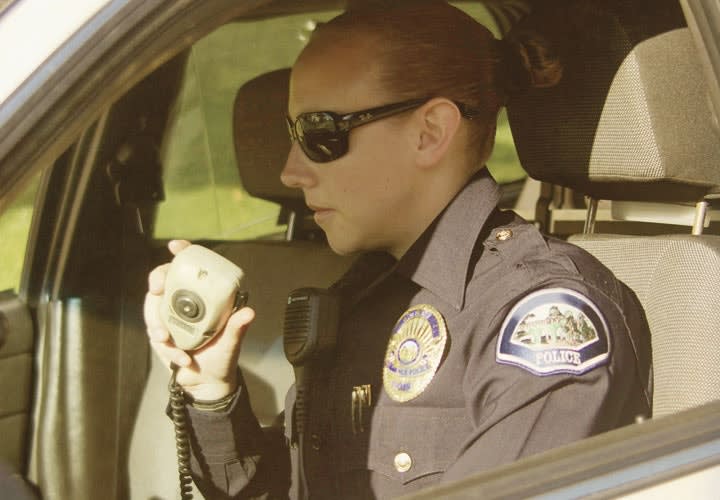
Photo: Yuda Chen
Within the law enforcement profession there is a core constituency of guys and gals who take pride in trusting their gut instincts and playing hunches. But even within these ranks, there runs an appreciation for concrete information, a desire to remove as many unknowables and abstractions as possible. These officers want to get where they need to be, with as much knowledge as possible about what awaits and what resources they will need.
Unfortunately, much of the time officers are given very little information upon receiving a call. Unless it is a "return to" situation, they have little or no idea of what actually awaits them. And most of the time, they have no means of finding out on their own. That is where dispatchers come into play.
Dispatchers send officers into harm's way. This may not be their intent, but it's their job. And it is a heady responsibility by any standard. It's a job that that commands respect, both by those who are obligated to perform it and perform it well and the officers who depend on that performance.
Previously, POLICE Magazine shared some things that dispatchers always wanted officers to know. This time, the shoe is on the other foot, and we allow field units to give dispatchers some advice. In order to make this article easier to read, we are going to boil down all of the information that we gathered on this subject into 10 points delivered in the voice of one typical officer.
1. Tell Me What to Look For
When you assign me a "just occurred" call, I know that I may be entering something of a mystery. But that doesn't mean it has to be "Twilight Zone" territory. Please get me some type of description of both cars and people.
I know the informant isn't always familiar with the various makes and models of cars, the differences between domestics and imports, and what constitutes a long bed or a short bed. None of this precludes the possibility of his recognizing something about the vehicle that might make it stand apart in the crowd, that might save me from needlessly fixating on the wrong vehicle. How often does the description come out "a van"—and then we find there's a hundred vans in the immediate vicinity? Ask the informant if he noticed something, anything, distinctive about the ride. Two-door? Four-door? Tinted windows? Decals? Some smart-alecky license plate frame? Was there any body damage? Did it appear to be an older model car or a newer one? The same goes for the suspect himself. Tall? Short? Bald? Long hair? Every piece of information that you relay to me is another piece of the puzzle played.
2. I Need Useable Intel
Descriptions are obviously great, but I also need good intel. Don't just tell me a suspect is on the side of the house, tell me which side. The front and back I can deal with most of the time. But the "right?" The "left?" Is that the "right" as when you're inside the house and looking out (in which case it's to my left when I arrive)?
If the call is a suspicious vehicle, then what makes it suspicious? Is it visibly occupied? Are the windows blacked out?
Ask clarifying questions. Don't assume things. Pass along all pertinent information. If the informant is deaf, please let me know so I won't necessarily TASER her when she runs out excitedly and fails to comply with my verbal commands.
Three Pittsburgh police officers were killed in 2009 when a dispatcher failed to relay information advising that there were firearms inside a house. Those guns were then used to kill the officers as they arrived at the location. Please spare me that fate. The presence of guns at the scene is a very important detail; bring them to my attention.
By the same token, don't needlessly escalate things by inferring things are worse than they are. Upon hearing that a store employee "got shafted," a dispatcher put out the call as an armed robbery, which led to a nine-minute pursuit and crash that seriously injured a Thurmont, Md., police officer. It turned out that the crime had only been a petty theft.
3. Use Common Sense
Please try to play devil's advocate on my behalf. Often, this isn't as difficult as it may sound, as it can come down to simply exercising common sense. For instance, if you send me on a suicide by hanging call, do you think I can probably use an assisting unit to help me cut the guy down in hopes of saving him? Consider the resources I might need, not just in terms of the number of units I need rolling, but whether or not a field supervisor, EMS, Fire, or some combination thereof needs to respond.
4. Put 2 and 2 Together
If you receive a call from an informant advising of two prowlers entering the backyard of a residence, followed by the sound of breaking glass and all you put out is a "suspicious person" call with none of that additional information do you think I might be frustrated upon my arrival to find a window-smash burglary, two suspects running, and no backup unit in sight?
On crime or possible crime calls such as domestics, always ask if there are weapons involved. If the person lies to you, shame on them. If they don't answer one way or the other because you failed to ask, shame on you.
The night that Arlington, Texas, police officer Jillian Michelle Smith was killed in 2010, a dispatcher failed to let officers know that Smith hadn't communicated with her in 15-minutes, as well as withheld information of a call advising that there'd been shots fired at the location and an officer was down. She sent the responding officers into an extremely dangerous situation that could have resulted in their being killed, as well.
5. I Have My Hands Full
Yes, I know that I have the means for running serialized property myself, and I apologize in advance if my lack of opportunity to do so places momentary constraints on you. But often it isn't laziness dictating the request but officer safety. I might have two digits worth of gang members detained and only so many handcuffs to go around and so much room in my backseat in which to detain them. My request is often made in prudence to their presence or the presence of others who might seek to exploit my attentions being committed elsewhere. Hopefully, you are in a much more comfortable position across the board to do this on my behalf.
6. Pay Attention to Your Work
The little outfits that you sew to put on those little bears and piggies are undeniably cute, but they are not part of your job description. Yes, you will have your down time. Appreciate it as such. But don't resent its disruption or my asking you to do something pertinent to our respective responsibilities. If we work together, you can return to the basket weaving with a clear conscience later. And I might even be able to get home to my family.
7. Prioritize Your Calls
Remember that your phone line has a "hold" button. This affords you the means to place less important calls on the backburner while you attend to more pressing concerns. Of course, it’s nice when you can remember to get back to calls that you have put on hold as well.
8. Be Consistent in Your Humor
If you don't like particular types of jokes, don't barter in them. Nothing is more aggravating than having the game rules switched mid-play and it can sour our working relationship thereafter.
9. We Hear What's Said About Us
Unless you are the one actually dispatching and have the opportunity to key and unkey the mic at will, we can hear you in the background. And since there are two sides to every story, you can bet that the Type A personalities among us will be sure to communicate our side at a more convenient time, should we feel it necessary. If push comes to shove, as in a hostile work environment allegation, a review of recorded radio transmissions may well come into play.
10. Tell Me If I Offend You
Maybe I have rubbed you wrong. It might be my personality, my tone of voice, or my occasionally curt nature. If I have done something to offend you, please bring it to my attention first. If your position has merit, I will try to adjust my conduct toward you. Should I fail to do so, I can hardly blame your taking the matter up elsewhere. But please remember, it may simply be a matter of responding in kind, on my part.
Related:
More Patrol

Adept Armor Introduces Two New Rifle Plates
Adept Armor has launched two new Level IV ballistic plates, the Emperor and the Archon Mark 2, which brings Adept Armor’s new Quatroid ceramic to the high-threat, performance-value center of the range at 5.2 pounds.
Read More →
POLICE Product Test: Benchmade Bailout
The Benchmade Bailout is a slim, lightweight carry knife with a deep-ride pocket clip and comes in a variety of blade steels and scales. Here is a detailed review of the Taiga Green Bailout, released earlier this year.
Read More →
NLEOMF Announces July 2026 Officer of the Month
NLEOMF honored a Michigan deputy sheriff as the July 2026 Officer of the Month for rescuing a trapped driver from a burning vehicle following a Fourth of July crash.
Read More →
Streamlight to Showcase Newest Lighting Products at National Safety Council’s Safety Congress & Expo 2026
Streamlight will showcase its latest lights, including the Portable Scene Light III and the LiteBox 1Million, at the 2026 National Safety Council (NSC) Safety Congress & Expo.
Read More →
The 2027 World Police & Fire Games Set for Perth, Australia
The 2027 World Police & Fire Games (WPFG) will take place in Perth, Western Australia, from Friday, March 12 through Sunday, March 21, 2027.
Read More →
5.11 Partners with National Fallen Firefighters Foundation to Support #ForThe343
5.11 has joined the nationwide movement honoring the 343 New York City Fire Department firefighters lost on Sept. 11, 2001.
Read More →
Team Wendy Announces Title Sponsorship of the Jorge Pastore Foundation
Team Wendy’s 3-year partnership with the Jorge Pastore Foundation expands access to programs that strengthen those who serve.
Read More →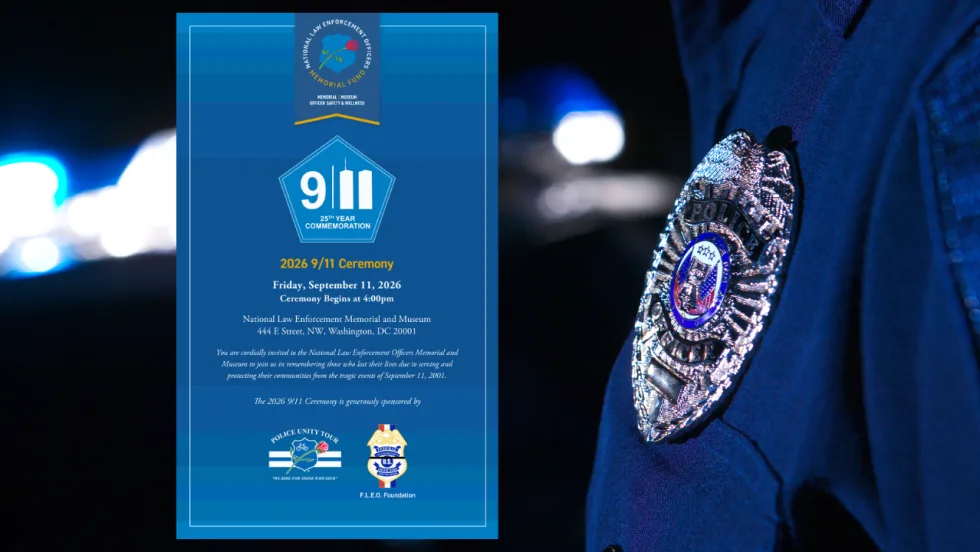
National Law Enforcement Memorial and Museum Hosting 9/11 25th-Year Commemoration Ceremony
The National Law Enforcement Memorial and Museum is hosting a 9/11 25th Year Commemoration Ceremony on Sept. 11 at 4 p.m.
Read More →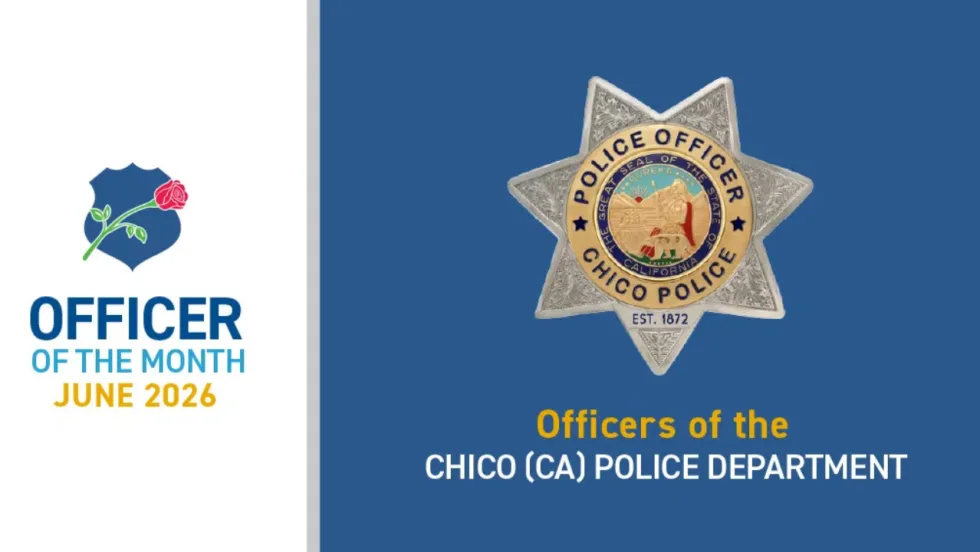
National Law Enforcement Officers Memorial Fund Announces June 2026 Officers of the Month
The National Law Enforcement Officers Memorial Fund (NLEOMF) named 15 officers of the Chico Police Department (California) as the Officers of the Month for June 2026 for their roles in responding to an active-shooter incident at a public library.
Read More →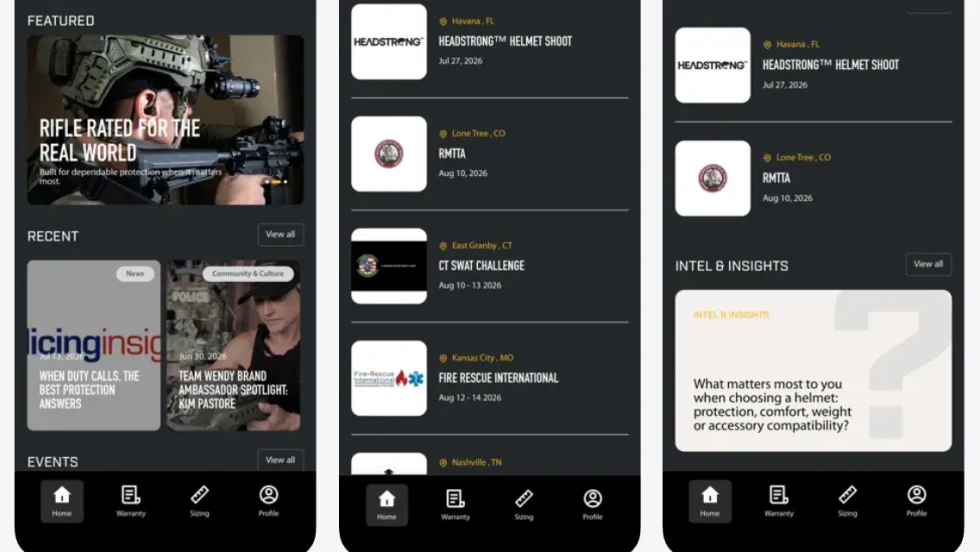
Team Wendy App Creates New Digital Hub for Helmet Owners
The Team Wendy Community App provides one location for warranty registration, size-fit tools, product updates, and community connection. For helmet owners, the new app creates a simpler path to the information and tools that matter most.
Read More →