



It’s an Ambush: How Ballistic Glass Redefines Patrol Vehicle Safety
Dana Safety Supply is setting a new standard for officer safety with windshields capable of withstanding multiple rounds and saving lives — and one Texas deputy is living proof.

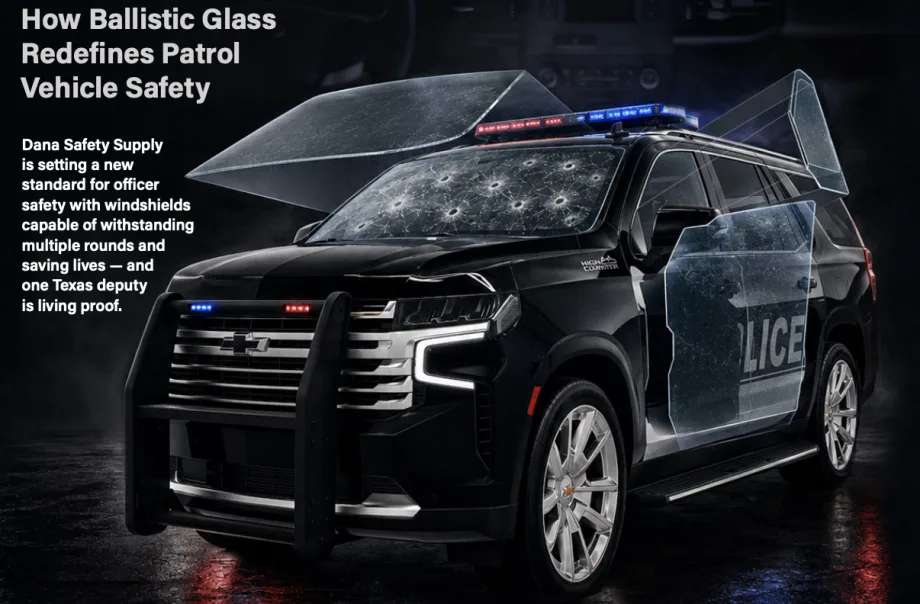

At 1:45 a.m. on May 31, 2025, Sgt. Keith Bitz of the Leon County (Texas) Sheriff’s office was doing what he had done thousands of times before in his 31 years on patrol: responding to a domestic call.
A rookie was first to answer, but Bitz was closer. The location was rural. The driveway was long. Bitz turned his lights on as he approached. He pulled up to the house and stopped. As he stepped out his Chevrolet Tahoe, he spotted a prone rifleman on the elevated porch.
In an instant, a routine call became an ambush.
Bitz jumped back in his vehicle, threw it into reverse and hit the gas. Then came the gunfire.
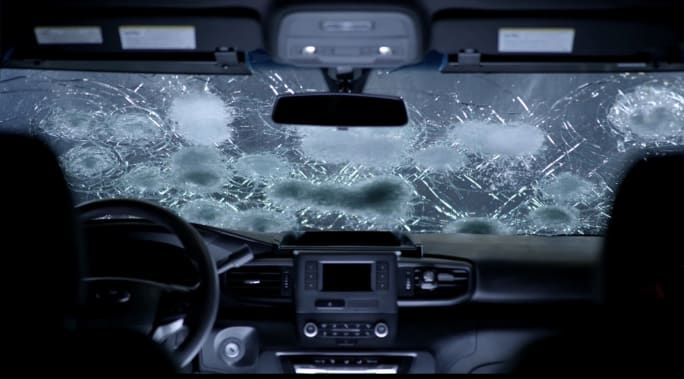
“I took eight rounds to the windshield,” he says. “Every one of them would have been lethal. I’m alive because of that glass.”
The rounds didn’t penetrate. The windshield held. And Bitz made it out alive.
It was one moment among many that underscores a growing reality in law enforcement: Properly equipping patrol vehicles can save lives.
The Myth of the Patrol Car as Cover
Dana Safety Supply
Officers instinctively retreat to their vehicles in moments of danger. Doors, pillars and engine blocks offer some degree of protection. But standard automotive glass does not, and available data suggests only a small percentage of non-SWAT units are equipped with bullet-resistant glass or door panels.
That shortfall has become harder to ignore as ambush-style attacks on patrol cars have become more common, says David Russo, founder and CEO of Dana Safety Supply, the Greensboro, N.C.-based company that upfitted Bitz’s Tahoe.
“We’re seeing a level of violence — and a willingness to target officers — that’s different from what it was even a decade ago,” says Russo, who speaks from both industry and personal experience. The former officer, supervisor and trainer has watched threats evolve and escalate over the course of his four-decade career in law enforcement.
Ambushes, once considered rare, now factor into everyday risk assessments. In several high-profile cases, officers have been shot while seated in their vehicles, often while parked or during routine calls.
That shift in threat profile is what led Russo and his team, including longtime business partner and collaborator Dana Marsh, to focus on a question that hadn’t been widely addressed: What if patrol vehicles could offer meaningful ballistic protection — without the cost and weight of traditional armoring?
A Body Armor Moment for Vehicles
The idea that would eventually become Dana Safety Supply’s BallisTech Vehicle Armoring Solutions didn’t start as a product pitch. It started as a realization.
“We looked at ballistic glass the same way the industry once looked at soft body armor,” Russo says. “Something that wasn’t standard yet, but would be.”
When body armor was introduced in the 1970s, it was costly, cumbersome and unfamiliar. Today, it’s standard issue. Russo believes vehicle protection is on a similar trajectory.
The catalyst, he says, was a combination of emerging technology and changing threat conditions. Advances in ballistic materials made lighter, more practical solutions possible. At the same time, incidents involving officers being targeted in their vehicles underscored the need.
“There was a point where it all became clear: If we could bring the cost down and make it practical, this is something that could save lives,” Russo says.
That challenge — bringing cost and complexity down — was significant. Traditional vehicle armoring, typically used for dignitary protection or specialized units, can run $30,000 or more per vehicle. It adds substantial weight and often limits functionality.
Dana Safety Supply’s approach was different: focus on “light armoring,” centered on the most vulnerable areas, and engineer it for scale.
The result is a system that adds less than 200 pounds to a vehicle and, in many cases, costs around $10,000 — still a meaningful investment, but one that agencies can begin to consider at the fleet level.
More Than a Windshield
Dana Safety Supply
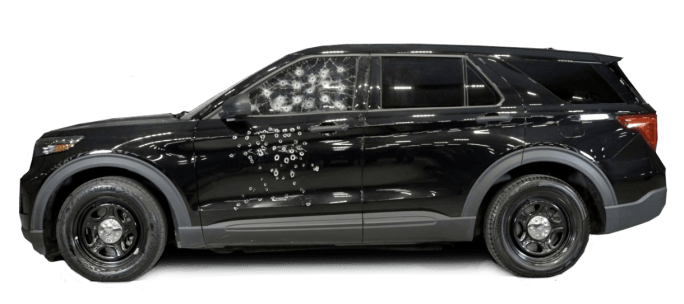
While the windshield has drawn the most attention, it’s only one component of Dana Safety Supply’s BallisTech package, says Director of Marketing & Business Development Thomas Sabo.
Side glass, door panels and an intelligent control system are also available, all designed to help departments meet their safety needs and budgetary concerns. Other factors include weight, visibility and drivability.
“The challenge wasn’t just building protection,” Sabo says. “It was making something agencies could actually deploy across a fleet.”
For many agencies, understanding the value of ballistic glass requires more than a specification sheet. It requires seeing it in action.
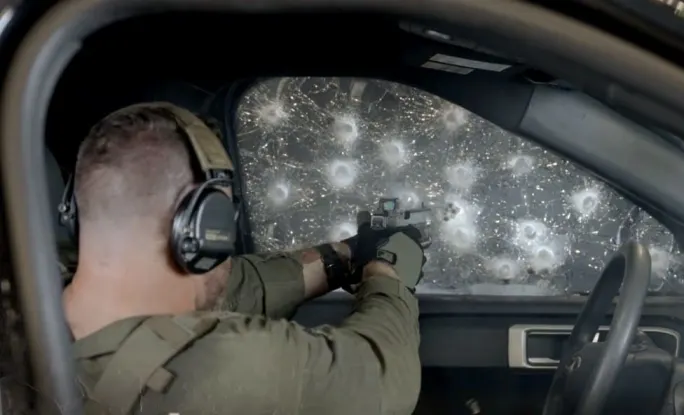
Dana Safety Supply has invested heavily in live-fire demonstrations, bringing outfitted vehicles to departments across the country. At these events, officers and command staff watch as the glass is subjected to repeated gunfire.
“We’ve spent over $1 million doing these demos, because once people see it, they understand it,” Russo says.
The demonstrations typically start with handgun fire and progress to shotguns and sometime rifles. After each volley, participants inspect the glass, examining the damage and assessing what would have happened in a real-world scenario.
The reactions can be eye-opening.
“A lot of agencies come in thinking this is something for SWAT,” Russo says. “And then they realize the patrol officer is the one facing the unknown every day.”
That realization has helped drive adoption. To date, more than 7,000 units have been deployed, with the majority in Texas, where state funding has supported large-scale implementation.
From Survival to Advocacy
For Sgt. Bitz, the value of ballistic glass isn’t theoretical. It’s personal.
At the time of the ambush, he had no expectation that his vehicle would be tested in that way. The call was routine. The threat was not. Worse yet, the rookie he took the call from had yet to have the ballistic windshield installed on his vehicle.
After the incident, Bitz set out to thank the people responsible for the equipment that saved his life. He didn’t initially know who that was.
“I sent emails to a few companies,” he says. “Most of them wrote back and said, ‘We’re glad you’re alive, but we didn’t provide that glass.’”
Eventually, he connected with Dana Safety Supply. The conversation led to a conversation with Sabo and an invitation to an event — and, ultimately, joining Sabo at conferences to advocate for ballistic glass. Bitz’s story resonates in a way no product pitch can.
“Right before they shoot the car, I stand up and tell them, ‘I’m Keith Bitz, and I survived an ambush. I took eight rounds to the windshield.’”
The Cost Question
Dana Safety Supply
Russo says that, despite growing interest, one barrier remains consistent: funding. “To this day, I’ve never had an agency tell me they have plenty of money.”
Even at a reduced cost of around $10,000 per vehicle, outfitting an entire fleet is a significant investment. Many agencies take a phased approach, equipping a portion of vehicles each year or prioritizing certain units.
Texas offers a glimpse of what broader adoption could look like. The state has allocated tens of millions of dollars to equip thousands of vehicles with ballistic glass, primarily for state troopers.
“If the funding were there, we’d have 10 times as many vehicles protected,” Russo says.
Other states are exploring similar initiatives, and there is ongoing discussion about potential federal support. For now, adoption remains uneven, shaped largely by local budgets and priorities.
Rethinking First-Line Protection
One of the persistent challenges in implementing new safety technologies is deciding where they belong.
Ballistic protection has traditionally been associated with specialized units — SWAT teams, tactical response groups, and dignitary protection details. But the nature of modern threats is prompting a shift in that thinking.
“The first instinct is to give this to high-risk units,” Russo says. “But the reality is, the patrol officer is the one out there every day, walking into unknown situations.”
That perspective is influencing how some agencies approach deployment. Patrol vehicles, supervisors’ units and other front-line assets are increasingly part of the conversation.
And there is a secondary benefit: Armored vehicles can serve as mobile fortresses in dynamic situations, from extracting wounded officers to shielding civilians during critical incidents.
For all the discussion of materials, ratings and budgets, the case for ballistic glass often comes down to a single, unpredictable moment.
A routine call. A dark driveway. A split-second decision.
As agencies continue to adapt to a changing threat landscape, the idea that a patrol vehicle can offer more than mobility — that it can provide meaningful protection — may become less of an exception and more of an expectation.
Bitz’s moment came after three decades on the job. For others, it may come sooner — or not at all.
“You don’t install something like this because you expect to need it,” Bitz says. “You install it because one day, without warning, you might.”
Behind the Glass: How the Windshield Works
Dana Safety Supply
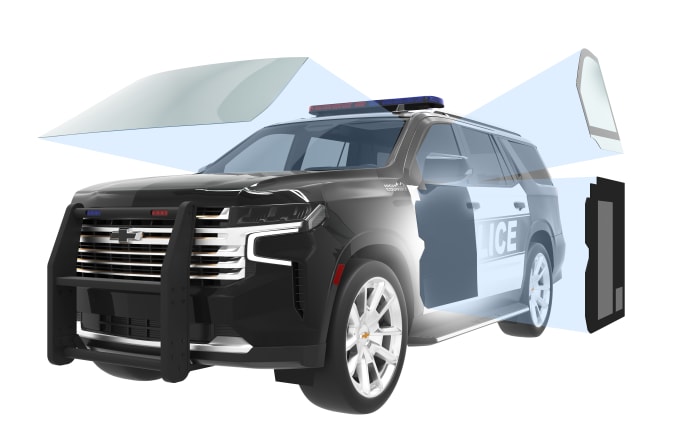
Dana Safety Supply relies on hand-selected, top-tier manufacturers for every component in the BallisTech family of products. By pairing high-performance ballistic glass with superior optical clarity and lightweight, thin and extraordinarily strong door panels, BallisTech packages are customizable, highly effective and virtually indistinguishable from OEM glass.
Rated to Level IIIA by National Institute of Justice standards, the glass is designed to stop handgun rounds — the most common threat in many encounters. But its performance often exceeds that baseline, particularly in real-world conditions.
“The windshield sits at an oblique angle,” Dana Safety Supply’s Thomas Sabo explains. “That works in your favor. In most cases, you’re not taking rounds head-on.”
In demonstrations, the windshields have withstood dozens of impacts. While the product is not certified for higher rifle ratings, its layered construction and geometry can provide additional resilience.
“You can put a lot of rounds into that windshield,” Sabo says. “It’s not just about stopping one shot. It’s about surviving an event.”
There are tradeoffs. Officers cannot effectively shoot back through the windshield, a design reality that prioritizes protection over offensive capability. But in many scenarios — particularly ambushes — the immediate need is survival and escape.
Clarity, long a challenge with ballistic glass, has also improved. Earlier generations of heavy armoring could distort vision and cause eye strain. Newer materials and manufacturing processes have reduced those issues, making the glass viable for everyday patrol use.
More Vehicle Ops
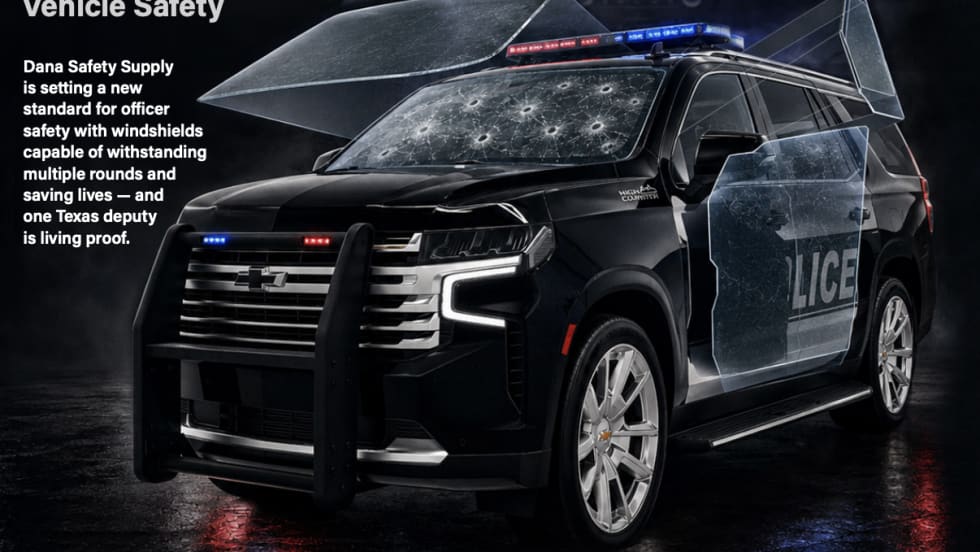
Dana Safety Supply’s BallisTech Vehicle Armoring Solutions
Dana Safety Supply is setting a new standard for officer safety with windshields capable of withstanding multiple rounds and saving lives.
Read More →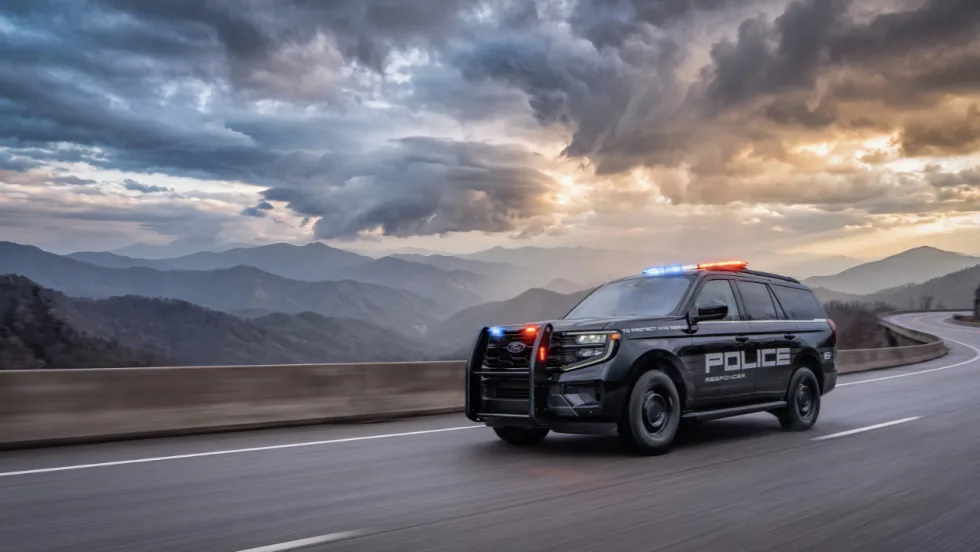
Ford Showcases 2028 Ford Expedition Police Responder
Ford showcased its 2028 Ford Expedition Police Responder, a full-size, pursuit-rated utility vehicle, at Police Fleet Expo this week. It comes standard with 4x4 and a 3.5-liter EcoBoost V6 producing 400 horsepower and 480 lb.-ft. of torque.
Read More →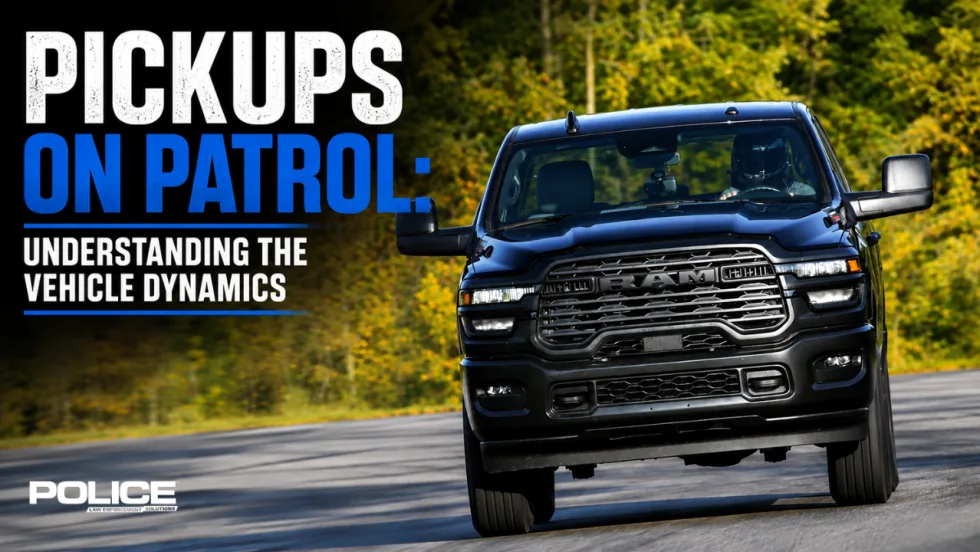
Pickups on Patrol: Understanding the Vehicle Dynamics
Pickup trucks are not new to patrol duties, but with the debut of the 2027 Ram 2500 Emergency Response Vehicle, they are getting larger and heavier. POLICE reached out to the Michigan State Police Precision Driving Unit to learn more about pickup truck handling, vehicle dynamics, and what officers need to know.
Read More →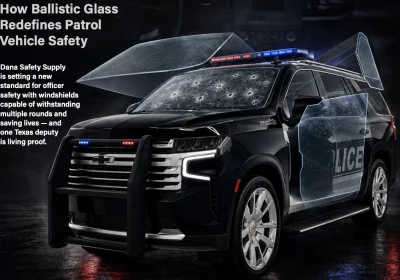
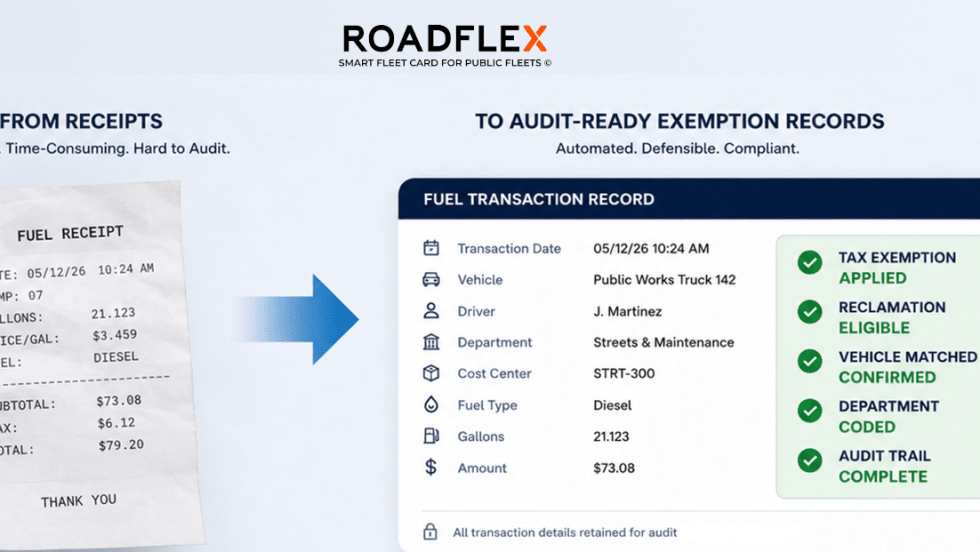
RoadFlex Brings Fuel Tax Compliance & Audit-Ready Reporting to Government Fleets
RoadFlex now offers its capabilities to help public-sector fleets streamline fuel tax exemptions, reclamation, reconciliation, and audit-ready reporting.
Read More →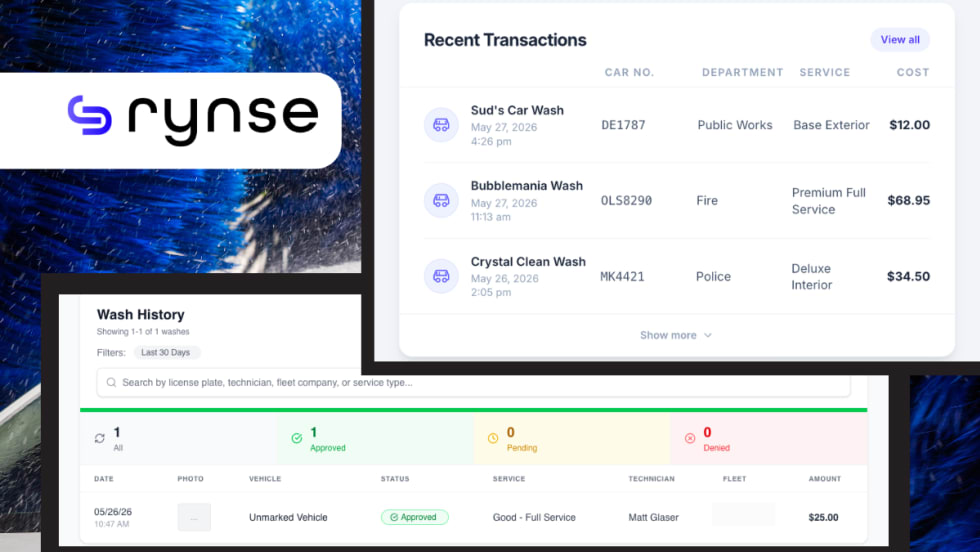
Rynse Awarded Cooperative Purchasing Contract, Expanding Nationwide Fleet Wash Access for Law Enforcement
Rynse has secured a 2026-2027 NCSA contract, giving law enforcement agencies nationwide fast-track access to its fleet wash network and management platform, which streamlines procurement, reduces administrative burdens, and helps fleets stay road-ready with greater oversight.
Read More →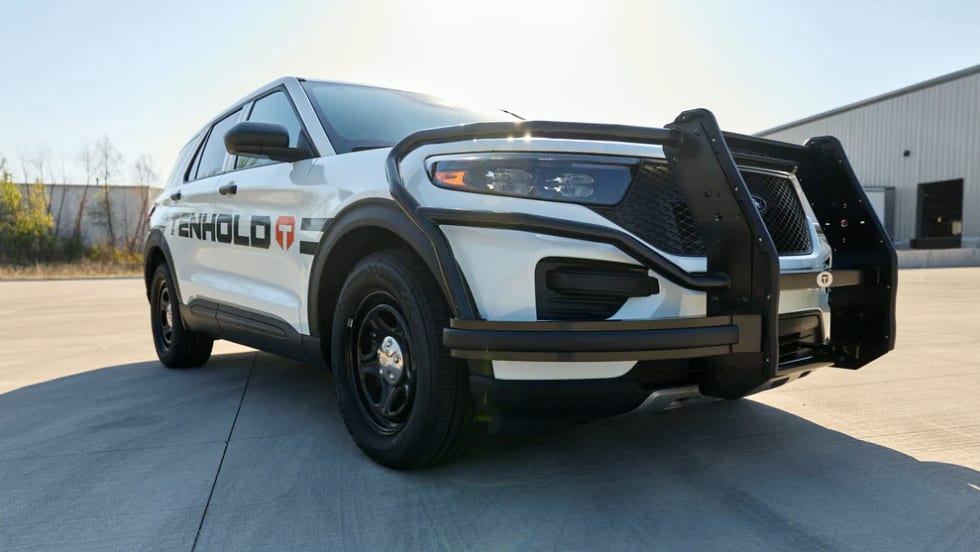
Tenhold Introduces Suppressor Gun Rack System
Tenhold, formerly Jotto Desk, provides next-generation vehicle systems for law enforcement and public safety and recently debuted its Suppressor Lock Head for its Weapon Mounting system.
Read More →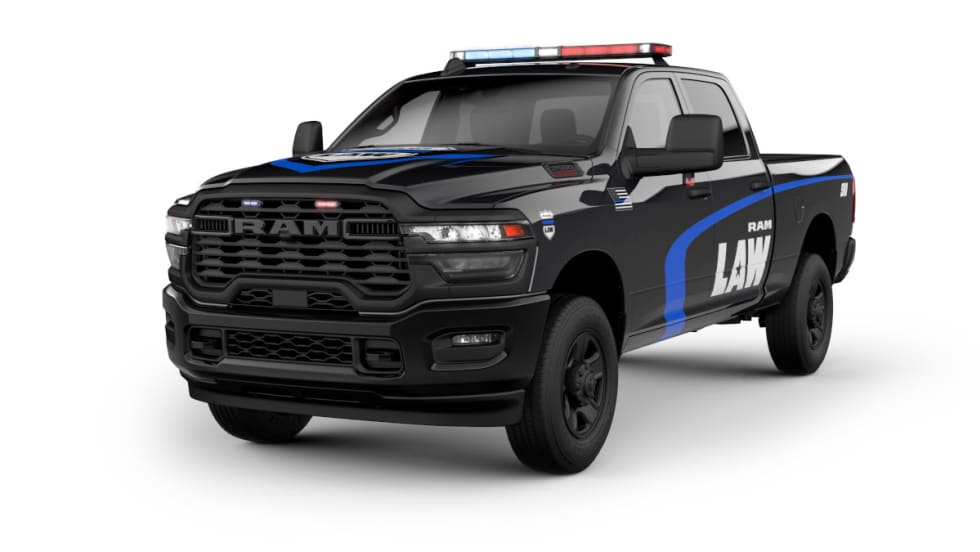
Ram Debuts Pursuit-Capable 2500 Emergency Response Vehicle
The 2027 Ram 2500 Emergency Response Vehicle is the first and only ¾-ton truck to complete the Michigan State Police vehicle trials, and Ram said it delivered outstanding performance in testing scenarios designed to replicate extreme real-world duty.
Read More →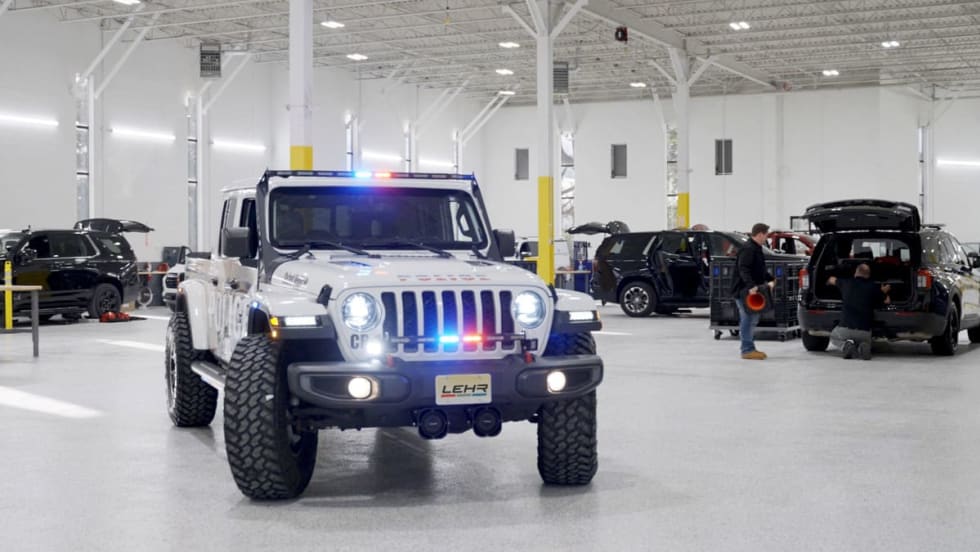
Emergency Vehicle Upfitter LEHR Opens New Facility in New Jersey
LEHR’s new centralized upfitting facility in New Jersey consolidates operations to deliver faster turnaround times and enhanced fleet capacity for law enforcement agencies across the Northeast.
Read More →
North Carolina Sheriff’s Office Improves Fueling Reliability & Operational Control
The Madison County Sheriff’s Office overcame fuel management and accounting challenges by turning to RoadFlex to improve fueling reliability, visibility, and administrative control.
Read More →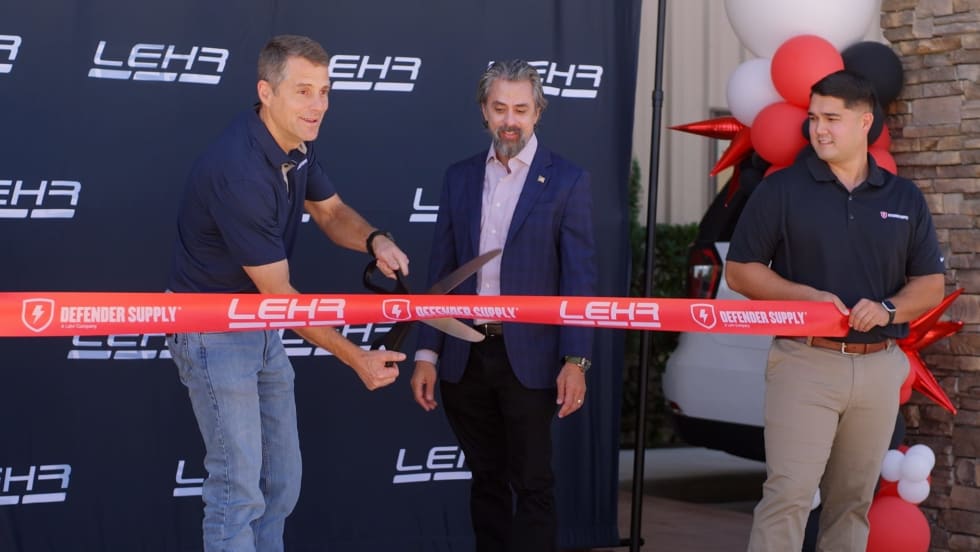
Emergency Vehicle Upfitter LEHR Expands National Footprint with New 40,000-Square-Foot Facility in Houston
LEHR has opened a 40,000-square-foot Defender Supply upfitting facility in Houston, Texas. It is expected to upfit thousands of public safety vehicles each year.
Read More →