Enhanced Worker Safety Through UV Lighting Technology
An examination of how ultraviolet (UV) perimeter lighting can improve the visibility of workers wearing high-visibility apparel and safety equipment in low-light environments. When paired with durable optical materials and effective light distribution, UV illumination offers a complementary approach to reducing worker exposure risks near traffic and equipment.
by Dr. Michael P. Halloran, Expert Mechanical Engineer at SoundOff Signal
November 9, 2026
Credit:
SoundOff Signal 2026
Sponsored by
SoundOff Signal
3 min to read
UV perimeter lighting enhances visibility for workers wearing high-visibility gear in low-light settings.
By integrating with durable optical materials, UV lighting helps reduce risks near traffic and equipment.
Effective light distribution of UV illumination acts as a supplementary method to improve worker safety.
*Summarized by AI
Why Vehicle-Pedestrian Accidents Remain a Serious Safety Threat for Workers
Worker safety remains a persistent challenge across transportation, construction and utility environments. National transportation and occupational safety data continue to show that vehicle-pedestrian incidents contribute significantly to injuries and fatalities, particularly in roadside and work-zone settings. Reduced visibility, limited reaction time and driver distraction can all increase risk, especially during nighttime operations.
Research examining workplace and industrial lighting has demonstrated a strong relationship between worker visibility and safety outcomes. While no single intervention can eliminate risk, visibility-enhancing technologies are increasingly being explored as part of a broader safe-system approach that includes training, traffic control measures, vehicle technology and personal protective equipment.
Enhancing Worker Visibility with Ultraviolet Safety Technology
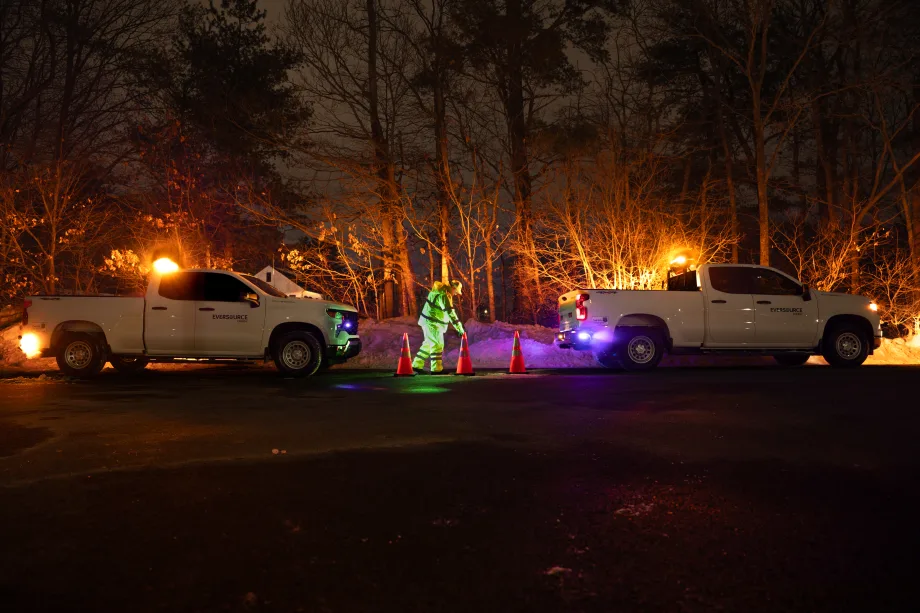
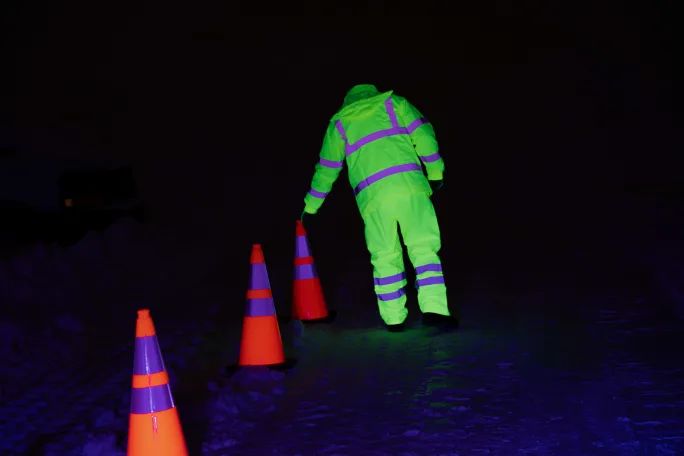
HINVII® (High Intensity Non-Visible Intelligent Illumination) has advanced the concept of using near-ultraviolet lighting to increase the conspicuity of workers wearing fluorescent safety apparel. Under UV illumination, many commonly used high-visibility garments and accessories fluoresce, helping create stronger visual contrast between workers and their surroundings.
Rather than drawing attention to the vehicle itself, UV technology places visual emphasis on personnel operating near vehicles and equipment. This characteristic has generated interest among safety professionals seeking additional methods to improve worker recognition in complex operating environments.
Maximizing Benefits of Ultraviolet Lighting: The mpower® Ultra Series
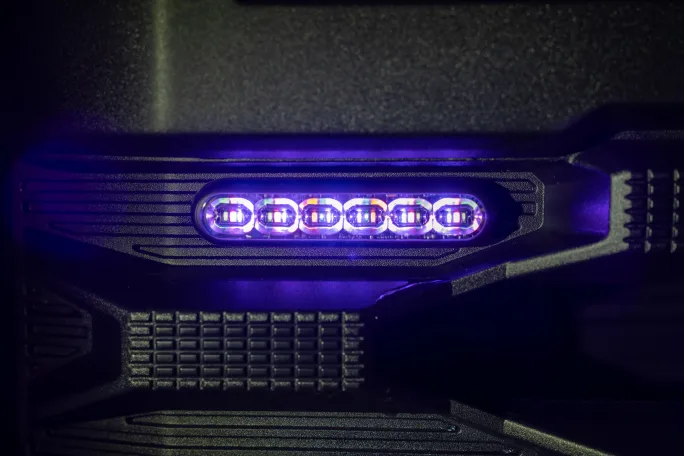
The effectiveness of UV-based visibility strategies depends not only on the light source, but also on the optical systems that deliver that illumination. The mpower® Ultra Series incorporates UV LEDs alongside patented mpower® silicone optical technology designed to support consistent light transmission in demanding operating conditions.
Credit:
SoundOff Signal 2026
Unlike traditional polycarbonate lens materials that can degrade when exposed to ultraviolet energy over time, silicone optics offer strong resistance to UV exposure and environmental stressors. This property makes silicone a practical material choice for applications where long-term optical performance is critical.
Many UV lighting systems rely on UV stabilizers to help mitigate material degradation of polycarbonate lenses. While effective in protecting the lens, these stabilizers can also limit the transmission of ultraviolet light, potentially reducing the amount of UV energy available to illuminate workers. Silicone optics, by comparison, are inherently resistant to UV exposure and do not require stabilizers, allowing for more efficient transmission of ultraviolet light.
From an engineering perspective, material durability is an important consideration for safety-focused lighting systems. Optical degradation can reduce light output and affect visibility performance. Materials that maintain clarity and structural integrity throughout extended service life may help support more predictable lighting performance.
By combining UV illumination with silicone-based optics, the system demonstrates how advances in materials science and vehicle lighting can contribute to ongoing efforts to improve worker visibility.
The Future of Visibility and Workplace Safety
As organizations continue to pursue strategies that reduce vehicle-pedestrian conflicts, visibility enhancement remains an important focus. Ultraviolet illumination represents one emerging approach that warrants continued evaluation alongside established safety practices and workplace controls.
The ongoing development of vehicle lighting technologies, optical materials and human-centered safety solutions will continue to shape how fleets, agencies and contractors approach worker protection in the years ahead.
Your safety is our mission. At SoundOff Signal, we proudly support law enforcement agencies and first responders who protect and serve our communities every day.
Explore a range of police lights, emergency vehicle sirens and control systems designed to deliver clear communication while minimizing driver distraction. Engineered for maximum visibility and performance, these solutions help improve roadway safety, enhance emergency scene awareness and support safer response operations.
This article reflects the views of SoundOff Signal and does not necessarily represent the views of Government Fleet or Bobit Business Media.
Quick Answers
UV perimeter lighting enhances worker visibility by illuminating high-visibility apparel and safety equipment, making workers more noticeable in low-light conditions.
Durable optical materials ensure that UV lighting is effectively distributed and maintained over time, thereby enhancing visibility and reducing equipment degradation.
Yes, UV lighting reduces exposure risks by creating a more visible and safer environment around traffic and equipment, complementing existing safety measures.
Combining UV lighting with traditional safety equipment offers a dual approach to visibility, significantly enhancing worker safety in low-light environments.
No, UV lighting is not a replacement but a complementary approach to existing safety measures, designed to enhance visibility and overall worker safety.
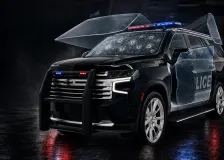
Dana Safety Supply is setting a new standard for officer safety with windshields capable of withstanding multiple rounds and saving lives — and one Texas deputy is living proof.
Ford showcased its 2028 Ford Expedition Police Responder, a full-size, pursuit-rated utility vehicle, at Police Fleet Expo this week. It comes standard with 4x4 and a 3.5-liter EcoBoost V6 producing 400 horsepower and 480 lb.-ft. of torque.
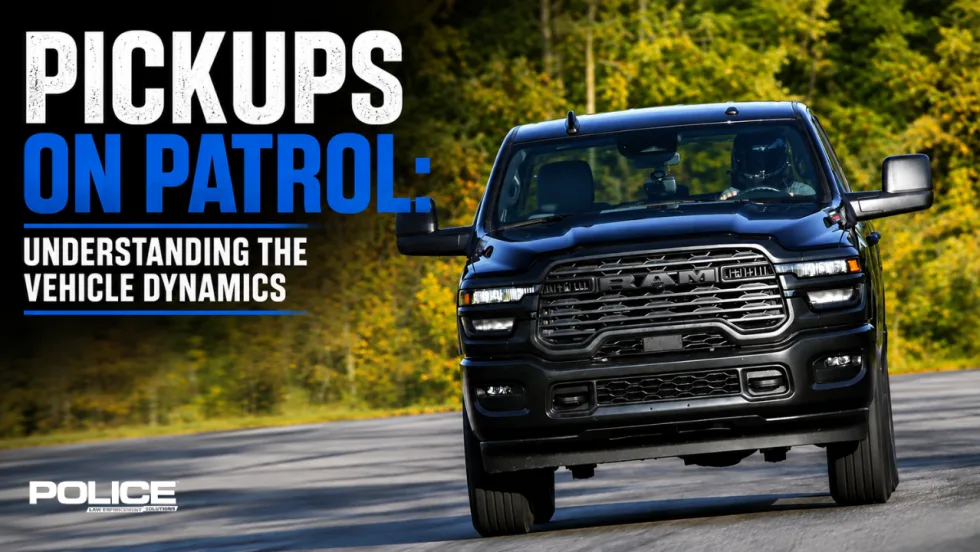
Pickup trucks are not new to patrol duties, but with the debut of the 2027 Ram 2500 Emergency Response Vehicle, they are getting larger and heavier. POLICE reached out to the Michigan State Police Precision Driving Unit to learn more about pickup truck handling, vehicle dynamics, and what officers need to know.
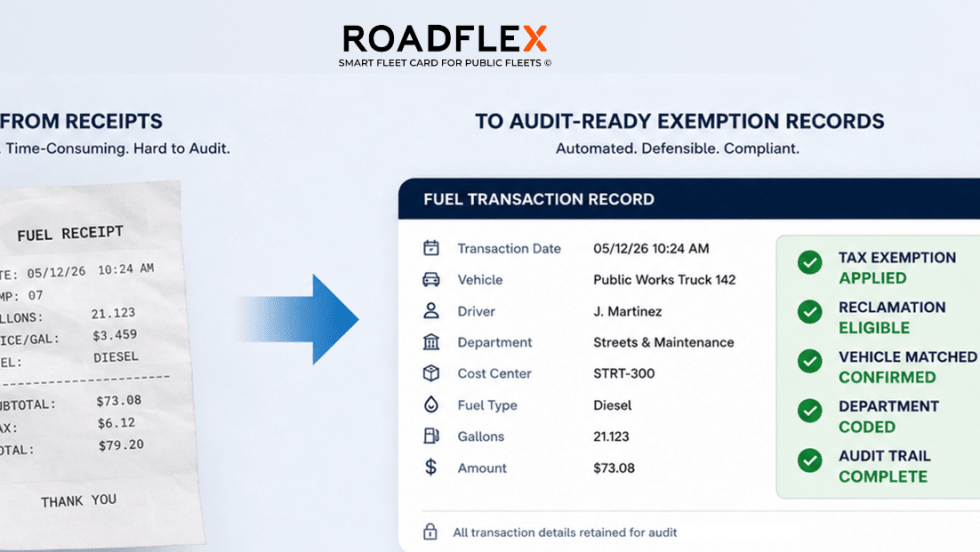
RoadFlex now offers its capabilities to help public-sector fleets streamline fuel tax exemptions, reclamation, reconciliation, and audit-ready reporting.
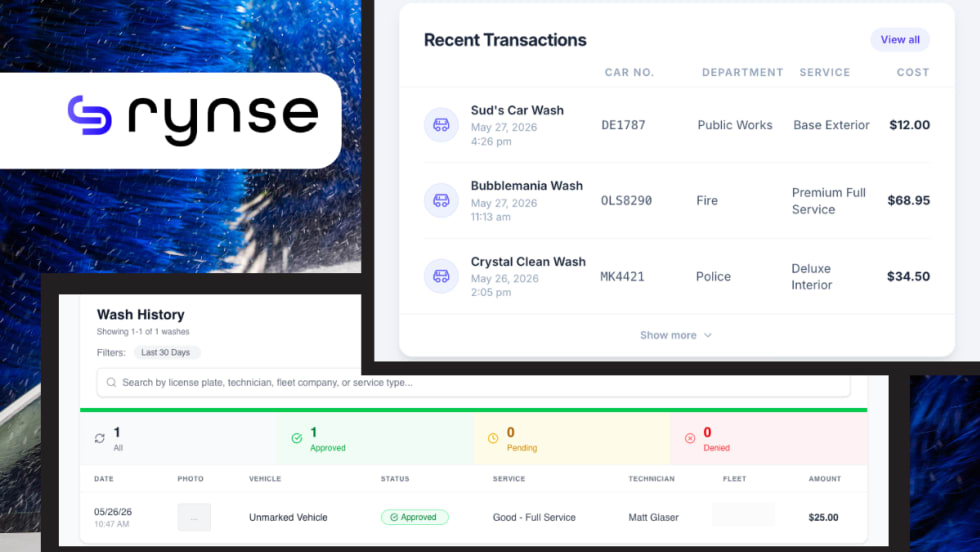
Rynse has secured a 2026-2027 NCSA contract, giving law enforcement agencies nationwide fast-track access to its fleet wash network and management platform, which streamlines procurement, reduces administrative burdens, and helps fleets stay road-ready with greater oversight.
Tenhold, formerly Jotto Desk, provides next-generation vehicle systems for law enforcement and public safety and recently debuted its Suppressor Lock Head for its Weapon Mounting system.
The 2027 Ram 2500 Emergency Response Vehicle is the first and only ¾-ton truck to complete the Michigan State Police vehicle trials, and Ram said it delivered outstanding performance in testing scenarios designed to replicate extreme real-world duty.
LEHR’s new centralized upfitting facility in New Jersey consolidates operations to deliver faster turnaround times and enhanced fleet capacity for law enforcement agencies across the Northeast.
The Madison County Sheriff’s Office overcame fuel management and accounting challenges by turning to RoadFlex to improve fueling reliability, visibility, and administrative control.