



How To Conduct Patrol-Level Interviews
Though the mission of a patrol officer is different than that of an investigator, you will find that when it comes to teaching interviews and interrogations, the material is often geared toward an investigator. Here are tips for patrol-level interviews.

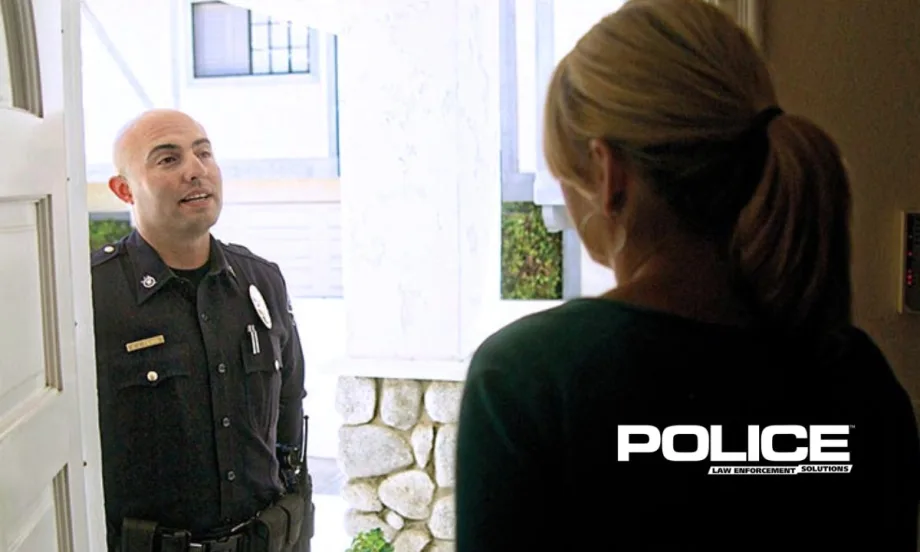
Vincent Taroc/POLICE
Patrol officers deal with interviews and interrogations in a way that's unique among law enforcement first responders. These officers share one thing in common; they don't have the luxury of time. Once they get a call assigned to them, they must accomplish certain basic tasks which include securing the scene, conducting interviews and interrogations, and obtaining enough information for a written report. It's the nature of the beast for an initial investigation. Handle the call at your level of responsibility and move on to the next one.
Although there are no national standards for how long a patrol officer has to investigate a call for service, it's safe to say that most calls are handled in under an hour. Anything more than that usually requires calling out a follow-up investigator to continue to work the incident. Unlike a first responding officer, a follow-up investigator can usually take whatever time they feel is necessary in order to work the case to its logical conclusion.
Though the mission of a patrol officer is different than that of an investigator, you will find that when it comes to teaching interviews and interrogations, the material is often geared toward an investigator. When a patrol officer takes the same course, it's left up to them to pick and choose what is applicable to them in the field. That being said, I have assembled some useful information specifically tailored for the patrol officer during their initial investigation.
Interview or Interrogation
The goals of an interview are different than those of an interrogation. An interview can either be planned or spontaneous in nature. The goal of the interview is to obtain information from anyone having knowledge of the events or circumstances related to the incident you are investigating. Interviews are associated with victims, witnesses, and complainants.
An interrogation, on the other hand, is associated with suspects. The goal of an interrogation is to get critical information about the crime that occurred. Ideally when you interrogate the suspect, you end up with an admission or confession. An interrogation can be custodial or noncustodial and I would consider it the more formal of the two.
The purpose of interviews and interrogations is the same. They are done in order to collect information, confirm facts, and determine the specific events of the case. You use both at the appropriate times to fill in the blanks when it comes to who, what, when, where, why, and how questions. Your goals for using interviews and interrogation are to obtain the truth of what happened and take whatever measures necessary within the law.
Miranda Warnings
Cases are lost every year due to the mishandling of Miranda warnings. Every officer should be familiar with the Fifth Amendment to the United States Constitution which guarantees certain rights to those that are being interviewed and or interrogated. To violate these rights will not only trash the investigation but could lead to legal action against the officer. I have included some interview and interrogation specific case law that every officer should be familiar with for your review.
1. Brown v. Mississippi, 297 U.S. 278 (1936): Use of force in obtaining a confession will make the resulting confession inadmissible.
2. Escobedo v. Illinois, 378 U.S. 478 (1964): Refusal to honor the accused's request to consult with their attorney will make their statements inadmissible.
Miranda v. Arizona3. , 384 U.S. 346 (1966): Whenever a person is taken into custody or deprived of their freedom in any significant way, they must be given specific warnings of their rights or any statements made will be inadmissible.
4. Oregon v. Mathiason, 429 U.S. 492 (1977): Miranda warnings are not necessarily required unless there is some restriction of freedom that places the suspect in custody.
5. New York v. Quarles, 467 U.S. 649 (1979): Miranda warnings need not be given to a suspect if asking questions reasonably prompted by a concern for public safety.
The trick to applying Miranda warnings is knowing when you are conducting a custodial interrogation. You can apply the following two-pronged test: Is the person under arrest or otherwise restrained (not free to go) and are you asking questions or engaged in an activity that is designed to elicit an incriminating response? If the answer is "yes" to both those questions, then you have to give them their Miranda warnings. I recommend you always read Miranda warnings from your agency-issued card. It will guard you from attack by a defense attorney later on.
Establish Rapport
The need to establish rapport has almost become cliché but it remains a necessary component of conducting any type of interview. It is also one of the hardest things to accomplish at the patrol level because you don't have all day. To be successful, there are certain guidelines you must follow. For example, if you are not sincere, you will almost certainly close off the information flow. In order to establish rapport and your credibility, you must also dispel the person's fear.
You do this by having a casual conversation using simple words and sentences. Listen carefully in order to show you are interested. Maintain eye contact and remain courteous and respectful. Don't become absorbed in taking notes. Instead, listen first, write second.
What Questions to Ask
You need to establish a timeline and identify all the players. You must identify the elements of the crime, speak with anyone who has any useful information, sift through the information, and determine the facts. Stick to the basics by asking who, what, when, where, why, and how types of questions.
Make every effort to ask open-ended questions so you can get as much information as possible. Reserve yes and no types of questions for when you need to clarify something.
General Considerations
Here are some tips I have picked up over the years:
1. You must never forget what it feels like to be a victim. Your victim shouldn't be made to feel like a victim a second time based on your actions.
2. You can think whatever you want, just don't voice your thoughts to any victim, witness, or suspect.
3. If you treat people with dignity and respect, you will get more information. Even if you don't, you'll get a lot less drama and pushback.
4. When dealing with introverts, remember that they process information differently, can't handle too much information at once, and will shut down if overloaded.
5. When dealing with extroverts, realize that they want to see what you have. They will answer in bits and pieces based on your conversation. They talk a lot but don't say much.
6. Don't lie to people you interview. Your most important asset is your word.
7. The truth always matches; lies do not.
8. Time is something you can never get back, so make the most of yours.
9. Remain flexible and go with the flow. Your questions might be going in one direction, and their answers may take you in another.
10. Do not make any promises you can't keep; it's just as bad as lying.
Final Thoughts
Even though you don't have the same amount of time to conduct your interviews as an investigator, you can still learn much from spending time with one. Job shadow and learn some tips from their training and experience. Conducting interviews and interrogations is an art form you develop over time. Just because you work patrol doesn't mean you can't be effective.
Amaury Murgado retired a senior lieutenant from the Osceola County (FL) Sheriff's Office with over 29 years of experience. He also retired from the Army Reserve as a master sergeant. He holds a Master of Political Science degree from the University of Central Florida.
More Patrol

Adept Armor Introduces Two New Rifle Plates
Adept Armor has launched two new Level IV ballistic plates, the Emperor and the Archon Mark 2, which brings Adept Armor’s new Quatroid ceramic to the high-threat, performance-value center of the range at 5.2 pounds.
Read More →
POLICE Product Test: Benchmade Bailout
The Benchmade Bailout is a slim, lightweight carry knife with a deep-ride pocket clip and comes in a variety of blade steels and scales. Here is a detailed review of the Taiga Green Bailout, released earlier this year.
Read More →
NLEOMF Announces July 2026 Officer of the Month
NLEOMF honored a Michigan deputy sheriff as the July 2026 Officer of the Month for rescuing a trapped driver from a burning vehicle following a Fourth of July crash.
Read More →
Streamlight to Showcase Newest Lighting Products at National Safety Council’s Safety Congress & Expo 2026
Streamlight will showcase its latest lights, including the Portable Scene Light III and the LiteBox 1Million, at the 2026 National Safety Council (NSC) Safety Congress & Expo.
Read More →
The 2027 World Police & Fire Games Set for Perth, Australia
The 2027 World Police & Fire Games (WPFG) will take place in Perth, Western Australia, from Friday, March 12 through Sunday, March 21, 2027.
Read More →
5.11 Partners with National Fallen Firefighters Foundation to Support #ForThe343
5.11 has joined the nationwide movement honoring the 343 New York City Fire Department firefighters lost on Sept. 11, 2001.
Read More →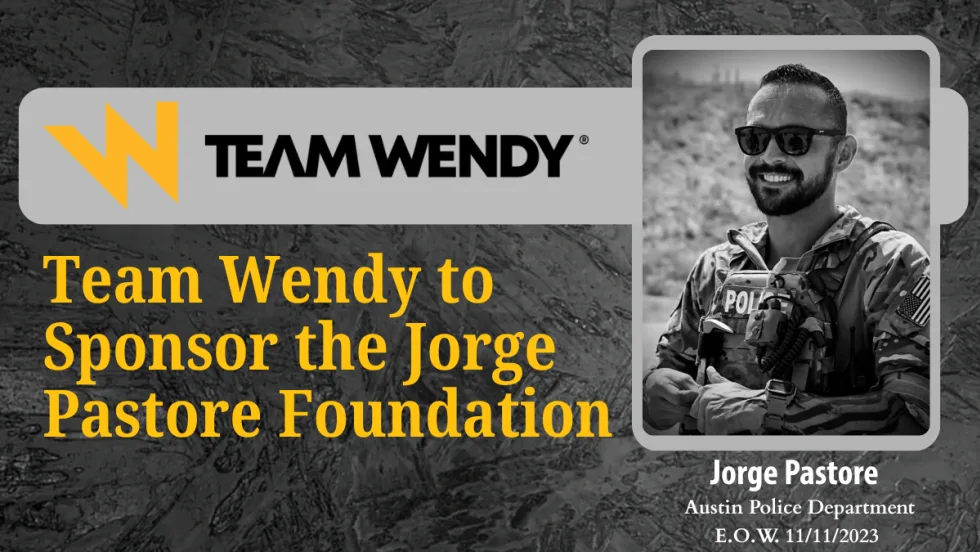
Team Wendy Announces Title Sponsorship of the Jorge Pastore Foundation
Team Wendy’s 3-year partnership with the Jorge Pastore Foundation expands access to programs that strengthen those who serve.
Read More →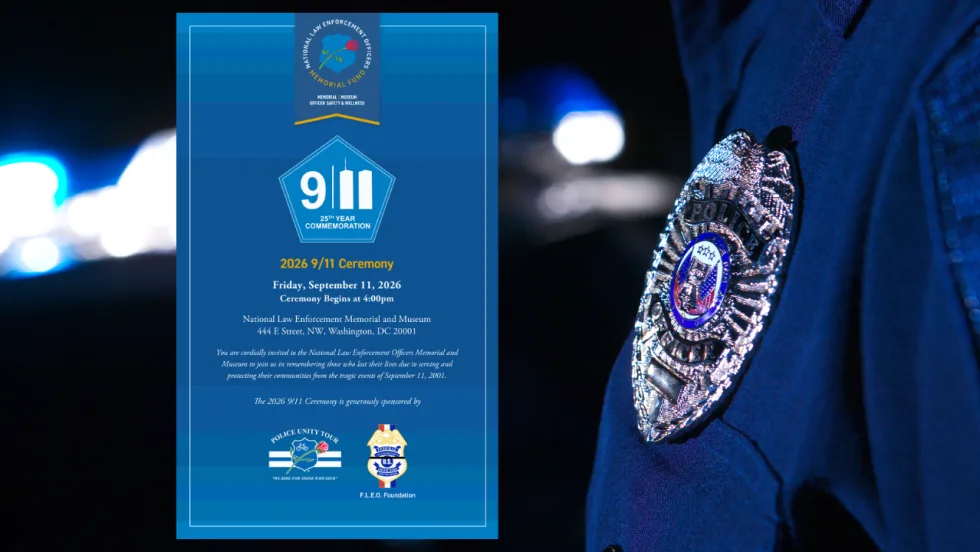
National Law Enforcement Memorial and Museum Hosting 9/11 25th-Year Commemoration Ceremony
The National Law Enforcement Memorial and Museum is hosting a 9/11 25th Year Commemoration Ceremony on Sept. 11 at 4 p.m.
Read More →
National Law Enforcement Officers Memorial Fund Announces June 2026 Officers of the Month
The National Law Enforcement Officers Memorial Fund (NLEOMF) named 15 officers of the Chico Police Department (California) as the Officers of the Month for June 2026 for their roles in responding to an active-shooter incident at a public library.
Read More →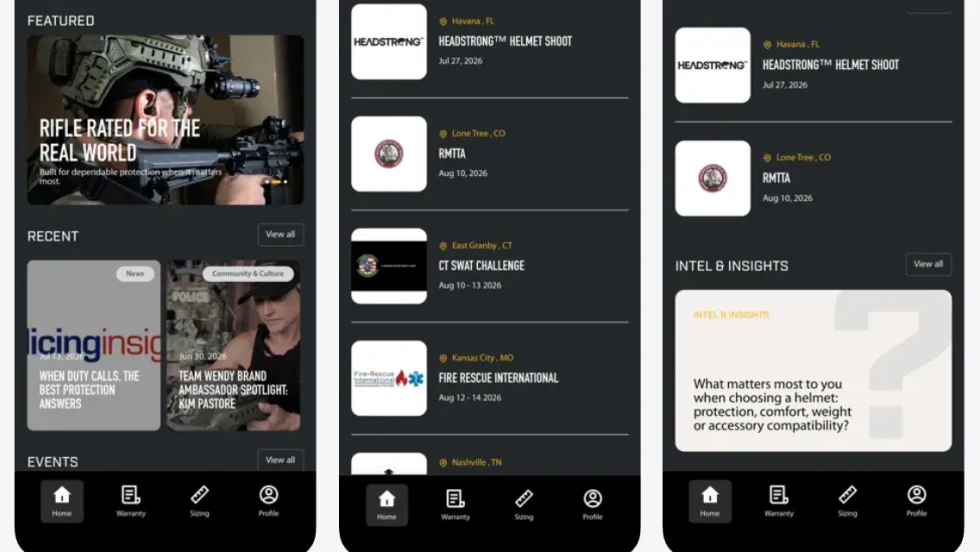
Team Wendy App Creates New Digital Hub for Helmet Owners
The Team Wendy Community App provides one location for warranty registration, size-fit tools, product updates, and community connection. For helmet owners, the new app creates a simpler path to the information and tools that matter most.
Read More →