



FCC Picks LTE for Public Safety Network
The announcement was cautiously applauded by law enforcement supporters of a national broadband network that would replace the web of disparate radio frequencies that often thwart communication between police, fire and EMS during incident response.

The Federal Communications Commission today announced that the nation's wireless public safety network will rely on LTE (Long Term Evolution) technology to provide interoperable communication for first responders.
The announcement was cautiously applauded by law enforcement supporters of a national broadband network that would replace the web of disparate radio frequencies that often thwart communication between police, fire and EMS during incident response.
In a statement, the Association for Public Safety-Radio Operators (APCO) praised the adoption of LTE.
"APCO International applauds the FCC for its formal adoption today of LTE as the technology standard for public safety broadband communications, which is consistent with APCO's early recommendation in support of LTE," according to Bill Carrow, APCO's president. "We also look forward to addressing the important interoperability issues in the NPRM portion of today's action."
With NPRM, Carrow referenced the fourth Notice of Public Rulemaking, an FCC document recommending LTE. While the technology standard has been approved, the spectrum required to support it has yet to be solidified.
Segments of the 700 MHz D-Block spectrum set aside for such a network were auctioned to Verizon Wireless and AT&T in 2008. Since that auction, law enforcement and other responders have been lobbying the FCC for other 700 MHz segments.
The New York Police Department has formally objected to the FCC's current plan, filing a white paper in March stating its case. When he spoke to POLICE Magazine in February, NYPD Deputy Chief Charles Dowd called the FCC's plan "a red herring."
Under the current plan, law enforcement agencies would compete with the public on wireless networks during a crisis, when data and voice networks are clogged.
"They're not giving us the kind of access we need," Dowd said at the time. "The notion is that the extra spectrum is going to be available to us is not accurate. It's going to be available to everyone."
Related:
NYPD Says FCC's Public Safety Broadband Network Plan Falls Short
More Technology
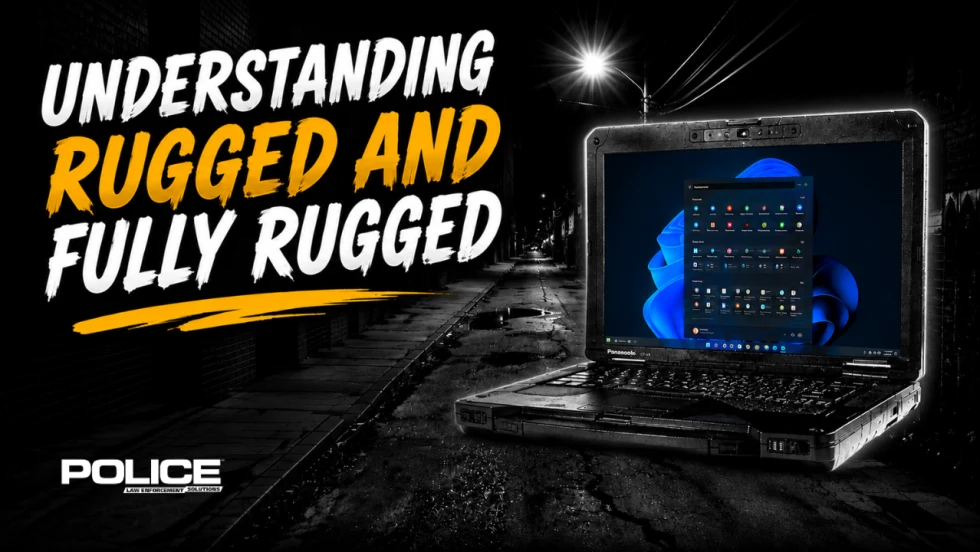
What Qualifies a Laptop as Rugged or Fully Rugged?
Police officers face a wide range of working conditions that can damage or even destroy a regular consumer laptop. Learn what qualifies a computer as rugged or fully rugged and why those devices are vital for law enforcement.
Read More →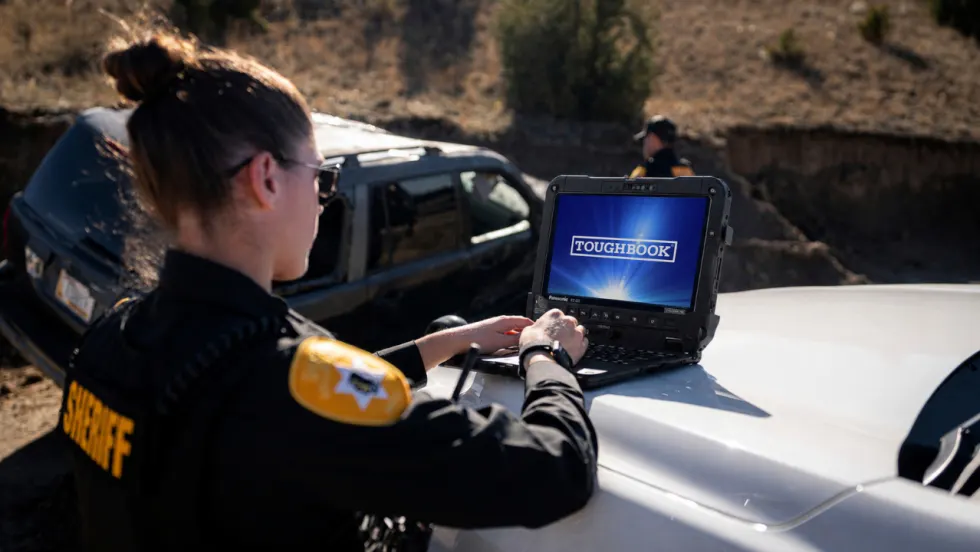
Panasonic Connect Launches the Toughbook 34 and Toughbook G3, Fully Rugged 2-in-1 Mobile Computers
Panasonic Connect has launched the Toughbook 34 and Toughbook G3 to facilitate in-vehicle dispatch, records management, and mobile command operations from any location.
Read More →
A police agency's guide to data-driven fleet management
Costs are rising and the public expects more transparency into how their tax dollars are spent. This e-book shows how police agencies can use fleet data to take control of fleet expenses while improving officer safety and demonstrating fiscal responsibility to the communities they serve.
Read More →

AI and analytics for law enforcement: Turning data into insights
Law enforcement agencies are managing more video, sensor data and digital evidence than ever before. Discover how AI and analytics can help turn that data into actionable insights that strengthen situational awareness, accelerate investigations and support more informed decisions.
Read More →
Vasco Electronics Adds Automatic Language Detection to Vasco Translator Q1
Vasco Electronics’ software update introduces hands-free language switching and expanded offline translation across 45 language pairs, empowering law enforcement, healthcare, and front-office enterprise teams
Read More →
North Miami Police Department Deploys Mark43
The North Miami Police Department has deployed Mark43 as part of its Five-Year Strategic Plan that represents its collective vision and goals for a more proactive police department, anchored by a core commitment to leveraging modern technology to enhance efficiency and public safety.
Read More →
Cellebrite Genesis for Enterprise Now Generally Available
Made available to the public sector in June, Cellebrite Genesis is serving a growing mix of national, regional, and local agencies worldwide, including some of the largest regional and metropolitan police departments. It is now available for enterprise organizations.
Read More →
2026 Vision FirstNet Users Summit to Host Emerging Leaders Training on Grassroots Advocacy for Public Safety
“Emerging Leaders Training: Understanding the Importance of Grassroots Advocacy for Public Safety," a session during the 2026 Vision FirstNet Users Summit, will offer a roadmap for unified advocacy at the federal level.
Read More →
Motorola Solutions Completes Acquisition of D-Fend Solutions
Motorola Solutions has acquired D-Fend Solutions, an industry leader in counter-drone technology. This deal provides public safety and enterprise customers with access to advanced counter-unmanned aerial systems.
Read More →
ZeroEyes, Advantech & Camden Police Partner to Bring AI Gun Detection Technology to Delaware School District
ZeroEyes has partnered with Advantech and the Camden Police Department to deploy ZeroEyes’ AI gun detection and intelligent situational awareness platform at Delaware’s Caesar Rodney School District (CRSD).
Read More →