



Law Enforcement Fatalities by Gunfire Reaches 20-Year High
The 40 law officers killed by gunfire in the first half of 2011 marks the highest number in two decades in a year that's been especially deadly for those who wear the badge.


The 40 law officers killed by gunfire in the first half of 2011 marks the highest number in two decades in a year that's been especially deadly for those who wear the badge.
Fatalities in the first six months of the year rose for the second year, according to preliminary figures released by the National Law Enforcement Officers Memorial Fund (NLEOMF).
In all, 98 law enforcement officers died in the line of duty during the first six months of 2010, according to the "Law Enforcement Officer Deaths: Mid-Year 2011 Report," which was jointly released by NLEOMF and the Concerns of Police Survivors (C.O.P.S.).
"The economy has forced reductions in training, safety equipment and personnel at law enforcement agencies across America," said Craig Floyd, NLEOMF's chairman. "These budget cuts have put our officers at greater risk, especially as they face a more brazen, cold-blooded criminal element and a continuing terrorist threat."
The 98 duty deaths represent a 14 percent increase over the 86 officers who lost their lives during the same period last year. Officers killed by firearms surged 33 percent higher than the first-half numbers for 2010.
The 42 officers killed in traffic-related incidents represented a 17 percent decline compared to the first half of 2010. Traffic-related incidents have been the leading cause of law enforcement fatalities for 13 years.
The report further delineated the 98 line of duty deaths of officers:
40 were shot to death
21 died in automobile crashes
16 succumbed to job-related illnesses
7 were struck by automobiles while outside of their own vehicles
5 were killed in motorcycle crashes
2 were struck by a train
1 died in an aircraft crash
1 was beaten to death
1 was electrocuted
1 was killed in a bomb blast
1 was crushed to death
1 was strangled
With 10 officers killed each, Florida and Texas were the deadliest states in the nation. These states were followed by New York (8), Ohio (7), California (4), Michigan (4), and Tennessee (4).
Nine of the officers killed served with federal agencies, and five served with corrections agencies. The average age of the officers who died was 41. On average, they served for 13 years. Also, eight female officers (8.16 percent) were counted as duty deaths.
"The number of family members impacted by line of duty law enforcement deaths increases each year," said Linda Moon-Gregory, national president of C.O.P.S. "Correspondently, the number of families requesting assistance through their darkest days, and requesting assistance through C.O.P.S. grief healing retreats, has also increased."
Related:
More Patrol

Team Wendy Introduces the EXFIL Endurance Ballistic Helmet, Engineered to Reduce the Burden of Extended Wear
Team Wendy has launched its EXFIL Endurance, a new lightweight ballistic helmet engineered to deliver protection, comfort, and fit during demanding, extended operations.
Read More →
The First Responders Children’s Foundation National First Responders Day Roll Call of Heroes Ceremony Returns to Times Square, NYC
First Responders Children’s Foundation (FRCF), in collaboration with T-Mobile, will host the Roll Call of Heroes ceremony in Times Square to commemorate National First Responders Day on Wednesday, Oct. 28. During the event, FRCF will present 18 Hero Awards.
Read More →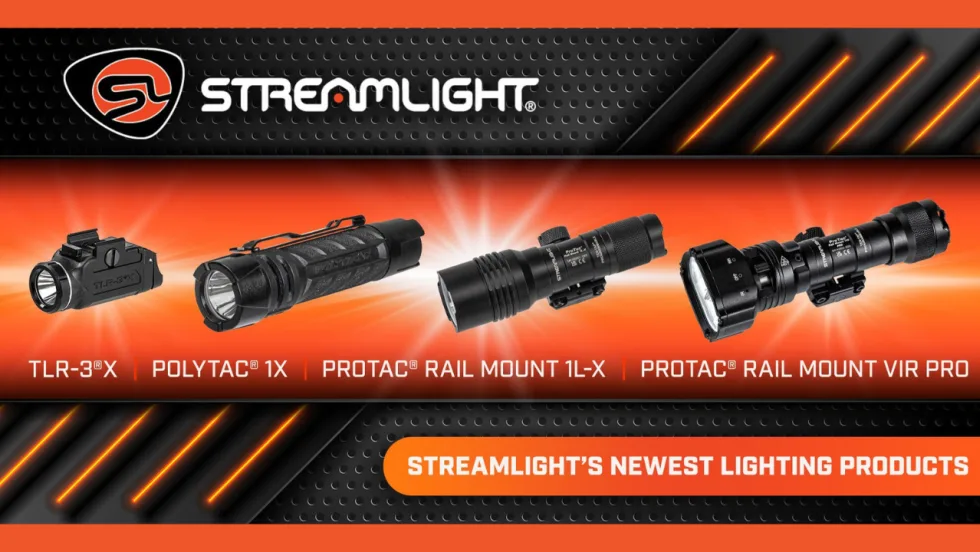
Streamlight to Showcase Newest Lighting Products for Law Enforcement Professionals at IACP 2026
Streamlight will showcase its newest lights for law enforcement at the International Association of Chiefs of Police Annual Conference & Expo. Featured lights will include the TLR-3 X, the PolyTac 1X, and more.
Read More →
Streamlight Portable Scene Light III Wins 2026 OH&S New Product of the Year Award
Streamlight’s Portable Scene Light III has won the 2026 Occupational Health & Safety (OH&S) New Product of the Year Award in the Lighting category.
Read More →
Adept Armor Introduces Two New Rifle Plates
Adept Armor has launched two new Level IV ballistic plates, the Emperor and the Archon Mark 2, which brings Adept Armor’s new Quatroid ceramic to the high-threat, performance-value center of the range at 5.2 pounds.
Read More →
POLICE Product Test: Benchmade Bailout
The Benchmade Bailout is a slim, lightweight carry knife with a deep-ride pocket clip and comes in a variety of blade steels and scales. Here is a detailed review of the Taiga Green Bailout, released earlier this year.
Read More →
NLEOMF Announces July 2026 Officer of the Month
NLEOMF honored a Michigan deputy sheriff as the July 2026 Officer of the Month for rescuing a trapped driver from a burning vehicle following a Fourth of July crash.
Read More →
Streamlight to Showcase Newest Lighting Products at National Safety Council’s Safety Congress & Expo 2026
Streamlight will showcase its latest lights, including the Portable Scene Light III and the LiteBox 1Million, at the 2026 National Safety Council (NSC) Safety Congress & Expo.
Read More →
The 2027 World Police & Fire Games Set for Perth, Australia
The 2027 World Police & Fire Games (WPFG) will take place in Perth, Western Australia, from Friday, March 12 through Sunday, March 21, 2027.
Read More →
5.11 Partners with National Fallen Firefighters Foundation to Support #ForThe343
5.11 has joined the nationwide movement honoring the 343 New York City Fire Department firefighters lost on Sept. 11, 2001.
Read More →