



Corruption: Policing the Police
Among more polite officers, internal affairs is thought of as a necessary evil. In less polite, more candid circles it's thought of in less savory terms like "the secret police" and "the rat squad."

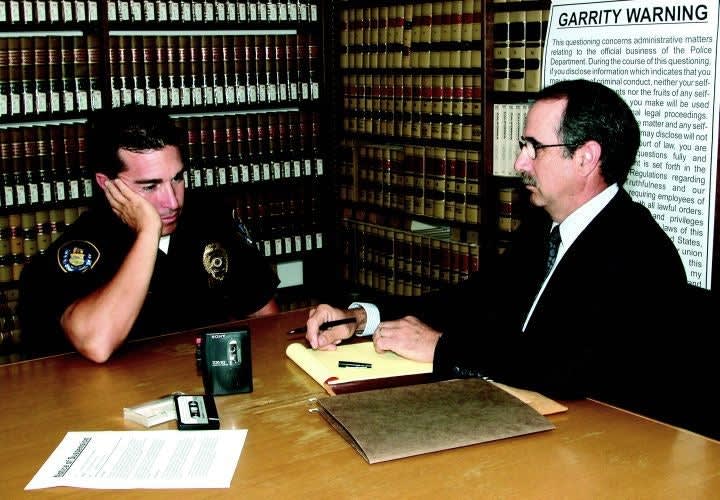
Among more polite officers, internal affairs is thought of as a necessary evil. In less polite, more candid circles it's thought of in less savory terms like "the secret police" and "the rat squad."
Since the 1950s when the first internal affairs units were established, policing the police has not been an easy job. It was never intended to be.
But it is indeed a necessary evil. If internal affairs units didn't exist, departments would face more external oversight from local, state, and federal governments. And for an understanding of what a pain it is to answer to the feds, talk to officers in Pittsburgh, Los Angeles, and most recently Detroit who now toil under mountains of additional paperwork dictated by consent decrees (See "Under the Gun").
The job of internal affairs investigators is to find the truth about charges levied by civilians against fellow cops and to protect the department from systemic corruption. This puts them in the strange and untenable position of possibly being the best friend a cop could have, or his worst adversary.
"Our job is to keep the police officers out of trouble," says Lt. Jorge Perez, commander of the Miami Police Department's internal affairs unit. "The officers may not like the way that we keep them out of trouble, but if we can have an officer enjoy a full career of 20 to 25 years of service because of what we do, then we have achieved our mission."
Working the Miami IA is a tough job in more ways than one. The case load is heavy and the staff is small. The unit has 15 investigators, counting Perez, which are divided into a misconduct group and a corruption group. In 2002, these officers worked 290 complaints, involving 566 allegations. In addition, they conducted "early warning" tracking to identify problem officers, and followed up with undercover operations to determine if suspicions of officer misconduct merited further investigation.
Every investigation is different but all result in one of four findings: cleared, inconclusive, sustained, or withdrawn. Because of the nature of policing in which one officer often engages one civilian, many allegations require IA investigators to weigh the word of the officer against the word of the complainant without corroborating evidence and result in a finding of "inconclusive." Regardless of the IA investigators' initial findings, Florida law requires that cases involving allegations of serious misconduct be sent to the state attorney's office for review.
In Miami, findings for cases that don't involve criminal conduct are submitted to the commander of the officer who is being investigated and discipline is meted out by the command structure, not by IA. "Officers have a misconception that we are smacking them," says Perez. "But that's incorrect. In the city of Miami, IA does not recommend discipline."
Perez says his goal is to make sure that allegations are investigated as soon as possible to remove tarnish on the reputations of innocent officers. Toward that end, Miami IA tries to complete every investigation within 45 days of its filing. "We treat every investigation as if it was a homicide investigation, processing it as soon as possible. It's not fair to an officer or his family to let a case linger."[PAGEBREAK]
Fast action on IA cases also shows the public that the Miami PD is responsive to complaints and it deflects charges of stalling to protect bad cops. Still, the public often believes that IA investigations are nothing more than whitewashes.
"I would venture to say that every internal affairs department and every department around the nation has once or twice been acused of whitewashing stuff," Perez says. "It happened here in the city of Miami. Citizens had the perception that IA was not doing its job, so they passed legislation that created a citizens investigation panel."
The citizens investigation panel has no oversight over the Miami PD's internal affairs unit. However, the panel often looks into civilian complaints after IA investigations are completed. "They can request a review of cases that we have completed," says Perez. "Then they do a review. And if they come up with different findings from us, then they can make recommendations to the chief and the commissioner."
Perez says the revelation of recent police scandals and the hiring of a new police chief have resulted in policies that give his unit more clout and make it easier for it to conduct thorough investigations that don't appear to be tainted by political considerations. For example, new Chief John Timoney changed the command structure so that an assistant chief heads internal affairs, eliminating any intermediaries between internal affairs and the chief's office.
In addition, Timoney moved internal affairs out of police headquarters, making it easier for the public to make complaints. "Some of the comments we were getting from the citizens and from the media were that some people were intimidated at the thought of coming into the police station to make a complaint, when the first person they might see could be the officer they were making a complaint against," explains Perez. "Now they feel more comfortable coming into this building."
Another recent development that has helped Miami Internal Affairs is the fine-tuning of the department's use-of-force policies. Perez says the previous policy was not clear enough, leaving many officer-involved shootings in a gray area and giving the public the impression that Miami cops are too inclined to shoot. "If you have a loose shooting policy, then an officer might shoot somebody not because he has to but because he can. We are trying to adjust our policy in a way that protects the officers on the street but also protects the department from litigation."
One of the scenarios covered by Miami PD's new use-of-force policy is shooting at moving cars, an action that has caused a lot of problems for the department. "Before, an officer could say, 'Well the car was coming at me, so I emptied my magazine out,'" explains Perez. "The policy said you could do that, but that didn't mean you should. I mean you could jump out of the way." He adds that the new policy will not take effect until after officers have received additional use-of-force training.
Perez admits that his fellow Miami cops don't always like the new policies. He also agrees that some officers on the internal affairs unit say that they have been ostracized by other cops. But he says he's never felt resentment from honest Miami cops.
Of course, Perez knows that one of the reasons he may have been spared the open contempt of his colleagues for being a member of the "rat squad" is because he is a lieutenant and commander of the unit. But he quickly adds that he never felt like an outcast when he was just another IA investigator. "I think it's because everybody knew one thing about me," he says. "I was fair. If I was going to do an investigation on you, it was going to be fair."
And Perez argues that officers under investigation shouldn't blame internal affairs for their problems because IA is not headhunting. "The bottom line is this, whatever situation an officer finds himself in, he is there because he placed himself there. I mean, contrary to popular belief, IA is not part of some conspiracy. We're not out there 24/7 trying to get you. We couldn't do that even if we wanted to. We don't have the manpower."
More Patrol

Adept Armor Introduces Two New Rifle Plates
Adept Armor has launched two new Level IV ballistic plates, the Emperor and the Archon Mark 2, which brings Adept Armor’s new Quatroid ceramic to the high-threat, performance-value center of the range at 5.2 pounds.
Read More →
POLICE Product Test: Benchmade Bailout
The Benchmade Bailout is a slim, lightweight carry knife with a deep-ride pocket clip and comes in a variety of blade steels and scales. Here is a detailed review of the Taiga Green Bailout, released earlier this year.
Read More →
NLEOMF Announces July 2026 Officer of the Month
NLEOMF honored a Michigan deputy sheriff as the July 2026 Officer of the Month for rescuing a trapped driver from a burning vehicle following a Fourth of July crash.
Read More →
Streamlight to Showcase Newest Lighting Products at National Safety Council’s Safety Congress & Expo 2026
Streamlight will showcase its latest lights, including the Portable Scene Light III and the LiteBox 1Million, at the 2026 National Safety Council (NSC) Safety Congress & Expo.
Read More →
The 2027 World Police & Fire Games Set for Perth, Australia
The 2027 World Police & Fire Games (WPFG) will take place in Perth, Western Australia, from Friday, March 12 through Sunday, March 21, 2027.
Read More →
5.11 Partners with National Fallen Firefighters Foundation to Support #ForThe343
5.11 has joined the nationwide movement honoring the 343 New York City Fire Department firefighters lost on Sept. 11, 2001.
Read More →
Team Wendy Announces Title Sponsorship of the Jorge Pastore Foundation
Team Wendy’s 3-year partnership with the Jorge Pastore Foundation expands access to programs that strengthen those who serve.
Read More →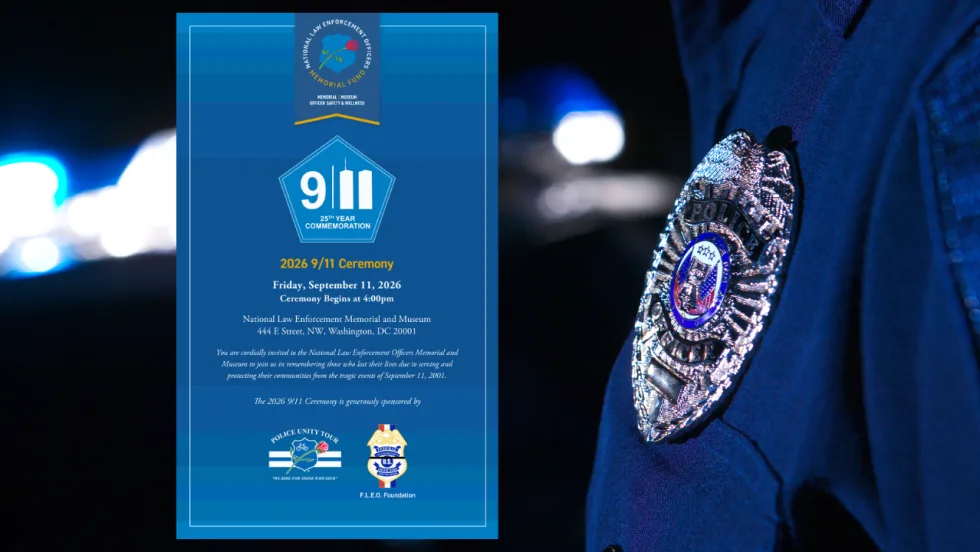
National Law Enforcement Memorial and Museum Hosting 9/11 25th-Year Commemoration Ceremony
The National Law Enforcement Memorial and Museum is hosting a 9/11 25th Year Commemoration Ceremony on Sept. 11 at 4 p.m.
Read More →
National Law Enforcement Officers Memorial Fund Announces June 2026 Officers of the Month
The National Law Enforcement Officers Memorial Fund (NLEOMF) named 15 officers of the Chico Police Department (California) as the Officers of the Month for June 2026 for their roles in responding to an active-shooter incident at a public library.
Read More →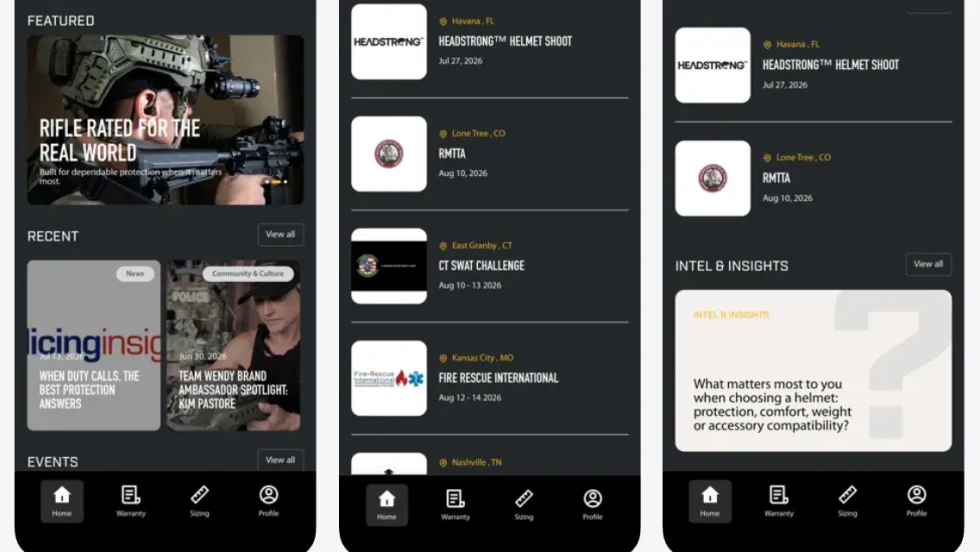
Team Wendy App Creates New Digital Hub for Helmet Owners
The Team Wendy Community App provides one location for warranty registration, size-fit tools, product updates, and community connection. For helmet owners, the new app creates a simpler path to the information and tools that matter most.
Read More →