



Chief Accountability
Sometimes the man or woman in charge shoulders the blame, even when not personally involved in an incident.


Have you ever noticed that whenever a plaintiff's attorney files suit against someone in the department for an alleged violation of rights, the chief (or sheriff, commissioner, director or other top cop) also gets sued? If you're the chief, should you be worried?
Statutes, Torts, and Civil Rights
There are three basic categories of civil cases that can be brought against public officials: (1) under a state or federal statutory scheme that creates specific causes of action to cover particular subjects (employment, sexual harassment, public records access, vehicle pursuits, etc.); (2) under general tort law (for such things as negligence, false imprisonment, assault and battery, infliction of emotional distress, etc.); (3) or you might be sued under Title 42, section 1983, of the US Code, for alleged violations of federal statutory or constitutional rights by state and local officials acting under color of law (similar suits against federal officials are permitted by case law; see Bivens v. Six Unknown Named Agents of Fed. Bureau of Narcotics).
The potential liability of the chief of an agency under the first two categories will be controlled by statutory schemes, or by state case law. This varies by state and by cause of action. Jurisdictions often apply a rule of law called "respondeat superior," which makes the chief liable for the torts of his or her subordinate officers. But it is also common for states to legislate immunities from tort damages for particular acts and omissions, so that you don't get sued for failing to make an arrest or prevent a crime.
Because the state rules vary widely in the first two categories of cases, it isn't practical to try to discuss the potential liabilities, immunities, and defenses for the various statutory and tort claims that could be made against you. Local advisors can do the best job of that.
But the federal rules applicable to the 1983/Bivens actions are fairly uniform, and some common principles generally apply to those cases everywhere. And because the provision for attorneys' fees over and above a plaintiff's award of damages makes civil rights cases especially attractive to lawyers, they are often your biggest headache, and the biggest potential drain on your budget.
So, when can the chief be held liable in a civil rights lawsuit?
Vicarious Liability Principles
In Monell v. New York City Department of Social Services, the Supreme Court ruled that the doctrine of respondeat superior does not apply to § 1983 cases. This means that a chief cannot be held liable for violations by his or her subordinates, based solely on the supervisory relationship. While that reduces the prospect of liability for the chief, it does not eliminate it. There still are ways the chief can be found liable, either in an "individual" or an "official" capacity.
In larger departments, chiefs may be occupied full-time with administrative duties and rarely act in an enforcement capacity in the field. Chiefs of mid-sized and smaller agencies often become personally involved in directing major investigations. A chief can be sued in his or her "individual capacity" when it is alleged that the chief was personally involved in the conduct at issue, or personally set in motion a course of action that caused others to violate the plaintiff's rights.
When the chief is named in an "official capacity" suit, the plaintiff is essentially suing the city or county. (Kentucky v. Graham.) In the Monell case, the court held that a municipality can be held liable for an employee's violation of a plaintiff's rights if-and only if-it can be said that the employee was acting pursuant to an official policy. Therefore, the issues are whether it can be shown that the department has an official policy directed toward the kind of conduct alleged, whether the employee's actions were in conformity with that policy, and whether that policy was the moving force behind a constitutional violation.[PAGEBREAK]
Policy Considerations
Litigation over the years has given us a few further principles. For example, a "policy" need not be written or formalized, but may be established by widespread custom and practice within the department. (Adickes v. S.H. Kress & Co.) Liability for unlawful practices cannot be avoided by not writing them down.
And a policy must be one established by an official who has "final policymaking authority" for the particular kind of action taken. (Pembaur v. Cincinnati.) An official policy also results where the person with final policymaking authority subsequently ratifies an unconstitutional action taken by the subordinate. (St. Louis v. Praprotnik.)
In Oklahoma City v. Tuttle, the Supreme Court ruled that a single incident of unlawful conduct by a subordinate is not enough to establish an unconstitutional policy, although a single act by the chief would be. On the other hand, if an unconstitutional policy is established, a subordinate's single unconstitutional act pursuant to that policy is enough to create municipal liability. (Pembaur.)
Failure to Train
One of the rulings that plaintiffs most often invoke against chiefs is City of Canton v. Harris. In that case, the Supreme Court held that a failure to train subordinates can cause municipal liability where the need for the training is so obvious, and the consequences of a lack of training so predictable, that the chief may be said to have been "deliberately indifferent" to the rights of the citizenry who might come into contact with untrained officers.
It is very common for plaintiffs' attorneys to include a Canton claim whenever they file a federal civil rights lawsuit. This is another good reason to ensure that officers receive timely and accurate training, and to be able to submit proof of that training.
An example of the potential consequences of inadequate training is in Davis v. Mason County. In that case, several deputies were found to have used unlawful force against several plaintiffs, and their force training was deemed inadequate, if not nonexistent. The federal court of appeals upheld jury verdicts and fees against the sheriff and his deputies totaling some $780,000, for both the excessive force and the failure to train. Ouch.
State Immunity
In some states, county sheriffs will be considered state actors. (McMillian v. Monroe County, Ala.) This is significant because the Supreme Court has ruled that states and state officials are not subject to suit under § 1983. (Will v. Michigan Dept. of State Police.) Whether a sheriff is immune from suit as a state actor, or liable to suit as a county official, is determined by looking to state law.
The best defense against civil liability is ensuring that policies conform with the Constitution, providing effective training to subordinates, and correcting errors when they occur. If you're a chief of police (or other agency head), you've got better things to do than answer lawsuits, and better things to spend your shrinking budget on than paying off judgments.
Attorney Devallis Rutledge, a former police officer and prosecutor, defends officers and agencies in federal civil rights cases at the California law
offices of Manning & Marder, Kass, Elrod, Ramirez.
More Patrol
The First Responders Children’s Foundation National First Responders Day Roll Call of Heroes Ceremony Returns to Times Square, NYC
First Responders Children’s Foundation (FRCF), in collaboration with T-Mobile, will host the Roll Call of Heroes ceremony in Times Square to commemorate National First Responders Day on Wednesday, Oct. 28. During the event, FRCF will present 18 Hero Awards.
Read More →
Streamlight to Showcase Newest Lighting Products for Law Enforcement Professionals at IACP 2026
Streamlight will showcase its newest lights for law enforcement at the International Association of Chiefs of Police Annual Conference & Expo. Featured lights will include the TLR-3 X, the PolyTac 1X, and more.
Read More →
Streamlight Portable Scene Light III Wins 2026 OH&S New Product of the Year Award
Streamlight’s Portable Scene Light III has won the 2026 Occupational Health & Safety (OH&S) New Product of the Year Award in the Lighting category.
Read More →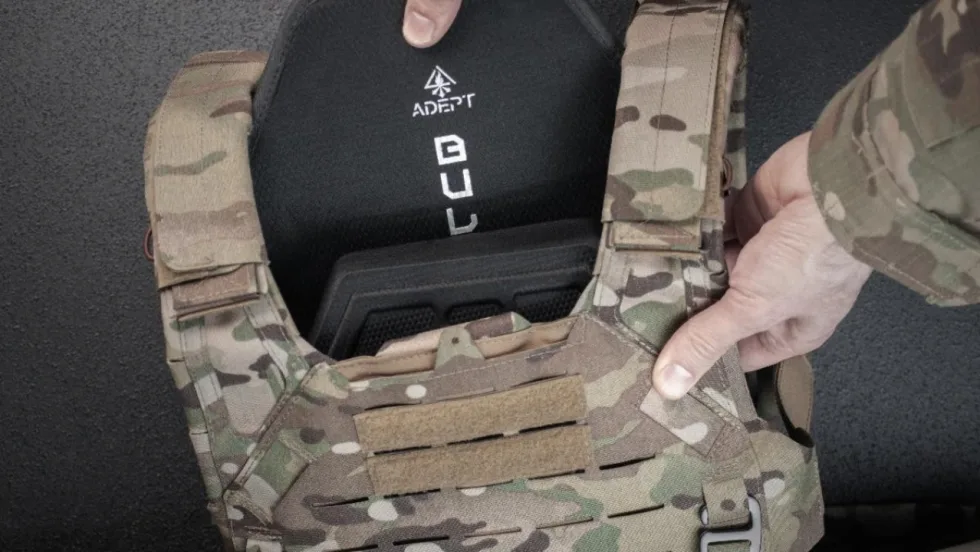
Adept Armor Introduces Two New Rifle Plates
Adept Armor has launched two new Level IV ballistic plates, the Emperor and the Archon Mark 2, which brings Adept Armor’s new Quatroid ceramic to the high-threat, performance-value center of the range at 5.2 pounds.
Read More →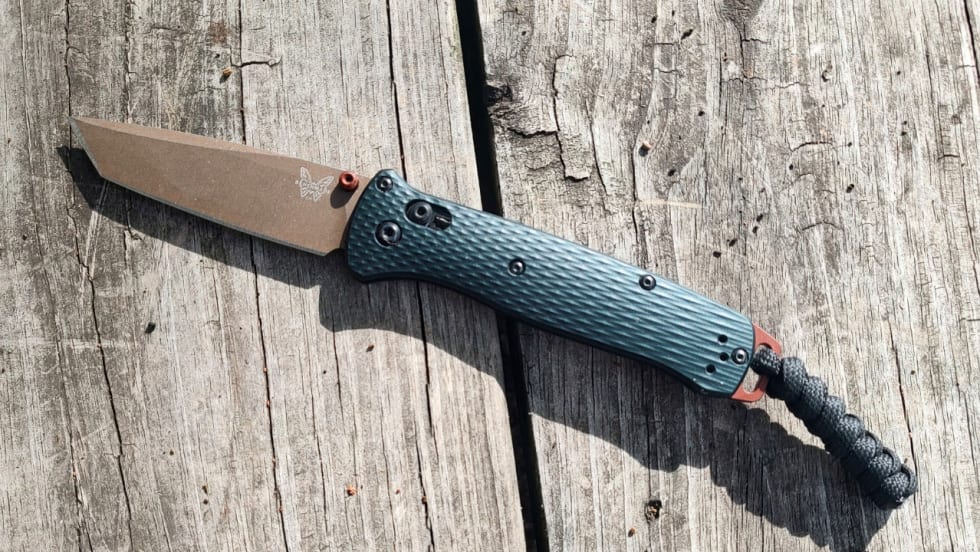
POLICE Product Test: Benchmade Bailout
The Benchmade Bailout is a slim, lightweight carry knife with a deep-ride pocket clip and comes in a variety of blade steels and scales. Here is a detailed review of the Taiga Green Bailout, released earlier this year.
Read More →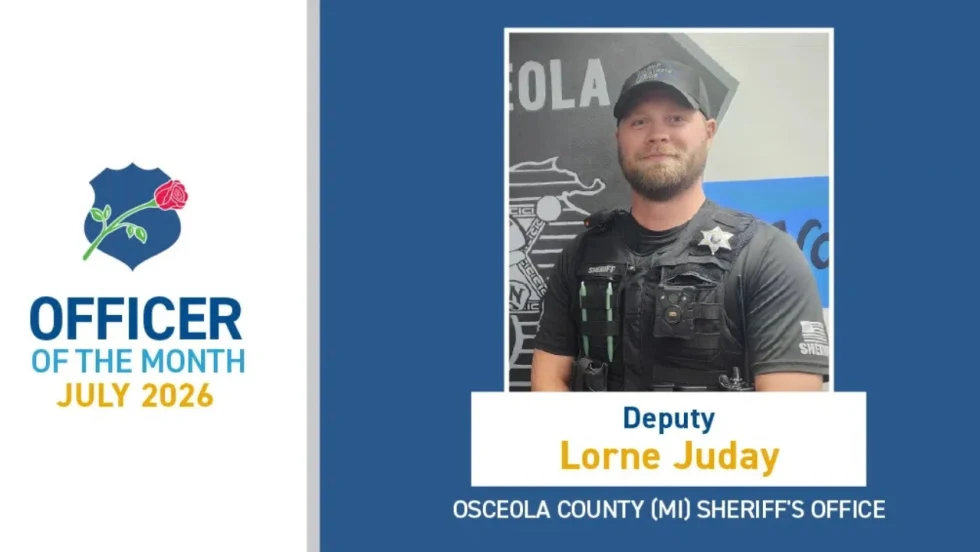
NLEOMF Announces July 2026 Officer of the Month
NLEOMF honored a Michigan deputy sheriff as the July 2026 Officer of the Month for rescuing a trapped driver from a burning vehicle following a Fourth of July crash.
Read More →
Streamlight to Showcase Newest Lighting Products at National Safety Council’s Safety Congress & Expo 2026
Streamlight will showcase its latest lights, including the Portable Scene Light III and the LiteBox 1Million, at the 2026 National Safety Council (NSC) Safety Congress & Expo.
Read More →
The 2027 World Police & Fire Games Set for Perth, Australia
The 2027 World Police & Fire Games (WPFG) will take place in Perth, Western Australia, from Friday, March 12 through Sunday, March 21, 2027.
Read More →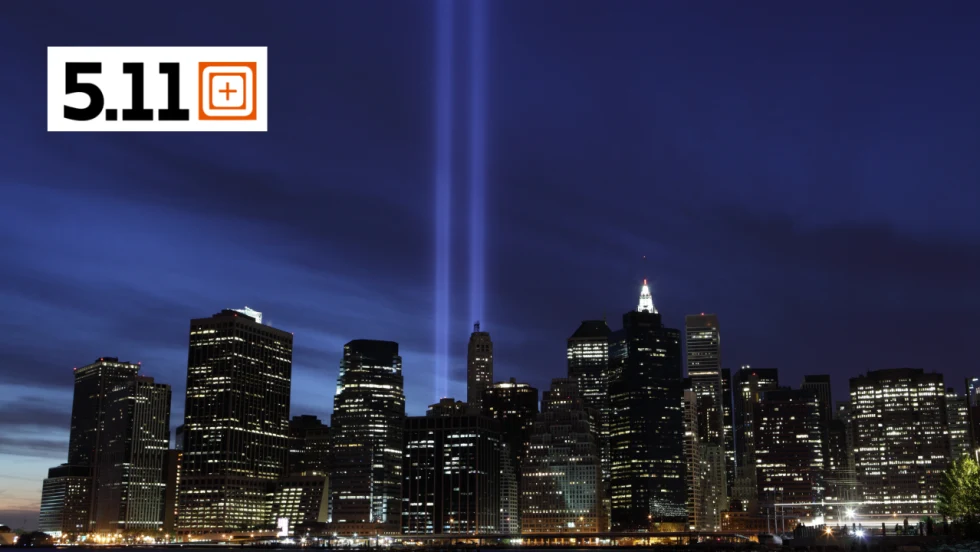
5.11 Partners with National Fallen Firefighters Foundation to Support #ForThe343
5.11 has joined the nationwide movement honoring the 343 New York City Fire Department firefighters lost on Sept. 11, 2001.
Read More →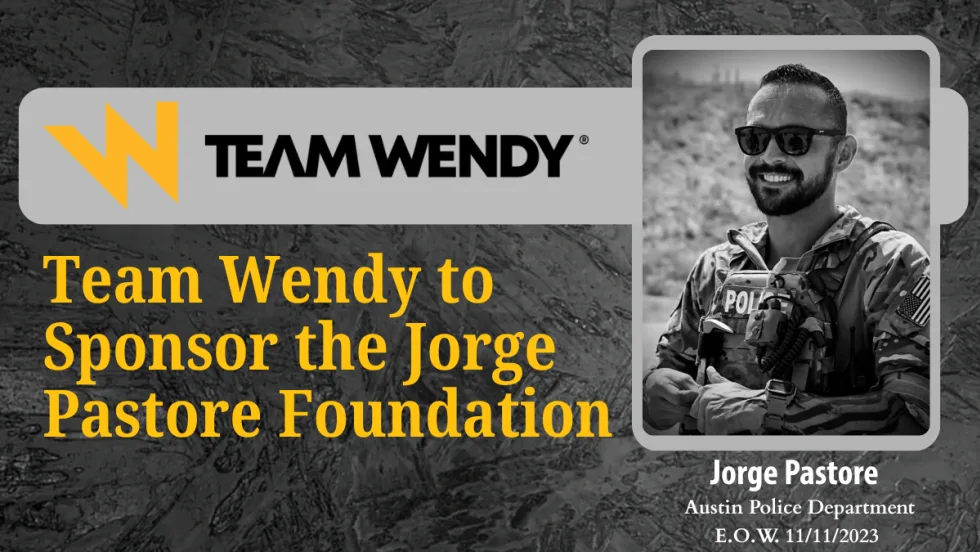
Team Wendy Announces Title Sponsorship of the Jorge Pastore Foundation
Team Wendy’s 3-year partnership with the Jorge Pastore Foundation expands access to programs that strengthen those who serve.
Read More →