



Texas University Releases Results from Police Body Camera Footage Study
Ultimately, researchers found that force of any kind was exceedingly rare and police and citizen interactions in Aransas Pass were not influenced by gender or race. Instead, the likelihood of a citizen receiving a citation or getting arrested was most strongly tied with whether they were intoxicated or pulled over for a traffic violation.

Texas A&M University-Corpus Christi researchers have studied 12 months of body camera footage from the Aransas Pass Police Department (APPD). The goal was twofold – first, to chronicle and classify the police-citizen interactions, and second, to determine whether specific factors (race/ethnicity, gender, who initiated contact, etc.) were correlated with the nature and outcomes of the interactions. For APPD, an additional goal was to use the results to enhance training programs and improve officer interactions with the public.
Dr. Sarah Scott, assistant professor of criminal justice; and Dr. Wendi Pollock, associate professor of criminal justice, led the research team. Scott has conducted local and state-level evaluations for numerous criminal justice agencies while Pollock is an accomplished researcher in the area of police-public contact. Additional team members included Eric Moore, associate professor of criminal justice who holds a J.D. from Harvard Law, and Emily Shafer, Islander graduate student in the master of public administration (MPA) program. Moore acted as the team’s legal consultant while Shafer assisted by coding data.
“The majority of citizens have few personal interactions with police, but what they do have is a constant barrage of negative exposure to police-citizen interactions via the news or social media,” said Pollock. “Studying the number and nature of police-citizen contacts can potentially increase transparency between the two units, thereby improving safety, trust, and quality of these interactions.”
APPD began outfitting officers with body cameras in 2012 when fewer than 10 percent of police departments nationwide were using the technology. By 2014, the entire APPD was equipped with cameras, and unlike most departments that archive their footage for 60-90 days, APPD archives their footage for a full year. The city of Aransas Pass has a population of about 8,300 and is considered by the Census Bureau to be highly diverse. These reasons made Aransas Pass and APPD a natural choice as community partners.
“The APPD was really ahead of the national curve in adopting this technology,” said Scott. “They also gave our research team unfettered access to the entire database of body-camera footage. I was really impressed with the level of transparency, and I give Police Chief Eric Blanchard full credit for his dedication to serving the citizens of Aransas Pass fairly, even if that meant opening the doors for outsiders to look in.”
From the 30,000 videos uploaded by APPD from May 2016 to May 2017, the research team randomly selected 600 videos that included officer-citizen interactions to analyze – most of the clips having been recorded before officers knew the videos would be used in this specific study. It took the team about 18 months to properly scrutinize all the interactions.
“It was incredibly time-consuming to watch and code each interaction, somewhere around 325 hours of video,” said Scott, “but because we were watching video and not relying on research observations during a police officer ride-along, we were able to observe interactions as they occurred, without our presence influencing anyone’s behavior.”
Ultimately, researchers found that force of any kind was exceedingly rare and police and citizen interactions in Aransas Pass were not influenced by gender or race. Instead, the likelihood of a citizen receiving a citation or getting arrested was most strongly tied with whether they were intoxicated or pulled over for a traffic violation. Of the 600 videos reviewed by researchers, an overwhelming majority ended in a positive outcome, such as a conversation.
“In this case, what we found is that Aransas Pass Police are not only following policy and law, but they are generally very personable with the people they interact with,” said Pollock. “They do things like explain the law, give directions, laugh with folks, and give out collectable game cards to kids.”
Other major conclusions include:
* Police-citizen interactions were slightly more likely to be initiated by officers than members of public (38.2 percent versus 36.8 percent)
* Interaction type was overwhelmingly initiated through a traffic stop (28.7 percent)
* By a large margin, citizen interactions with police were most likely to end in a conversation (50.3 percent)
* In only three incidences (0.5 percent) did citizens have force threatened or used against them, none of that force being lethal
* Police interacted primarily with white and Latino citizens (83 percent), which is reflective of the demographic of Aransas Pass
“The people of Aransas Pass should feel good,” continued Pollock. “They can trust that their police officers generally see them as more than just someone being pulled over. Aransas Pass Police will listen to them, try to help them, and above all, seem to be willing to do their best to treat citizens with dignity and respect. Citizens can now trust that – not just because their PD says it – but because an outside group of independent researchers conducted a systematic observation of cases and found it to be true.”
Sylvia Carrillo, then city manager for Aransas Pass and Islander MPA graduate, was the first to pitch the idea of this study to researchers at A&M-Corpus Christi. The study received major financial support from the City of Aransas Pass along with a smaller Research Enhancement Grant from the College of Liberal Arts, which supported Shafer’s work on the study.
The research is currently being submitted for publication in a criminal justice journal.
More Technology
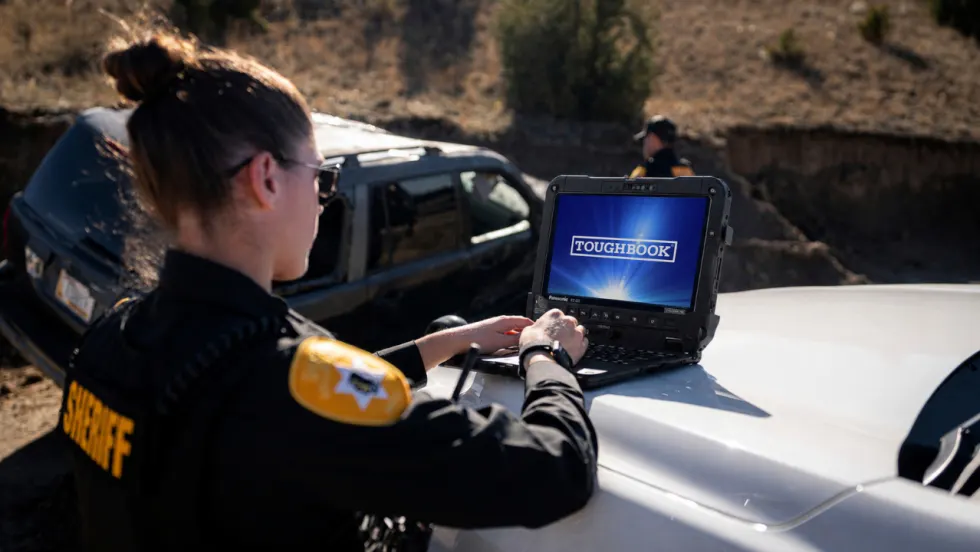
Panasonic Connect Launches the Toughbook 34 and Toughbook G3, Fully Rugged 2-in-1 Mobile Computers
Panasonic Connect has launched the Toughbook 34 and Toughbook G3 to facilitate in-vehicle dispatch, records management, and mobile command operations from any location.
Read More →
A police agency's guide to data-driven fleet management
Costs are rising and the public expects more transparency into how their tax dollars are spent. This e-book shows how police agencies can use fleet data to take control of fleet expenses while improving officer safety and demonstrating fiscal responsibility to the communities they serve.
Read More →
AI and analytics for law enforcement: Turning data into insights
Law enforcement agencies are managing more video, sensor data and digital evidence than ever before. Discover how AI and analytics can help turn that data into actionable insights that strengthen situational awareness, accelerate investigations and support more informed decisions.
Read More →

Vasco Electronics Adds Automatic Language Detection to Vasco Translator Q1
Vasco Electronics’ software update introduces hands-free language switching and expanded offline translation across 45 language pairs, empowering law enforcement, healthcare, and front-office enterprise teams
Read More →
North Miami Police Department Deploys Mark43
The North Miami Police Department has deployed Mark43 as part of its Five-Year Strategic Plan that represents its collective vision and goals for a more proactive police department, anchored by a core commitment to leveraging modern technology to enhance efficiency and public safety.
Read More →
Cellebrite Genesis for Enterprise Now Generally Available
Made available to the public sector in June, Cellebrite Genesis is serving a growing mix of national, regional, and local agencies worldwide, including some of the largest regional and metropolitan police departments. It is now available for enterprise organizations.
Read More →
2026 Vision FirstNet Users Summit to Host Emerging Leaders Training on Grassroots Advocacy for Public Safety
“Emerging Leaders Training: Understanding the Importance of Grassroots Advocacy for Public Safety," a session during the 2026 Vision FirstNet Users Summit, will offer a roadmap for unified advocacy at the federal level.
Read More →
Motorola Solutions Completes Acquisition of D-Fend Solutions
Motorola Solutions has acquired D-Fend Solutions, an industry leader in counter-drone technology. This deal provides public safety and enterprise customers with access to advanced counter-unmanned aerial systems.
Read More →
ZeroEyes, Advantech & Camden Police Partner to Bring AI Gun Detection Technology to Delaware School District
ZeroEyes has partnered with Advantech and the Camden Police Department to deploy ZeroEyes’ AI gun detection and intelligent situational awareness platform at Delaware’s Caesar Rodney School District (CRSD).
Read More →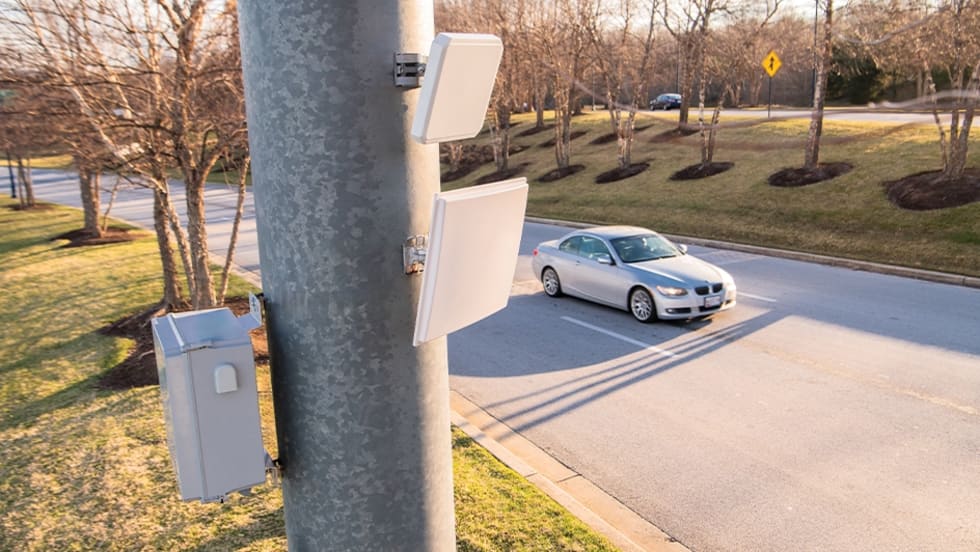
Leonardo U.S. Cyber & Security Solutions Introduces SignalTrace, the Next Evolution in Electronic Signature Detection Technology
SignalTrace reflects years of product refinement and a clearer expression of the technology’s purpose of recognizing and correlating electronic signatures in publicly broadcast wireless signals to reveal patterns, relationships, and trends that might otherwise go undetected.
Read More →