



Learn More: Body Camera Policy and Training
Case Study Details Integration of Body-Worn Cameras with CAD
The Billerica Police Department (Massachusetts) improved transparency and accountability, sharpened evidence management, and reduced manual hours by integrating Axis Communications body-worn cameras with its Computer-Aided Dispatch (CAD) system.
from News/Media Release
May 7, 2026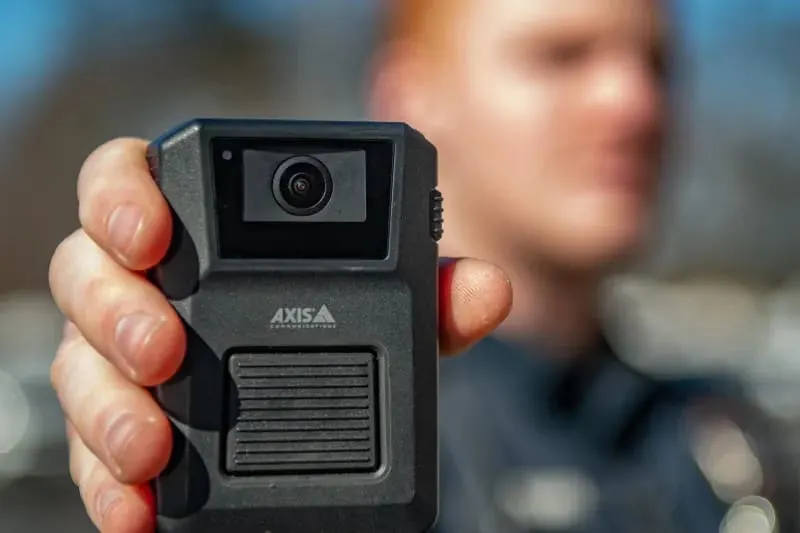
For the Billerica Police Department, implementing a body-worn camera program was not simply about recording interactions. The goal was to reinforce officer safety, improve community confidence, and ensure that reliable body-worn camera evidence could be accessed quickly when needed.
Credit:
Axis
7 min to read
- The Billerica Police Department in Massachusetts enhanced transparency and accountability by integrating Axis body-worn cameras with their CAD system.
- Evidence management was sharpened, allowing for more efficient processing and utilization of collected data.
- The integration helped reduce manual work hours, streamlining operations for the police department.
*Summarized by AI
By integrating Axis Communications' body-worn cameras with a Computer-Aided Dispatch (CAD) system, the Billerica Police Department improved transparency and accountability, sharpened evidence management, and cut hours of manual work.
Community Policing in Billerica
The Billerica Police Department (BPD) serves a community of approximately 42,978 residents in Billerica, Massachusetts, with a department of 66 officers committed to professionalism, accountability, and public trust. As expectations around transparency increased, department leadership recognized that modern policing requires technology that protects both officers and the public while reinforcing confidence in day-to-day interactions.
The department had already deployed network video across municipal buildings and public spaces, creating a strong technological foundation. BPD also uses Axis technology as part of its broader security ecosystem, including access control that links door events with video to verify who enters secured facilities and when. When evaluating a body-worn camera program, BPD leadership sought a solution that would integrate seamlessly with this security environment, reduce administrative burden, support officers in the field, and simplify workflows behind the scenes.
“We’re a 21st-century police department,” Chief Roy Frost said. “For us to adequately practice what we preach, having the body-worn cameras has been critical … having both categorization and the integration with our CAD system has helped what can often be slow and cumbersome. Thanks to the engineers at Axis, our system runs smoothly and efficiently.”
For BPD, implementing a body-worn camera program was not simply about recording interactions. The goal was to reinforce officer safety, improve community confidence, and ensure that reliable body-worn camera evidence could be accessed quickly when needed.
In tense or complex situations, clear documentation can protect both the public and the officer by providing an objective record of events. That same footage can also serve as a valuable training resource, helping officers refine their decision-making, de-escalation, and tactical awareness.
Saving Time for Officers
Department leaders also wanted to reduce the time officers spent managing video. In many agencies, body-worn camera footage must be manually tagged and matched to incident reports, creating additional desk work and increasing the potential for errors. BPD wanted a system that would simplify documentation rather than complicate it, allowing officers to spend more time in the community and less time behind a computer.
Reducing Manual Video Management with CAD
Without integration, video management can become a separate workflow entirely, according to Axis. Officers must categorize footage, supervisors must verify it, and records teams must retrieve it for court evidence discovery. BPD’s objective was clear: body-worn camera footage should seamlessly connect to dispatch data through an automated process that pairs CAD metadata and video after the camera is docked and the video uploaded, eliminating the need for manual intervention.
Rather than requiring officers to hand tag each video with call type, case number, incident details, and retention schedule, the CAD integration handles the association automatically. By removing manual tagging wherever possible, the department is improving accuracy, strengthening the chain of custody, and creating a more consistent documentation process across shifts and personnel.
To build a solution that addressed these needs, BPD worked with Axis partner Cross Camera Controls to design an integrated system connecting body-worn cameras, dispatch, and video management workflows. This automation ultimately enabled:
- Faster evidence retrieval.
- Accurate retention scheduling.
- Reduced administrative workload.
- Improved records processing.
“I'm really happy with the CAD integration,” Frost said, describing it as a game-changer. “That's a big, big step in making it easier for our officers to get their work done and not have to be slowed down by categorization.”
Evidence Clarity with Body-Worn Cameras
Since deployment, body-worn camera footage evidence has provided clarity in situations that might otherwise rely solely on conflicting accounts.
- In one case, responding officers had to later confirm that they properly announced themselves before entering a residence. Video from multiple law enforcement body-worn cameras confirmed that repeated announcements were made and that officers acted professionally, allowing the complaint to be resolved quickly and transparently.
- In another incident involving an attempt to detain an individual, footage documented the exact sequence of events during a tense interaction. After the individual did not comply with officer instructions and was taken into custody, they reported an injury. Upon reviewing clear police officer body-worn camera evidence, it was determined that all law enforcement officers acted in accordance with policy and handled the situation appropriately.
“The cameras were instrumental in showing how the officers put their hands on this person, how they announced themselves, how the whole thing took place,” Frost explained.
Before body-worn cameras, internal reviews at the department relied heavily on written reports and witness accounts. Now, video review will fill in details that simply were not available before, strengthening investigative findings and giving the public a concrete reason to trust the outcome.
Automatic Activation of Recording
To further streamline operations, Cross Camera Controls helped BPD implement in-vehicle activation kits, which trigger police body-worn cameras when emergency lights are engaged.
“When the siren is activated, the device in the vehicle creates a Bluetooth beacon, which then automatically turns the body-worn camera on,” said Thomas Lienhard, president of Cross Camera Controls. “So, the officer doesn't have to be trying to drive, respond to a crisis, and fumble for a button on their chest.”
Supports Pooled Camera Model
This automation ensures that critical moments are captured from the outset, even during high-pressure situations where manual activation could be overlooked. The system also supports a pooled camera model, rather than assigning a single device permanently to each officer.
“The system treats the body-worn camera like any other camera within the video management system, but the controller handles the indexing and user assignment automatically,” Lienhard said. “When the device is returned to the dock, it records the officer, time, slot, shift, and data correctly back to the video management system. That indexing of important footage was impressive for me as an integrator to see work so quickly.”
Officers check out devices at the beginning of each shift using secure credentialing, which ties recordings directly to the assigned user. Each officer signs out the camera by passing their BPD issued credential over a card reader connected to the system. This approach maintains a clear chain of custody while keeping the process simple and predictable. As a result, officers report greater confidence that technology will function reliably when it matters most.
Efficient Video Management
The benefits extend beyond accountability, Axis noted. Body-worn camera footage is automatically categorized and connected to dispatch data, enabling supervisors to retrieve video faster and officers to spend less time organizing files. The department has avoided dedicating full-time staff solely to managing video evidence, meaning resources remain focused on core public safety responsibilities.
By embedding the body-worn camera program into existing workflows, BPD has created a system that supports both operational efficiency and evidentiary integrity. The streamlined approach also reduces duplication of effort between patrol, supervisory, and records teams.
Scalable Solutions for Evolving Needs
The department’s collaboration with Axis extends beyond the use of body-worn cameras. BPD manages video and access control across municipal facilities within a unified environment, creating a supportive foundation for future growth.
“What stood out was how well the components worked together within the same system,” Lienhard said. “That integration allowed us to connect body-worn cameras, controllers, and video management into a single workflow.”
“Now you have an overlay of the event history of access control granted or denied, and then you have an associated video clip from the local camera or cameras that proves who was coming in according to the logs. That's important when it comes to correlating the events.”
As operational needs evolve, the system can expand to include additional analytics and safety technologies without requiring a complete redesign.
“Having a system we can manage locally and integrate with the infrastructure we already have was critical,” Frost said. “It gives us the flexibility to expand as our operational needs evolve.”
During implementation, feedback from officers led to refinements that improved usability, reinforcing the value of a responsive partnership model and demonstrating how collaboration can enhance real-world deployment.
Safer Policing with Body-Worn Cameras
Today, body-worn cameras are part of everyday operations at BPD. Automated activation, integrated dispatch linking, and streamlined evidence workflows support transparency while strengthening officer safety.
The department’s experience demonstrates that a body-worn camera program has the greatest impact when it’s fully integrated into operational systems rather than deployed as a standalone tool. By aligning technology with mission, BPD is reinforcing public trust, improving internal efficiency, and positioning the department for continued innovation.
More Technology

How Motorola Solutions’ New “Insights” Platform Helps Public Safety Agencies Identify Trends to Improve Their Operations
Motorola Solutions has introduced Insights, which leverages Assist, its mission-critical artificial intelligence (AI), to address these challenges and shape what’s next for public safety analytics and reporting technology.
Read More →
What Qualifies a Laptop as Rugged or Fully Rugged?
Police officers face a wide range of working conditions that can damage or even destroy a regular consumer laptop. Learn what qualifies a computer as rugged or fully rugged and why those devices are vital for law enforcement.
Read More →
Panasonic Connect Launches the Toughbook 34 and Toughbook G3, Fully Rugged 2-in-1 Mobile Computers
Panasonic Connect has launched the Toughbook 34 and Toughbook G3 to facilitate in-vehicle dispatch, records management, and mobile command operations from any location.
Read More →

Sponsored•October 1, 2026
A police agency's guide to data-driven fleet management
Costs are rising and the public expects more transparency into how their tax dollars are spent. This e-book shows how police agencies can use fleet data to take control of fleet expenses while improving officer safety and demonstrating fiscal responsibility to the communities they serve.
Read More →
Sponsored•September 10, 2026
AI and analytics for law enforcement: Turning data into insights
Law enforcement agencies are managing more video, sensor data and digital evidence than ever before. Discover how AI and analytics can help turn that data into actionable insights that strengthen situational awareness, accelerate investigations and support more informed decisions.
Read More →
Vasco Electronics Adds Automatic Language Detection to Vasco Translator Q1
Vasco Electronics’ software update introduces hands-free language switching and expanded offline translation across 45 language pairs, empowering law enforcement, healthcare, and front-office enterprise teams
Read More →
North Miami Police Department Deploys Mark43
The North Miami Police Department has deployed Mark43 as part of its Five-Year Strategic Plan that represents its collective vision and goals for a more proactive police department, anchored by a core commitment to leveraging modern technology to enhance efficiency and public safety.
Read More →
Cellebrite Genesis for Enterprise Now Generally Available
Made available to the public sector in June, Cellebrite Genesis is serving a growing mix of national, regional, and local agencies worldwide, including some of the largest regional and metropolitan police departments. It is now available for enterprise organizations.
Read More →
2026 Vision FirstNet Users Summit to Host Emerging Leaders Training on Grassroots Advocacy for Public Safety
“Emerging Leaders Training: Understanding the Importance of Grassroots Advocacy for Public Safety," a session during the 2026 Vision FirstNet Users Summit, will offer a roadmap for unified advocacy at the federal level.
Read More →
Motorola Solutions Completes Acquisition of D-Fend Solutions
Motorola Solutions has acquired D-Fend Solutions, an industry leader in counter-drone technology. This deal provides public safety and enterprise customers with access to advanced counter-unmanned aerial systems.
Read More →