



Panasonic's Toughbook 19, 30 and U1 Laptops Gain MIL-STD-810G Certification
Panasonic Computer Solutions Company today announced its fully rugged line and Toughbook U1 are the first to be certified by an independent third party test lab to meet the newer and more demanding MIL-STD-810G standard for environmental conditions, which was issued in October 2008 and supersedes MIL-STD-810F.

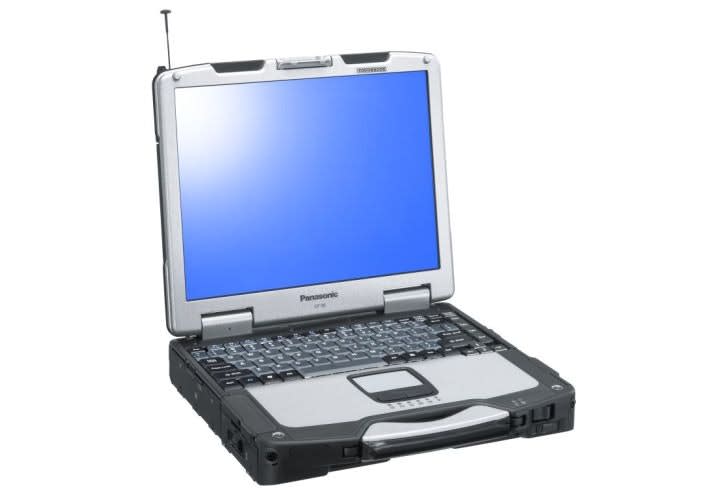
Panasonic Toughbook 30
Panasonic Computer Solutions Company, manufacturer of durable, reliable Panasonic Toughbook mobile computers, today announced its fully rugged line and Toughbook U1 are the first to be certified by an independent third party test lab to meet the newer and more demanding MIL-STD-810G standard for environmental conditions, which was issued in October 2008 and supersedes MIL-STD-810F. The announcement was made at the company's annual meeting of its Toughbook Premier Partners (TP3), an elite group of resellers and solution providers, in Scottsdale, Ariz.
The Toughbook 30 laptop, Toughbook 19 convertible tablet, and Toughbook U1 ultra mobile handheld replacement have passed 20 critical MIL-STD-810G tests applicable to mobile computers, as well as IP65 ingress protection and ASTM D4169-04 vehicle vibration tests. Testing was conducted and certified by an internationally respected third-party laboratory.
MIL-STD-810G and Beyond
Mobile computing environments are often more demanding than what is laid out in military standard testing criteria. Because of this, Panasonic had its Toughbook 19, 30, and U1 tested beyond MIL-STD-810G, based on its 15 years of customer experience managing mobile deployments in extreme conditions. In particular, all of the products were drop tested 26 times at four-, five-, and six-foot levels. While MIL-STD-810G allows up to five samples to be used, Panasonic only used one unit for the Toughbook 19, 30, and U1. Even more noteworthy, the same unit was used for the 26 drops at 4 feet, then the same unit was dropped again 26 times from a height of 5 feet, and then the same exact unit was dropped 26 times from a height of 6 feet. In short, each unit tested survived 78 drops between heights of 4 and 6 feet.
"Most people are not aware that the military itself does not test products but only provides guidelines. As a result, there is actually a lot of flexibility in conducting military standard testing, which has made for an environment in which vendor claims about durability have actually gone untested," saya Kyp Walls, director of product management at Panasonic Computer Solutions Company.
"For example, many companies will use multiple devices to pass the 26 angle military standard drop test method. This level of slack means that some products can be identified as mil-spec, yet not reflect real-world performance needs. This is unacceptable according to Panasonic's-and our mission-critical customers'-standards."
MIL-STD Testing
MIL-STD-810G is a series of testing standards and procedures issued by the United States Army, in order to identify products approved for use by all agencies and organizations within the Department of Defense. While these procedures were initially created specifically for the military, they have since become an important benchmark for numerous public and private sector organizations to verify if products will withstand challenging conditions throughout their service life.
"There's a common misconception that products can receive a blanket 'military standard certification' verifying the device is rugged in all respects," says Walls. "This is not the case. There are numerous tests and each test is broken down into different procedures. Tests can be modified, which is generally used as an excuse by vendors to make them easier to pass. However, Panasonic did not modify any MIL-STD-810G tests to try to water them down or make them easier.
Rather, Panasonic has modified a test to make it more challenging and indicative of something a product could face in the real world. Although these military standard tests are self regulated and do not require third party verification, Panasonic testing is conducted and certified by an internationally respected third party laboratory.
"Companies interested in buying mobile computers that declare some level of military testing need to ask about the specific tests that were conducted, the number of devices required to pass each test, if the tests were modified and who conducted and verified the test results," adds Walls.
Panasonic's reliability (as indicated by extremely low failure rates), is backed by a three-year standard warranty and Toughbook users rely on the company's extensive market knowledge, strong channel partnerships, unmatched customer support, financing, and a host of other options.
IP65 Testing
Panasonic fully rugged mobile computers and the Toughbook U1 ultra-mobile-rugged computer are sealed and can be used in rain, snow, dust, desert storms, and other hostile environments. Other unsealed devices can have internal components exposed to contaminants, which then introduce a point of failure in mission-critical environments.
Ingress Protection Rating testing for the Toughbook 19, 30, U1 was conducted and certified by an internationally respected third-party laboratory adhering to IEC 60529 Sections 13.4, 13.6.2 for IP6x testing (dust), and Sections 14.2.5, 14.3 for IPx5 testing (water). The IP6x testing was conducted in a dust chamber for a total of 8 hours using talcum powder while the units were non-operating. The IPx5 testing was conducted by spraying the unit with pressurized water at the rate of 3.33 gallons per minute, from all practicable directions.
For more information about Panasonic Toughbook mobile computing solutions, visit www.panasonic.com/toughbook.
More Technology
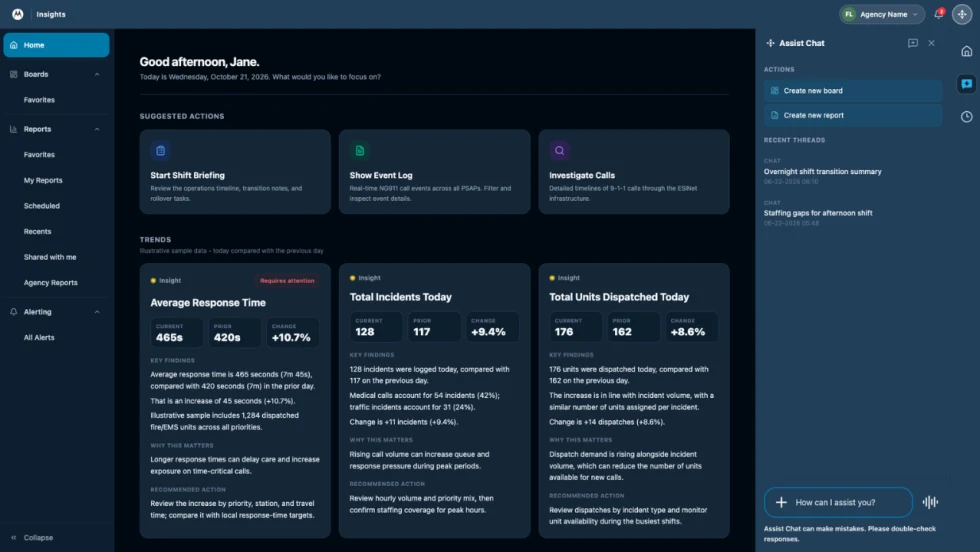
How Motorola Solutions’ New “Insights” Platform Helps Public Safety Agencies Identify Trends to Improve Their Operations
Motorola Solutions has introduced Insights, which leverages Assist, its mission-critical artificial intelligence (AI), to address these challenges and shape what’s next for public safety analytics and reporting technology.
Read More →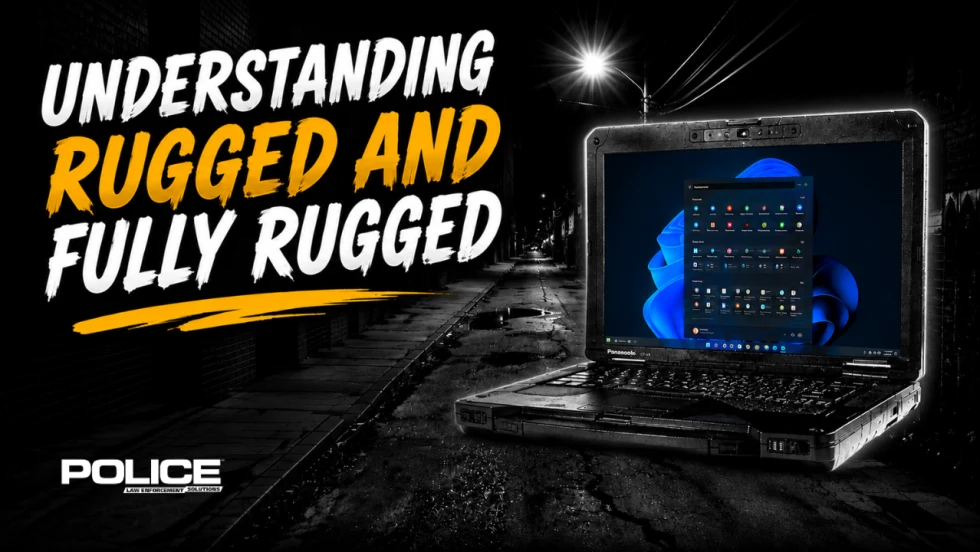
What Qualifies a Laptop as Rugged or Fully Rugged?
Police officers face a wide range of working conditions that can damage or even destroy a regular consumer laptop. Learn what qualifies a computer as rugged or fully rugged and why those devices are vital for law enforcement.
Read More →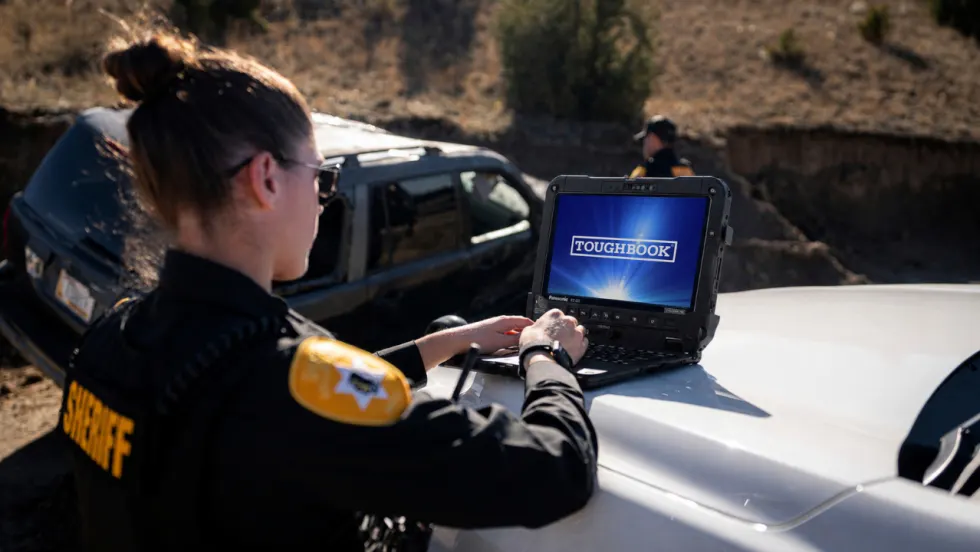
Panasonic Connect Launches the Toughbook 34 and Toughbook G3, Fully Rugged 2-in-1 Mobile Computers
Panasonic Connect has launched the Toughbook 34 and Toughbook G3 to facilitate in-vehicle dispatch, records management, and mobile command operations from any location.
Read More →

A police agency's guide to data-driven fleet management
Costs are rising and the public expects more transparency into how their tax dollars are spent. This e-book shows how police agencies can use fleet data to take control of fleet expenses while improving officer safety and demonstrating fiscal responsibility to the communities they serve.
Read More →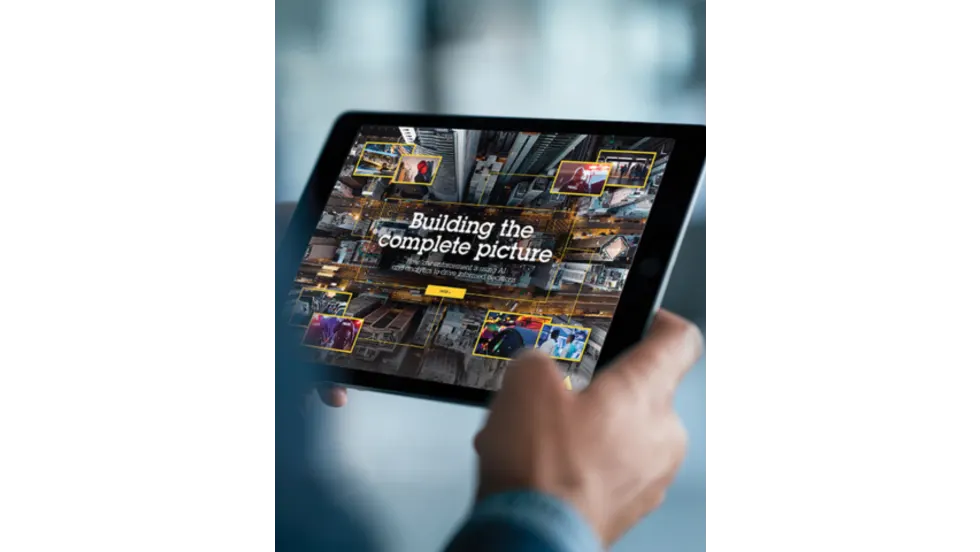
AI and analytics for law enforcement: Turning data into insights
Law enforcement agencies are managing more video, sensor data and digital evidence than ever before. Discover how AI and analytics can help turn that data into actionable insights that strengthen situational awareness, accelerate investigations and support more informed decisions.
Read More →
Vasco Electronics Adds Automatic Language Detection to Vasco Translator Q1
Vasco Electronics’ software update introduces hands-free language switching and expanded offline translation across 45 language pairs, empowering law enforcement, healthcare, and front-office enterprise teams
Read More →
North Miami Police Department Deploys Mark43
The North Miami Police Department has deployed Mark43 as part of its Five-Year Strategic Plan that represents its collective vision and goals for a more proactive police department, anchored by a core commitment to leveraging modern technology to enhance efficiency and public safety.
Read More →
Cellebrite Genesis for Enterprise Now Generally Available
Made available to the public sector in June, Cellebrite Genesis is serving a growing mix of national, regional, and local agencies worldwide, including some of the largest regional and metropolitan police departments. It is now available for enterprise organizations.
Read More →
2026 Vision FirstNet Users Summit to Host Emerging Leaders Training on Grassroots Advocacy for Public Safety
“Emerging Leaders Training: Understanding the Importance of Grassroots Advocacy for Public Safety," a session during the 2026 Vision FirstNet Users Summit, will offer a roadmap for unified advocacy at the federal level.
Read More →
Motorola Solutions Completes Acquisition of D-Fend Solutions
Motorola Solutions has acquired D-Fend Solutions, an industry leader in counter-drone technology. This deal provides public safety and enterprise customers with access to advanced counter-unmanned aerial systems.
Read More →