



DOJ Announces $20 Million Program to Help Agencies Buy Body Cameras
The program includes $17 million in competitive grants for the purchase of body-worn cameras, $2 million for training and technical assistance and $1 million for the development of evaluation tools to study best practices. The pilot program is part of President Obama’s proposal to invest $75 million over three years to purchase 50,000 body-worn cameras for law enforcement agencies.

The Department of Justice Friday announced a $20 million Body-Worn Camera (BWC) Pilot Partnership Program to respond to the immediate needs of local and tribal law enforcement organizations.
The program includes $17 million in competitive grants for the purchase of body-worn cameras, $2 million for training and technical assistance and $1 million for the development of evaluation tools to study best practices. The pilot program is part of President Obama’s proposal to invest $75 million over three years to purchase 50,000 body-worn cameras for law enforcement agencies.
“This body-worn camera pilot program is a vital part of the Justice Department’s comprehensive efforts to equip law enforcement agencies throughout the country with the tools, support, and training they need to tackle the 21st century challenges we face,” said Attorney General Loretta E. Lynch. “Body-worn cameras hold tremendous promise for enhancing transparency, promoting accountability, and advancing public safety for law enforcement officers and the communities they serve.”
Administered by the Bureau of Justice Assistance (BJA) under the Justice Department’s Office of Justice Programs (OJP), the BWC pilot program will provide support to help law enforcement agencies develop, implement and evaluate body-worn camera programs across the United States.
“Body-worn camera technology is a valuable tool for improving police-citizen relationships,” said Director Denise O’Donnell of the Bureau of Justice Assistance. “BJA is committed to helping law enforcement agencies identify the safest and most effective methods for deploying this technology and addressing factors such as privacy, archiving and legal regulations surrounding its use. BJA stands by to guide agencies through what can be a complex process toward more successful adoption of the technology.”
The Justice Department expects to provide 50 awards to law enforcement agencies, with about one-third of the grants directed toward smaller law enforcement agencies. The grants, which require a 50/50 in-kind or cash match, can be used to purchase equipment but applicants must establish a strong plan for implementation of body-worn cameras and a robust training policy before purchasing cameras. The long term costs associated with storing this information will be the financial responsibility of each local agency.
Another $2 million will fund a national BWC Training and Technical Assistance provider through a competitive process, to assist agencies developing and enhancing their BWC programs. This training and technical assistance will provide support to law enforcement agencies to support successful implementation of their body-worn camera programs.
OJP’s Bureau of Justice Statistics (BJS) will receive $1 million of the funds to collect data on body-worn camera usage through surveys of law enforcement agencies. BJS will also design data collection forms that can be used in future surveys of prosecutors and public defenders to measure how body-worn camera footage is being used by the courts in criminal cases.
BJA will launch a BWC Implementation Toolkit in May, designed as an online resource for stakeholders. The toolkit will focus on implementation requirements, retention issues, policy concerns, interests of prosecutors, victim and privacy advocates’ concerns, along with community engagement and funding considerations.
For additional information about the BWC Pilot Implementation Program, visit this website: https://go.usa.gov/3BtMW.
More Technology
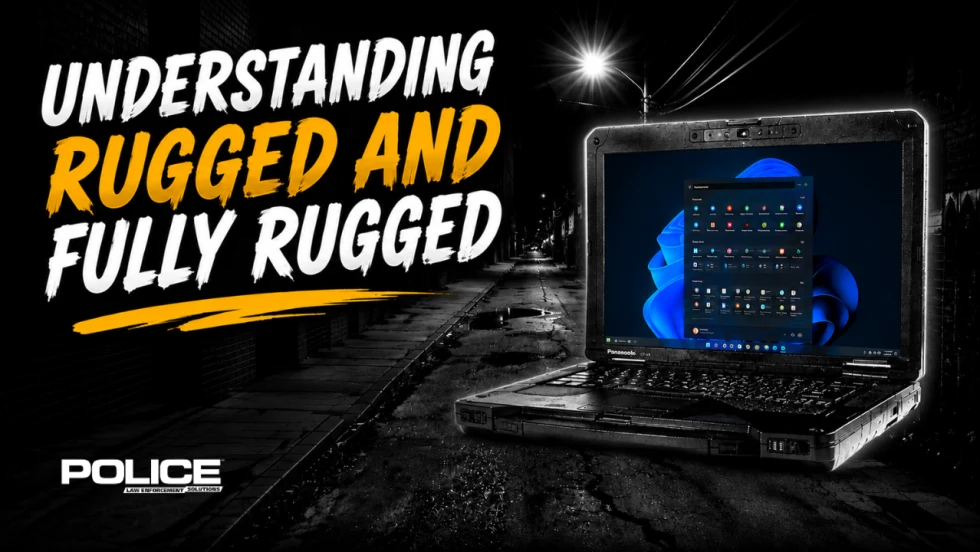
What Qualifies a Laptop as Rugged or Fully Rugged?
Police officers face a wide range of working conditions that can damage or even destroy a regular consumer laptop. Learn what qualifies a computer as rugged or fully rugged and why those devices are vital for law enforcement.
Read More →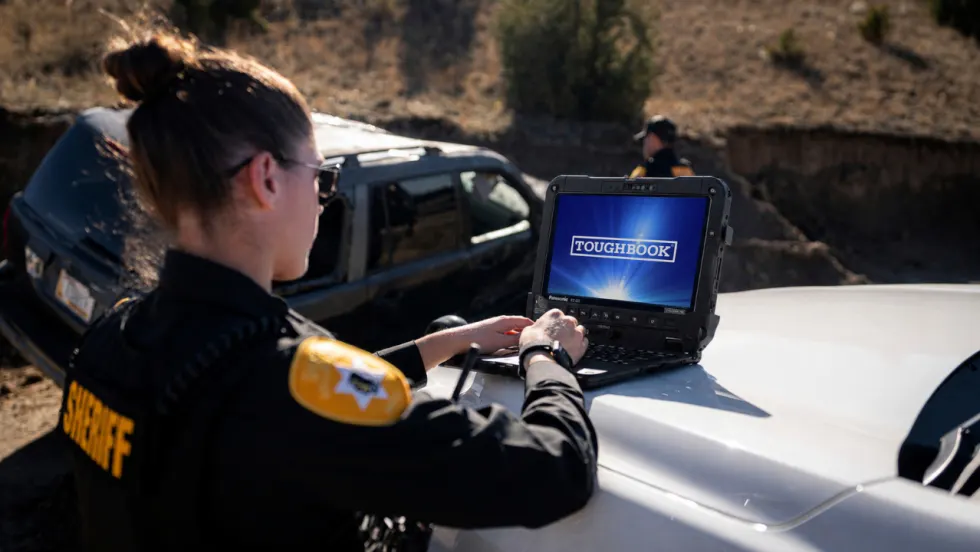
Panasonic Connect Launches the Toughbook 34 and Toughbook G3, Fully Rugged 2-in-1 Mobile Computers
Panasonic Connect has launched the Toughbook 34 and Toughbook G3 to facilitate in-vehicle dispatch, records management, and mobile command operations from any location.
Read More →
A police agency's guide to data-driven fleet management
Costs are rising and the public expects more transparency into how their tax dollars are spent. This e-book shows how police agencies can use fleet data to take control of fleet expenses while improving officer safety and demonstrating fiscal responsibility to the communities they serve.
Read More →

AI and analytics for law enforcement: Turning data into insights
Law enforcement agencies are managing more video, sensor data and digital evidence than ever before. Discover how AI and analytics can help turn that data into actionable insights that strengthen situational awareness, accelerate investigations and support more informed decisions.
Read More →
Vasco Electronics Adds Automatic Language Detection to Vasco Translator Q1
Vasco Electronics’ software update introduces hands-free language switching and expanded offline translation across 45 language pairs, empowering law enforcement, healthcare, and front-office enterprise teams
Read More →
North Miami Police Department Deploys Mark43
The North Miami Police Department has deployed Mark43 as part of its Five-Year Strategic Plan that represents its collective vision and goals for a more proactive police department, anchored by a core commitment to leveraging modern technology to enhance efficiency and public safety.
Read More →
Cellebrite Genesis for Enterprise Now Generally Available
Made available to the public sector in June, Cellebrite Genesis is serving a growing mix of national, regional, and local agencies worldwide, including some of the largest regional and metropolitan police departments. It is now available for enterprise organizations.
Read More →
2026 Vision FirstNet Users Summit to Host Emerging Leaders Training on Grassroots Advocacy for Public Safety
“Emerging Leaders Training: Understanding the Importance of Grassroots Advocacy for Public Safety," a session during the 2026 Vision FirstNet Users Summit, will offer a roadmap for unified advocacy at the federal level.
Read More →
Motorola Solutions Completes Acquisition of D-Fend Solutions
Motorola Solutions has acquired D-Fend Solutions, an industry leader in counter-drone technology. This deal provides public safety and enterprise customers with access to advanced counter-unmanned aerial systems.
Read More →
ZeroEyes, Advantech & Camden Police Partner to Bring AI Gun Detection Technology to Delaware School District
ZeroEyes has partnered with Advantech and the Camden Police Department to deploy ZeroEyes’ AI gun detection and intelligent situational awareness platform at Delaware’s Caesar Rodney School District (CRSD).
Read More →