



Axon Introduces AI-Powered, Automated Police Reporting Tool
Agency trials have resulted in roughly one hour of time saved per day on paperwork, the company says. For every eight officers who use Draft One during their day, that translates to an extra eight-hour shift or more.
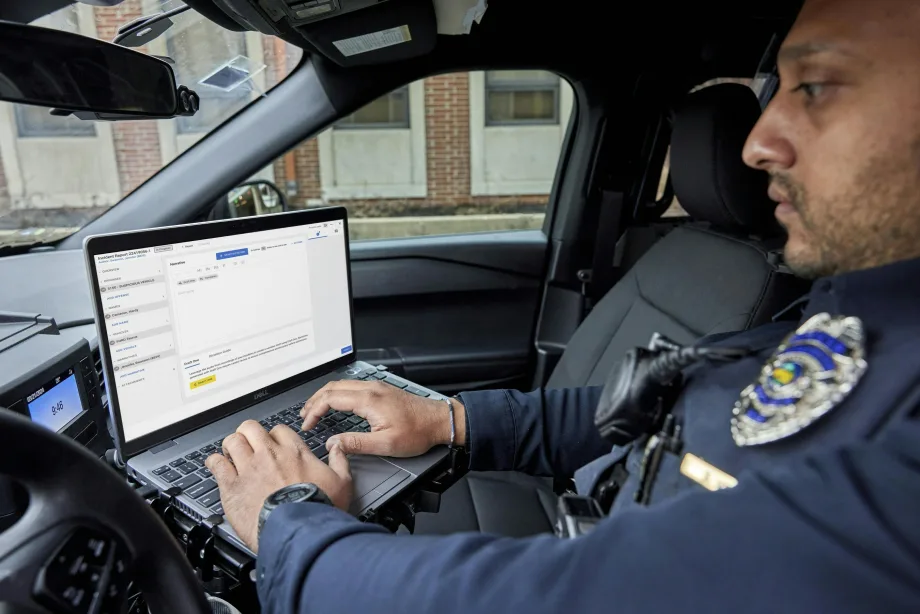
Officer using Draft One. The new Axon tool transcribes audio from the company's current body-worn cameras and uses artificial intelligence to produce a police report.
Axon
Axon has introduced Draft One, a new software product that drafts police report narratives in seconds based on auto-transcribed body-worn camera audio. Draft One leverages generative artificial intelligence (AI) and includes a range of critical safeguards, requiring every report to be reviewed and approved by a human officer before they are submitted.
Axon says Draft One will be a force multiplier for law enforcement agencies. Axon found that every week officers in the U.S. can spend up to 40% of their time — or 15 hours per week — on what is essentially data entry. Additionally, prosecutors and defense attorneys have shared that they welcome the quality improvement of Draft One reports as they can help support and accelerate the judicial process.
"Every single officer in the U.S. writes police reports, often every day and normally multiple times a day," said Axon CEO and founder Rick Smith. "As we've done with Draft One, harnessing the power of AI will prove to be one of the most impactful technological advancements of our time to help scale police work and revolutionize the way public safety operates."
Axon says it developed Draft One to positively impact the trajectory of what officers can achieve, allowing them to reclaim time for more meaningful and impactful work, such as investigations, patrol, training, wellness and rest.
Agency trials have resulted in roughly one hour of time saved per day on paperwork, the company says. For every eight officers who use Draft One during their day, that translates to an extra eight-hour shift or more. When officers can spend more time connecting with the community and taking care of themselves both physically and mentally, they can make better decisions that lead to more successful de-escalated outcomes. Draft One also increases job satisfaction by helping police officers get a quality head-start on a high-volume, time-consuming task.
Draft One accelerates the task of reporting by leveraging AI to create a draft narrative from body camera audio. Audio from Axon Body 3 and 4 camera footage is uploaded over LTE and transcribed automatically, so report drafts are available within five minutes of an incident ending.
"With over 27 years of experience in law enforcement, I have seen technology come and go, but Draft One is one of the most exciting innovations for law enforcement I have ever seen," said Fort Collins Colorado Police Services Sergeant Robert Younger. "Our agency has been testing Draft One, and we have seen an 82% decrease in time spent writing reports. Testing officers have also shared that the quality of their reports has improved substantially, with Draft One, including statements and actions that could have easily been overlooked or missed if done manually. Draft One has exceeded our expectations and will be a huge asset to our agency."
Axon conducted a double-blind study to compare the quality between report narratives written with Draft One and those without. Results showed that Draft One performed equal to or better than officer-only report narratives across five dimensions, including completeness, neutrality, objectivity, terminology and coherence. Learn more about the study, which was conducted with 24 independent experts, including district attorneys, field operations command staff and inclusion scholars.
Axon says Draft One includes a range of strict safeguards and requires that humans make the decisions in key moments:
Officer required to review and sign-off: Once the report narrative has been edited and key information has been added, officers are required to sign-off on the report's accuracy before submitting for the next round of human review.
Adheres to the audio data: Report narratives are drafted strictly from the audio transcript from the body-worn camera recording. Axon calibrated the underlying model for Draft One to prevent speculation or embellishments.
Controls to ensure proofreading: Each draft includes placeholders that officers are required to edit, by either adding more information or removing the placeholder.
Report drafts are restricted to minor incidents and charges: The default experience limits report drafts to minor incident types and charge levels, specifically excluding incidents where arrests took place and for felonies. With this default, agencies can get started with Draft One and gain tremendous value in expediting report writing for the overwhelming majority of reports officers submit. This allows agencies the option to gain experience on low severity reports first, then expand to more severe reports once they gain experience in how to use the tool effectively. Agencies can set a policy determining which reports are eligible for Draft One utilization, and the tool then ensures enforcement of the agency policy.
Axon rigorously tests AI-enabled products to measure inherent bias in the models before they are released. Axon also actively seeks external feedback from its Ethics and Equity Advisory Council (EEAC) and others during product development, as it has with Draft One. Input from Axon's EEAC resulted in purposeful additions to Draft One's development process and resulting product, including conducting the double-blind study to measure quality and to test for bias risks.
"Rigorous testing is essential for ensuring accuracy and ethical integrity in new technologies. I commend Axon for their proactive approach in appropriately addressing the inherent challenges that may come with large language models," said Axon Ethics and Equity Advisory Council member Broderick Turner, Ph.D. "Axon's dedication to refining language tone to mitigate biases, while leveraging technology for good is crucial for fostering an equitable society. I'm inspired to continue partnering with them to promote continuous improvement and innovation in public safety and believe their commitment to mitigate unintended consequences through bias testing and appropriate safeguards is the key to innovating responsibly."
Draft One is available today in the U.S. as part of the Axon ecosystem and works for Axon body-worn camera and Axon Evidence customers, with even easier and more seamless insertion into Axon Records incident reports. For agencies not yet using Axon Records, the generated reports can be easily inserted into their current RMS. Data is always secured within the Axon network, where transcripts and reports maintain agency security controls. Axon unveiled this latest technology innovation at its leading public safety technology and training conference, Axon Week. To learn more about the news announced at Axon Week, see Axon's blog.
More Technology

A police agency's guide to data-driven fleet management
Costs are rising and the public expects more transparency into how their tax dollars are spent. This e-book shows how police agencies can use fleet data to take control of fleet expenses while improving officer safety and demonstrating fiscal responsibility to the communities they serve.
Read More →
AI and analytics for law enforcement: Turning data into insights
Law enforcement agencies are managing more video, sensor data and digital evidence than ever before. Discover how AI and analytics can help turn that data into actionable insights that strengthen situational awareness, accelerate investigations and support more informed decisions.
Read More →
Vasco Electronics Adds Automatic Language Detection to Vasco Translator Q1
Vasco Electronics’ software update introduces hands-free language switching and expanded offline translation across 45 language pairs, empowering law enforcement, healthcare, and front-office enterprise teams
Read More →
North Miami Police Department Deploys Mark43
The North Miami Police Department has deployed Mark43 as part of its Five-Year Strategic Plan that represents its collective vision and goals for a more proactive police department, anchored by a core commitment to leveraging modern technology to enhance efficiency and public safety.
Read More →
Cellebrite Genesis for Enterprise Now Generally Available
Made available to the public sector in June, Cellebrite Genesis is serving a growing mix of national, regional, and local agencies worldwide, including some of the largest regional and metropolitan police departments. It is now available for enterprise organizations.
Read More →
2026 Vision FirstNet Users Summit to Host Emerging Leaders Training on Grassroots Advocacy for Public Safety
“Emerging Leaders Training: Understanding the Importance of Grassroots Advocacy for Public Safety," a session during the 2026 Vision FirstNet Users Summit, will offer a roadmap for unified advocacy at the federal level.
Read More →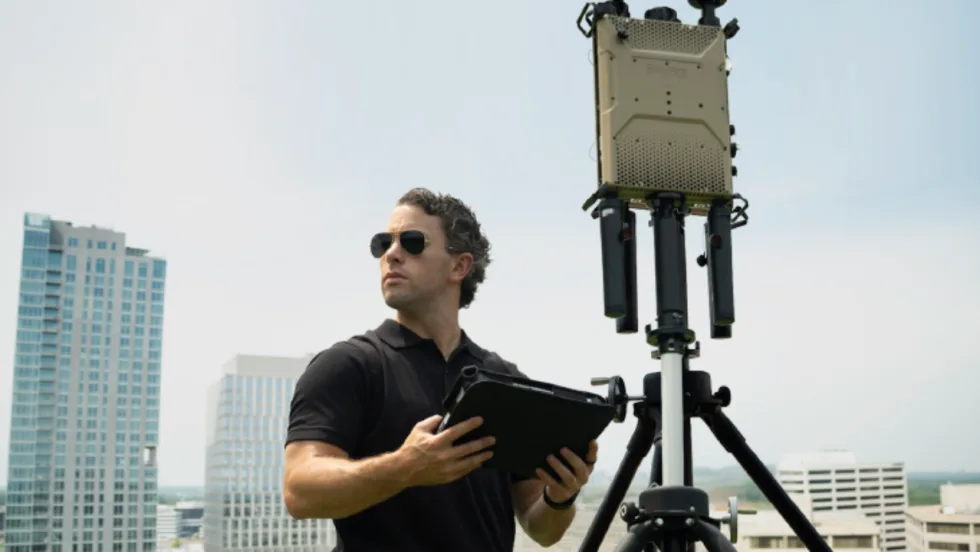
Motorola Solutions Completes Acquisition of D-Fend Solutions
Motorola Solutions has acquired D-Fend Solutions, an industry leader in counter-drone technology. This deal provides public safety and enterprise customers with access to advanced counter-unmanned aerial systems.
Read More →
ZeroEyes, Advantech & Camden Police Partner to Bring AI Gun Detection Technology to Delaware School District
ZeroEyes has partnered with Advantech and the Camden Police Department to deploy ZeroEyes’ AI gun detection and intelligent situational awareness platform at Delaware’s Caesar Rodney School District (CRSD).
Read More →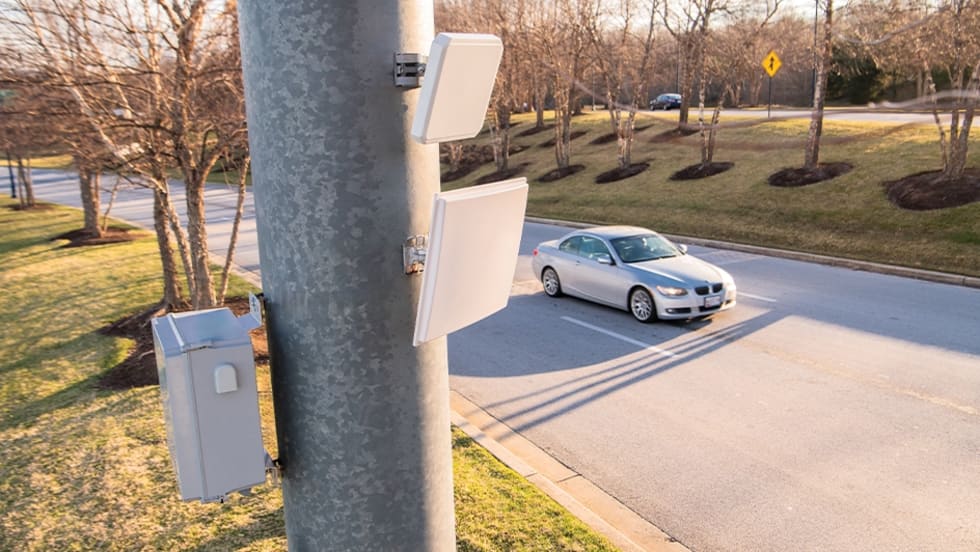
Leonardo U.S. Cyber & Security Solutions Introduces SignalTrace, the Next Evolution in Electronic Signature Detection Technology
SignalTrace reflects years of product refinement and a clearer expression of the technology’s purpose of recognizing and correlating electronic signatures in publicly broadcast wireless signals to reveal patterns, relationships, and trends that might otherwise go undetected.
Read More →
Pimloc Launches Secure File Sharing to Streamline Release of Redacted Video
Pimloc’s Secure File Sharing lets organizations deliver redacted video, audio, and documents through expiring, passcode-protected links, accelerating delivery while reducing security, compliance, and chain-of-custody risks.
Read More →