



Trax from Zetx: Visual Analysis
Have you ever had to sift through spreadsheets of data looking for that needle in a haystack that will help solve your case? Trax software from Zetx recognizes cell phone data in any format from any provider and uses it to map the cell towers, create visuals of call information, highlight callers' habits, and even autofill search warrants. And it's simple enough that any officer can use it.

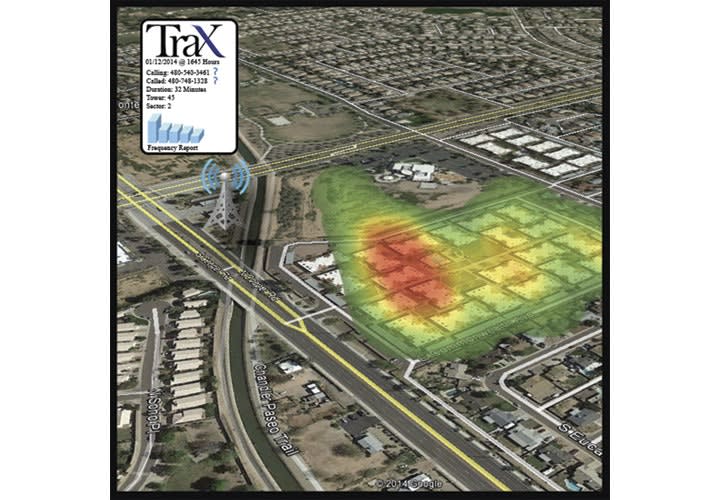
Photo: Zetx
Have you ever had to sift through spreadsheets of data looking for that needle in a haystack that will help solve your case? Trax software from Zetx recognizes cell phone data in any format from any provider and uses it to map the cell towers, create visuals of call information, highlight callers' habits, and even autofill search warrants. And it's simple enough that any officer can use it.
Sy Ray is now the president of Zetx, but he started as a police officer with the Gilbert (Ariz.) Police Department who wanted an easier way to use phone record data in investigations. Through trial and error, he discovered patterns in the data and techniques that worked for him to find useful information, but it was all done manually.
"I figured there must be a way to automate that system so that it visualizes cellular records," says Ray. Determined, he taught himself programming so he could develop Trax.
Because he and his colleagues at Zetx have experience building cases with cell phone data, they understand what tools are most helpful to officers. One major component that makes Trax so useful is that it provides a visual of all of the call information from each tower.
Say a subject travels from Phoenix to Salt Lake City and makes 14 phone calls along the way. "Once you get those records, you pop it in the program and in about 30 seconds it kicks out a KML file, which loads into Google Earth and shows all the towers between Salt Lake and Phoenix that were used, in chronological order," explains Ray. "And it will actually animate the process, taking you on a flying visual tour from tower to tower. And each time it displays a tower it will actually display the call information: who called, how long the call was, etc."
Not content to stop there, Ray developed Trax to communicate not just which tower was used and from which side of the tower the call came, but to calculate how far away from each tower a call might have been made. This can help pinpoint the location of a call, which is often key to solving cases. In a densely populated area, one cell phone might use different cellular towers at different times. Trax uses an algorithm that looks at each tower in conjunction with each neighboring tower to determine the estimated coverage area and displays an overlay on the visual map.
Zetx has also developed a way to create an easily understood visual of callers' habits to pinpoint their location over time and on key dates. "We'll have heat maps that will figure out where people spend most of their time [based on where they're making calls from]," Ray says. "And for specific events like a homicide or robbery, the actual cell tower data can show where the events happened."
Another key component of Trax is how easily investigators can share their reports with everyone who might need to view the data during the course of a court case, without worrying about licensing issues or program compatibility.
"Anybody who has the free version of Google Earth can view the final product," Ray says. "You can burn it to disks for everybody." That means you can send Trax reports to the prosecutor and the defense attorney for discovery. These reports are saved as Google Earth-supported KML files, which are designed to hold large amounts of data in a very compressed file. This makes sending a file as an e-mail attachment simple.
Now Zetx is gearing up to roll out phase 2 of Trax, which will include an app to allow officers to receive real-time notification of a subject's location via GPS. This information can be sent to the phone of any other officer on duty via a dropdown menu to help find a suspect. But this geolocation tool can be used to locate officers as well. "It puts GPS on every officer in the department who has his or her phone on, so it’s a big officer safety tool," says Ray.
For now, Zetx offers visual automated phone data analysis that every member of an agency can use on any device with an Internet connection. "We're trying to package Trax so it's affordable for smaller agencies of around 50 officers or less," says Ray. "It essentially gives those who don't have big resources expert cell phone record analysis abilities on a web-based program."
More Technology
A police agency's guide to data-driven fleet management
Costs are rising and the public expects more transparency into how their tax dollars are spent. This e-book shows how police agencies can use fleet data to take control of fleet expenses while improving officer safety and demonstrating fiscal responsibility to the communities they serve.
Read More →
AI and analytics for law enforcement: Turning data into insights
Law enforcement agencies are managing more video, sensor data and digital evidence than ever before. Discover how AI and analytics can help turn that data into actionable insights that strengthen situational awareness, accelerate investigations and support more informed decisions.
Read More →
Vasco Electronics Adds Automatic Language Detection to Vasco Translator Q1
Vasco Electronics’ software update introduces hands-free language switching and expanded offline translation across 45 language pairs, empowering law enforcement, healthcare, and front-office enterprise teams
Read More →
North Miami Police Department Deploys Mark43
The North Miami Police Department has deployed Mark43 as part of its Five-Year Strategic Plan that represents its collective vision and goals for a more proactive police department, anchored by a core commitment to leveraging modern technology to enhance efficiency and public safety.
Read More →
Cellebrite Genesis for Enterprise Now Generally Available
Made available to the public sector in June, Cellebrite Genesis is serving a growing mix of national, regional, and local agencies worldwide, including some of the largest regional and metropolitan police departments. It is now available for enterprise organizations.
Read More →
2026 Vision FirstNet Users Summit to Host Emerging Leaders Training on Grassroots Advocacy for Public Safety
“Emerging Leaders Training: Understanding the Importance of Grassroots Advocacy for Public Safety," a session during the 2026 Vision FirstNet Users Summit, will offer a roadmap for unified advocacy at the federal level.
Read More →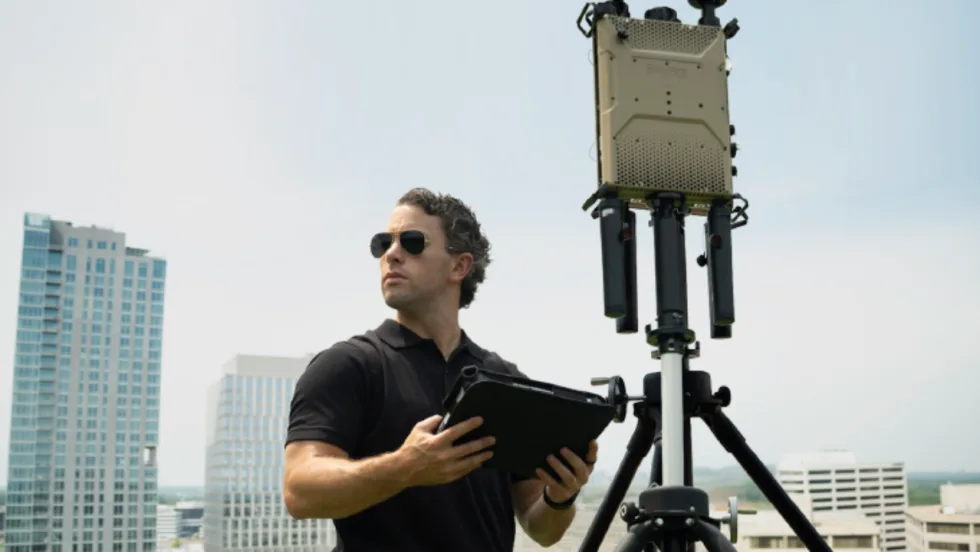
Motorola Solutions Completes Acquisition of D-Fend Solutions
Motorola Solutions has acquired D-Fend Solutions, an industry leader in counter-drone technology. This deal provides public safety and enterprise customers with access to advanced counter-unmanned aerial systems.
Read More →
ZeroEyes, Advantech & Camden Police Partner to Bring AI Gun Detection Technology to Delaware School District
ZeroEyes has partnered with Advantech and the Camden Police Department to deploy ZeroEyes’ AI gun detection and intelligent situational awareness platform at Delaware’s Caesar Rodney School District (CRSD).
Read More →
Leonardo U.S. Cyber & Security Solutions Introduces SignalTrace, the Next Evolution in Electronic Signature Detection Technology
SignalTrace reflects years of product refinement and a clearer expression of the technology’s purpose of recognizing and correlating electronic signatures in publicly broadcast wireless signals to reveal patterns, relationships, and trends that might otherwise go undetected.
Read More →
Pimloc Launches Secure File Sharing to Streamline Release of Redacted Video
Pimloc’s Secure File Sharing lets organizations deliver redacted video, audio, and documents through expiring, passcode-protected links, accelerating delivery while reducing security, compliance, and chain-of-custody risks.
Read More →