



Trancite Logic Systems Easy Street Draw 3.0 and ScenePD 2.0
Whether you're drawing a complex collision scene, documenting an elaborate crime scene, or just need to draw a straightforward two-car crash, you can probably do it easier, faster, and better with Trancite Logic System's Easy Street Draw 3.0 or its more sophisticated sister product ScenePD 2.0.

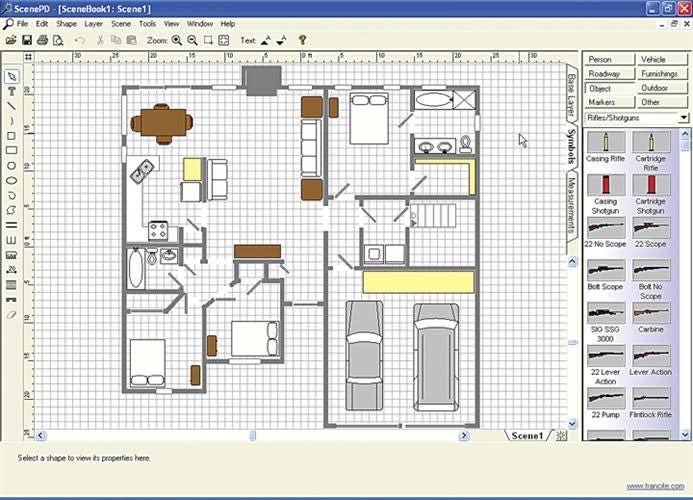
Whether you're drawing a complex collision scene, documenting an elaborate crime scene, or just need to draw a straightforward two-car crash, you can probably do it easier, faster, and better with Trancite Logic System's Easy Street Draw 3.0 or its more sophisticated sister product ScenePD 2.0.
Following dictates to "make it simple to learn" and "easy on storage," Trancite created Easy Street Draw software for Idaho's State Police. The company's concept was simple: start the drawing with general templates of roadways, let the users modify them to fit their specific scene needs, then allow the users to drag and drop in all the symbols necessary to complete it. The result is a professional diagram that's easily worth a thousand or more written words.
From its beginnings several years ago, Boise-based Trancite has always sought out feedback on its products from its customers. The result is enhanced products with substantial law enforcement pedigrees that have features and functionality designed to meet the demands of end users.
But why take my word for it? Trancite will let you to take its software out for a free 30-day test drive. You can find links for downloading both Easy Street Draw 3.0 and ScenePD 2.0 at www.trancite.com.
Once you have these tools installed on your Windows PC (sorry, Mac users), open up ScenePD 2.0. When the software has launched, you'll be asked to select a "new scene" from a host of drawing templates displayed in a tabbed dialog box.
Trancite provides a wide array of templates for you to choose from. You can choose from streets, structures, domestic violence, and samples. In addition, you can immediately begin creating, sharing, and saving your own template. So let the traffic engineers do their worst. Even the wildest roadway designs can be quickly documented in this software, and you can store your creations as templates, saving hundreds of redrawing hours.
Creating road diagrams in ScenePD 2.0 couldn't be simpler; just drag and drop and adjust the basic properties of the object such as length. Now let's say you need to add an intersection to that stretch of roadway and it's going to be one of those odd oblique angles. No problem. Just drag out another section of roadway from the "streets toolset," rotate it to the angle you want, and drop it on the existing roadway section.
Now watch as the magic begins and the software does its stuff right there before your eyes, automatically creating an intersection with radius curves to each of the curb lines. If it doesn't look quite right, just grab one of the object's handles, rotate a bit more, and the software updates all the angles automatically. Now that's sweet and a huge time saver, too.
In my test scenario, I created a scene that was 120 feet long. I was then able to quickly adjust the diagram by turning on the alignment grid and resizing my drawing to scale with ScenePD's built-in scaling feature. It's that simple.
Once the basics are done, you're ready for the next step with ScenePD's Object Property Bar, which is handily located at the bottom of the work space. When you select an object in the base layer, such as a roadway, you can name it, tell it the number of lanes, types of dividers, their spacing and separation, and even the width of the painted stripes. Then from the toolset you can add roadway shoulders and lane markers. From there you can use the built-in standard drawing tools and add dimensioning or any other unusual objects or features.
Now you're ready for the next layer of your drawing. On the "symbols" layer you can begin to add more than 150 symbols in Easy Street Draw and dramatically more in ScenePD. The obvious reason for this is that ScenePD can also be used for crime scene documentation while Easy Street Draw is limited to accident scene drawings.
In ScenePD 2.0, Trancite has added "intelligent" structures, allowing you to place walls, windows, doorways, and furnishings by dragging them into position. With these smart tools, it's easy to create complex crime scene or road scene drawings. For example, after I created a multi-lane roadway I needed to populate it with "symbols." I dragged and dropped a car symbol and placed it in the lane, and the software automatically placed the car and faced it in the proper direction. No unnecessary effort was required to correct the car's rotation, and the same applies to roadway signs and directional arrows.
As for drawing structures, it's never been so easy as it is in ScenePD 2.0. Just start with the basic shape of the building, typically a box, and start dragging and dropping in the walls, doors, and windows. Next, add the fixtures and furniture and before you know it the entire scene is laid out. This of course provides endless possibilities for tactical planning, site surveys, courtroom presentations, and other tasks.
Easy Street Draw and ScenePD are very easy to use, but you still may need to refer to the manual. Each tool comes with an electronic version of its User Guide in Adobe's Portable Document Format (PDF). The guides are easy to read and full of graphics to help tutor you through the shallow learning curve. And this works fine, but personally I would have preferred to see some animated files, as there are many different ways to learn and sometimes it's more effective to show a user how to complete a task via animation rather than forcing him or her to drill down through some help indices.
During my evaluation, I also learned that Trancite does not have a 3D modeling tool for ScenePD at this time. Hopefully they'll consider adding this feature to future enhancements of the product.
Even with these minor shortcomings, Easy Street Draw and its big sister ScenePD are two great police tools. They are easy to learn, use tiny amounts of storage space, and provide professional results that I'd be proud to display in any courtroom.
Bob Davis supervises the San Diego Police Department's computer lab. He spent eight of his 26 years on the force as an accident investigator and collision re-constructionist.
More Technology

A police agency's guide to data-driven fleet management
Costs are rising and the public expects more transparency into how their tax dollars are spent. This e-book shows how police agencies can use fleet data to take control of fleet expenses while improving officer safety and demonstrating fiscal responsibility to the communities they serve.
Read More →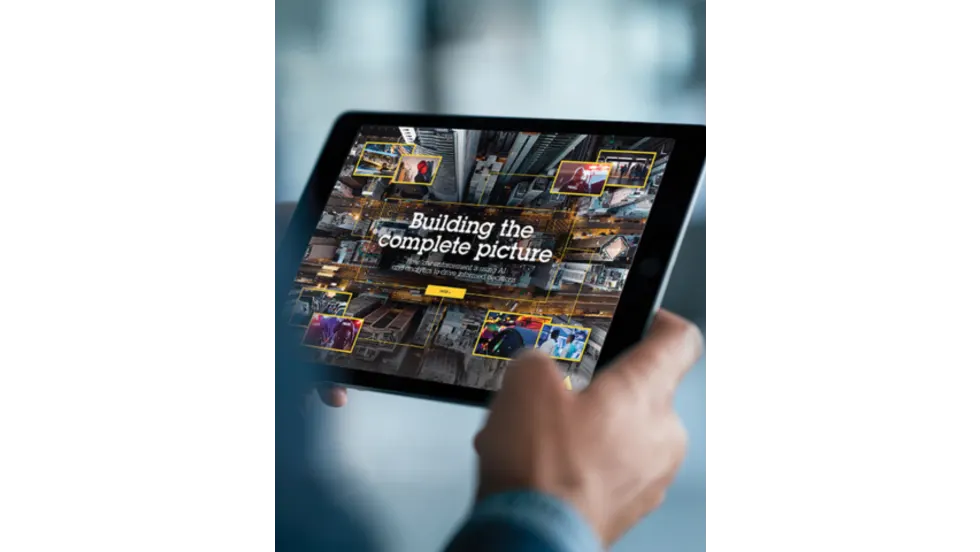
AI and analytics for law enforcement: Turning data into insights
Law enforcement agencies are managing more video, sensor data and digital evidence than ever before. Discover how AI and analytics can help turn that data into actionable insights that strengthen situational awareness, accelerate investigations and support more informed decisions.
Read More →
Vasco Electronics Adds Automatic Language Detection to Vasco Translator Q1
Vasco Electronics’ software update introduces hands-free language switching and expanded offline translation across 45 language pairs, empowering law enforcement, healthcare, and front-office enterprise teams
Read More →

North Miami Police Department Deploys Mark43
The North Miami Police Department has deployed Mark43 as part of its Five-Year Strategic Plan that represents its collective vision and goals for a more proactive police department, anchored by a core commitment to leveraging modern technology to enhance efficiency and public safety.
Read More →
Cellebrite Genesis for Enterprise Now Generally Available
Made available to the public sector in June, Cellebrite Genesis is serving a growing mix of national, regional, and local agencies worldwide, including some of the largest regional and metropolitan police departments. It is now available for enterprise organizations.
Read More →
2026 Vision FirstNet Users Summit to Host Emerging Leaders Training on Grassroots Advocacy for Public Safety
“Emerging Leaders Training: Understanding the Importance of Grassroots Advocacy for Public Safety," a session during the 2026 Vision FirstNet Users Summit, will offer a roadmap for unified advocacy at the federal level.
Read More →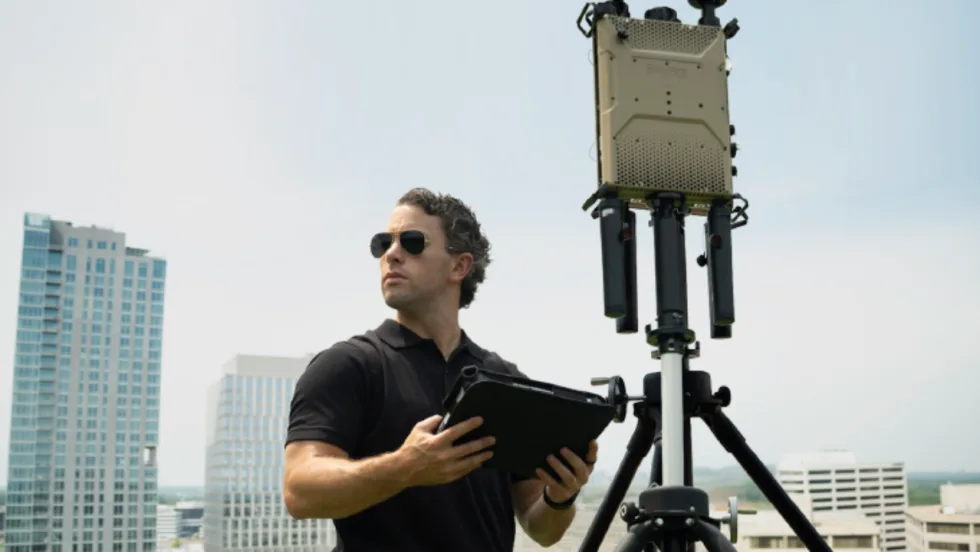
Motorola Solutions Completes Acquisition of D-Fend Solutions
Motorola Solutions has acquired D-Fend Solutions, an industry leader in counter-drone technology. This deal provides public safety and enterprise customers with access to advanced counter-unmanned aerial systems.
Read More →
ZeroEyes, Advantech & Camden Police Partner to Bring AI Gun Detection Technology to Delaware School District
ZeroEyes has partnered with Advantech and the Camden Police Department to deploy ZeroEyes’ AI gun detection and intelligent situational awareness platform at Delaware’s Caesar Rodney School District (CRSD).
Read More →
Leonardo U.S. Cyber & Security Solutions Introduces SignalTrace, the Next Evolution in Electronic Signature Detection Technology
SignalTrace reflects years of product refinement and a clearer expression of the technology’s purpose of recognizing and correlating electronic signatures in publicly broadcast wireless signals to reveal patterns, relationships, and trends that might otherwise go undetected.
Read More →
Pimloc Launches Secure File Sharing to Streamline Release of Redacted Video
Pimloc’s Secure File Sharing lets organizations deliver redacted video, audio, and documents through expiring, passcode-protected links, accelerating delivery while reducing security, compliance, and chain-of-custody risks.
Read More →