



More Than a Body Cam
Departments choosing a body camera must determine what system best fits their needs and their budgets. One of the contenders in the police body camera market is Utility.

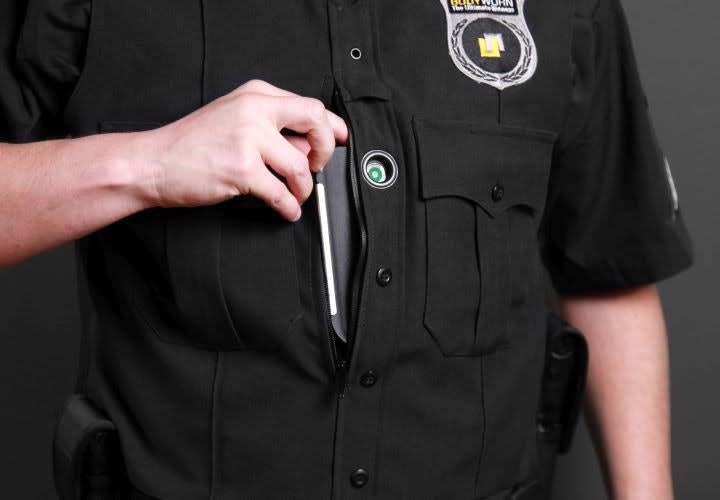
Photo: Utility
Body-worn cameras have been in the headlines of the mainstream media since August as agencies publicly search for a better way to document use-of-force incidents and prevent hearsay testimony from determining how the public feels about an incident, as happened in Ferguson, Mo.
Body cams are seen by many agencies as a technology that can support an officer's version of events, provide the public with visual evidence of the event, and minimize anti-police feelings and expensive lawsuits.
All of this publicity about the benefits of officer-worn video has not been ignored by companies that are looking to offer the most effective solutions and are hoping to become the industry standard product. But as with any new technology, the market has responded with so many different products that law enforcement agencies have numerous options and not every system is right for every agency.
Departments choosing a body camera must determine what system best fits their needs and their budgets. And they need to concern themselves with issues like how easy the cameras are to operate in the field and how to store the evidence once it is captured. They also have to find a system that fits their policy needs. Body-worn cameras range from an always-on solution that records up to eight hours of an officer's shift continually to systems that require activation by the officer each time he or she believes there is need to turn them on.
One of the contenders in the police body camera market is Utility. The Georgia-based company started out as a software developer, offering solutions such as GPS location software. Utility's original product line focused on tracking the mileage covered by utility company vehicles, the locations of the nearest unit to a needed response, and providing maintenance information on the vehicles such as idle time and maintenance requirements. But for the last 10 years, the company has been making mobile communications systems for public safety vehicles, and its new BodyWorn body camera grew out of that product line.
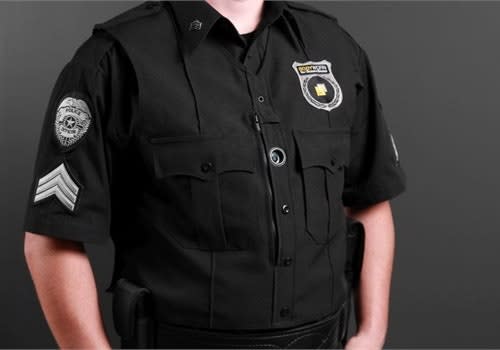
Cellphone Inside
When thinking of body cameras, most officers envision a purpose-built unit that has an on/off button, maybe a Wi-Fi function to upload footage, and a record/stop function. The BodyWorn system from Utility is more feature-rich than some of its competitors.
Most body cameras act as "dumb" devices, providing only the ability to record the actions of an officer. The difference in the Utility BodyWorn system is that it is based on technology we all use daily, the cellphone. Inside the BodyWorn's custom-designed rugged casing is a waterproof MotoX phone. Of course the Utility device no longer resembles a MotoX, but it can still send and receive calls as a programmed option.
The Utility BodyWorn, when coupled with the company's in-car hub solution, can conduct calls over Wi-Fi. The Utility in-car hub turns the immediate area around the vehicle into a secure Wi-Fi hotspot. This functionality can be used by officers to make calls or to offload footage recorded by the BodyWorn camera.
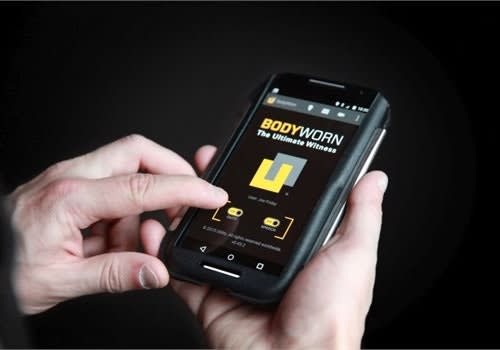
The BodyWorn camera also works as a smart device, allowing direct message communication ability. Because it has access to cellular technology and the BodyWorn has built-in equipment such as accelerometers, microphones, speakers, proximity sensors, and GPS, it not only records and transmits content like some other devices, it also allows external activation such as a remotely triggered recording from a dispatch center in the event of critical incidents.
After the Boston Marathon Bombings, cellphone technology proved invaluable in the identification of the suspects. The cellphone technology in Utility's BodyWorn gives agencies the ability to turn every single officer at the scene of a critical incident into a set of unblinking eyes that will record every face the officer sees in the general vicinity of the situation.
Triggers
Technology within the BodyWorn allows the camera to automatically activate based on policies set by the agency. Triggers can be set through internal devices to activate a recording in the event a vehicle exceeds 75 miles per hour or an officer exits a vehicle and starts running after a suspect. This removes the need for any officer action to record content.
Other policy-based activations can commence recording from events such as a gun discharge or officer voice commands. Utility's programming also allows the BodyWorn to read "geo fence" boundaries that activate a recording when an officer enters any area programmed into the device's memory such as a high-crime location or any area mapped within Utility's companion program.
One of the more interesting features of the BodyWorn system is that the camera can be programmed to trigger when it encounters content that fits certain criteria. Through proprietary recognition coding, the camera will activate automatically when it detects, for example, an interaction with a person. I watched a demonstration of this functionality and saw the camera disregard inanimate objects, but detect the movement of a person, based on many characteristics unique to a human and begin recording automatically.
It's important to note that even though the BodyWorn offers numerous automatic activation features, it can also be activated manually by the wearer. All he or she has to do to start a recording is to tap the device twice.
Video from the BodyWorn is uploaded securely to a cloud server. It can even be transferred immediately from the field over Wi-Fi or 3G connectivity, if it's deemed critical.
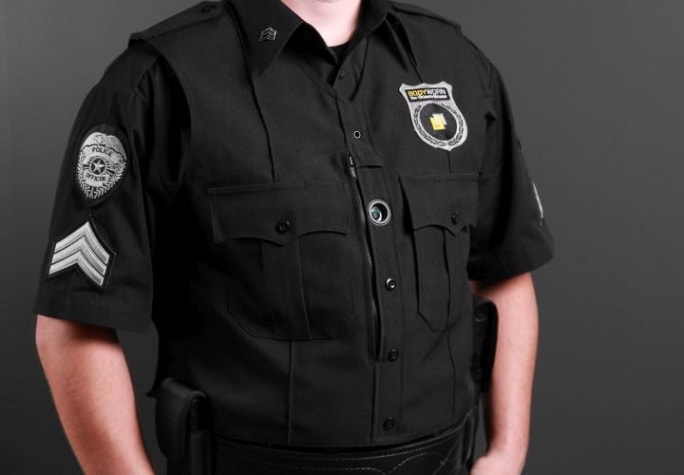
Photo: Utility
One of the great differences between the BodyWorn and many other body cams is its display. The back of the unit, which on a regular smartphone is the touch screen, becomes a communications portal to directly push central dispatch information such as BOLOs directly to the wearing officer. It's not hard to imagine the benefits technology such as this can offer law enforcement users. It can be used to send relevant information, including pictures of wanted suspects and missing children, or missing elderly in the event of Amber or Silver Alerts.
Administrative Features
Utility's proprietary software offers a special security feature that may be attractive to law enforcement administrators concerned about unauthorized sharing of videos. The software watermarks the securely transmitted footage with each user's login information each time that a file is cut to a DVD or digital file for outside viewing. This prevents the anonymous upload of video files to social media or community video upload sites such as YouTube.
Another aspect of the Utility BodyWorn that administrators are likely to appreciate is its compressed file format. The footage is compressed using proprietary algorithms to keep data storage down and only recording what is needed. This minimizes an agency's need for server or cloud storage space and saves money.
Ryan Mason is a former police officer who spent his time in law enforcement serving in the Midwest. He now lives in Atlanta and works as a freelance journalist and photographer.
More Technology
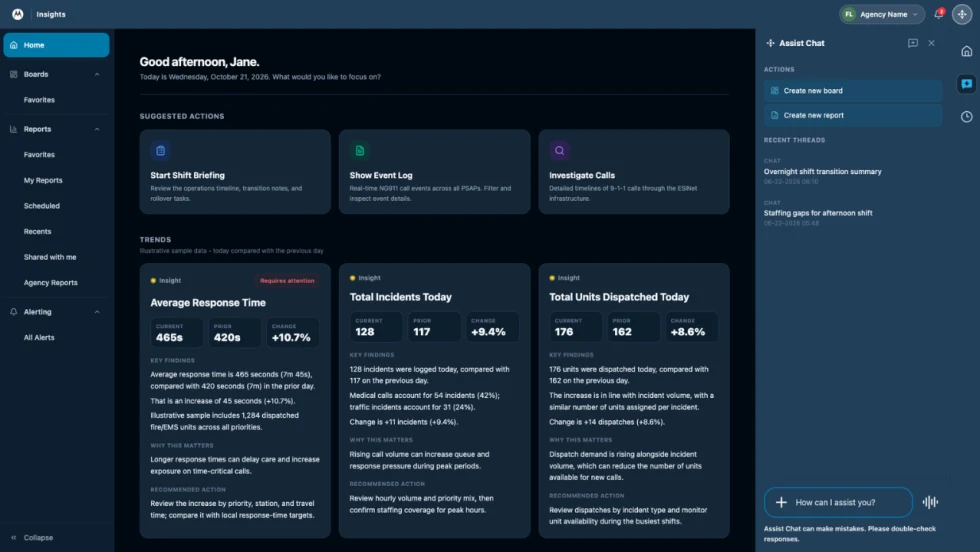
How Motorola Solutions’ New “Insights” Platform Helps Public Safety Agencies Identify Trends to Improve Their Operations
Motorola Solutions has introduced Insights, which leverages Assist, its mission-critical artificial intelligence (AI), to address these challenges and shape what’s next for public safety analytics and reporting technology.
Read More →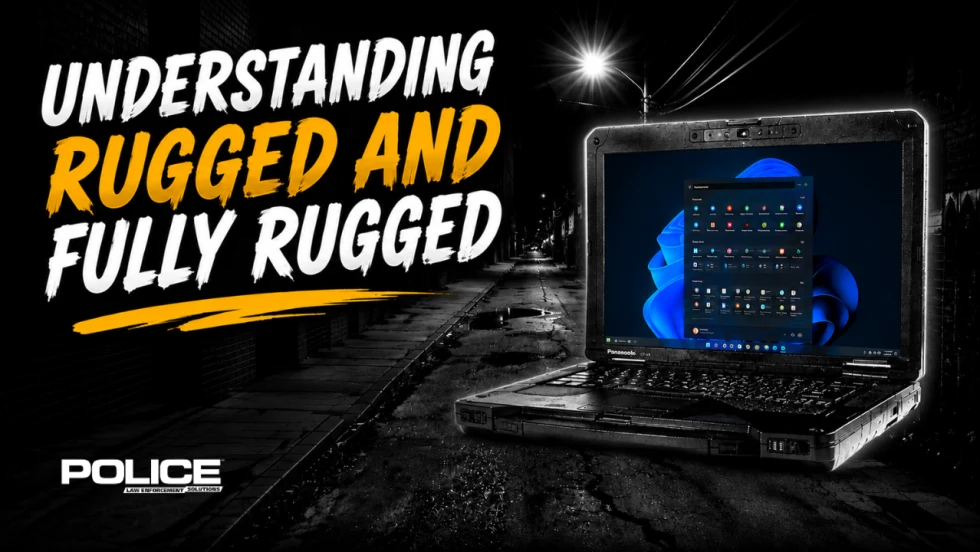
What Qualifies a Laptop as Rugged or Fully Rugged?
Police officers face a wide range of working conditions that can damage or even destroy a regular consumer laptop. Learn what qualifies a computer as rugged or fully rugged and why those devices are vital for law enforcement.
Read More →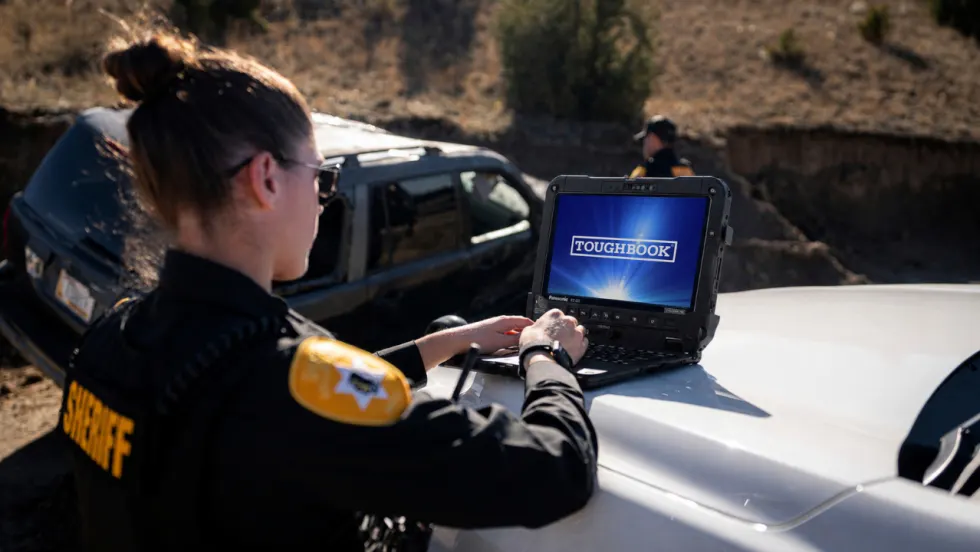
Panasonic Connect Launches the Toughbook 34 and Toughbook G3, Fully Rugged 2-in-1 Mobile Computers
Panasonic Connect has launched the Toughbook 34 and Toughbook G3 to facilitate in-vehicle dispatch, records management, and mobile command operations from any location.
Read More →
A police agency's guide to data-driven fleet management
Costs are rising and the public expects more transparency into how their tax dollars are spent. This e-book shows how police agencies can use fleet data to take control of fleet expenses while improving officer safety and demonstrating fiscal responsibility to the communities they serve.
Read More →
AI and analytics for law enforcement: Turning data into insights
Law enforcement agencies are managing more video, sensor data and digital evidence than ever before. Discover how AI and analytics can help turn that data into actionable insights that strengthen situational awareness, accelerate investigations and support more informed decisions.
Read More →
Vasco Electronics Adds Automatic Language Detection to Vasco Translator Q1
Vasco Electronics’ software update introduces hands-free language switching and expanded offline translation across 45 language pairs, empowering law enforcement, healthcare, and front-office enterprise teams
Read More →
North Miami Police Department Deploys Mark43
The North Miami Police Department has deployed Mark43 as part of its Five-Year Strategic Plan that represents its collective vision and goals for a more proactive police department, anchored by a core commitment to leveraging modern technology to enhance efficiency and public safety.
Read More →
Cellebrite Genesis for Enterprise Now Generally Available
Made available to the public sector in June, Cellebrite Genesis is serving a growing mix of national, regional, and local agencies worldwide, including some of the largest regional and metropolitan police departments. It is now available for enterprise organizations.
Read More →
2026 Vision FirstNet Users Summit to Host Emerging Leaders Training on Grassroots Advocacy for Public Safety
“Emerging Leaders Training: Understanding the Importance of Grassroots Advocacy for Public Safety," a session during the 2026 Vision FirstNet Users Summit, will offer a roadmap for unified advocacy at the federal level.
Read More →
Motorola Solutions Completes Acquisition of D-Fend Solutions
Motorola Solutions has acquired D-Fend Solutions, an industry leader in counter-drone technology. This deal provides public safety and enterprise customers with access to advanced counter-unmanned aerial systems.
Read More →