



Mission Critical Conversations
The Columbine High School massacre underscored what can happen when tactical teams cannot communicate. Fast-forward 13 years, and such incompatibility still exists for many tactical teams, particularly those in mid-size to small departments.

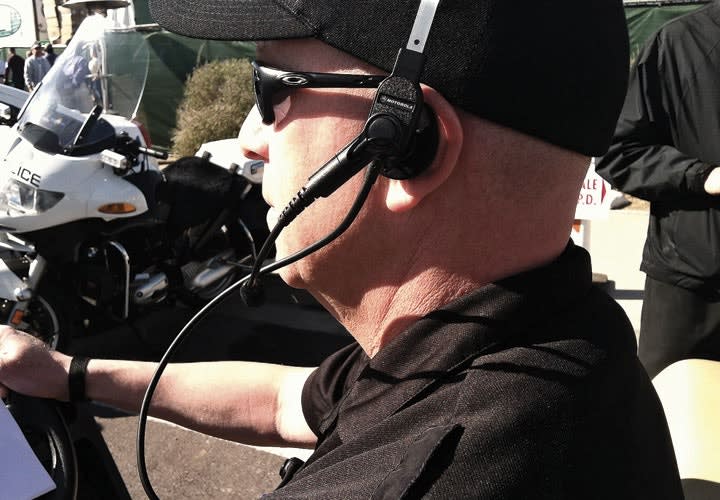
Tactical communications systems include over-the-ear headsets with boom mics.
The Columbine High School massacre underscored what can happen when tactical teams cannot communicate. Jammed radio links and cellular phones and the chronic incompatibility of communication systems used by the 35 different law enforcement agencies and 11 fire and EMS departments at the scene severely impaired communication.
Fast-forward 13 years, and such incompatibility still exists for many tactical teams, particularly those in mid-size to small departments.
John Gnagey, executive advisor for the National Tactical Officers Association (NTOA), says he was recently asked the following questions in an interview:
1. Do tactical teams have secure communications?
2. Do they have voice, data and video capabilities?
The answer, he says, is both yes and no. "Large departments have all of that, but smaller and mid-size departments don't. But as technology goes increasingly digital, there is a good probability in the future that they will have those capabilities too."
Old Radios
Tucson SWAT operator and sniper Rico Acevedo says his team prides itself on being very cutting edge in its operations and in equipping its explosive breachers, snipers, and other specialists with the latest and greatest technology. But he admits their communications capabilities are less than desired. In fact the department as a whole still relies on Motorola ASTRO XTS 3000 digital radios purchased in 1997.
Most of the time their dated communications technology performs the job as intended with only an occasional patch necessary with Nextel Push to Talk (PTT) phones and officer's own cell phones. But in a tactical operation these units can run afoul, Acevedo says.
"It comes to a point where we are doing an operation and suddenly our radios aren't working anymore," Acevedo says. "If we are following a home invasion crew that moves out of the city or into a different jurisdiction, for example, our radios won't work."
But that's about to change—at least on the radio side of the team's communications equation.
By 2013 the department's outdated radio systems will be old news as Pima County's new public safety wireless integrated network begins operation.
The Pima County Wireless Integrated Network (PCWIN) system will enable 31 fire and law enforcement agencies in the county to talk to each other by radio in real-time on a single system, regardless of jurisdictional boundaries. New communications towers throughout the county will eliminate the dead zones officers currently experience.
All officers, including Tucson's tactical team, will be equipped with Motorola XTR 6000 digital radios. "We'll all be using the same radios on the same frequencies so that we can cover more area and be able to talk to each other," Acevedo says.
But radios are just one piece of the tactical communications puzzle.
Besides their radios, tactical officers need headsets that pump sound into their ears and hands-free microphones. It simply isn't possible for these officers to move with stealth carrying long guns and other tools while also keeping their hands free to operate their communications systems.
Can You Hear Me Now?
At minimum tactical officers, especially in smaller departments, can get by with lightweight headsets with an ear tube design, according to Andrew Gordon, director of marketing at EAR Inc. of Boulder, Colo.
Tucson's team relies on this type of communications device. Its SureFire EP320-6HR devices cost around $400. Acevedo says they deliver incoming communications directly and clearly to officers and minimize the danger of garbled or intercepted messages.
"We got the SureFire's because they were Push to Talk," Acevedo says. "There are three wires but they are braided into a single wire that goes up under your vest and into your earpiece."[PAGEBREAK]Tucson's tactical team arrived at its current technology through trial and error. First they used earmuff-style communications. "We had issues with them," Acevedo says. "When you cued the mic, it would cut out your outside sound so that you only heard the radio talk and that was creating some problems. People were having a hard time hearing what was going on outside and hearing the radio at the same time."
The department then moved to custom-molded electronic earpieces, and Tucson's officers didn’t like them either. "You would put them in your ears and they'd click on to let you listen to the radio, but they also liked to magnify outside sounds," Acevedo says. "We had to turn the volume all the way up to hear what was being said. With our new headsets we can turn the radio down because the sound comes through so well."
Cutting the Cord
Bluetooth technology already has a strong foothold in the consumer industry. It is built into everything from phones to medical devices, letting people talk, send vital information, listen to music, and more without wires. And now the technology is entering the tactical space as well. "Bluetooth headsets, even those that will work with cell phones, are available to communicate with your two-way radio," Gordon says.
Many tactical officers prefer wireless headsets, he adds. "There's a lot of interest in Bluetooth technology, not as much on the security aspect but on the more covert side," he says. "Tactical officers hate to be wearing anything that a perpetrator can grab and use as a weapon. This technology cuts the cord so to speak."
And wireless systems have come a long way. Today they are lightweight, secure, and incorporate multiple ways to adjust volume. However, Gordon advises that they remain a solution teams will want to try before they buy. Bluetooth headsets can lose their connections from radio-frequency interference in the environment, and they need to be regularly recharged to make sure they are ready to go when the need for them arises.
"It is strictly the design of the maker, but some last for 12 hours, some for six," Gordon says. "Length of charge and time of use are important, especially in tactical situations where there could be a barricade and that officer is going to be on shift for 12-plus hours before being relieved. There is also the potential for interception and thus the officer’s personal security may be reduced."
Fortunately, wireless systems utilizing newer encryption capabilities have become more secure than their predecessors. "With advances in this technology, wireless voice communications are much more difficult to intercept," says Gnagey. "The system's digital signals when received by a standard radio scanner in someone’s home are indecipherable and sound like the noise made by a modem or a fax machine over a phone line."
Noise Suppression
Many of today's tactical headsets also offer decibel-limiting capabilities, which set decibel levels for received audio to 85 decibels or less unless officers override the setting manually.
As a rule of thumb in-ear headsets tend to provide better protection than traditional earmuffs and Bluetooth headsets offer a whole host of noise-limiting functions, Gordon says.
Tactical teams need to carefully consider the types of situations they may routinely find themselves in to gauge the level of protection they require. "The protection angle can be very simple, to what we call filtering air pieces. So you can still interact with your proximity sounds but you won't have distance sound or enhanced sound," Gordon says. "Or you can get into enhanced protection where you can understand what is going on around you but if a loud impulse noise, such as gunfire or an explosion takes off, that impulse noise is quieted to a safer limit."
Decibel-limiting headsets work well, particularly if tactical teams consider the sensitivity of the mic used with the headset system. "Teams need to consider the sensitivity of the mic and its ability to pick up whispered communications as well as being clearer when loud impact or impulse noises pick up," Gordon explains.[PAGEBREAK]Gordon adds that EAR Inc. focuses a lot of its efforts on ear-mic technology, where everything necessary for communication rests in the ear, eliminating the need for speaker hardware in, on, or over the ear. Currently in-ear technologies include bone conduction technology that works off of vibrations coming off of a jawbone or temple and pressure mic technology where the mic reads actual pressure changes within the ear and interprets them as auditory signals.
These systems allow tactical team members to communicate in hushed whispers that can be clearly heard and understood by other members of the team but not overheard by suspects.
A mic carried within the earpiece will work in most situations. However, it's not for everyone, Gordon admits. "With these systems some people sound like the 'teacher on Charlie Brown,' but you can get that even with throat mics," he adds. "It's just the structure of their throat, whether it be heavily muscled or just screwed up vocal cords, but whatever it is, you can't get around it. Ear mic technology can be a little more sensitive than throat mic technology and pick up vocal tone and vibrations a little bit better but some guys may not be able to use it."
Such individuals may be forced to use boom mic technology even when the rest of their team switches to earpieces. This setup, while considered old school to some, puts the mic directly in front of the wearer's mouth. This type of mic is more sensitive to the wearer's voice, says Gordon, but may also be more likely to pick up surrounding noise.
Tactical teams also need to consider the applications in which the mics will be used. "If they are planning to go in with gas masks, for example, only certain systems will work. Ear mic technology covers most tactical aspects because it's not in front of the mouth. Even when you don a gas mask, it works because the vibration/pressure is still coming off the ear," Gordon explains.
When choosing a mic, one thing Gordon cautions against is selecting one with voice activation, where the system sends out voice communications when it senses the wearer speaking. These systems often aren’t precise enough for tactical situations, he says.
"A lot of teams don't like voice activation because it would be a huge liability to say 'Don't shoot' and have it come across as 'Shoot' because the mic didn’t pick up 'Don't,'" Gordon says.
The Comfort Factor
While all of these features are important, Gordon cautions users to also consider comfort and weight. All the technology in the world won't make a difference, he says, if the headset is uncomfortable to wear.
"The big focus has been in making these systems smaller and more lightweight," he says. "When you're carrying a long gun, a pack, a radio, and other things, weight and size become an important issue. Departments are moving from earmuffs to something that fits in the ear because it's a lot less bulky and a lot more lightweight."
Comfort is extremely important, Acevedo agrees. "In Tucson where it’s extremely hot, wearing a headset gets old really quickly," he says. "That's why we like our SureFire's. They are light and you almost don't even feel it when it's in your ear."
Headsets also need to fit into the tactical team's helmets, adds Acevedo, whose team uses Kevlar, military-style helmets. Recently the Tucson team trained with a U.S. Customs & Border Protection tactical unit and found the other organization's low-drag helmets with high cutout ears extremely comfortable. He laments, "They are very expensive but we would definitely add them if we could."
"Helmets should integrate with your headset and your earpiece and fit over whatever you are wearing," Gnagey adds.
Tactical teams can avoid fit problems by taking advantage of the testing and evaluation programs many manufacturers offer, says Gordon. "This allows them to make sure the headset fits underneath their helmet or works with their existing equipment before they make a full team purchase," he says.
The good news is that as law enforcement agencies move from analog to digital communication systems, the size of tactical communications units has come down and they more easily and comfortably fit underneath helmets. "Digital uses less power, the devices are smaller, they have more secure transmissions and they give you greater variety in that they may also transmit voice, data and video," says Gnagey.
"The push is on to have communications systems that are very, very robust," Gnagey adds. "Future systems will give users the ability to talk, send data, capture video, and receive photographs and annotated maps."
Ronnie Garrett is a freelance writer based in Fort Atkinson, Wis.
BTI Tactical
CeoTronics
EAR Inc.
FreeLinc
Harris
Motorola
Pryme Radio Products
Setcom
Tactical Command Industries
Television Equipment Associates
The Earphone Connection
Xacore
More Technology

A police agency's guide to data-driven fleet management
Costs are rising and the public expects more transparency into how their tax dollars are spent. This e-book shows how police agencies can use fleet data to take control of fleet expenses while improving officer safety and demonstrating fiscal responsibility to the communities they serve.
Read More →
AI and analytics for law enforcement: Turning data into insights
Law enforcement agencies are managing more video, sensor data and digital evidence than ever before. Discover how AI and analytics can help turn that data into actionable insights that strengthen situational awareness, accelerate investigations and support more informed decisions.
Read More →
Vasco Electronics Adds Automatic Language Detection to Vasco Translator Q1
Vasco Electronics’ software update introduces hands-free language switching and expanded offline translation across 45 language pairs, empowering law enforcement, healthcare, and front-office enterprise teams
Read More →

North Miami Police Department Deploys Mark43
The North Miami Police Department has deployed Mark43 as part of its Five-Year Strategic Plan that represents its collective vision and goals for a more proactive police department, anchored by a core commitment to leveraging modern technology to enhance efficiency and public safety.
Read More →
Cellebrite Genesis for Enterprise Now Generally Available
Made available to the public sector in June, Cellebrite Genesis is serving a growing mix of national, regional, and local agencies worldwide, including some of the largest regional and metropolitan police departments. It is now available for enterprise organizations.
Read More →
2026 Vision FirstNet Users Summit to Host Emerging Leaders Training on Grassroots Advocacy for Public Safety
“Emerging Leaders Training: Understanding the Importance of Grassroots Advocacy for Public Safety," a session during the 2026 Vision FirstNet Users Summit, will offer a roadmap for unified advocacy at the federal level.
Read More →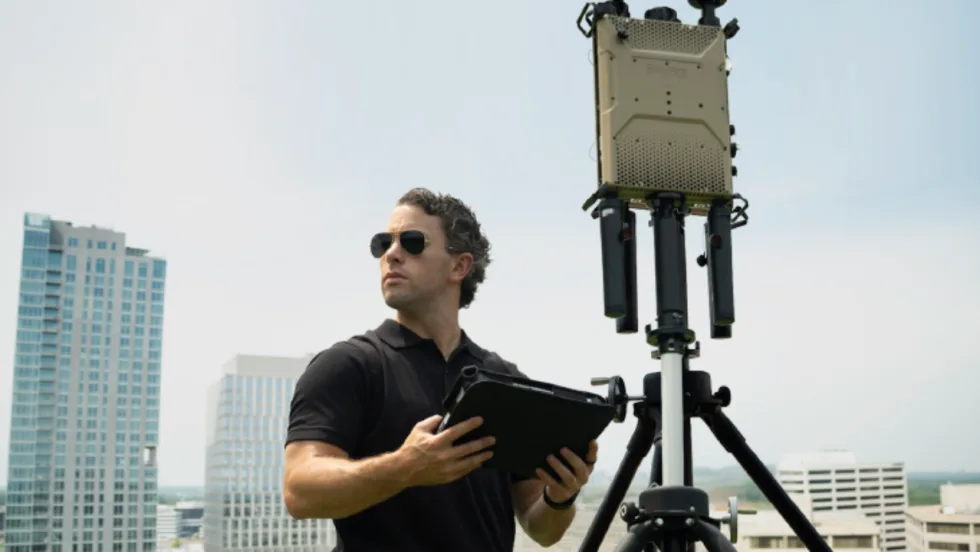
Motorola Solutions Completes Acquisition of D-Fend Solutions
Motorola Solutions has acquired D-Fend Solutions, an industry leader in counter-drone technology. This deal provides public safety and enterprise customers with access to advanced counter-unmanned aerial systems.
Read More →
ZeroEyes, Advantech & Camden Police Partner to Bring AI Gun Detection Technology to Delaware School District
ZeroEyes has partnered with Advantech and the Camden Police Department to deploy ZeroEyes’ AI gun detection and intelligent situational awareness platform at Delaware’s Caesar Rodney School District (CRSD).
Read More →
Leonardo U.S. Cyber & Security Solutions Introduces SignalTrace, the Next Evolution in Electronic Signature Detection Technology
SignalTrace reflects years of product refinement and a clearer expression of the technology’s purpose of recognizing and correlating electronic signatures in publicly broadcast wireless signals to reveal patterns, relationships, and trends that might otherwise go undetected.
Read More →
Pimloc Launches Secure File Sharing to Streamline Release of Redacted Video
Pimloc’s Secure File Sharing lets organizations deliver redacted video, audio, and documents through expiring, passcode-protected links, accelerating delivery while reducing security, compliance, and chain-of-custody risks.
Read More →