



Improving Communications After the Tucson Shootings
The Jan. 8 shootings in Tucson may have drawn interest toward law enforcement in Arizona's second-largest city, but another incident that highlighted the need to improve public safety communications for agencies across the entire nation occurred much earlier: on 9/11.

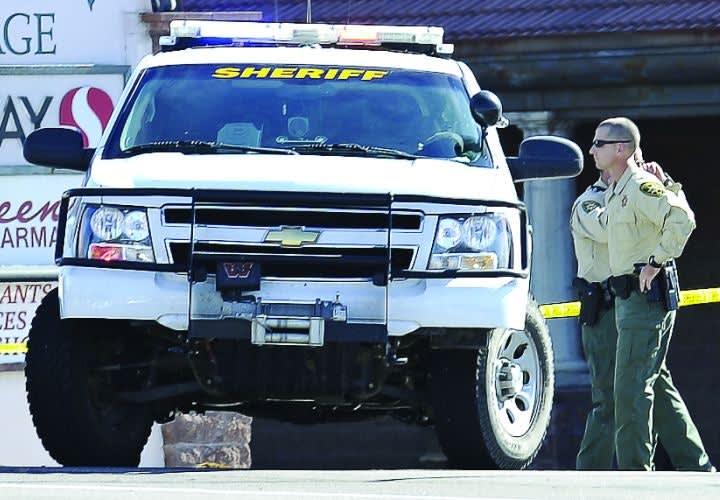
Photo: Zuma Press.
The Jan. 8 shootings in Tucson may have drawn interest toward law enforcement in Arizona's second-largest city, but another incident that highlighted the need to improve public safety communications for agencies across the entire nation occurred much earlier: on 9/11.
"Certainly the events of 9/11/2001 in New York and Washington showed all the necessity of interoperable communications," says Carl Drescher, an administrator of Information Technology for the City of Tucson, which is participating in the ambitious Pima County Wireless Integrated Network (PCWIN). The multi-agency program—for which voters authorized $92 million in a special bond election in 2004—is tasked with, among other goals, improving public safety radio interoperability to enable agencies to "talk with each other" on a single frequency band.
Contiguous jurisdiction incidents and multijurisdictional pursuits—not uncommon events in cities of all sizes these days—are classic cases that beg for interoperability between agencies, says project administrator Capt. Paul Wilson of the Pima County Sheriff's Department.
"You have multiple agencies chasing the bad guy and not being able to communicate directly with one another while they're doing that," he says. "[An additional problem is] not having your medical responders knowing what's going on during all of that, so that they can pre-stage where they need to be, so they can provide the most efficient, effective, and quick service."
The City of Tucson alone operates on a hodgepodge of venues: VHF and UHF analog systems, and 800 MHz digital frequencies. Motorola police two-way radios mostly use VHF (150 MHz). Fire and emergency medical services use UHF (450 MHz). Mobile data accessed in police vehicles and fire apparatus operate jointly on the 800 MHz radio system. And other city public works departments crowd into all three bands for voice communications.
"The radio system in its current configuration has been in operation since 1982," Drescher notes. "However, some of the original core system has been in operation since the early 1970s."
The linchpin of PCWIN's mission is to provide digital radio service to more than 30 police and fire agencies in Pima County, which covers an area of almost 9,200 square miles. Several additional 800 MHz frequencies have been licensed for public safety use in the new radio system, including some set aside as multi-agency "group talk" channels. The project will adapt and construct multiple radio towers to allow interconnectivity, and purchase compatible radio equipment (handheld and fixed mount) for which each agency will pay a monthly user fee per radio.
The final element is construction of a centralized, regional communications center for the sheriff's department and other agencies, as well as technological upgrades to existing facilities for Tucson police, fire, and city communications so that each site serves as a "live" backup to the other, in case operations are suddenly compromised or shut down. The entire project is expected to become operational in 2014.
More Technology
What Qualifies a Laptop as Rugged or Fully Rugged?
Police officers face a wide range of working conditions that can damage or even destroy a regular consumer laptop. Learn what qualifies a computer as rugged or fully rugged and why those devices are vital for law enforcement.
Read More →
Panasonic Connect Launches the Toughbook 34 and Toughbook G3, Fully Rugged 2-in-1 Mobile Computers
Panasonic Connect has launched the Toughbook 34 and Toughbook G3 to facilitate in-vehicle dispatch, records management, and mobile command operations from any location.
Read More →
A police agency's guide to data-driven fleet management
Costs are rising and the public expects more transparency into how their tax dollars are spent. This e-book shows how police agencies can use fleet data to take control of fleet expenses while improving officer safety and demonstrating fiscal responsibility to the communities they serve.
Read More →

AI and analytics for law enforcement: Turning data into insights
Law enforcement agencies are managing more video, sensor data and digital evidence than ever before. Discover how AI and analytics can help turn that data into actionable insights that strengthen situational awareness, accelerate investigations and support more informed decisions.
Read More →
Vasco Electronics Adds Automatic Language Detection to Vasco Translator Q1
Vasco Electronics’ software update introduces hands-free language switching and expanded offline translation across 45 language pairs, empowering law enforcement, healthcare, and front-office enterprise teams
Read More →
North Miami Police Department Deploys Mark43
The North Miami Police Department has deployed Mark43 as part of its Five-Year Strategic Plan that represents its collective vision and goals for a more proactive police department, anchored by a core commitment to leveraging modern technology to enhance efficiency and public safety.
Read More →
Cellebrite Genesis for Enterprise Now Generally Available
Made available to the public sector in June, Cellebrite Genesis is serving a growing mix of national, regional, and local agencies worldwide, including some of the largest regional and metropolitan police departments. It is now available for enterprise organizations.
Read More →
2026 Vision FirstNet Users Summit to Host Emerging Leaders Training on Grassroots Advocacy for Public Safety
“Emerging Leaders Training: Understanding the Importance of Grassroots Advocacy for Public Safety," a session during the 2026 Vision FirstNet Users Summit, will offer a roadmap for unified advocacy at the federal level.
Read More →
Motorola Solutions Completes Acquisition of D-Fend Solutions
Motorola Solutions has acquired D-Fend Solutions, an industry leader in counter-drone technology. This deal provides public safety and enterprise customers with access to advanced counter-unmanned aerial systems.
Read More →
ZeroEyes, Advantech & Camden Police Partner to Bring AI Gun Detection Technology to Delaware School District
ZeroEyes has partnered with Advantech and the Camden Police Department to deploy ZeroEyes’ AI gun detection and intelligent situational awareness platform at Delaware’s Caesar Rodney School District (CRSD).
Read More →