



How to Train with Simulators
Anyone who has ever watched “Star Trek: The Next Generation”—that’s the one with Picard, not Kirk—has probably noticed a special room on the Enterprise called the “Holo-Deck.” The Holo-Deck uses holograms, transporters, replicators, and other unlikely science-fiction technologies to create an immersive virtual reality that can be used by the Enterprise crew for both recreation and ultra-realistic training.

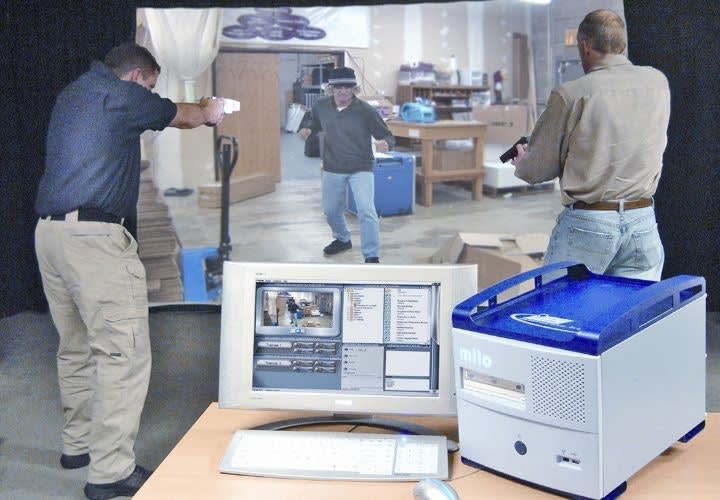
The MILO processor from IES lets trainers create their own branched instructive scenarios for the company's Range 2000 and Range 3000 law enforcement simulator systems.
Anyone who has ever watched “Star Trek: The Next Generation”—that’s the one with Picard, not Kirk—has probably noticed a special room on the Enterprise called the “Holo-Deck.” The Holo-Deck uses holograms, transporters, replicators, and other unlikely science-fiction technologies to create an immersive virtual reality that can be used by the Enterprise crew for both recreation and ultra-realistic training.
Today’s law enforcement sims are a far cry from Star Trek’s totally immersive Holo-Deck. But they are becoming more and more valuable as training tools. And they’re only going to get better.
Versatile Reality
The evolutionary path of law enforcement training sims has been from simple systems that presented officers with shoot/don’t shoot targets to high-powered computer systems that allow instructors to create their own scenarios.
New simulation systems will be capable of training anyone on any topic, anytime, at any location. Simulators offer instructors and students the benefit of all three aspects of adult learning: auditory, visual, and kinesthetic (muscle memory).
The result is that law enforcement trainers are now rethinking the ways that they use sims for officer training. And we are now entering a new era of enhanced officer education through educational simulator platforms.
The questions that trainers and administrators have to ask themselves about simulator training are numerous and serious. For example, are simulators designed to take over your training? Are they designed to replace or enhance the instructor? Can simulators really replace physical instructors? After reading this article, you should be able to formulate some of your own answers to these questions.
Training with Sims
There are many training goals that can be achieved using computerized simulators. For example, other than role-playing and force-on-force exercises, using sims is one of the best ways to train officers how to react to rapidly developing incidents.
You can use a sim to learn how to talk to and approach an unruly drunk at a traffic stop, or to practice how to respond to an active shooter, and, of course, sims are great for shoot/don’t shoot training.
But all sim training sessions are not created equal. An effective sim session must have a learning objective; otherwise this expensive, high-tech equipment becomes nothing more than a video game.
For example, an instructor may use a programmable sim to explain an agency’s shooting policy and reinforce that policy in the minds of the students. Being goal-focused in your training sessions and documenting your objectives is vital to effective sim training.
You should also distinguish between big goals and little goals. Learning objectives are basically chunks of skill-oriented instruction that can be used to build the student’s proficiency and knowledge. Students and instructors should think of each sim session as a way to teach or learn one chunk, one objective.
If you think in terms of learning objectives when conducting or participating in a sim training session, you will be able to get the most out of the session. But if you don’t have learning objectives outlined or stated in your training programs, then you will have difficulty judging your performance.
And remember, regardless of how much thought the instructor has put into planning a session, it’s critical that the student take the session seriously. This is training. It’s not a game.
More Than Training
One of the things you will realize when you train with today’s innovative law enforcement sims is that they are no longer just tools for teaching use-of-force scenarios.
The latest sims can be used to teach critical incident management scenarios, courses for admin personnel, and even scenarios for other public safety professionals in your city.
In addition, new technologies will allow simulation systems to be used as presentation and media exchange platforms. They will likely even have functions that will connect with a large variety of database management software. This will allow users to employ the sim as both a training tool and an intelligence tool.
A Little History
The law enforcement training sim has come a very long way.
The modern law enforcement simulator was born about 20-odd years ago when Jody Schecter approached the staff at the Federal Law Enforcement Training Center (FLETC) in Glynco, Ga., with plans for creating a driving simulator for law enforcement. Schecter left that meeting and decided that FLETC needed a computerized firearms training sim more than it needed a driving sim. The result was the Fire-Arms Training System (FATS) produced by the company of the same name.
FATS was first but it wasn’t alone in the market for long. Other companies soon developed computer-based law enforcement training sims. And these became much more sophisticated as computer processing power and computer graphics technology advanced. The result was that simulation training systems evolved from shoot/don’t shoot scenarios into scenarios that required trainees to make a variety of use-of-force decisions.
Still, the one thing that computerized training sims couldn’t do was shoot back. They still can’t, not in any realistic way. But for about seven years now, the Prism system from Advanced Interactive Systems (AIS) has offered an option that forces trainees to take cover during a simulated gunfight. AIS’s Return Fire system shoots small nylon balls at the student during scenarios where the suspect is firing.
The latest innovation in law enforcement sims is the ability of the agency that buys the system to program its own scenarios. For example, IES Interactive Training offers the Range 2000 system, which features the MILO processor that can be easily programmed by the user, and the Range 3000 system with MILO, which can be programmed by the user and also features Advanced Debrief and the A2Z Classroom Trainer with Advanced Trainee Action Capture. The features of these systems give trainers the ability to create interactive environments for teaching officers a variety of tactical skills.
[PAGEBREAK]
And now simulator manufacturers are breaking out even more advanced computerized training systems.
One of the most intriguing current simulator technologies is Laser Shot’s Livefire Simulation Trainer, a system that allows officers to use their real sidearms and live ammunition in sim scenario training. The Livefire Simulation Trainer is a combination of hardware and software that allows the operator to project simulator scenarios onto a special rubber screen. The screen is self-sealing and can absorb thousands of rounds of live fire. Special cameras detect the heat of bullets passing through the screen and determine if the shooter has successfully neutralized the threat presented in the scenario. The Livefire Simulation Trainer can be used on any indoor range.
Another advance in law enforcement training sims is the integration of driving sims with shooting sims. At the recent International Chiefs of Police conference in Miami Beach, AIS PRISim and L-3 Communications showed a joint effort to make training sims more like the job.
The AIS PRISim and L-3 MPRI systems allow officers to effectively experience an entire simulated call by seamlessly combining Advanced Interactive Systems’ judgment simulator and AirMunition recoil products with L-3’s PatrolSim IV driving simulator.
An officer can enter a fully functional cab, respond to road hazards, respond to dispatch, proceed to the scene of a call, and successfully arrive outside. He or she can then immediately segue into responding to the same call, utilizing a full range of force options to attempt to control the situation. The same system then debriefs the officer.
Perhaps the law enforcement firearms simulator that comes closest to a completely immersive training environment is the IVR-360 HD system from VirTra. The 360 is significant. The IVR-360 is a floor to ceiling 360-degree environment. Its six screens surround the officer and allow the instructors to introduce threats from all directions, including from behind.
The Future of Sims
The first thing we will likely see in the next generation of sims is the ability to train multiple students with multiple devices.
Currently, limitations in detection technology usually allow for a maximum of four untethered devices. In the near future, sims will be able to track as many as 16 untethered devices. Each device will be definable by the operator, and it will track the performance of the student to which it was assigned.
For example, you could have 16 shooters at once, and the computer will track who fired each shot and where that shot impacted. Or you could have eight shooters armed with firearms and their own OC spray. Or you could have four shooters, each with a handgun, OC spray, a Taser, and a long gun. Oh, and it should be noted that the 16-device limit does not include flashlights, so each student could use a light for simulated low light operations.
The point here is that the manufacturers and the police trainers who create scenarios for their devices are designing simulators and scenarios that are rapidly yielding accurate simulations of actual law enforcement operations.
Such advances are truly impressive. But the real improvements in future simulation systems will be in how they can be modified to meet the needs of the trainer.
In the near future, presentation software will allow users to operate their simulation systems as virtual white boards. Notes and drawings, even handwritten notes and drawings, will immediately be projected downrange. A camera at the podium will be used to photograph and project any item. The trainer will also be able to control the information being presented, and make the changes needed for his or her own objectives.
Instructors will also be able to immediately poll an audience with questions. This will be especially useful when combined with classroom training software that can be used with a predesigned course of instruction that either the instructor or other companies have produced.
Which brings us to a discussion of perhaps the most exciting advantage of the next generation of law enforcement training sims. These devices will soon be able to capture and preserve the quality of the training sessions presented by your agency’s best trainers. That means that long after Sgt. John Smith, your best use-of-force trainer, has retired new cops will still be able to benefit from his wisdom and experience.
Finally, in the near future, portable simulators will not only be used in police training. They will also be employed in courtrooms to explain police operations to juries.
The versatility of future sim technology is only limited by the imagination of the manufacturers and the designers. Sims will be used as presentation platforms for attorneys, as investigative tools by review boards, for presentations by PIOs to the media, and as pre-op planning and training tools by tactical teams.
Note: This article was written with the aid of veteran officer and trainer Todd R. Brown.
Dave Young is the Director of Specialized Programs for the Tactical Training Division of Fox Valley Technical College Tactical Training Division and the Director of Training for RedMan Training Gear. He is a 20-year veteran of both civilian and military law enforcement and a member of the Police Advisory Board.
TRAINING SIMULATOR RESOURCES
Advanced Interactive Systems (AIS)
www.ais-sim.com
FATS
www.fatsinc.com
IES Electronics Industries
www.ies-usa.com
L-3 Communications
www.l-3com.com
Laser Shot
www.lasershot.com
VirTra Systems
www.virtrasystems.com
More Technology
A police agency's guide to data-driven fleet management
Costs are rising and the public expects more transparency into how their tax dollars are spent. This e-book shows how police agencies can use fleet data to take control of fleet expenses while improving officer safety and demonstrating fiscal responsibility to the communities they serve.
Read More →
AI and analytics for law enforcement: Turning data into insights
Law enforcement agencies are managing more video, sensor data and digital evidence than ever before. Discover how AI and analytics can help turn that data into actionable insights that strengthen situational awareness, accelerate investigations and support more informed decisions.
Read More →
Vasco Electronics Adds Automatic Language Detection to Vasco Translator Q1
Vasco Electronics’ software update introduces hands-free language switching and expanded offline translation across 45 language pairs, empowering law enforcement, healthcare, and front-office enterprise teams
Read More →

North Miami Police Department Deploys Mark43
The North Miami Police Department has deployed Mark43 as part of its Five-Year Strategic Plan that represents its collective vision and goals for a more proactive police department, anchored by a core commitment to leveraging modern technology to enhance efficiency and public safety.
Read More →
Cellebrite Genesis for Enterprise Now Generally Available
Made available to the public sector in June, Cellebrite Genesis is serving a growing mix of national, regional, and local agencies worldwide, including some of the largest regional and metropolitan police departments. It is now available for enterprise organizations.
Read More →
2026 Vision FirstNet Users Summit to Host Emerging Leaders Training on Grassroots Advocacy for Public Safety
“Emerging Leaders Training: Understanding the Importance of Grassroots Advocacy for Public Safety," a session during the 2026 Vision FirstNet Users Summit, will offer a roadmap for unified advocacy at the federal level.
Read More →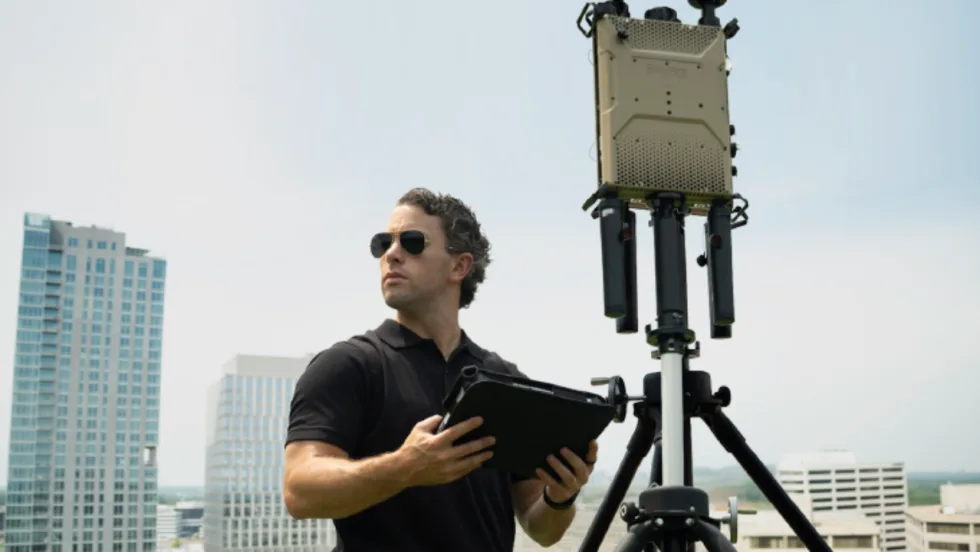
Motorola Solutions Completes Acquisition of D-Fend Solutions
Motorola Solutions has acquired D-Fend Solutions, an industry leader in counter-drone technology. This deal provides public safety and enterprise customers with access to advanced counter-unmanned aerial systems.
Read More →
ZeroEyes, Advantech & Camden Police Partner to Bring AI Gun Detection Technology to Delaware School District
ZeroEyes has partnered with Advantech and the Camden Police Department to deploy ZeroEyes’ AI gun detection and intelligent situational awareness platform at Delaware’s Caesar Rodney School District (CRSD).
Read More →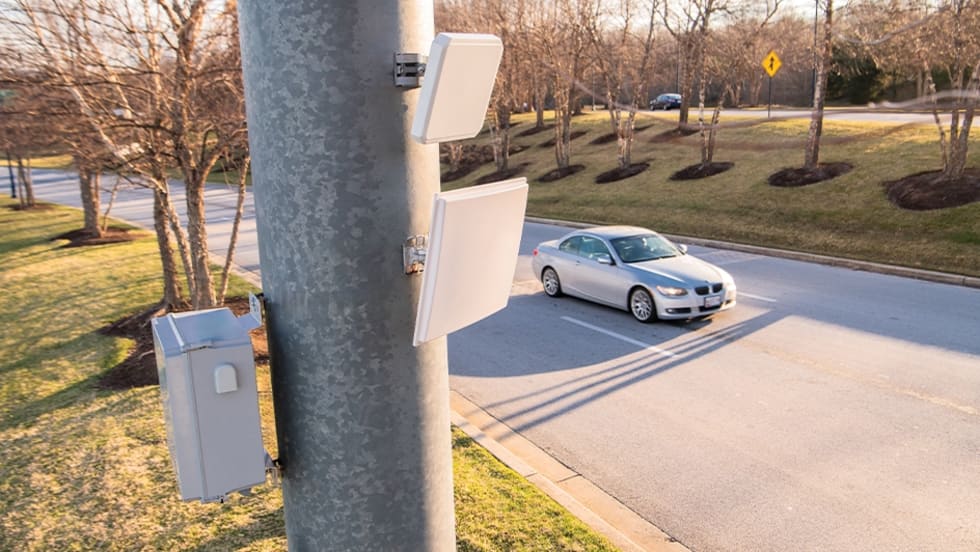
Leonardo U.S. Cyber & Security Solutions Introduces SignalTrace, the Next Evolution in Electronic Signature Detection Technology
SignalTrace reflects years of product refinement and a clearer expression of the technology’s purpose of recognizing and correlating electronic signatures in publicly broadcast wireless signals to reveal patterns, relationships, and trends that might otherwise go undetected.
Read More →
Pimloc Launches Secure File Sharing to Streamline Release of Redacted Video
Pimloc’s Secure File Sharing lets organizations deliver redacted video, audio, and documents through expiring, passcode-protected links, accelerating delivery while reducing security, compliance, and chain-of-custody risks.
Read More →