



Heavy reporting demands drive law enforcement professionals to seek new technologies
The time officers spend on incident reporting is removing them from other high value-tasks


Paperwork is keeping law enforcement officers away from the communities they serve, according to the result of a recent national survey. This is becoming a rising challenge with police departments, many of which are looking to increase visibility and keep more feet on the street.
Officers want to spend less time on paperwork, more time on community service
As the pressures intensify each year, with calls for more transparency and community involvement in policing, officers at every rank agree that, while the reports and other documentation they produce daily is important to help move criminal proceedings along, as with many other document-intensive jobs, there are concerns heavy reporting demands will overwhelm and create burn-out.
The survey of more than 12,000 police chiefs and their command staff found that 39 percent of respondents said they can spend 3-4 hours daily on incident reports and other-police paperwork. Furthermore, over 30 percent of officers surveyed said they are spending at least a quarter of their day at the station working on reports, versus being out and working in the community.
Overall, the collective agreement is that the time officers spend on incident reporting is removing them from other high value-tasks.
Police departments can give officer’s back time
The good news, there are many new tools that can help give the valuable time back officers need to protect and serve. In law enforcement, in particular, new AI-powered speech recognition solutions are helping with one of the most important tasks officers spend hours on each day – completing incident reports.
Now, instead of typing by hand, officers can dictate an incident report, conduct common tasks – like a license plate lookup – using simple voice commands, or enter data into the CAD or RMS, all by voice. These new voice-powered tools also enable officers to work more safely, allowing them to stay heads-up and better maintain situational awareness while on patrol.
The basics behind AI-powered speech recognition
Here’s a somewhat simple explanation for a complex technology. Speech recognition technology uses the human voice as the main interface between the user (the person speaking) and the computer (the machine that will automate the task of typing). It’s a highly sophisticated technology that leverages “language modeling” to recognize and differentiate among the millions of human utterances that make up any dialect. Using statistical models, speech recognition programs analyze an incoming stream of sound and interpret those sounds as commands and dictation.
Through machine learning, speech recognition systems learn each word individually as well as which word combinations typically occur. This means that it gets smarter the more it’s used, and it can differentiate between words like “marshal” and “martial” by understanding their context in a sentence.
Even more important, today’s advances in speech recognition mean it can study the way a specific user talks – learning their accent or the subtle nuances of their voice and deliver 99% accuracy. And with advanced features, new systems like, Dragon Law Enforcement, include customized language models to include words and phrases used by law enforcement.
Also, with background noise, a major factor in fields like policing, advances in AI technology mean it also knows to “ignore” ambient noise and focus specifically on the individual speaker.
Download the 2018 Role of Technology in Law Enforcement Paperwork Annual Report here.
To learn more on how voice-powered tools like speech recognition provide officers the time they need to better protect the communities they serve, without sacrificing accuracy and report timeliness, visit here.
Want more info from NUANCE?
Sign up to receive additional information on NUANCE.
More Technology

A police agency's guide to data-driven fleet management
Costs are rising and the public expects more transparency into how their tax dollars are spent. This e-book shows how police agencies can use fleet data to take control of fleet expenses while improving officer safety and demonstrating fiscal responsibility to the communities they serve.
Read More →
AI and analytics for law enforcement: Turning data into insights
Law enforcement agencies are managing more video, sensor data and digital evidence than ever before. Discover how AI and analytics can help turn that data into actionable insights that strengthen situational awareness, accelerate investigations and support more informed decisions.
Read More →
Vasco Electronics Adds Automatic Language Detection to Vasco Translator Q1
Vasco Electronics’ software update introduces hands-free language switching and expanded offline translation across 45 language pairs, empowering law enforcement, healthcare, and front-office enterprise teams
Read More →

North Miami Police Department Deploys Mark43
The North Miami Police Department has deployed Mark43 as part of its Five-Year Strategic Plan that represents its collective vision and goals for a more proactive police department, anchored by a core commitment to leveraging modern technology to enhance efficiency and public safety.
Read More →
Cellebrite Genesis for Enterprise Now Generally Available
Made available to the public sector in June, Cellebrite Genesis is serving a growing mix of national, regional, and local agencies worldwide, including some of the largest regional and metropolitan police departments. It is now available for enterprise organizations.
Read More →
2026 Vision FirstNet Users Summit to Host Emerging Leaders Training on Grassroots Advocacy for Public Safety
“Emerging Leaders Training: Understanding the Importance of Grassroots Advocacy for Public Safety," a session during the 2026 Vision FirstNet Users Summit, will offer a roadmap for unified advocacy at the federal level.
Read More →
Motorola Solutions Completes Acquisition of D-Fend Solutions
Motorola Solutions has acquired D-Fend Solutions, an industry leader in counter-drone technology. This deal provides public safety and enterprise customers with access to advanced counter-unmanned aerial systems.
Read More →
ZeroEyes, Advantech & Camden Police Partner to Bring AI Gun Detection Technology to Delaware School District
ZeroEyes has partnered with Advantech and the Camden Police Department to deploy ZeroEyes’ AI gun detection and intelligent situational awareness platform at Delaware’s Caesar Rodney School District (CRSD).
Read More →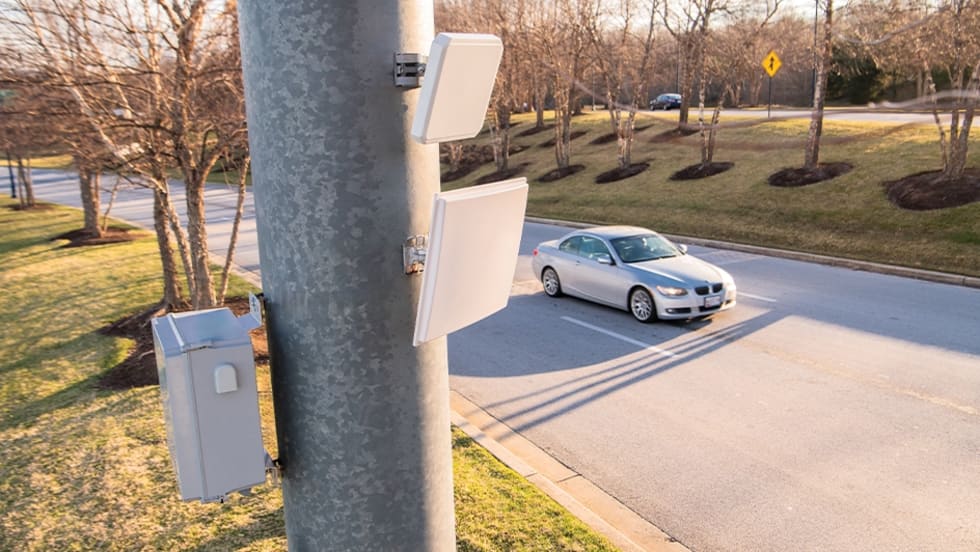
Leonardo U.S. Cyber & Security Solutions Introduces SignalTrace, the Next Evolution in Electronic Signature Detection Technology
SignalTrace reflects years of product refinement and a clearer expression of the technology’s purpose of recognizing and correlating electronic signatures in publicly broadcast wireless signals to reveal patterns, relationships, and trends that might otherwise go undetected.
Read More →
Pimloc Launches Secure File Sharing to Streamline Release of Redacted Video
Pimloc’s Secure File Sharing lets organizations deliver redacted video, audio, and documents through expiring, passcode-protected links, accelerating delivery while reducing security, compliance, and chain-of-custody risks.
Read More →