



Understanding AR Systems
In recent years more and more manufacturers have developed new takes on AR-style rifles, resulting in four major operating systems for the common patrol rifles used by American law enforcement. Let's take a look at the four operating systems and their pros and cons

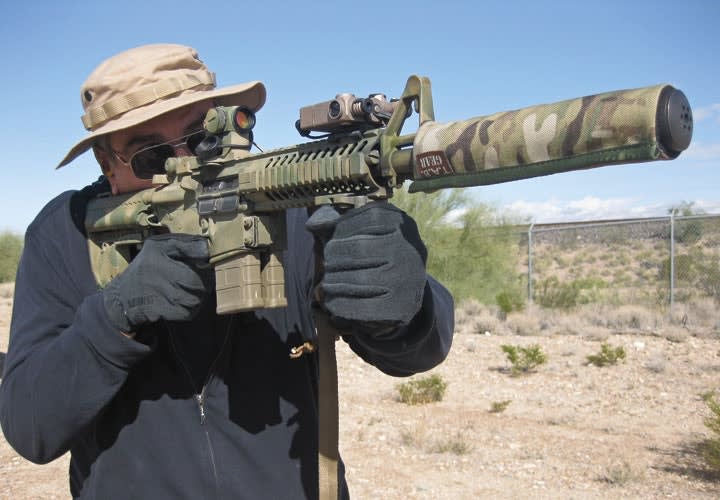
Photo: Nick Jacobellis
Automaker Henry Ford once famously said: "The customer can have a Model T in any color he wants-so long as it is black." For decades that was also kind of the approach the gun manufacturers had to M16/AR-type rifles: The customer can have any operating system he wants as long as it's the direct impingement design of gunsmith and inventor Eugene Stoner.
But in recent years more and more manufacturers have developed new takes on AR-style rifles, resulting in four major operating systems for the common patrol rifles used by American law enforcement.
The result for some officers has been a cloud of confusion as to which AR operating system best fits their needs. So let's take a look at the four operating systems and their pros and cons.
Direct Impingement
Most M16s and the M4 carbines used by the U.S. military operate with a direct impingement gas system. In a direct impingement-powered M4, the hot gas from expended ammunition is deposited directly back into the chamber area of the receiver and is used to drive the bolt to the rear.
Unfortunately, in a direct impingement rifle or carbine, burned powder residue is also deposited into the upper and lower receiver area. This means that when a direct impingement M4 carbine is fired on a regular basis, the internal parts will heat up after being coated with hot gas and will also collect particles of burned gunpowder.
As long as a direct impingement rifle is properly maintained it will continue to function reliably. Which means, you have to keep it clean.
However, this statement is by no means meant to give you the impression that direct impingement M4s are fragile firearms that are prone to malfunction after a certain amount of use. Retired NYPD sergeant Pat Rogers of tactical training company E.A.G. Tactical has discovered that a well-made direct impingement M4 that technically needs a cleaning is capable of continuing to reliably operate when it is properly lubricated.
Mid-Length Direct Impingement
In the mid-length direct impingement operating system the gas system is a bit longer than the carbine length direct impingement gas system that is used for example in a Colt 6920 or a Colt 6940 M4.
The difference in length changes the dwell time, which results in a slightly softer recoil impulse. The end result is that a mid-length operating system is less punishing to the shooter's shoulder. An operating system that produces a noticeably softer recoil impulse also enables a properly trained and skilled operator to fire faster follow-up shots with more precision.
Note: A mid-length direct impingement operating system still needs to be properly maintained just like a direct impingement-powered M4.
Piston Power
When a piston-powered rifle or carbine is fired, the hot gas from the expended ammunition is used to power a steel rod or piston that pushes the bolt to the rear. Piston-powered rifles run cleaner and cooler than direct impingement rifles because the hot gas and particles of burned gunpowder from discharged ammunition are contained within the piston system. This prevents the bolt and the other internal parts in the receiver from heating up and getting dirty when the rifle is fired. In some piston rifles you can adjust the flow of gas from the expended ammunition.
Mid-Length Piston Power
The mid-length piston-powered operating system used in the LWRC M6A2 SPR or Special Purpose Rifle (M4) is exactly what the name implies. It's a combination of a piston system and a mid-length system.
According to an LWRC technician, "With the gas port being farther from the chamber and closer to the muzzle, the dwell time is shorter and thus the pressures in the system are reduced, reducing the perceived felt recoil by the shooter." Because the longer mid-length piston system shortens the dwell time, which in turn results in a softer recoil impulse, the operator of a mid-length piston rifle is able to make faster follow-up shots.
Shooting the Options
As someone who has field tested numerous select-fire and semi-automatic M16 and M4 variants, I recently began to wonder if there is any advantage to adopting a piston-powered M4, a mid-length direct impingement M4, or a mid-length piston-powered M4 over a traditional direct impingement design.
To conduct the test, I assembled a group of shooters and five semi-auto M4 variants. Our test weapons included a carbine length direct impingement powered Colt 6940, a carbine length direct impingement Colt 6920, a mid-length direct impingement Bravo Company EAG Tactical Model M4, a mid-length piston-powered LWRC M6A2 Special Purpose Rifle (M4), and a piston powered SIG 516 (M4). All rifles were tested using Winchester 55-grain 5.56 FMJ, Federal 55-grain 5.56 FMJ, and Israeli 62-grain military surplus ammunition.
Once the various M4s were sighted in using iron sights, Aimpoint red dot optics, and a Trijicon TAO1NSN ACOG magnified optic, we began the test. The evaluation was conducted from the standing unsupported position at a range of approximately 30 yards.
The first test compared the mid-length direct impingement Bravo Company EAG Tactical Model M4 to the mid-length gas piston-powered LWRC M6A2 SPR M4 to see if the mid-length operating system displayed a noticeably softer recoil impulse. Each member of the testing team fired numerous rounds from each M4.
Three out of four shooters immediately recognized that the mid-length direct impingement Bravo Company EAG Tactical Model M4 has a softer and shorter recoil impulse. All four shooters also noticed that the mid-length piston-powered LWRC International M6A2 SPR also has a soft shooting and short recoil impulse. [PAGEBREAK]
The LWRC M6A2 SPR also proved to be an incredibly smooth shooting rifle. I believe this rifle shot so well because all of the internal parts are coated with a patented EXO Technology nickel alloy that protects against corrosion while also adding lubricity to all internal parts and mechanisms, including the trigger system. The LWRC M6A2 SPR also uses the Advanced Combat Bolt, which is designed to operate for 20,000 rounds.
During the next phase of our test the mid-length direct impingement Bravo Company EAG Tactical Model M4 was compared to the direct impingement Colt 6940 Model M4 carbine. Three out of four shooters noticed that the recoil impulse from the Bravo Company EAG Tactical shot noticeably softer than the Colt 6940.
In our third range evaluation, we compared a direct impingement Colt 6920 M4 and a direct impingement Colt 6940 M4 to the Bravo Company EAG Tactical Carbine and the LWRC M6A2 SPR. The Bravo Company EAG Tactical Carbine was without question the softest shooting M4 of any rifle tested during this session. This rifle was equipped with a mid-length gas system as well as an incredibly effective Battle Comp compensator.
It should be noted that even though the Battle Comp compensator significantly reduces muzzle rise under firing conditions, this compensator does produce a loud noise signature. While this did not prove to be a problem for anyone operating the Bravo Company M4, the rifle sounded very loud to bystanders and other shooters.
In the fourth range session, we compared the Bravo Company EAG Tactical to the LWRC M6A2 SPR. The Bravo Company EAG Tactical Carbine (M4) once again proved to be the softest shooting rifle tested. For the record, both the Bravo Company EAG Tactical Carbine that was equipped with an Aimpoint Micro T1 red dot optic and the LWRC M6A2 SPR (M4) that was equipped with an Aimpoint Comp M4 red dot optic produced almost identical sub-one-inch groups at 50 yards.
Everyone who participated in the test and evaluation agreed that any well-made M4 variant that uses high-quality parts regardless of the operating system is a very capable rifle for law enforcement operations.
But a softer shooting rifle enhances precision and speed of engagement, and a mid-length direct impingement M4 like the Bravo Company variant or a mid-length gas piston LWRC M6A2 SPR shoots softer than a standard direct impingement M4.
A Quick Quide to AR Systems
Direct Impingement: The original Eugene Stoner design in use for decades. Uses hot gas from expended ammunition to drive the bolt to the rear.
Pros: Battle tested for decades, entry-level versions generally less expensive than other AR/M4 designs.
Cons: According to the U.S. military, reliability can be a concern under certain adverse conditions (Note: the author has never experienced a problem with direct impingement rifles that could not be attributed to defective or worn-out magazines), gets dirtier than other AR operating systems, recoil is noticeably heavier than in other AR operating systems, select fire versions can be prone to stoppage during sustained usage.
Mid-Length Direct Impingement: Direct impingement design with longer gas system.
Pros: Shoots softer than standard direct impingement model for faster follow-up shots, stays slightly cleaner than direct impingement model, reportedly very reliable. (The CEO of EAG Tactical says that he has shot 48,000 rounds through one of Bravo Company's mid-length direct impingement models with no malfunction.)
Cons: More expensive than an entry-level direct impingement model.
Gas Piston: Hot gas from the expended ammunition is used to power a steel rod or piston that pushes the bolt to the rear.
Pros: Runs cooler and cleaner than direct impingement ARs, improved reliability over standard model, select fire gas piston models tend to be more reliable than select fire direct impingement models.
Cons: Generally more expensive than direct impingement models, armorers used to working on direct impingement rifles need to be trained specifically to work on gas piston versions, additional expense can be incurred stockpiling spare parts for the more popular direct impingement versions and the gas piston models, some gas piston models can be retrofits of direct impingement rifles, which can lead to breakage of critical internal parts.
Mid-Length Gas Piston: A hybrid of the piston system and a mid-length system.
Pros: Most advanced M4/AR design, incorporates all of the best features of the mid-length direct impingement design and the gas piston design.
Cons: More expensive than standard direct impingement, armorers used to working on direct impingement rifles need to be trained specifically to work on mid-length gas piston versions, additional expense can be incurred stockpiling spare parts for the more popular direct impingement versions and the mid-length gas piston models, relatively new and unproven design.
For More Information:
Bravo Company
Colt
LWRC
SIG Sauer
Nick Jacobellis is a medically retired U.S. Customs Agent and former police officer who was physically disabled in the line of duty while working as a federal agent.
More Weapons
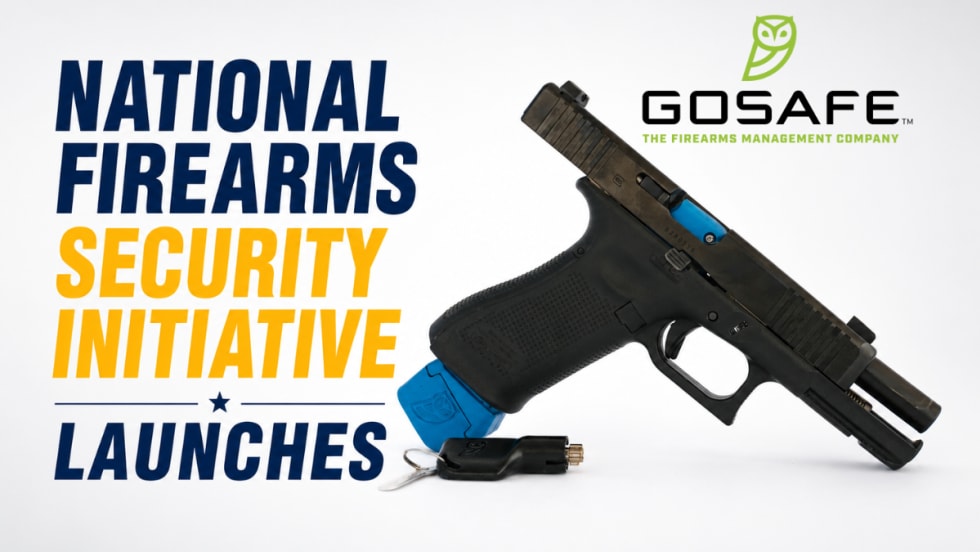
GOSAFE Technology Announces Public Safety Initiative Focused on Firearm Security and Risk Reduction
GOSAFE Technology’s new initiative provides support for agency-level solutions around secure firearm storage, vehicle-storage risks, off-duty firearm security, firearm accountability, and the public safety consequences that may result when firearms are stolen, lost, improperly secured, or diverted from lawful possession.
Read More →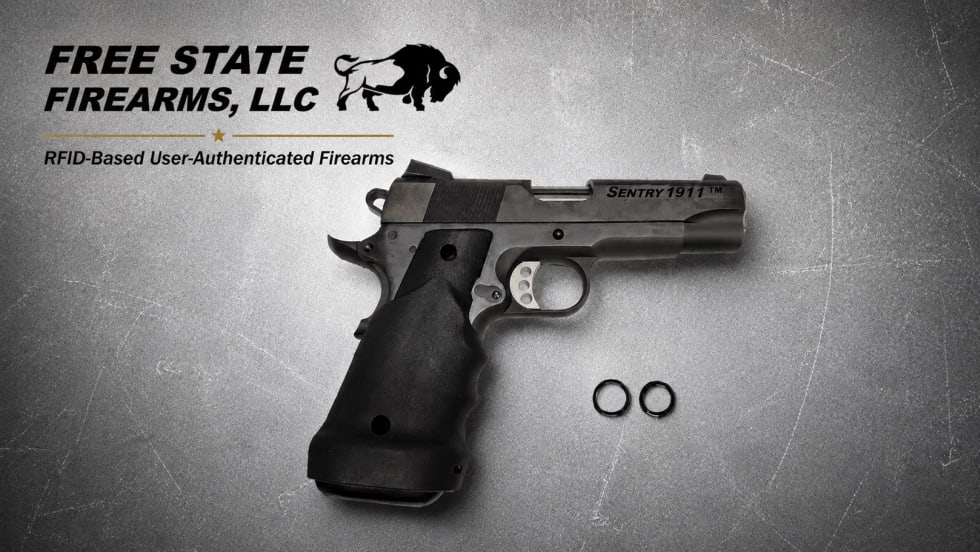
Texas Sheriff’s Office Deploys RFID-Based User-Authenticated Firearm for Prisoner Transport Operations
A sheriff’s office in Texas is now using RFID-based user-authenticated firearms, from Free State Firearms, for prisoner transfer and transport operations.
Read More →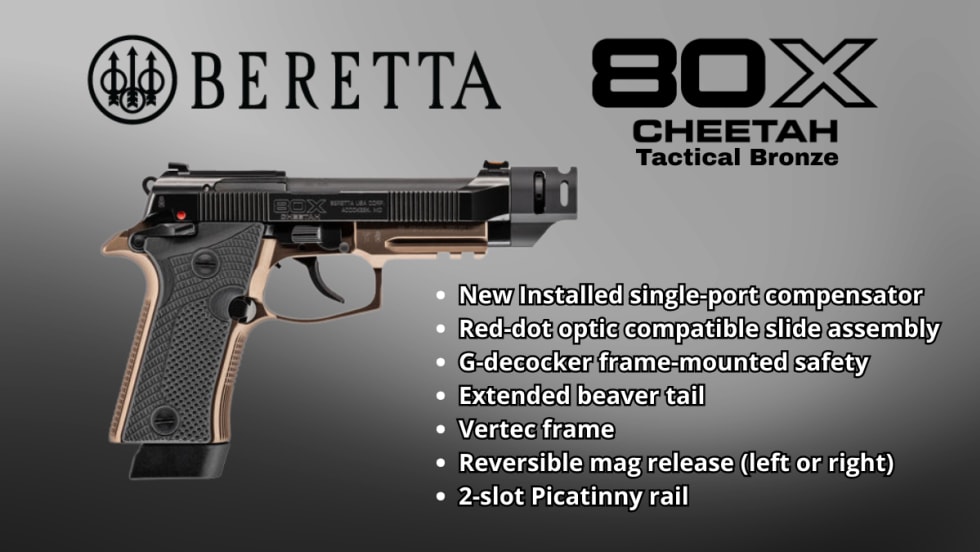
Beretta Introduces the 80X Cheetah Tactical Bronze
Beretta has launched the 80X Cheetah Tactical Bronze, which features a fiber-optic front sight, a serrated rear sight, and a Picatinny rail for accessory mounting, and ships with three 15-round extended magazines.
Read More →
Wrap Raises $5 Million to Restart Domestic Manufacturing & Advance R&D
With new funding, Wrap Technologies will restart domestic manufacturing, advance validated R&D programs into commercialization, and responsibly accelerate early growth initiatives aligned with rising demand for non-lethal response capabilities.
Read More →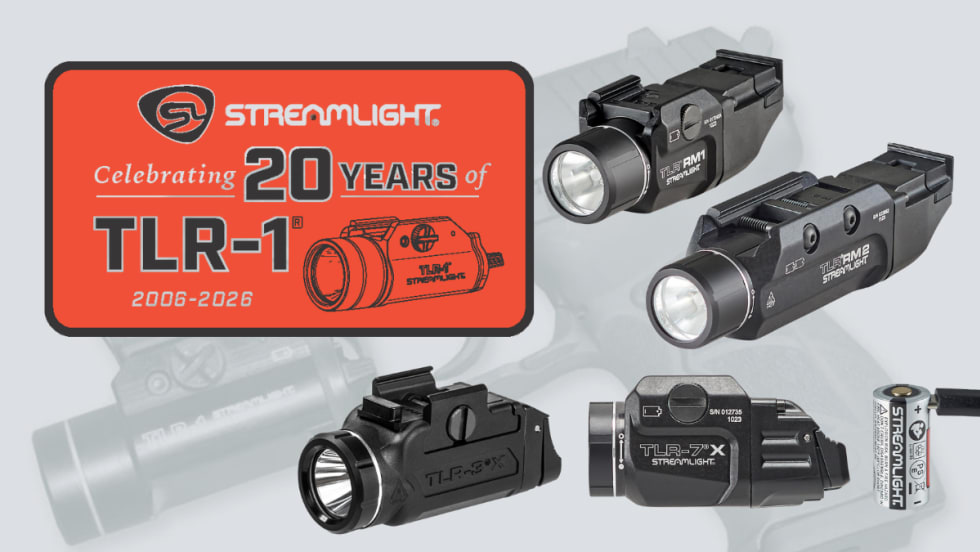
Streamlight Celebrates the 20-Year Anniversary of the TLR Series
This year, Streamlight marks two decades of weapon-mounted lighting innovation with the 20th anniversary of the TLR-1.
Read More →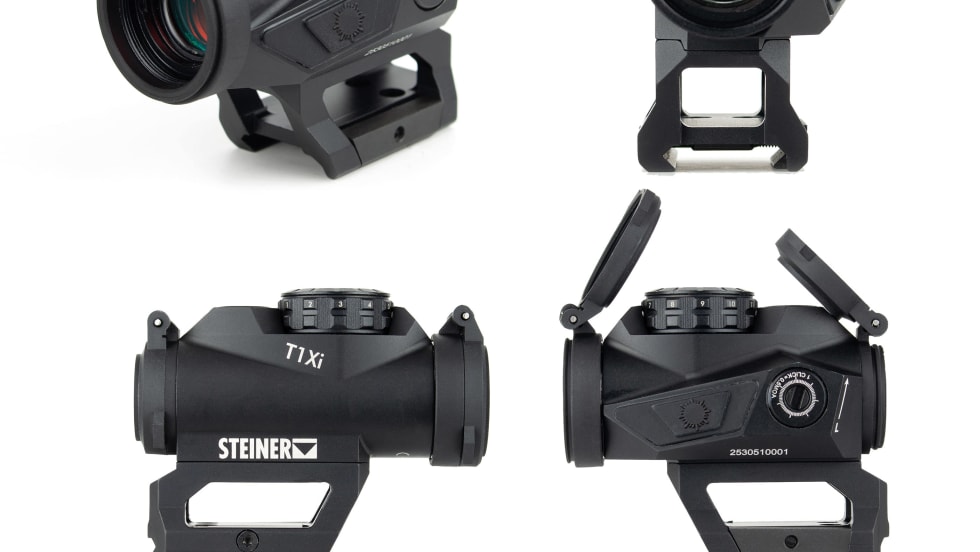
Steiner’s T1Xi Selected as Top Performer in Texas DPS Optic Evaluation
Steiner Optics’ T1Xi was selected as the top-performing red dot in the recent Texas Department of Public Safety optic evaluation.
Read More →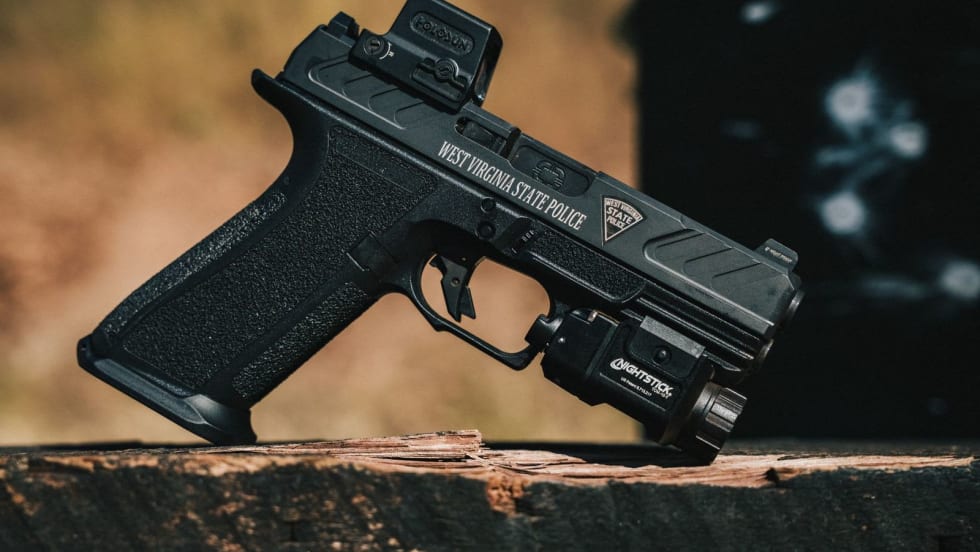
Shadow Systems Selected as Exclusive Pistol Provider for West Virginia State Police
Shadow Systems will provide 700 XR920 crossover pistols for West Virginia State Police troopers and 80 CR920X high-capacity subcompact pistols for the Bureau of Criminal Investigation.
Read More →
Aimpoint Celebrates 50 Years of Innovation and Excellence in Sighting Technology
Aimpoint is marking its 50th anniversary in 2025, celebrating five decades of red dot innovation trusted by military, law enforcement, and tactical professionals worldwide.
Read More →
Streamlight Introduces Long-Range Handgun Light
“Our newest weapon light provides an industry-leading level of candela for handguns, giving users enhanced visibility under low light conditions, such as when searching a dark alley,” said Streamlight President Michael F. Dineen.
Read More →
Georgia Sheriff Warns Criminals They Face Felony Charges for Having Glock Switches
This device by itself, regardless if it is installed on a slide or not, is classified by the ATF to be a machine gun, which is illegal to possess,” the Bibb County Sheriff’s Office said.
Read More →