
February 25, 2026
No Waiting: Detective Busts Missing Persons Myth
Detective David Lee Stephens wants the public and every law enforcement agency to know there is no truth nor logic to the widely held belief that one must wait 24 or 48 hours to report a missing person.
Staff
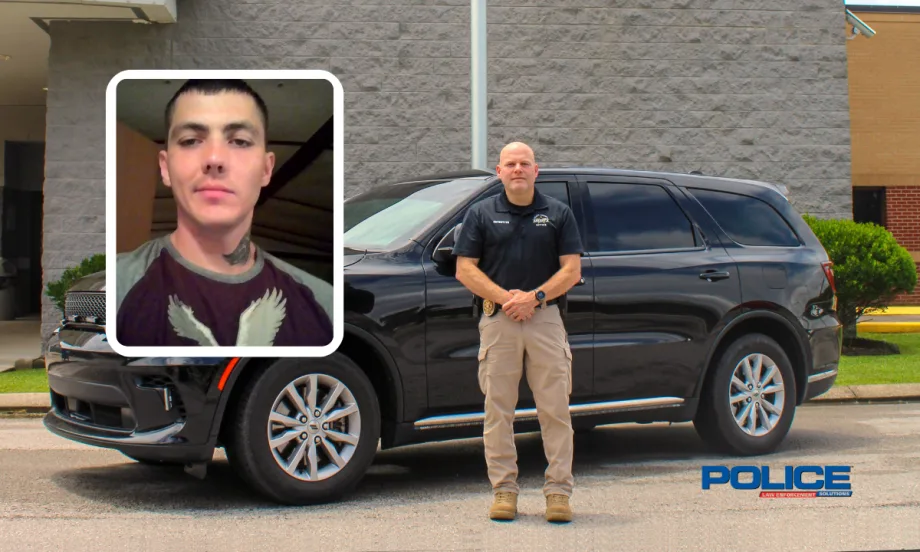
Scott County, Tenn., resident William “Will” Cross had been missing for more than five years when his remains were found across the Kentucky state line. Detective David Lee Stephens of the Scott County (Tenn.) Sheriff’s Office, found him, and believes the myth that one must wait 24 or 48 hours to report a missing person has “buried too many good people.”
Credit:
Detective Aimee Wright/Robin Phillips
5 min to read
- Detective David Lee Stephens aims to debunk the myth that one must wait 24 or 48 hours to report a missing person.
- He addresses both the public and law enforcement agencies, stressing the importance of immediate action.
- The misconception lacks both truth and logical basis, according to Detective Stephens.
*Summarized by AI
William “Will” Cross went missing on Friday, May 18, 2018. The 29-year-old resident of Scott County, Tenn., was last seen north of the state line, in McCreary County, Ky. By the time his remains were found in October 2023, his mother, Robin Phillips, had learned more than she cared to know about how missing persons cases are handled and sometimes mishandled.
“This experience has opened my eyes,” Phillips told POLICE. “I feel for the other families that don’t have that closure.”
Phillips said she navigated a maze of jurisdictional issues and policies that seemed to vary from agency to agency, some of which had “no clue” how to handle a missing persons case. At one point, with no apparent provocation, she was asked to sign a document acknowledging she could be arrested if she was found to be “hiding” her son.
Worse yet, the start of the investigation was delayed. Phillips thought she had to wait a full 48 hours before she could file a report.
“I just believed that. I think the majority of people believe that,” she said. “I waited 48 hours and reported him missing Monday.”
Phillips credits Detective David Lee Stephens with moving the once-stalled case forward. Stephens is a Scott County native who began his law enforcement career in nearby Oak Ridge, Tenn., where he made detective in 2008. He was hired by newly elected Scott County Sheriff Brian Keeton in 2022 as part of an effort to clear a backlog of cold cases, including the search for Will Cross, and update the agency’s polices and procedures.
Stephens doesn’t blame Phillips for waiting 48 hours. He said the myth is so prevalent that many police — not to mention agency staff and emergency call center personnel — believe it as well.
“A lot of people think that’s what it is,” Stephens said. “They’re afraid of having an angry officer chew them out. So, they just think, ‘Hey, there’s no use in calling.’”
The Trail Runs Cold
Stephens blames Hollywood for creating and perpetuating the myth. “I don’t think I’ve ever heard a television show or movie say the correct thing,” he said. He knows it wasn’t invented by a real-life investigator. “The longer they wait, the colder the trail gets.”
Jeff McConnell is a Towns County, Ga.-based K-9 sergeant, SWAT team commander, firearms trainer, and general instructor. Most of his K-9 calls are for controlled searches. But he and his partner, Bravo, a Belgian Malinois/German shepherd mix, sometimes assist in missing persons cases, and McConnell’s first K-9 partner was a bloodhound named Lacey.
While working with Lacey in an adjacent county, McConnell grew so frustrated at showing up to contaminated scenes that he sent an agency-widememo.
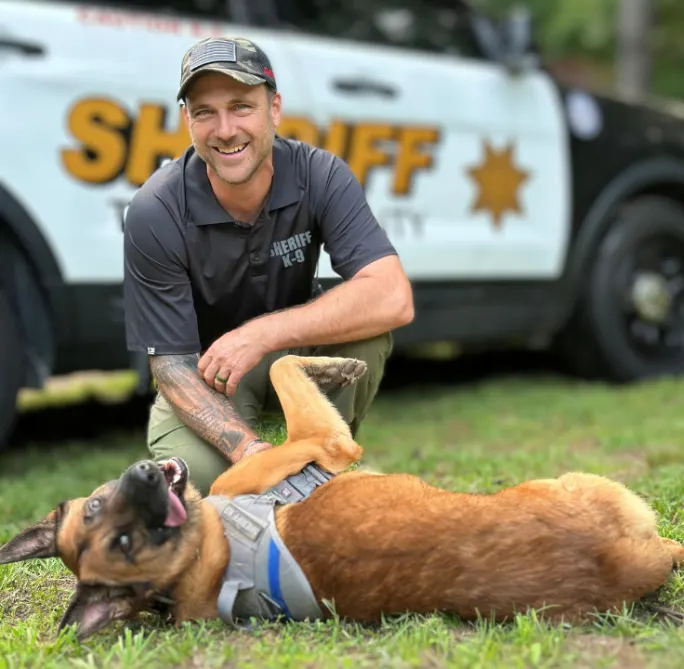
Bloodhound and patrol dog handler Jeff McConnell of the Towns County (Ga.) Sheriff’s Office says delayed reporting leads to contaminated scenes and cold trails.
Credit:
Kristina McConnell
“If it’s a missing person, do me a favor: Stay out of the woods. Give me 15 or 20 minutes,” it read, he recalled. The same advice applies to friends and family of missing persons who may believe they have to search on their own while they wait to file a report. “Of course, you’re a human being. You’re going to go try to find them. The problem with that is, if you’re going into the woods, your scent will be so similar, it will throw the dog off.”
And as Stephens pointed out, the longer the investigation is delayed, the wider the search radius.
And that’s just the tip of the iceberg: Surveillance footage may be overwritten. Cellphone data may be lost. Witnesses may forget crucial details or leave the area, never to be interviewed.
“We get people from other states doing off-road riding. If they go missing on a trail, and there are any witnesses, you’ve got a day to find those witnesses before they go back across the state line,” Stephens says.
Family and friends understand the urgency. If they believe they have to wait to report a missing person, they are likely to start investigating on their own. Stephens worked on one case in which searchers were chased out of a dangerous area by armed residents.
“That family should not feel like they had to be out there,” he said. “But if law enforcement is doing what they should be doing and communicating with the families, they’ll feel like everything that could be done is being done.”
“Time is already against you,” McConnell added. “Between weather, people walking through the area, the quicker the better. Because those hours or even minutes could be a life.”
Education, Policies & Procedures
Stephens said he believes unwinding the forced delay myth will require a multifaceted approach:
- Training: First and foremost, every law enforcement officer, 911 operator, and public-facing staff member must be properly educated.Policies and procedures must clearly state that citizens should never be told it’s too soon to take a report. “You get a department that doesn’t have much crime, doesn’t often handle cases like this, and doesn’t have training, they will fall back on what they know.”
- Media: Stephens would like to see a disclaimer at the beginning or end of every movie or TV episode that depicts a missing person, particularly if the myth is invoked. “For the storyline, the drama, you can’t change that. But they can say ‘We’re using this 24- or 48-hour delay for effect, but you should not delay reporting someone missing.’”
- Social media: Stephens urges police departments and sheriffs’ offices to periodically call out the myth on their social channels, assuring followers that any delay reduces the chance their loved one will be located quickly. “If every agency made it a point to educate through social media, to the citizens in their area, that would take Hollywood out of it.”
Stephens said that, if law enforcement does its part, even long-held beliefs can change — among the public and in Hollywood writers’ rooms. He believes the 24- or 48-hour myth has “buried too many good people” and wants to see it erased.
“I've seen what happens when families wait. I've also seen what happens when they don't. The difference is life-changing.”
Missing Persons by the Numbers
- Around 600,000 people are reported missing in the United States every year. (Statista)
- U.S. law enforcement agencies cleared 89% of the missing persons reports filed in2023. (National Crime Information Center)
- About 99% of missing persons cases are ultimately “canceled,” meaning the subject returned home, was located deceased, or was reported missing due to a misunderstanding. (NamUs)
- 79% of missing children and 76% of missing adults are located within 24 hours, and 86% of adults are located within 48 hours. (Missing People)
Quick Answers
The biggest myth is that you must wait 24 or 48 hours before reporting a missing person.
*Summarized by AI
Loading data...