



Web Exclusive: A New Approach to Firearms Training
Students who have attended the D.R.A.W. School say the results can be impressive. “When we went to the range for live-fire training after the first D.R.A.W. School class, the results were instantly apparent. Not only were officers quicker out of the holster, their first shot was right on target, and their follow-up shots were faster and much more accurate,” says Lt. Jason Graham, training coordinator with the Wake Forest (NC) Police Department.

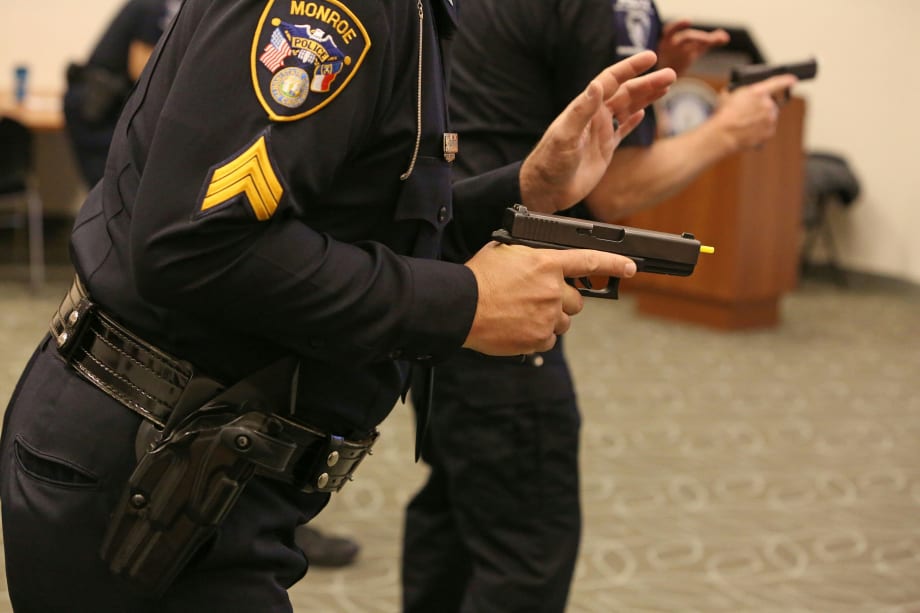
Officers are trained to move into their stance before reaching for their guns.
In most states, the firearms training standards for law enforcement officers are geared toward helping officers qualify with their firearms on an annual or semi-annual basis. Many departments though, have a hard time getting their officers past the basics of shooting taught in the academy. “Criminals are getting smarter, faster and more deadly than ever before. Our training must give our officers the advantage on the street today,” says Sgt. James “Mike” Smith, president of the North Carolina Law Enforcement Training Officers Association and a trainer with the Monroe (NC) Police Department.
Jason Speller, chief firearms instructor with Charlotte-based Fenix Law Enforcement Training strongly agrees. “We cannot continue to make our minimums our maximums. We are seeing how state-mandated training minimums are handicapping officers, especially when it comes to being able to quickly perform the basic skills necessary to win in high-stress scenarios.”
To help officers gain more advanced firearms skills Speller and the team at Fenix developed the Law Enforcement D.R.A.W. School Firearms Training program. D.R.A.W. is an acronym that stands for drawing, reloading, and aiming of weapons.
“When we started working on D.R.A.W. School, we knew we wanted to push the training envelope, and this would require setting tradition aside and thinking well outside the box,” says Speller.
Body Mechanics
Speller turned to an unlikely source for input—elite athletic trainers and doctors. He teamed up with Dr. Aaron Ernst, who worked directly with the USA Olympic judo team during and was instrumental in helping Kayla Harrison win a gold medal in 2012. “When we started our research for D.R.A.W. School, the first thing we did was focus on the human body, not the gun," Ernst says.
Ernst's approach became the foundation of the D.R.A.W. School program. The first part of the DRAW School curriculum focuses on the mental and physical processes that create good balance and rapid movement. “One of the most interesting things we learned was that there is absolutely no such thing as ‘muscle memory.’ The brain initiates and controls movement, and how fast the impulse travels from the brain to the muscles will dictate the speed and accuracy of that movement,” says Speller. “In the first D.R.A.W. School training module we teach officers how the brain precisely controls movement and physical balance. Once they understand these two important factors we then focus on how the body works mechanically.”
Ernst says there are a lot of current firearms training techniques that actually slow down an officer’s speed. “Anytime you are working against the natural parameters of how the brain functions sequentially or how the body is designed to move mechanically, an officer’s performance and speed will suffer tremendously,” he explains.
Speller says the D.R.A.W. team spent months looking at every physical function of using a firearm, from drawing to shooting. Any techniques that did not use proper body mechanics were discarded and new ones were developed, he explains.
That meant D.R.A.W. was challenging conventional wisdom and traditional training methodologies. “This was not popular when we first started,” Speller says. "But we quickly realized that the traditional fundamentals being taught to officers for decades actually inhibited an officer’s performance.”
For instance Fenix says the process in which the brain fires signals to the muscles in a high-stress situation will always cause the officer to begin moving or getting into his or her shooting stance before reaching for the firearm. “Based on the traditional fundamentals of marksmanship, teaching grip before stance actually slows the officer down. If we train officers in a manner that is not in line with the brains natural sequences, we are robbing the officer’s ability to react in the fastest way possible,” says Speller. "What we've found is proper stance and balance must be taught and mastered before anything else.”
Another adjustment Speller says the D.R.A.W. School program made was replacing the fundamental of “grip” with “draw sequence.” Many officers and instructors told the Fenix team they were never taught a specific method for drawing their firearms from a duty holster. Yet, according to Speller, many officers struggle with the draw.
With a Level III duty holster, there are several things that must take place simultaneously in a fraction of a second for a quick, smooth draw, Speller explains. “Gripping the firearm is just one part of the draw process. If we don’t train officers on the entire draw sequence, we are really hurting their performance at a very crucial point. If the overall draw sequence isn’t right, nothing else will be either.”
Stress Inoculation
There are a lot of similarities between the negative, involuntary physiological affects experienced by elite athletes and officers in high-stress situations. Increased heart and respiratory rate, loss of fine motor function, auditory exclusion, restricted sight, and other physical responses to stress can impair an officer’s performance. For many years, athletic trainers have been teaching athletes how to identify and push past these involuntary responses and maintain focus on their objectives. Accordingly, the D.R.A.W. School curriculum and practical exercises are designed to inoculate officers against much of the mental and physical stress they will initially experience during high-stress situations.
Speller says this is extremely important when it comes to aiming. In high-stress situations, it is rare that officers actually acquire their sights before firing their guns. “The brain has an amazing ability to control fine movement in a high-stress situation,” explains Speller, “but only if we train for it. We train officers to align their sights on every repetition in a very specific, conscientious manner. As we increase the speed of each segment of training, the process of aligning their sights slowly becomes less of a conscious function and more of a subconscious function.”
Speller explains it this way, “When officers anticipate recoil, they are not aware they flinched as the bullet was traveling through the bore. That is because in the instant the gun fires, the subconscious mind is afraid of the gun firing and tries to counter the recoil by flinching and pushing the muzzle down. It happens so fast the officer doesn’t consciously know he or she did it. All the officer sees is a low impact on the target.”
Students who have attended D.R.A.W. School say the results can be impressive. “When we went to the range for live-fire training after the first D.R.A.W. School class, the results were instantly apparent. Not only were officers quicker out of the holster, their first shot was right on target, and their follow-up shots were faster and much more accurate,” says Lt. Jason Graham, training coordinator with the Wake Forest (NC) Police Department.
Recoil Management
The increased level of accuracy experienced by the Wake Forest PD students is a result of another aspect of the Fenix team's research, say Ernst. “In a word, it's all about ergonomics. It is one thing to grip a firearm, it is something entirely different to interface with it based on what it does when it’s fired,” he explains.
The team used several technologies to analyze how recoil energy traveled from the firearm and through the body of the shooter. They discovered the energy always seeks the path of least resistance, and they found two ways to manage recoil.
Their first method is to teach students to manipulate joint angles in the wrist, elbows, and back, so that the recoil energy is given a predictable and controllable path to travel. “When the officer knows how and where recoil energy is going to travel, managing it becomes much easier,” explains Speller.
The second method focuses on using the stored energy in a semi-auto pistol's recoil spring to the officer’s advantage. When a pistol is fired, the recoil energy moves the slide to the back of the gun, compressing the recoil spring. As the spring moves the side forward, energy is immediately transferred back to the front of the firearm. This process happens in a fraction of second, making it extremely difficult for muscles to react to the opposing forces in a controlled manner. “When we control recoil energy with the angles in the wrist and elbows, the stored energy in the recoil spring will bring the firearm right back down on target for us, which means the officer doesn’t have to fight the firearm back on target for each shot.”
The next thing the officer has to focus on is trigger control. “We cannot underscore the importance of trigger control enough,” says Speller. “We speed things up by slowing them down when it comes to trigger control.”
Speed is also addressed in the program's weapon drawing training. It takes an average of 1.5 seconds for an officer to get his or her firearm out of the holster and on target from the point of recognition. “That 1.5 seconds in a high-stress situation is an eternity. Every officer we spoke to who had been involved in a shooting said that if they could’ve had a few extra tenths of a second, they would have gladly taken it,” says Speller.
Fenix claims D.R.A.W. School can help officers cut their draw time from a Level III holster almost in half. “Officers in our first D.R.A.W. School class reduced their draw speed to under one second from the point of recognition,” says Wake Forest PD's Graham. “The speed at which the students were drawing from duty holsters by the end of the class was much faster than when they started.”
A Blended Learning System
Firearms skills are perishable, regardless of the quality of the shooter's training. “If officers go three or four weeks in between training sessions with their firearms, they often lose more than they learned,” explains Speller. “We wanted to develop a training system that allowed officers to stay constantly engaged in the firearms training process throughout the year. This meant that the practical exercises had to be developed on a dry-fire training platform."
D.R.A.W. School uses a blended learning system, including five four-hour classroom sessions. These sessions cover mastering the proper bio-mechanical sequences for drawing and reloading, performing in an injured state with only one arm, mastering one-handed shootings, and shooting from various positions on the ground. Through a carefully designed series of practical exercises, officers quickly apply the techniques they are learning.
Classroom training is not enough, though, Speller says. That's why the D.R.A.W. School includes online training. Following each four-hour classroom session, officers must take five additional 15-minute training sessions. The online sessions require officers to work through each step of the classroom portion individually. Certain parts of the online training have “shoot-don’t shoot” scenarios hidden throughout. "Departments asked us to build accountability into the online training system,” says Speller. At the end of each online session officers have to take a short quiz in order to progress.
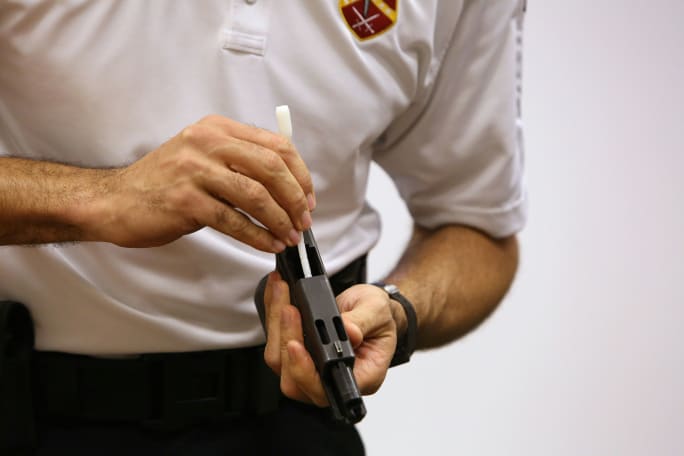
Fenix developed the BarrelBlok to make dry-fire training safer and more realistic.
Making Training Safer and More Realistic
While dry-fire training can be highly beneficial, it also has its drawbacks. “Dry-fire training can build unnecessary steps into a performance sequence; we call these training scars,” explains Speller. Training scars are functions an officer has to perform in a training environment that would not otherwise be duplicated in a real-world situation.
“We wanted D.R.A.W. School to have zero training scars," Speller says. "This meant that every function of the firearm had to be precisely duplicated, while ensuring the firearm was completely safe." According to Speller, achieving this goal was no small feat. “There wasn’t a single product on the market that could do what we needed, so we ended up designing a new training tool altogether.”
Fenix created a two-piece training and safety tool called BarrelBlok, which inserts into the firearm. The first part of the BarrelBlok slides into the barrel through the open ejection port and fits into the chamber. When installed, the chamber is completely blocked and a round cannot be chambered. The other end protrudes from the muzzle. This provides a positive visual indication that the firearm is safe and the tip also acts as a holster clearance indicator when drawing. This teaches officers the correct draw height so they don’t under or over draw from the holster.
The other part of the BarrelBlok device resembles the shape of a cartridge and gets inserted into the top of the magazine. It “tricks” the gun’s mechanical functions by replicating a magazine with live ammunition in it. The slide will not lock to the rear when fully actuated and it will not chamber the device itself. “When BarrelBlok is inserted, the firearm will maintain its full mechanical functionality just as it would when carried on duty. You simply cannot make the firearm any safer or more realistic than when using BarrelBlok,” says Speller.
How The Program Works
To keep the cost of the program low, Fenix Training came up with an innovative delivery method for D.R.A.W. School. First, a department purchases the D.R.A.W. School program, which is priced on a sliding scale according to the agency's number of sworn officers. The cost for an average-sized department is about $25 per officer for the first year. The department then sends it’s firearms instructors to a five-day D.R.A.W. School Instructor Training course to become certified instructors.
The instructor training course is an intense program that includes academic study, practical exercises, live-fire training, and online training for each segment of D.R.A.W. School. Instructor candidates must show proficiency in all areas to pass the course. Upon successful completion of the program, the instructors go back to their departments and implement D.R.A.W. School at their own pace. This means each department can customize the program to fit its needs.
Speller says the reasoning behind the delivery system is easily understood. “It ensures that state-certified firearms instructors are conducting the training." That's important because Speller hopes that in the near future D.R.A.W. School may be approved for in-service training requirements in many states. To make sure those hours are eligible for annual training requirements, in most states it has to be taught by state-certified law enforcement instructors. “
Higher Learning
D.R.A.W. School has also caught the eye of the college community. North Carolina’s largest community college. “We had the opportunity to learn about D.R.A.W. School and see it in action when it was being developed. We realized we could take law enforcement firearms training to a higher level by keeping officers constantly engaged, which we feel is extremely important for all of our officers,” says Major Pat Brown, program coordinator for law enforcement in-service training for Charlotte-based Central Piedmon Community College.
She says the program has received excellent feedback from regional law enforcement instructors who went through the D.R.A.W. School course the college hosted. Immediately following that input, CPCC added all five modules of the D.R.A.W. School program to its spring and fall semesters. “Our world has changed tremendously in the last couple of years and the threats our officers face are not the same as they were 10 or 15 years ago. Our training has to rapidly evolve to keep officers in front of the curve,” says Brown. “We are excited to offer D.R.A.W. School to our law enforcement community.”
For more information on D.R.A.W. School, call Chief Firearms Instructor Jason Speller of Fenix Law Enforcement Training at (704) 935-4433 or go to DrawTraining.com.
More Weapons
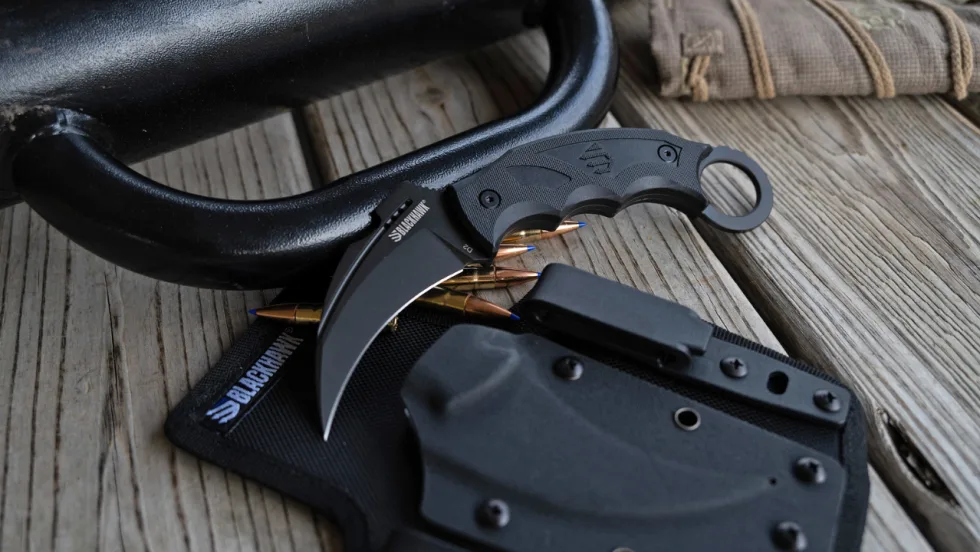
Blackhawk Introduces the Garra Fixed Karambit
The Blackhawk Garra Fixed Karambit is made from D2 steel and features a curved profile that enhances slicing efficiency, plus the full-tang construction ensures strength and durability from tip to handle.
Read More →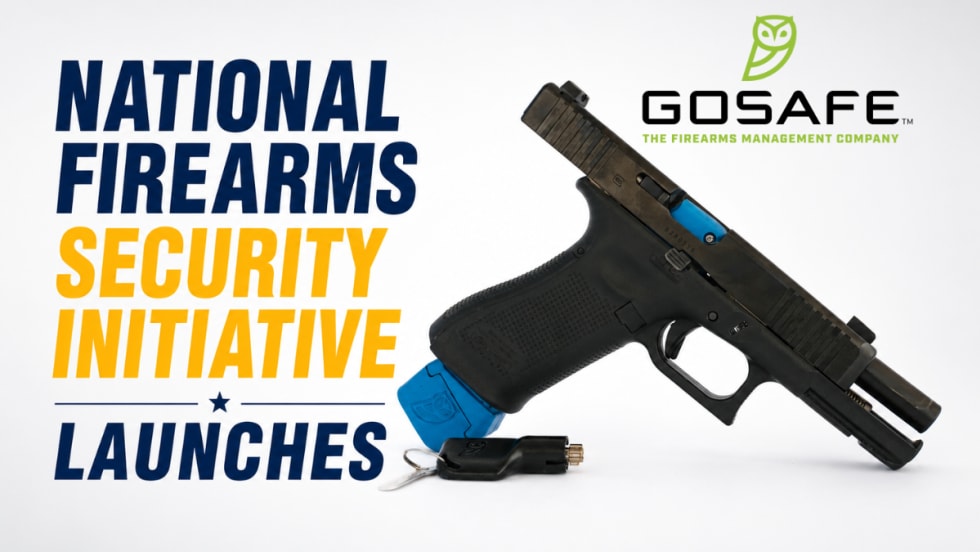
GOSAFE Technology Announces Public Safety Initiative Focused on Firearm Security and Risk Reduction
GOSAFE Technology’s new initiative provides support for agency-level solutions around secure firearm storage, vehicle-storage risks, off-duty firearm security, firearm accountability, and the public safety consequences that may result when firearms are stolen, lost, improperly secured, or diverted from lawful possession.
Read More →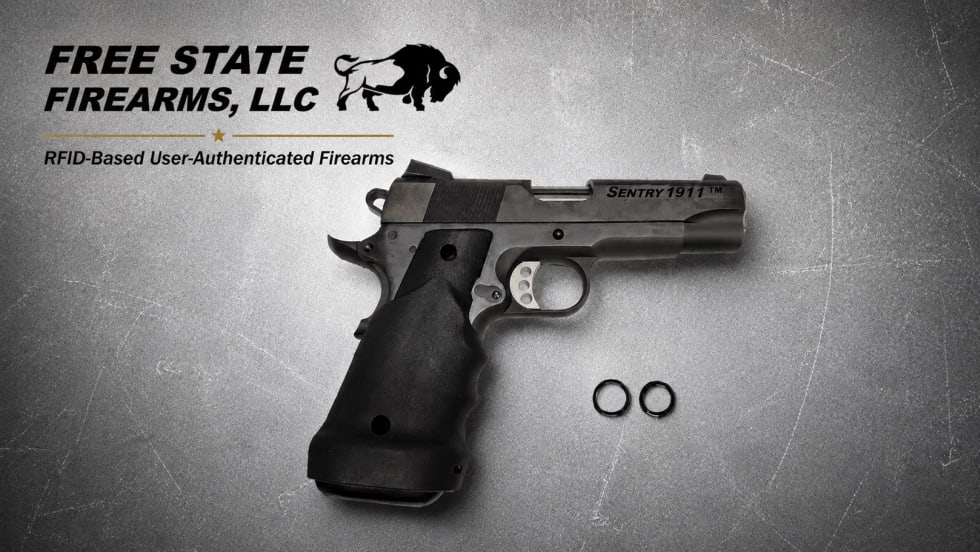
Texas Sheriff’s Office Deploys RFID-Based User-Authenticated Firearm for Prisoner Transport Operations
A sheriff’s office in Texas is now using RFID-based user-authenticated firearms, from Free State Firearms, for prisoner transfer and transport operations.
Read More →
Beretta Introduces the 80X Cheetah Tactical Bronze
Beretta has launched the 80X Cheetah Tactical Bronze, which features a fiber-optic front sight, a serrated rear sight, and a Picatinny rail for accessory mounting, and ships with three 15-round extended magazines.
Read More →
Wrap Raises $5 Million to Restart Domestic Manufacturing & Advance R&D
With new funding, Wrap Technologies will restart domestic manufacturing, advance validated R&D programs into commercialization, and responsibly accelerate early growth initiatives aligned with rising demand for non-lethal response capabilities.
Read More →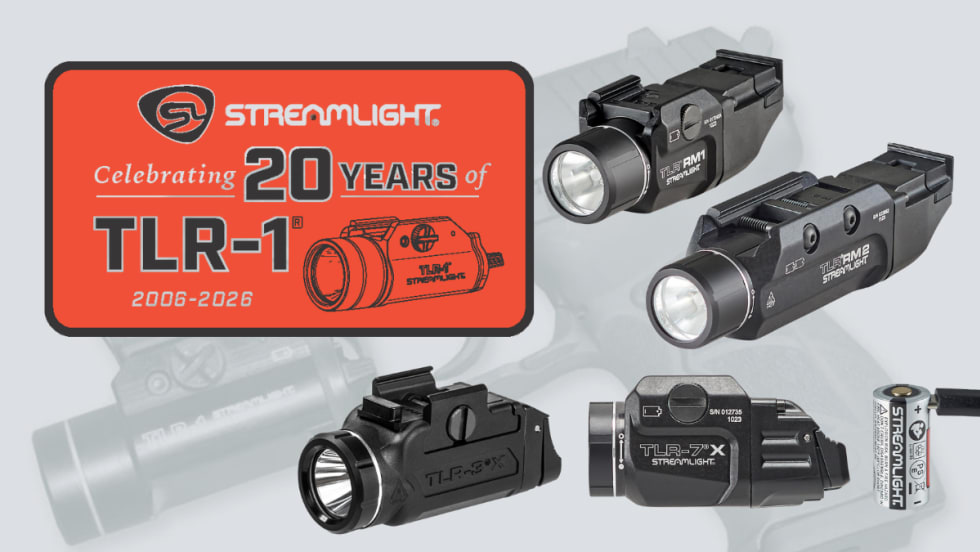
Streamlight Celebrates the 20-Year Anniversary of the TLR Series
This year, Streamlight marks two decades of weapon-mounted lighting innovation with the 20th anniversary of the TLR-1.
Read More →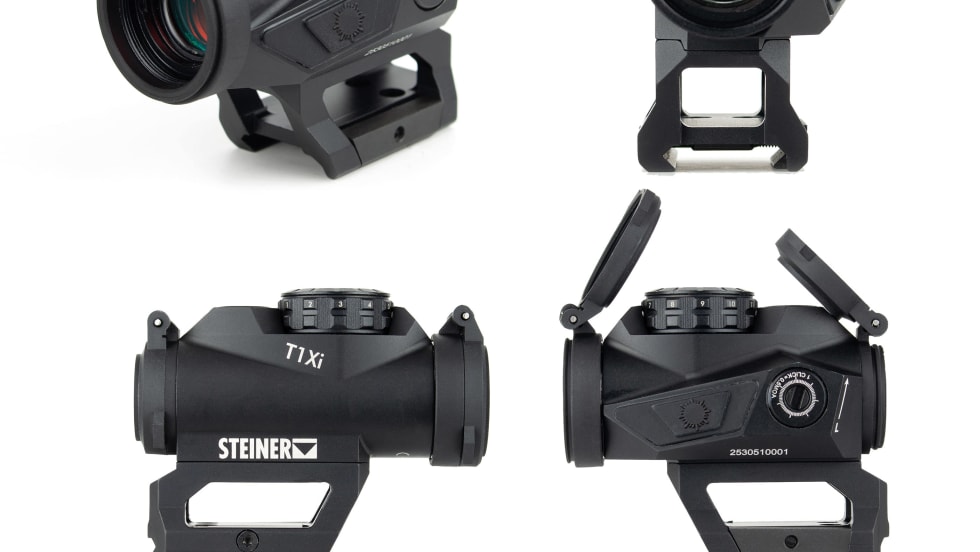
Steiner’s T1Xi Selected as Top Performer in Texas DPS Optic Evaluation
Steiner Optics’ T1Xi was selected as the top-performing red dot in the recent Texas Department of Public Safety optic evaluation.
Read More →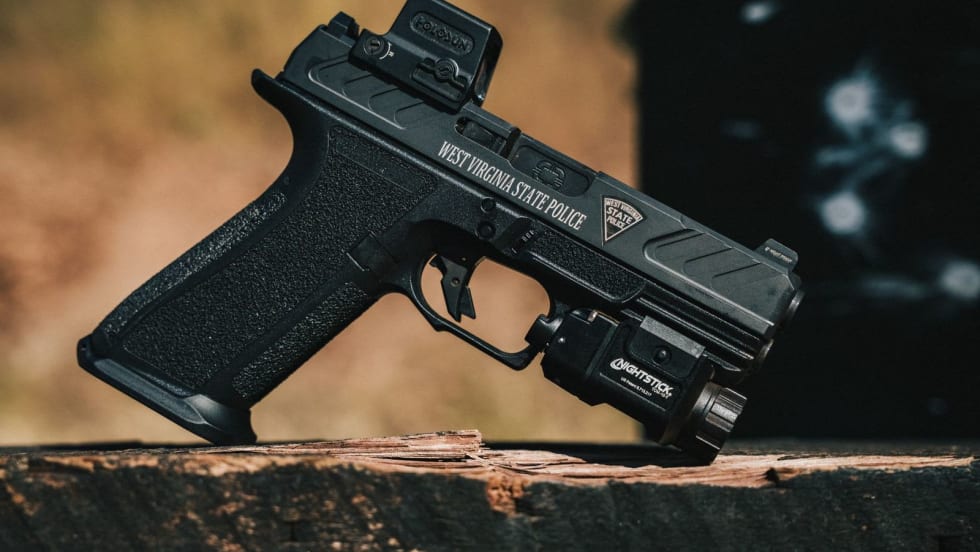
Shadow Systems Selected as Exclusive Pistol Provider for West Virginia State Police
Shadow Systems will provide 700 XR920 crossover pistols for West Virginia State Police troopers and 80 CR920X high-capacity subcompact pistols for the Bureau of Criminal Investigation.
Read More →
Aimpoint Celebrates 50 Years of Innovation and Excellence in Sighting Technology
Aimpoint is marking its 50th anniversary in 2025, celebrating five decades of red dot innovation trusted by military, law enforcement, and tactical professionals worldwide.
Read More →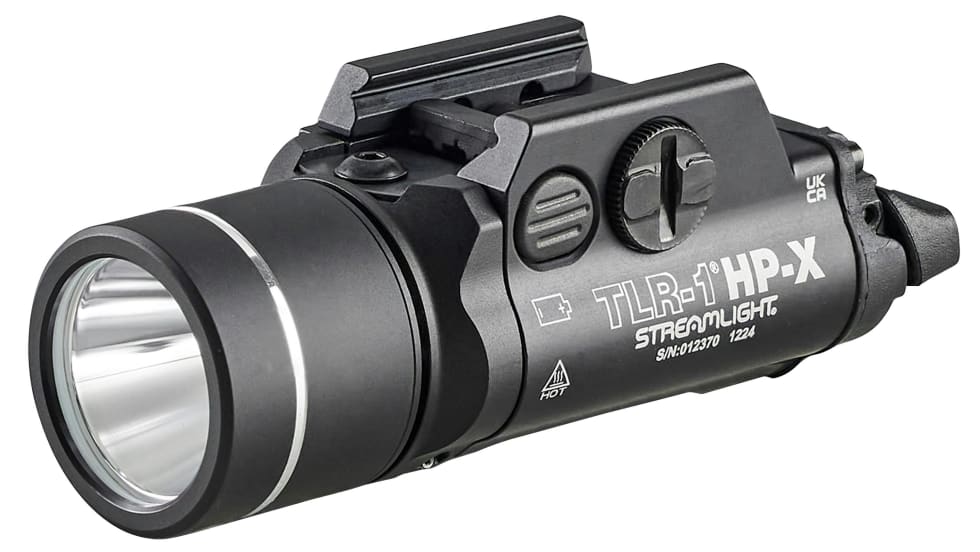
Streamlight Introduces Long-Range Handgun Light
“Our newest weapon light provides an industry-leading level of candela for handguns, giving users enhanced visibility under low light conditions, such as when searching a dark alley,” said Streamlight President Michael F. Dineen.
Read More →