



Who Qualifies for the LEOSA Privilege?
Let me stress that this is not meant to be either legal advice or an end-all/be-all discussion, but it is my hope that it will assist many of you in answering this question: Who qualifies for the privilege LEOSA affords?

Photo: istockphoto.com
Within my first week as an attorney at the National Rifle Association of America's Institute for Legislative Action I took a call on the Law Enforcement Officers Safety Act (LEOSA). I admittedly knew nothing about the law, but in my post-military arrogance, I assumed there would be nothing too complex about responding to an inquiry from a fellow Marine on a two-page law. Little did I realize that almost six years later a large portion of my time would still be devoted to clearing up all the misconceptions there are about LEOSA.
A book could be written about all the unique and novel problems that arise under LEOSA, but after mulling my word count limit for this article for several weeks I decided to attempt to tackle one of the most common areas of confusion I encounter. Let me stress that this is not meant to be either legal advice or an end-all/be-all discussion, but it is my hope that it will assist many of you in answering this question: Who qualifies for the privilege LEOSA affords?
The Employment Requirement
Many of you may recall a story from earlier this year regarding the arrest of a Pennsylvania State Corrections Officer in New Jersey after his vehicle was struck by a drunk driver. Upon informing the responding officers that he was in possession of a firearm under the false assumption that he was protected by the law, the officer quickly found himself facing a minimum of three-and-a-half years in prison over a charge of unlawful possession of a handgun. There were many conflicting reports over the applicable law and what, if anything, exempted the officer from New Jersey's archaic firearm laws. But here's what really happened. The officer in question believed his state of Pennsylvania permit afforded him protection in New Jersey under the erroneous belief of a reciprocity agreement between the states. It was the media who distorted the narrative, claiming that LEOSA applied and protected him from prosecution. The charges were ultimately dropped, but it had nothing to do with LEOSA. Despite the law's intent, LEOSA afforded this officer no protection.
The unlikely facts leading to the corrections officer's arrest in New Jersey should serve as a cautionary tale to many who carry under the false belief that the LEOSA privilege extends to them. There are many qualified law enforcement officers/qualified retired law enforcement officers (QLEO/QRLEO) that fail to realize they qualify for the LEOSA privilege such as animal control officers, coroners, arson investigators, to name a few, but my experience shows there are far more who falsely believe they do.
Both sections of the law (18 U.S.C. §§ 926B & C) outline the requirements one must meet in order to qualify for the privilege LEOSA affords; however, many people fail to recognize one of the most important elements contained in both. Perhaps it is because they are not listed individually like the others, or because the language differs in each section, but even though you may have 20 years of service as a POST/DCJS certified law enforcement officer and meet every other element of the statute's requirements, if you are not employed by a government/public agency you are not protected.
It is heartbreaking for me to relay this information. There are countless good officers who should be able to carry under the intended purpose of the law, but the simple fact remains that your employment matters. And while you may think any uncertainty over your employment status is easily resolved by a quick check of your employer's status it is not. Because even if you work for a government/public agency LEOSA does not define who or what an "employee" is.
When LEOSA was amended in 2010 significant changes were made to the definition of a "qualified retired law enforcement officer." Along with substituting "separated" for "retired" in all areas except the title, the requirement that separated/retired officers have a "nonforfeitable right to benefits" was removed and the language "regularly employed … for an aggregate of 15 years…" was changed to separated after having "served as a law enforcement officer for an aggregate of 10 years…" While these changes may appear only relevant to those who previously left service after 10 years but before 15, the change of language effectively opened the door to everyone that is, and could be, considered a law enforcement "employee."
Prior to 2010, officers in a non-full-time status could carry under the LEOSA privilege only while actively attached to a government/public agency. However, the minute they separated or retired the LEOSA privilege was lost. This was because most could not meet the "nonforfeitable right to benefits" requirement. When the amendment removed that language, the LEOSA privilege was effectively opened to almost every separated government/public LEO with 10 or more years of aggregate service, whether he or she be reserve, auxiliary, special category/level officers, and even volunteers. And individuals who separated after completing any applicable probationary period due to a service-connected disability also qualify.
Defining Qualifications
Most states define who a peace officer is and where the officer's authority extends under law. Many agencies rely on these definitions when looking to apply or, more often, deny their officers the ability to qualify for LEOSA. This often comes through an agency's refusal to issue the law's required photographic ID to anyone but those defined as full-time active or separated/retired officers. Those that rely on the false assumption that LEOSA requires 24/7 law enforcement authority fail to comprehend that LEOSA contains its own definition of a QLEO/QRLEO, and that definition is what determines an individual's qualification status for the LEOSA privilege. Furthermore, because LEOSA neither defines "employee" nor contains any limiting language on it, agencies that establish policies denying IDs to non-full-time officers may be exposing themselves to liability.
Agency Control
Much like the many issues that arise under LEOSA, an entire book can be dedicated to the topic of employment, but the most important takeaway in relation to employment under LEOSA is that had Congress intended to limit the LEOSA privilege solely to full-time officers, it could have done so.
A review of LEOSA's legislative history highlights the amount of consideration given to the law's terms. H.R. Rep. No. 108-560, at 80 (2004) reads in part: "We think of a law enforcement officer as someone who is actively engaged in making arrests; however, this legislation uses an expanded definition…This broad definition could encompass different individuals in different states including probation and parole officers and jail or prison guards. These officers, while performing an admirable service, will not necessarily have the experience of the beat police officer, yet, this legislation insists we allow them the same authority to carry concealed weapons anywhere in the country." This debate over the statute's definitions of QLEO/QRLEOs not only highlights Congress' understanding of the broad applicability of the law, but also the legislators' understanding that limiting language such as a requirement for financial compensation could have been included had the desire been to limit the privilege solely to full-time officers. Absent any limits on the word "employee" it is clear that none are intended. But conveying that point to agencies hostile to the theory that non-full time officers qualify can be difficult without further support.
Most states have laws defining "employee," but an analysis of the laws of all 50 states is impractical for the purpose of this article. However, since most state laws mirror federal law, a simple, yet non-exhaustive review of how "employee" is defined at the federal level is instructive.
While a federal definition of employee can be found in specific contexts such as federal employment laws such definitions provide little assistance for LEOSA purposes. So we must look to case law. Again, while no direct definition can be found, the Supreme Court has found that when determining the meaning of an undefined word contained in a federal statute common law principles apply.
For purposes of LEOSA, the Supreme Court case of Nationwide Mutual Insurance Co. v. Darden (503 U.S. 318, 322-23, 112 S. Ct. 1344, 1348, 117 L. Ed. 2d 581—U.S. 1992) is instructive. It details that agency law principles, or what is more commonly known as the "agency control" test, is to be used to determine the definition of "employee" when a statute does not helpfully define it. Under the "agency control" test, your employment status is determined by an analysis of the amount of control the agency/department exerts over you. Broken down even further, employee status is found if the purported employer controls, or has the right to control, both the result that is accomplished and the means and manner used to accomplish it.
Given the amount of oversight an agency has over the activity and conduct of its officers, little argument can be made that any law enforcement officer, regardless of status, does not qualify as an employee. While there is some limited case law examining this principle, The People of the State of New York v. Arthur Rodriguez (Indictment Number 2917/06 [November 2006]) provides us with the most thorough analysis.
Rodriguez, a Pennsylvania Constable paid on a per-job basis, was found to qualify for the LEOSA privilege because of the agency's control over him. While termed an "independent contractor," not subject to the same supervision as police officers or sheriff's deputies, and not qualifying for state legal representation when sued in connection to his duties and lacking any municipal oversight for his actions, the court nevertheless found that "with respect to the work done by a constable for a court, the constable is performing 'judicial duties' and is in fact 'employed' by the court, district or judge which engaged his services."
Applying the agency control analysis, the Court reasoned that "the fact that Pennsylvania courts have full power to remove Pennsylvania State Constables from their positions, and the fact that they are elected officials, conflicts with the People's theory that Pennsylvania State Constables are not government employees."
Despite being labeled as independent contractors, the ability of the courts to remove state constables from their positions was both a clear indicator of the control they exercised over constables and that constables were in fact employees. Applying this universally, there can be little argument made that agencies do not control the conduct of their officers or have the ability to remove them, regardless of their status.
This is not to say that all law enforcement officers in a status other than full time do in fact qualify for the LEOSA privilege. All of the other statutory requirements must be met in order to meet LEOSA's definition of QLEO/QRLEO, the most applicable being statutory arrest authority and authorization to carry a firearm. But for the vast majority of LEOs, even those that do not receive any financial compensation, due to the amount of agency oversight they are subject to there can be little doubt that they qualify for the privilege LEOSA affords. It is important to recognize this both for administrative and enforcement functions.
Agency Liability
Misidentifying those who qualify for LEOSA can be costly, not only for the individual carrying under the false belief he or she qualifies for the privilege the law affords, but also for agencies and departments that refuse to recognize or misapply the law. The case of Diaz v City of San Fernando, et. al., Los Angeles Superior Court Case No. PC 044139 highlights this point.
Prior to the 2013 amendments that clearly opened the door to military and Department of Defense law enforcement personnel, Diaz, a reserve Coast Guardsman, was pulled over for having a temporary plate on his vehicle. During the stop, a plastic Glock handgun case was observed on the rear floorboard of Diaz's car. During questioning, Diaz identified himself as a "maritime law enforcement officer" and presented his military ID (CAC card) to the officer. After contacting the Coast Guard to "ascertain if the defendant was allowed to carry a loaded firearm," and learning that the Coast Guard "does not issue firearms to reserve personnel" Diaz was arrested for 12031(A) PC, possession of a loaded firearm in a vehicle and spent the night in jail.
When the LEOSA privilege was explained by Diaz's counsel, the case against Diaz was dismissed. Rightfully unsatisfied with the mere dismissal, Diaz sued the city, police department, and officer involved, leading to an out-of-court settlement of $43,500 in Diaz's favor.
The Diaz case demonstrates both the importance of officers understanding who qualifies for the LEOSA privilege and why agencies that refuse to issue LEOSA compliant ID cards to their non-full-time officers, whether they are active or separated, are exposing themselves to potential liability. While the law does not mandate the issuance of LEOSA compliant IDs, failure to issue them to those who meet the statute's definition of a QLEO/QRLEO is a de-facto acknowledgement by denying agencies that those individuals do not qualify for the law. Accordingly, even if the denying agency properly trains their officers to recognize who qualifies for the privilege LEOSA affords, a savvy attorney can easily argue that the conflict between training and department policy creates confusion in the minds of their officers. Accordingly, should an officer fail to properly recognize the privilege in the field, a very credible and costly improper training argument could be made.
James M. Baranowski is manager of External/International Affairs at the NRA's Institute for Legislative Action. As both an attorney and member of the International Law Enforcement Educators and Trainers Association he has served as a subject matter expert on LEOSA issues to legal counsel and agencies throughout the country. He is also a decorated combat veteran, having served more than eight years in the U.S. Marine Corps both as an officer with 1st Reconnaissance Battalion and as a judge advocate. His numerous awards and decorations include the Navy and Marine Corps Commendation Medal with Valor, which he received for his actions during a sniper attack on his unit in Fallujah, Iraq.
More Weapons
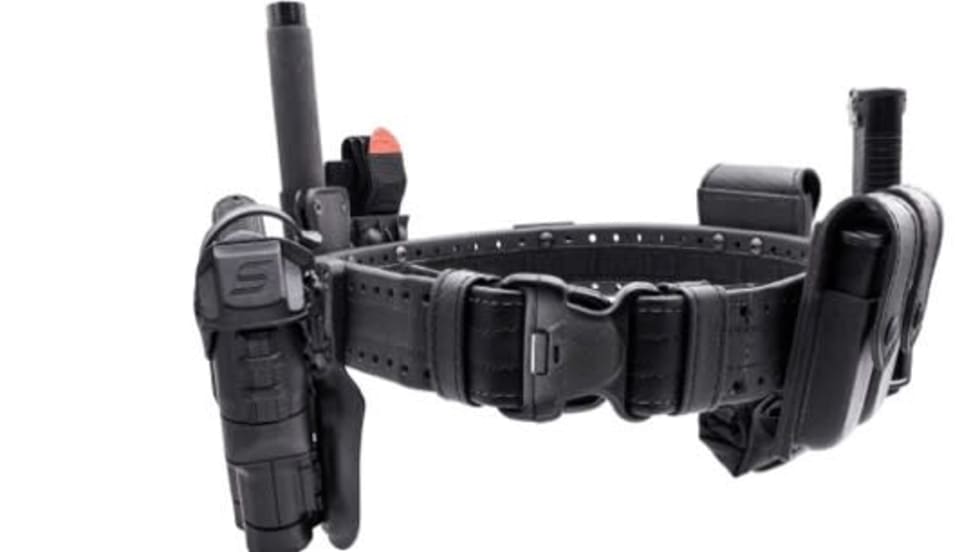
Safariland HOLLE Duty Belt System
For those who keep the peace and put their lives on the line daily, good gear is essential.
Read More →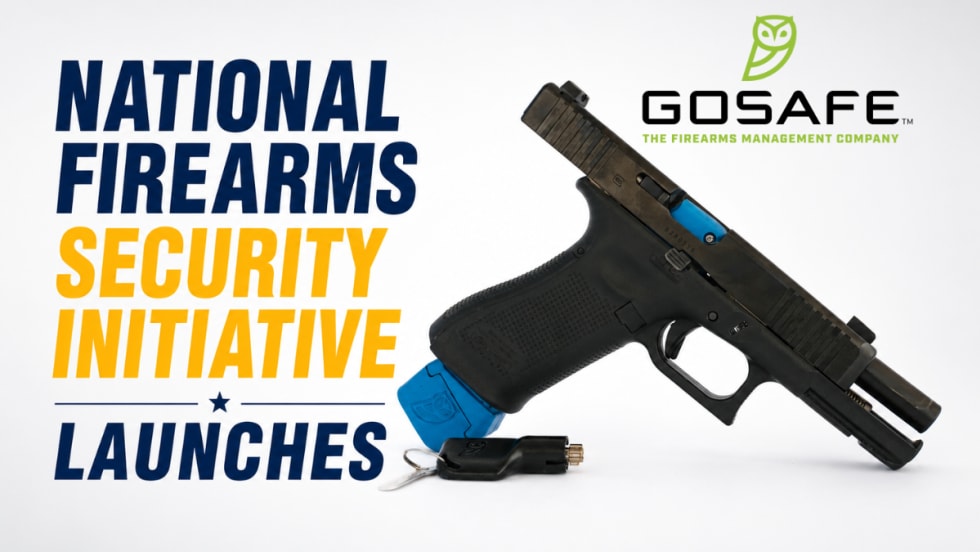
GOSAFE Technology Announces Public Safety Initiative Focused on Firearm Security and Risk Reduction
GOSAFE Technology’s new initiative provides support for agency-level solutions around secure firearm storage, vehicle-storage risks, off-duty firearm security, firearm accountability, and the public safety consequences that may result when firearms are stolen, lost, improperly secured, or diverted from lawful possession.
Read More →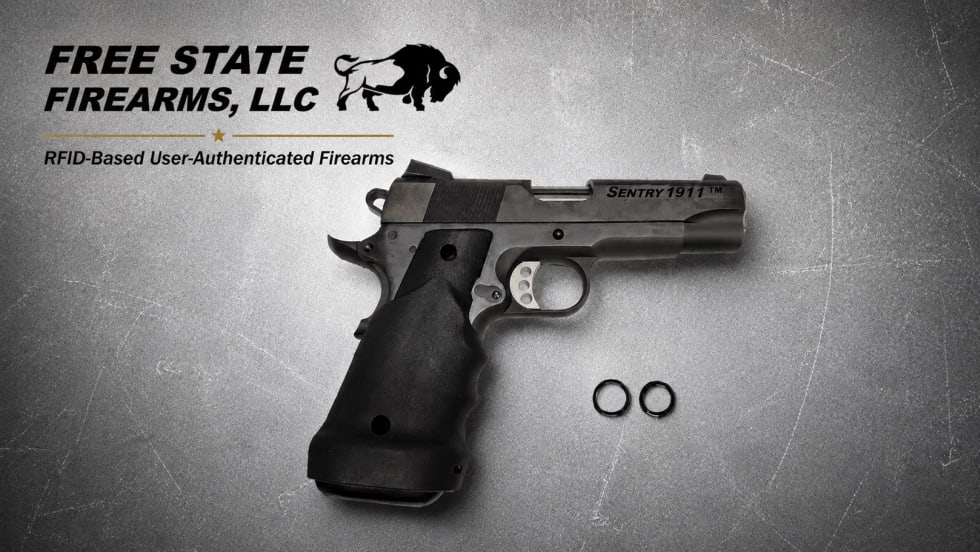
Texas Sheriff’s Office Deploys RFID-Based User-Authenticated Firearm for Prisoner Transport Operations
A sheriff’s office in Texas is now using RFID-based user-authenticated firearms, from Free State Firearms, for prisoner transfer and transport operations.
Read More →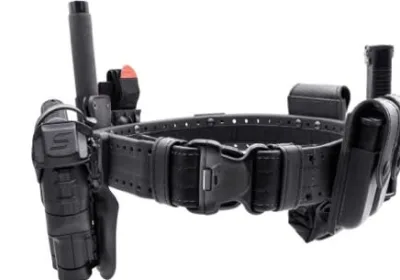

Beretta Introduces the 80X Cheetah Tactical Bronze
Beretta has launched the 80X Cheetah Tactical Bronze, which features a fiber-optic front sight, a serrated rear sight, and a Picatinny rail for accessory mounting, and ships with three 15-round extended magazines.
Read More →
Wrap Raises $5 Million to Restart Domestic Manufacturing & Advance R&D
With new funding, Wrap Technologies will restart domestic manufacturing, advance validated R&D programs into commercialization, and responsibly accelerate early growth initiatives aligned with rising demand for non-lethal response capabilities.
Read More →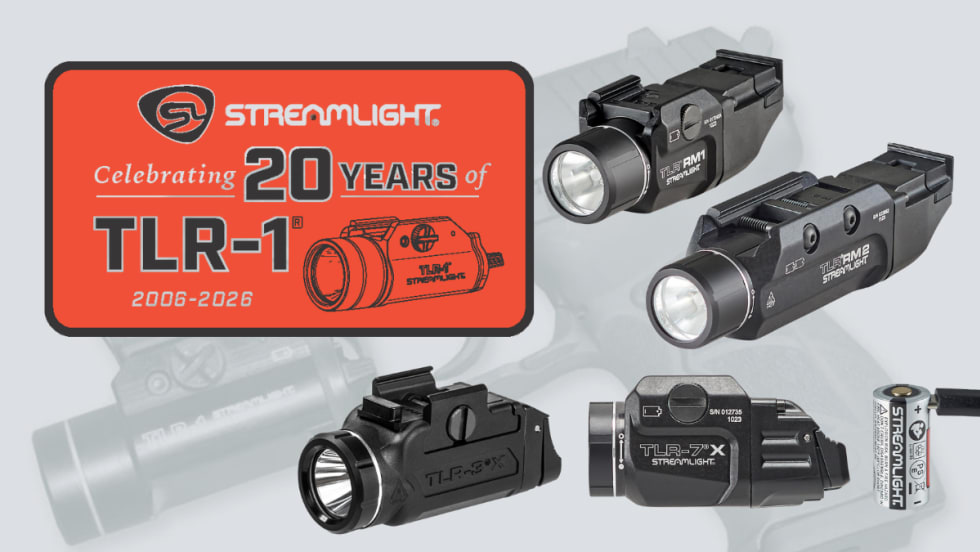
Streamlight Celebrates the 20-Year Anniversary of the TLR Series
This year, Streamlight marks two decades of weapon-mounted lighting innovation with the 20th anniversary of the TLR-1.
Read More →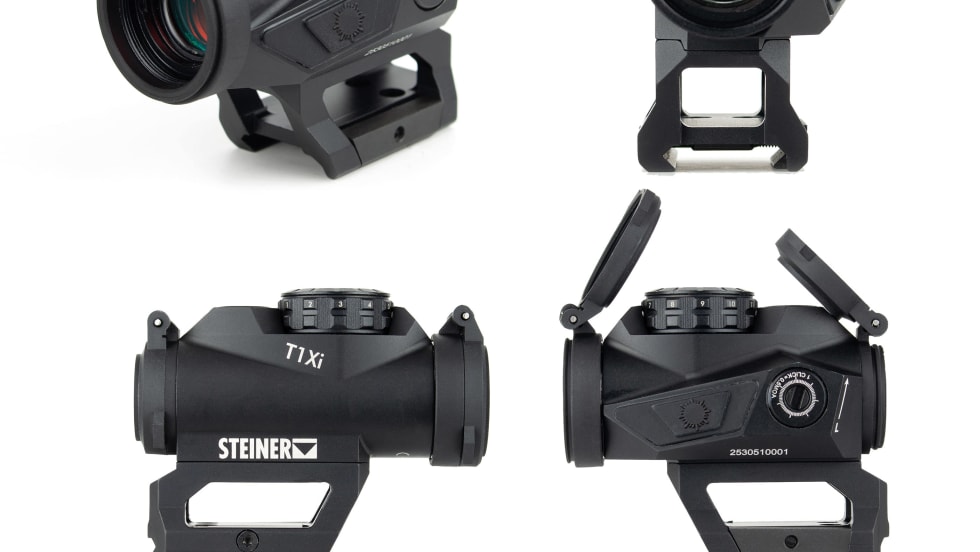
Steiner’s T1Xi Selected as Top Performer in Texas DPS Optic Evaluation
Steiner Optics’ T1Xi was selected as the top-performing red dot in the recent Texas Department of Public Safety optic evaluation.
Read More →
Shadow Systems Selected as Exclusive Pistol Provider for West Virginia State Police
Shadow Systems will provide 700 XR920 crossover pistols for West Virginia State Police troopers and 80 CR920X high-capacity subcompact pistols for the Bureau of Criminal Investigation.
Read More →
Aimpoint Celebrates 50 Years of Innovation and Excellence in Sighting Technology
Aimpoint is marking its 50th anniversary in 2025, celebrating five decades of red dot innovation trusted by military, law enforcement, and tactical professionals worldwide.
Read More →
Streamlight Introduces Long-Range Handgun Light
“Our newest weapon light provides an industry-leading level of candela for handguns, giving users enhanced visibility under low light conditions, such as when searching a dark alley,” said Streamlight President Michael F. Dineen.
Read More →