



NGA Center to Help States Improve Public Safety Interoperable Communications
To help states ensure their communication capabilities are adequately prepared to respond to an emergency, the National Governors Association Center for Best Practices (NGA Center) has announced six states—Arizona, Arkansas, Idaho, Massachusetts, New York and Washington—selected to participate in the Public Safety Interoperability Communications Policy Academy: Focus on Governance.

To help states ensure their communication capabilities are adequately prepared to respond to an emergency, the National Governors Association Center for Best Practices (NGA Center) has announced six states—Arizona, Arkansas, Idaho, Massachusetts, New York and Washington—selected to participate in the Public Safety Interoperability Communications Policy Academy: Focus on Governance.
"Emergency response officials consistently cite the ability to communicate with other first responders as critical to being able to better protect the public in the face of any emergency," said John Thomasian, director of the NGA Center. "This Policy Academy will provide states the opportunity to addresses the coordination needed among key stakeholders to build efficient, effective interoperable communications."
The Policy Academy will focus on helping selected states improve their governance structures that oversee statewide communications interoperability planning and implementation. States will have the opportunity to work closely with and learn from other states and a faculty of government officials, researchers and other experts.
Each participating state will identify an interdisciplinary team comprised of representatives from the governor's office and key state and local agencies to be a part of a nine-month process that includes two meetings and customized technical assistance. Participating states will identify a set of specific objectives to improve governance for statewide interoperable communications and submit a final report of activities and outcomes.
Public safety communications is a critical issue facing state and local policymakers. States continue to struggle to ensure that first responders from various agencies, jurisdictions and levels of government can speak to each other during emergencies or at the scene of a disaster.
In the 2007 NGA State Homeland Security Directors Survey, interoperable communications ranked first on a list of homeland security advisors' concerns. According to the survey, nearly every state has a statewide interoperable communications governance structure in place, however, many states need to draw in additional stakeholders or formalize their activities to improve interoperability.
To learn more about NGA and states efforts to improve interoperable communication, visit http://www.nga.org/center/hst.
More Technology
Vasco Electronics Adds Automatic Language Detection to Vasco Translator Q1
Vasco Electronics’ software update introduces hands-free language switching and expanded offline translation across 45 language pairs, empowering law enforcement, healthcare, and front-office enterprise teams
Read More →
North Miami Police Department Deploys Mark43
The North Miami Police Department has deployed Mark43 as part of its Five-Year Strategic Plan that represents its collective vision and goals for a more proactive police department, anchored by a core commitment to leveraging modern technology to enhance efficiency and public safety.
Read More →
Cellebrite Genesis for Enterprise Now Generally Available
Made available to the public sector in June, Cellebrite Genesis is serving a growing mix of national, regional, and local agencies worldwide, including some of the largest regional and metropolitan police departments. It is now available for enterprise organizations.
Read More →

2026 Vision FirstNet Users Summit to Host Emerging Leaders Training on Grassroots Advocacy for Public Safety
“Emerging Leaders Training: Understanding the Importance of Grassroots Advocacy for Public Safety," a session during the 2026 Vision FirstNet Users Summit, will offer a roadmap for unified advocacy at the federal level.
Read More →
Motorola Solutions Completes Acquisition of D-Fend Solutions
Motorola Solutions has acquired D-Fend Solutions, an industry leader in counter-drone technology. This deal provides public safety and enterprise customers with access to advanced counter-unmanned aerial systems.
Read More →
ZeroEyes, Advantech & Camden Police Partner to Bring AI Gun Detection Technology to Delaware School District
ZeroEyes has partnered with Advantech and the Camden Police Department to deploy ZeroEyes’ AI gun detection and intelligent situational awareness platform at Delaware’s Caesar Rodney School District (CRSD).
Read More →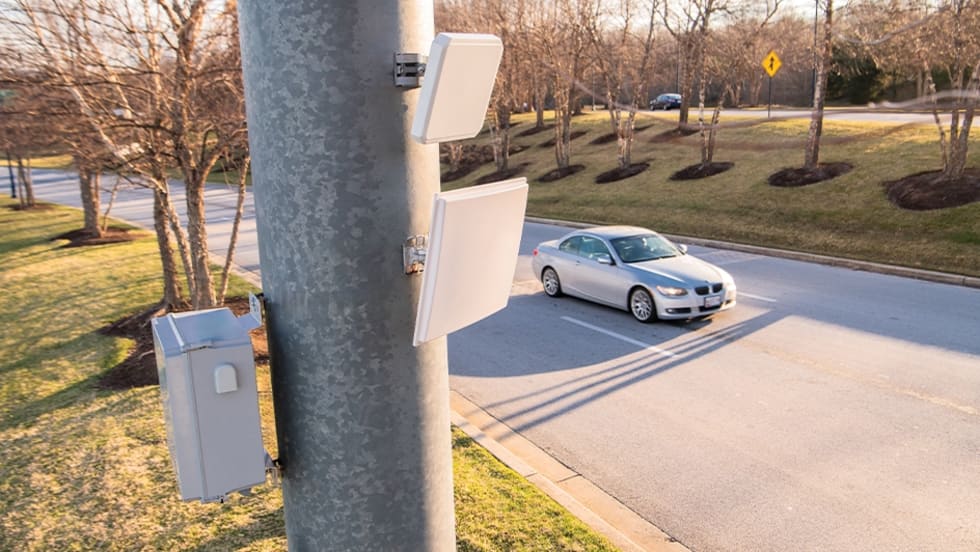
Leonardo U.S. Cyber & Security Solutions Introduces SignalTrace, the Next Evolution in Electronic Signature Detection Technology
SignalTrace reflects years of product refinement and a clearer expression of the technology’s purpose of recognizing and correlating electronic signatures in publicly broadcast wireless signals to reveal patterns, relationships, and trends that might otherwise go undetected.
Read More →
Pimloc Launches Secure File Sharing to Streamline Release of Redacted Video
Pimloc’s Secure File Sharing lets organizations deliver redacted video, audio, and documents through expiring, passcode-protected links, accelerating delivery while reducing security, compliance, and chain-of-custody risks.
Read More →
2026 Vision FirstNet Users Summit to Explore How FirstNet Fusion and LMR Are Redefining Mission-Critical Communications
One of the sessions at the 2026 Vision FirstNet Users Summit will highlight hybrid devices bridging broadband and LMR. “Bridging Broadband and LMR: FirstNet Fusion and the Rise of Hybrid Devices” will explore how public safety agencies can modernize their communications environments while maintaining the reliability of land mobile radio.
Read More →
Cellebrite Expands Exclusive SkySafe Partnership to Deliver Immediate Drone Detection and Airspace Intelligence for Digital Investigations at Scale
By integrating SkySafe's drone detection and airspace intelligence with Cellebrite's platform, agencies can connect real-time and historical UAV flight data with mobile forensic evidence, all in one place.
Read More →