
Police Magazine

 MENU
MENU SEARCHMENUSEARCH
Loading data...

The detective rapped on the front door. Then three seconds later, instead of waiting for a resident to answer, one of the officers on his team kicked in the door. They had expected to find a meth lab in the apartment, but the man and woman they'd awakened in the middle of the night and handcuffed had committed no crimes. The officers had raided the wrong apartment.
Read More →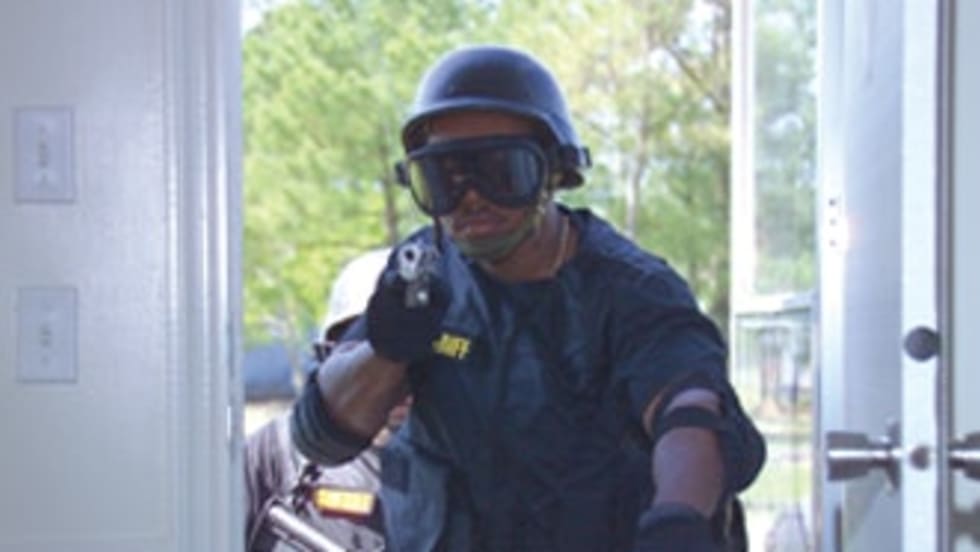

A search conducted under a valid search warrant can still violate the Fourth Amendment if it is conducted in an unreasonable manner. "It is incumbent upon the officer executing a search warrant to ensure the search is lawfully authorized and lawfully conducted." (Groh v. Ramirez)
Read More →Never mind the headlines and the editorials proclaiming that the Supreme Court did away with the knock-and-announce requirement for execution of search warrants in the recent case of Hudson v. Michigan. The court did no such thing.
Read More →Any law enforcement entry into private premises, including a residence, or an office or other commercial area that is not open to the public, is governed by the Fourth Amendment. Officers may make lawful entry only in four ways, and the consequences of unlawful entry can include suppression of evidence and civil liability.
Read More →One of the "firmly established exceptions" to the warrant requirement for searches and seizures is the "consent exception."
Read More →The Fourth Amendment governs three forms of activity: searches (intrusions into privacy), seizures of the person (detentions and arrests), and seizures of property. If these acts are not authorized by judicial warrant, they must come within one or more of the court-created exceptions for warrantless search and seizure (Katz v. U.S.). One of these exceptions is called “plain view.”
Read More →For at least 10 years, it has been clear that terrorists favor targeting transportation systems, high-density population venues, and symbolic structures.
Read More →Most traffic stops are routine. You see a moving or equipment violation, make the stop, and issue a citation or warning. Everything’s over in 10 minutes or so.
Read More →In some cases, it’s necessary to take a suspect into custody as soon as you conclude that probable cause exists. But in other cases, making the arrest too quickly might not be advisable. Making an arrest triggers certain constitutional tests and starts the clock running on steps that have to be taken within specified times. Control and safety permitting, it may be best to delay making an arrest until the last practical moment.
Read More →More than a handful of judges, lawyers, and police officers mistakenly thought of Miranda as some sort of judicial rule about how police officers are required to conduct interrogations.
Read More →