



A Fine Line
When does a voluntary conversation between a citizen and an officer become a seizure?


When you approach a vehicle on duty, such as a parked car, and engage in normal conversation with a driver, a constitutional seizure does not occur. However, when you stop a motor vehicle, you have, of course, "seized" it under the Fourth Amendment.
Both of these examples are black and white. But what about a situation that falls into the shades of gray between these two scenarios? As the case of People v. Rockey, 752 N.E.2d 576, 2001 Ill. App. LEXIS 469 (2001) shows, the distinction between a voluntary encounter and a temporary seizure may not always be so clear cut.
Suspicious Turns
People v. Rockey began when an officer who was driving an unmarked vehicle through a residential village between 12 and 1 a.m. observed a pickup truck with its lights on parked in an alley. As the pickup truck began moving, the officer was behind it and she saw the driver make several turns. The officer concluded that the driver was uncomfortable because of a patrol car in the rearview mirror and decided to follow the vehicle around the block. When the pickup truck turned into a driveway, the officer pulled up and stopped in the street just prior to the driveway.
Later when she was asked what was suspicious about this vehicle, the officer noted the time of morning and the proximity of the alley to an auto dealership that had been burglarized numerous times. Asked what facts led her to believe the defendant was breaking into cars since she was not on the lot, she replied that she had none but felt she had a duty to check out the situation.
Seeing the stopped police car, the defendant got out of her vehicle and started walking toward the officer. The officer got out and met the defendant about "half way" near the end of the short driveway. She then asked the defendant if she lived at the address, and the defendant said her ex-boyfriend lived there. During this conversation, the officer smelled a "very strong odor of an alcoholic beverage" and noticed that the defendant "staggered somewhat."
The officer asked her for identification because of her suspicion regarding her presence in the alley, the odor of the alcoholic beverage, and the staggering. In court she later stated that this was her "probable cause to believe that the defendant might possibly be under the influence of alcohol."
After obtaining the defendant's driver's license, the officer told the defendant to wait while she went to her patrol car, made a call for assistance, and ran a record check. When later asked what the defendant had done wrong to be detained, she answered, "At that point she hadn't done anything wrong." But when the officer saw the defendant's name, she remembered that the defendant had previously had a suspended license, and she wanted to know if the defendant's license was still suspended. The license came back valid, but the officer charged the defendant with DUI/DWI.
Motion to Suppress
In court, during a motion to suppress evidence, the defendant argued that a seizure took place in the driveway for Fourth Amendment purposes and that there were no articulable facts to warrant a investigatory detention. In granting the defendant's petition, the lower court stated that it "did not believe that the officer's suspicion in this instance was reasonable," and granted the defendant's motion to suppress.
On appeal, the State first argued that the officer never stopped the defendant's vehicle because the officer merely approached the defendant after the defendant had parked her vehicle. The court agreed that the initial encounter when the defendant stopped her truck in the driveway and then approached the officer was not a stop or "seizure" for Fourth Amendment purposes because the defendant's conduct appeared to have been voluntary and there was no show of authority by the officer at that time.
However, a stop occurred when the officer took the defendant's facially valid driver's license and told her to wait until she could run a record check of the license. A reasonable person would not have felt free to leave once her license was taken from her.
Next, in examining whether the stop was justified, the court explained that a person cannot lawfully be seized unless there are reasonable, objective grounds for doing so. Further, to sustain an investigatory stop, the officer must be able to point to specific and articulable facts, which, taken together with rational inferences from those facts, reasonably warrant the intrusion.
In this case, the officer testified that she had no facts leading her to believe that the defendant was breaking into any cars. Also, the officer later conceded that there were burglaries in the county in the previous 10 days, but none were in the residential village. Furthermore, although the officer "felt" that the defendant was trying to avoid having a vehicle behind her "for some reason," the facts known to the officer pointed to no more than an impermissible hunch. There was also no sound basis to believe that the defendant was evading a police officer merely because the defendant drove around the block. Thus, the stop could not be sustained on the basis of a reasonable suspicion that an offense was being committed prior to the defendant's stopping in the driveway.
Nevertheless, the State argued that the seizure was supported by probable cause to believe the defendant was driving under the influence of alcohol. The court rejected this argument as well.
The officer had not observed the defendant violate any laws or drive in an erratic manner, and the signs of intoxication for probable cause to develop in an officer's presence are ordinarily far more substantial than the two mentioned in the officer's testimony. Although the officer stated the defendant was "possibly" under the influence of alcohol, her reasons for the detention focused on the officer's ultimately incorrect hunch that the defendant was driving with a suspended license-a suspicion that had no reasonable, factual basis at the time of the stop.
The court decided that to conclude otherwise would be to approve of the detention of any driver at any time to run a license check if the officer thought the driver had committed an offense on a prior occasion. The constitutional test of reasonable and particularized suspicion did not support such a proposition.
Simple Consent
Looking back at the facts, this case provides a good example to use for training purposes on a number of fronts. The court's decision contains a good analysis of the difference between a voluntary encounter and a temporary seizure, and also shows how courts will closely scrutinize the totality of factors in determining if a reasonable suspicion of a crime was present. It also reiterated the proposition that a stop will not be supported on the basis of a mere hunch of criminal activity alone.
Lastly, this case reveals a number of situations that could have been handled differently, either during the actual interaction, or during the officer's testimony. For instance, there was no reason why the officer in this case could not have asked the individual if she minded if the officer checked her ID. A simple consent could have remedied the whole situation. Moreover, the officer probably could have developed the evidence of impaired driving in a much better light, had she been focusing on the issue when she began to observe some of the telltale symptoms of alcohol impairment at the scene.
In any case, as the facts here show, an officer must always stay aware of changing circumstances that might transform a seemingly voluntary encounter into a temporary seizure.
John A. Stephen is deputy commissioner for the New Hampshire Department of Safety and has served as assistant attorney general in the New Hampshire Department of Justice, where he was a state prosecutor.
Adapted from the "Officer's DUI Handbook (2002 State-to-State Case Summaries Supplement)" published by LexisNexis. For more information on the Officer's Handbook Series, visit www.lexisnexis.com/lawenforcement
More Patrol

Streamlight Portable Scene Light III Wins 2026 OH&S New Product of the Year Award
Streamlight’s Portable Scene Light III has won the 2026 Occupational Health & Safety (OH&S) New Product of the Year Award in the Lighting category.
Read More →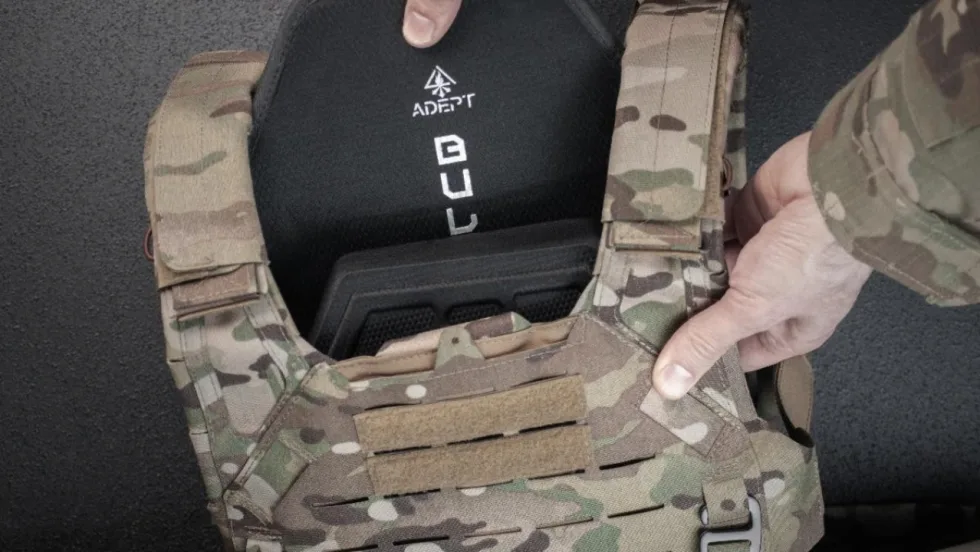
Adept Armor Introduces Two New Rifle Plates
Adept Armor has launched two new Level IV ballistic plates, the Emperor and the Archon Mark 2, which brings Adept Armor’s new Quatroid ceramic to the high-threat, performance-value center of the range at 5.2 pounds.
Read More →
POLICE Product Test: Benchmade Bailout
The Benchmade Bailout is a slim, lightweight carry knife with a deep-ride pocket clip and comes in a variety of blade steels and scales. Here is a detailed review of the Taiga Green Bailout, released earlier this year.
Read More →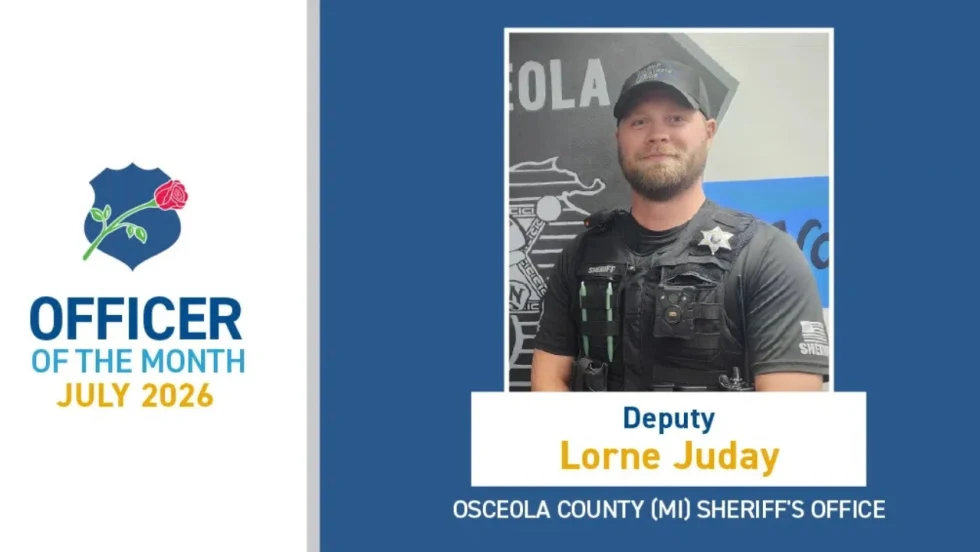
NLEOMF Announces July 2026 Officer of the Month
NLEOMF honored a Michigan deputy sheriff as the July 2026 Officer of the Month for rescuing a trapped driver from a burning vehicle following a Fourth of July crash.
Read More →
Streamlight to Showcase Newest Lighting Products at National Safety Council’s Safety Congress & Expo 2026
Streamlight will showcase its latest lights, including the Portable Scene Light III and the LiteBox 1Million, at the 2026 National Safety Council (NSC) Safety Congress & Expo.
Read More →
The 2027 World Police & Fire Games Set for Perth, Australia
The 2027 World Police & Fire Games (WPFG) will take place in Perth, Western Australia, from Friday, March 12 through Sunday, March 21, 2027.
Read More →
5.11 Partners with National Fallen Firefighters Foundation to Support #ForThe343
5.11 has joined the nationwide movement honoring the 343 New York City Fire Department firefighters lost on Sept. 11, 2001.
Read More →
Team Wendy Announces Title Sponsorship of the Jorge Pastore Foundation
Team Wendy’s 3-year partnership with the Jorge Pastore Foundation expands access to programs that strengthen those who serve.
Read More →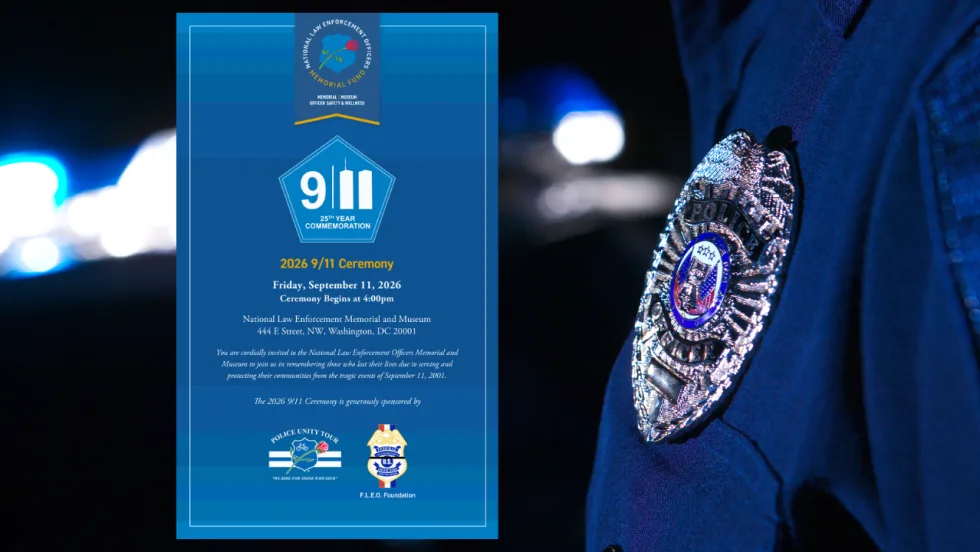
National Law Enforcement Memorial and Museum Hosting 9/11 25th-Year Commemoration Ceremony
The National Law Enforcement Memorial and Museum is hosting a 9/11 25th Year Commemoration Ceremony on Sept. 11 at 4 p.m.
Read More →
National Law Enforcement Officers Memorial Fund Announces June 2026 Officers of the Month
The National Law Enforcement Officers Memorial Fund (NLEOMF) named 15 officers of the Chico Police Department (California) as the Officers of the Month for June 2026 for their roles in responding to an active-shooter incident at a public library.
Read More →