



The Waiting Game
In some cases, it’s necessary to take a suspect into custody as soon as you conclude that probable cause exists. But in other cases, making the arrest too quickly might not be advisable. Making an arrest triggers certain constitutional tests and starts the clock running on steps that have to be taken within specified times. Control and safety permitting, it may be best to delay making an arrest until the last practical moment.

In some cases, it’s necessary to take a suspect into custody as soon as you conclude that probable cause exists. But in other cases, making the arrest too quickly might not be advisable. Making an arrest triggers certain constitutional tests and starts the clock running on steps that have to be taken within specified times. Control and safety permitting, it may be best to delay making an arrest until the last practical moment.
Reinforcing Probable Cause
An unlawful arrest, as we’re all painfully aware, has numerous bad consequences, including potential civil liability and suppression of criminal evidence. (42 U.S.C. § 1983; Mapp v. Ohio)
The Fourth Amendment requires that an arrest be supported by probable cause. (U.S. v. Watson) If a court rules that you lacked P.C. at the moment the arrest was made, the arrest cannot be saved by pointing to other evidence you subsequently developed that would have supported P.C., if you had only known of it beforehand. No evidence or information you obtain after an arrest can be relied on as any part of the P.C. (Smith v. Ohio)
But the point at which the information you’ve developed amounts to legally sufficient probable cause will not always be easy to identify. Also, there’s a chance that a judge may disagree with your assessment of whether or not the facts and circumstances initially confronting you, combined with your training and experience, amounted to probable cause. Fortunately, you’re under no obligation to call a halt to your investigation and make an arrest the minute you have P.C. to do so. Instead, you can continue to develop additional information to reinforce the P.C. you already believe you have.
In Hoffa v. U.S., the Supreme Court said, “There is no constitutional right to be arrested. The police are not required to guess at their peril the precise moment at which they have probable cause to arrest a suspect....” Therefore, instead of taking a chance that early information adds up to P.C., it will usually be better in non-emergency cases to postpone making an arrest until your on-scene investigation is complete. This will allow you to use all of the information you’ve acquired to constitute probable cause, which in turn should reduce the risks of suppression of evidence and civil liability.
Deferring Miranda
Delaying arrest (or similar restraints) will delay the requirement for giving Miranda warnings, which often have the effect of foreclosing any further admissible statements. “Miranda warnings may inhibit persons from giving information....” (Oregon v. Elstad)
As you know, full admissibility of a suspect’s statements resulting from police interrogation will be subject to the Miranda rule once the suspect is in custody. “Custody,” for Miranda purposes, means “formal arrest or restraint on freedom of movement of the degree associated with a formal arrest.” (California v. Beheler) Miranda is triggered when you interrogate a person who has been told he or she is under arrest, or who is restrained with handcuffs, guns, or cages.
On the other hand, Miranda does not apply to interrogation of a suspect who is merely detained (other than inside a police facility) without arrest-like restraints—even though you may have P.C. to arrest and may already have decided you will be arresting the person after questioning (Berkemer v. McCarty), and even if the person attempts to invoke his right to counsel. (Per McNeil v. Wisconsin, there can be no “anticipatory invocation” of Miranda before custody occurs.)
From the standpoint of obtaining the best possible statements from a suspect, therefore, it will generally be advisable not to trigger Miranda too soon by arresting too soon.
Judicial Review Deadlines
Making an arrest also starts the clock on the time limits within which judicial officers must review the case. In County of Riverside v. McLaughlin, the Supreme Court held that the Fourth Amendment requires that the P.C. for a warrantless arrest be reviewed and approved by a judicial officer not later than 48 hours after arrest (or sooner, if circumstances permit). Once you make a warrantless arrest, this clock starts running, even though you may not have completed your investigation at the scene or in the field.
Postponing a formal or de facto arrest as long as possible gives you the ability to conduct additional investigation before starting the McLaughlin clock, and also permits you to add the results of any further investigation into your declaration of probable cause to be submitted to the judicial officer for review.
In addition to McLaughlin, many jurisdictions also have statutory limits on how long an arrestee can be held before being brought before a magistrate or judge for arraignment, allocution, bail setting, etc. (This limit is often 48 hours or less.) Again, if the choice is between starting this clock by arresting the moment you have minimal P.C. but before you complete your on-scene investigation and waiting until all feasible investigation is completed, it will generally make sense to postpone the arrest, rather than rush it.
Statutory Calls and Notifications
Most jurisdictions require arresting or custodial officers to afford an arrestee a prescribed number of phone calls within a specified time, such as within the first few hours after arrest. Juvenile statutes typically require parental notification within a specified time after a juvenile suspect is taken into custody, and federal statutes even require federal agents to give a parental advisory of rights upon making juvenile arrests. (18 U.S.C. § 5033)
Some cases have held that officers can be sued for not meeting such statutory deadlines. (E.g., Carlo v. City of Chino, ruling that officers were subject to suit for violating California’s law requiring that arrestees be given three phone calls within three hours after arrest.)
Wherever statutes impose deadlines that are triggered by arrest, these deadlines can be delayed by simply delaying the arrest until necessary investigation has been completed.
Search Incident to Arrest
Making a lawful arrest gives you the right to make a limited incidental search. You can search the person of the arrestee. (Gustafson v. Florida) If he or she was the recent occupant of a vehicle, you can search the passenger compartment (but not the trunk) of the vehicle. (Thornton v. U.S.) And if the arrest occurs inside premises you lawfully entered, you can search areas under the suspect’s immediate control and can peek into adjoining spaces to check for possible assailants. (Maryland v. Buie)
But you do not lose the right to make this search by delaying an arrest after you have established probable cause. Instead, the Supreme Court has ruled that a search incident to arrest can lawfully precede the arrest, as long as there was P.C. to arrest when the search was made. (Rawlings v. Kentucky) This permits you to continue your investigation by completing the incidental search, before you start clocks running or trigger Miranda by making the arrest.
Safety First
Obviously, you should never delay making an arrest for legal reasons if doing so might endanger officer or public safety or could allow a suspect to escape or retreat into a residence you could not enter without a warrant. But if a routine arrest presents none of these risks, it may often be advantageous to exercise some patience before hooking and booking.
Attorney Devallis Rutledge, a former police officer and prosecutor, serves as special counsel to a Southern California district attorney.
More Patrol
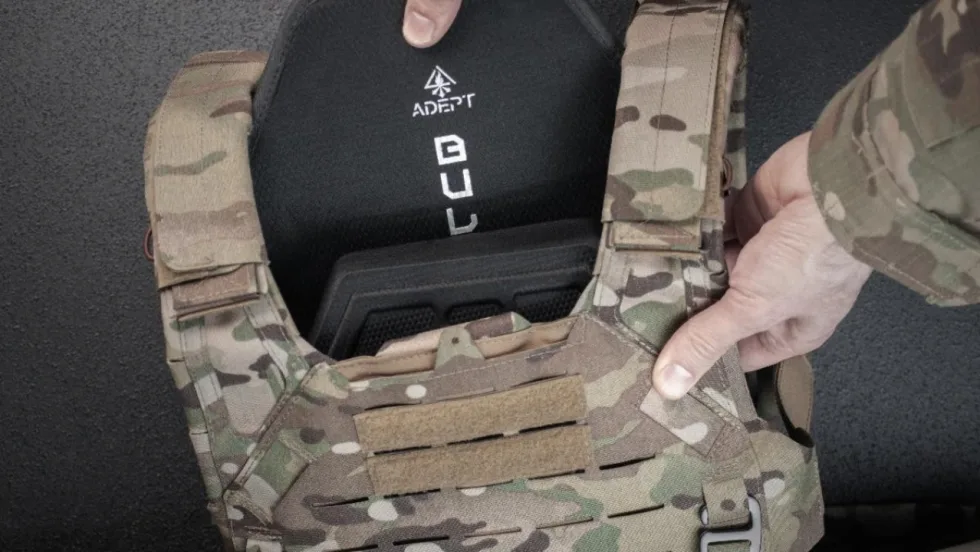
Adept Armor Introduces Two New Rifle Plates
Adept Armor has launched two new Level IV ballistic plates, the Emperor and the Archon Mark 2, which brings Adept Armor’s new Quatroid ceramic to the high-threat, performance-value center of the range at 5.2 pounds.
Read More →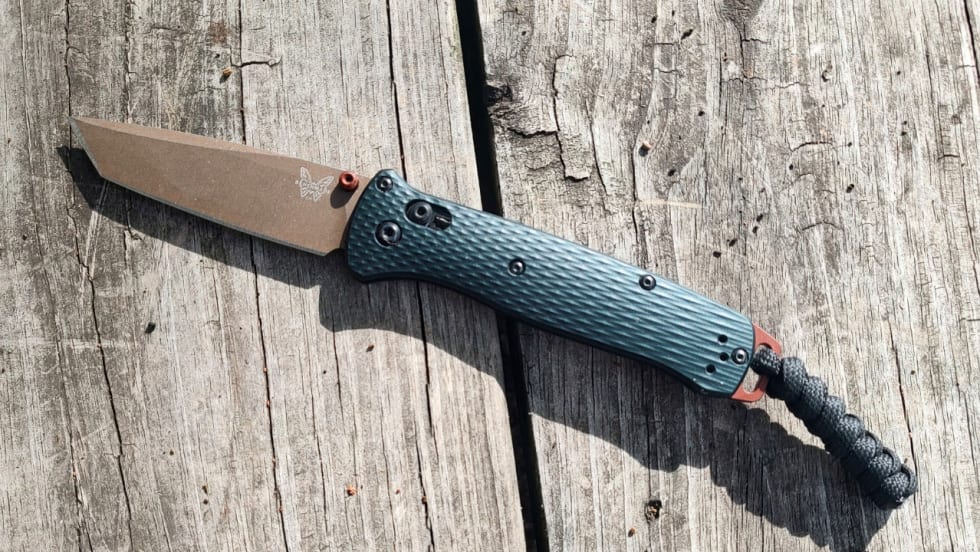
POLICE Product Test: Benchmade Bailout
The Benchmade Bailout is a slim, lightweight carry knife with a deep-ride pocket clip and comes in a variety of blade steels and scales. Here is a detailed review of the Taiga Green Bailout, released earlier this year.
Read More →
NLEOMF Announces July 2026 Officer of the Month
NLEOMF honored a Michigan deputy sheriff as the July 2026 Officer of the Month for rescuing a trapped driver from a burning vehicle following a Fourth of July crash.
Read More →
Streamlight to Showcase Newest Lighting Products at National Safety Council’s Safety Congress & Expo 2026
Streamlight will showcase its latest lights, including the Portable Scene Light III and the LiteBox 1Million, at the 2026 National Safety Council (NSC) Safety Congress & Expo.
Read More →
The 2027 World Police & Fire Games Set for Perth, Australia
The 2027 World Police & Fire Games (WPFG) will take place in Perth, Western Australia, from Friday, March 12 through Sunday, March 21, 2027.
Read More →
5.11 Partners with National Fallen Firefighters Foundation to Support #ForThe343
5.11 has joined the nationwide movement honoring the 343 New York City Fire Department firefighters lost on Sept. 11, 2001.
Read More →
Team Wendy Announces Title Sponsorship of the Jorge Pastore Foundation
Team Wendy’s 3-year partnership with the Jorge Pastore Foundation expands access to programs that strengthen those who serve.
Read More →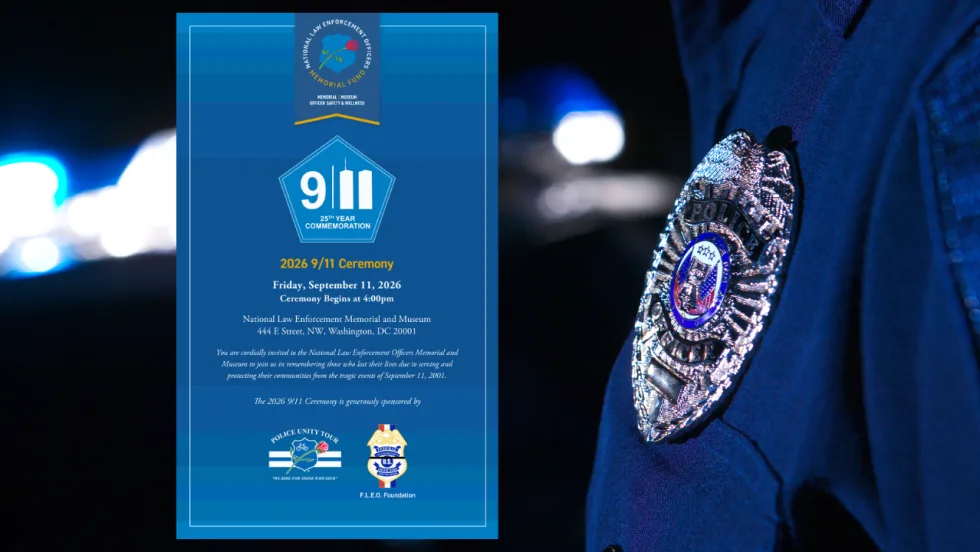
National Law Enforcement Memorial and Museum Hosting 9/11 25th-Year Commemoration Ceremony
The National Law Enforcement Memorial and Museum is hosting a 9/11 25th Year Commemoration Ceremony on Sept. 11 at 4 p.m.
Read More →
National Law Enforcement Officers Memorial Fund Announces June 2026 Officers of the Month
The National Law Enforcement Officers Memorial Fund (NLEOMF) named 15 officers of the Chico Police Department (California) as the Officers of the Month for June 2026 for their roles in responding to an active-shooter incident at a public library.
Read More →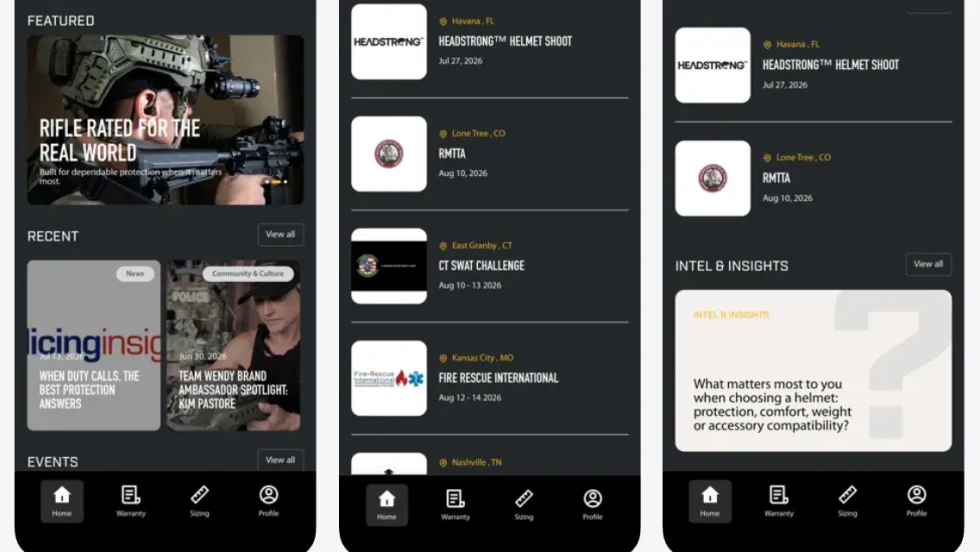
Team Wendy App Creates New Digital Hub for Helmet Owners
The Team Wendy Community App provides one location for warranty registration, size-fit tools, product updates, and community connection. For helmet owners, the new app creates a simpler path to the information and tools that matter most.
Read More →