



Public Safety Searches
For at least 10 years, it has been clear that terrorists favor targeting transportation systems, high-density population venues, and symbolic structures.

For at least 10 years, it has been clear that terrorists favor targeting transportation systems, high-density population venues, and symbolic structures. Bomb and poisonous gas attacks against trains, subways, buses, ships, and aircraft have been carried out in Tokyo, Madrid, London, and elsewhere. Such attacks have been threatened in New York and other major U.S. cities. Olympic stadiums, crowded restaurants, and skyscrapers are often targeted. The attacks of September 11, 2001, gave terrorists a "three-fer," snarling air travel, killing thousands, and destroying the tallest symbols of free trade in our nation's largest city.
Law enforcement response to potential threats to public safety in the post-9/11 world involves intelligence gathering, target hardening, and different approaches to surveillance. How does the need to engage in suspicionless searches at places like train and bus terminals, subway entrances, airports, stadiums, shopping malls, amusement parks, and other potential targets square with the traditional restrictions imposed by the Fourth Amendment?
Justifying Suspicionless Searches
The Fourth Amendment does not prohibit searches and seizures; it prohibits unreasonable searches and seizures. We're all painfully familiar with the general rule that warrantless searches are presumed to be unreasonable. To engage in a search without a warrant, officers need to be able to point to one or more of the exceptions recognized by the Supreme Court as allowing a warrantless search (Katz v. U.S.).
The Supreme Court has never dealt with a case specifically regarding a standard that could be applied to a safety search for the detection of terrorist activity or for the discovery and seizure of terrorist weapons or explosives. Therefore, agencies seeking guidance for such police actions must look to other cases for rulings and reasoning that would seem to make such actions reasonable under the Fourth Amendment. Three possible theories of justification may be applicable: (1) implied consent, (2) public hazard, and (3) special needs.
Implied Consent
Where people do not have an unqualified right of access, admission may be conditioned on consent to search. It's commonplace to encounter magnetometers at the entrances to courthouses and airline gates. Long before this happened, the federal government routinely posted signs at entrances to military reservations and federal prisons informing the public that entrance onto the premises constituted permission to search. And for many years, most states have had "implied consent" laws requiring suspected impaired drivers to submit to a chemical test as a condition of receiving a driver's license. These laws have been repeatedly upheld by the Supreme Court (Mackey v. Montrym; South Dakota v. Neville).
Under this rationale, the owners of amusement parks and stadiums, for example, could post signs and print on admission tickets a condition of the license to enter the facilities that "all persons who enter are subject to search for the discovery of dangerous instrumentalities."
Likewise, operators of transportation systems could fortify their ability to search riders and visitors by giving similar advance notice via signs at entrances and warnings on passage tickets. It could then be argued that by coming onto the premises or purchasing a ticket, the person has impliedly consented to be searched.
In a much-quoted sentence from a case considering airport searches back in the days when hijackings were seen as the biggest threat, the federal appeals court said this: "When the risk is hundreds of human lives and millions of dollars of property interest in the pirating or blowing up of a large airplane, the danger alone meets the test of reasonableness, so long as the search is conducted in good faith for the purpose of preventing hijacking or like damage and with reasonable scope and the passenger has been given advance notice of his liability to such a search so that he can avoid it by choosing not to travel by air" (U.S. v. Edwards).
Public Hazard
The Supreme Court has also recognized that what might otherwise be unreasonable becomes reasonable when potential threats to public safety outweigh the intrusion on a person's privacy interests.
For example, because of the inherent danger in mining, the court has held that safety inspections can be conducted in mines without either a search warrant or any suspicion that violations are occurring (Donovan v. Dewey). The same rule has been applied to firearms dealers (U.S. v. Biswell), the premises of liquor licensees (Colonnade Corp. v. U.S.), and highway checkpoints to detect impaired drivers (Michigan v. Sitz).
From these rulings, it seems likely that the courts would take a suspected terrorist threat to a transportation system or public gathering place every bit as seriously as the risks caused by mining, firearms sales, and impaired drivers, and would weigh such threats against the minimal intrusion of a pat down search or a container inspection limited to the discovery of explosives and other weapons of mass destruction or contamination.
In fact, passages in three Supreme Court decisions stressed that the same standards normally applied to criminal searches would not necessarily apply to searches motivated by concerns for public safety threats:
"We do not say, for example, that a report of a person carrying a bomb need bear the indicia of reliability we demand for a report of a person carrying a firearm before the police can constitutionally conduct a frisk. Nor do we hold that public safety officials in quarters where the reasonable expectation of Fourth Amendment privacy is diminished, such as airports and schools, cannot conduct protective searches on the basis of information insufficient to justify searches elsewhere" (Florida v. J.L.).
"The Fourth Amendment would almost certainly permit an appropriately tailored roadblock set up to thwart an imminent terrorist attack" (Indianapolis v. Edmond).
"All of us are concerned not to prejudge a claim of authority to detect explosives and dangerous chemical or biological weapons that might be carried by a terrorist who prompts no individualized suspicion" (Illinois v. Caballes).
Special Needs
In limited circumstances when no other search warrant exception applies, the Supreme Court has sometimes justified particular searches by a "special need" that makes a search reasonable. Examples include probation and parole searches (Griffin v. Wisconsin), drug tests on railroad engineers (Skinner v. Railway Labor), and drug tests on student athletes (Veronia v. Acton). Arguably, homeland security against terrorists presents a special need that would justify limited searches near high-risk targets.
The Supreme Court has also recognized that particular profiles can provide justification for police action, even though no overt criminal conduct is observed (U.S. v. Sokolow; U.S. v. Arvizu).
Triple Justification
Until a specific Supreme Court decision addresses the standard to be applied to public safety searches prompted by terrorist threats, the best approach may be to combine all three of these doctrines.
Support an implied consent argument with appropriate signs at entrances and advance notices on tickets.
Invoke the public hazard justification by pointing to the nature of the threat and the vulnerability of the potential target.
Assert the special need to prevent massive death and disruption, coupled with facts matching a valid terrorist profile.
Note: Policies and procedures for securing potential targets in your jurisdiction should be devised in consultation with civil legal advisors, with the expectation that the courts will uphold reasonable searches clearly tied to legitimate public safety concerns.
Devallis Rutledge, a former police officer and veteran prosecutor, is Special Counsel to the Los Angeles County District Attorney.
More Patrol

Adept Armor Introduces Two New Rifle Plates
Adept Armor has launched two new Level IV ballistic plates, the Emperor and the Archon Mark 2, which brings Adept Armor’s new Quatroid ceramic to the high-threat, performance-value center of the range at 5.2 pounds.
Read More →
POLICE Product Test: Benchmade Bailout
The Benchmade Bailout is a slim, lightweight carry knife with a deep-ride pocket clip and comes in a variety of blade steels and scales. Here is a detailed review of the Taiga Green Bailout, released earlier this year.
Read More →
NLEOMF Announces July 2026 Officer of the Month
NLEOMF honored a Michigan deputy sheriff as the July 2026 Officer of the Month for rescuing a trapped driver from a burning vehicle following a Fourth of July crash.
Read More →
Streamlight to Showcase Newest Lighting Products at National Safety Council’s Safety Congress & Expo 2026
Streamlight will showcase its latest lights, including the Portable Scene Light III and the LiteBox 1Million, at the 2026 National Safety Council (NSC) Safety Congress & Expo.
Read More →
The 2027 World Police & Fire Games Set for Perth, Australia
The 2027 World Police & Fire Games (WPFG) will take place in Perth, Western Australia, from Friday, March 12 through Sunday, March 21, 2027.
Read More →
5.11 Partners with National Fallen Firefighters Foundation to Support #ForThe343
5.11 has joined the nationwide movement honoring the 343 New York City Fire Department firefighters lost on Sept. 11, 2001.
Read More →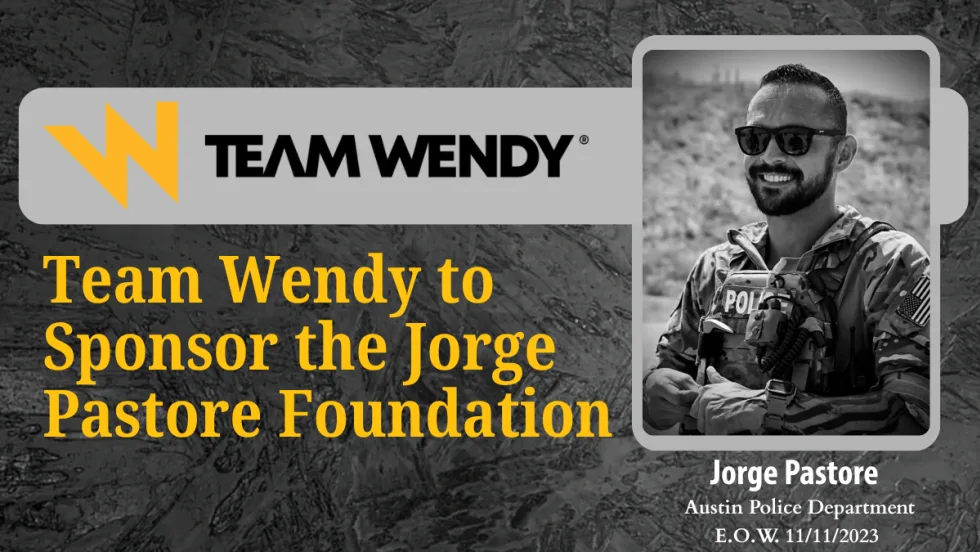
Team Wendy Announces Title Sponsorship of the Jorge Pastore Foundation
Team Wendy’s 3-year partnership with the Jorge Pastore Foundation expands access to programs that strengthen those who serve.
Read More →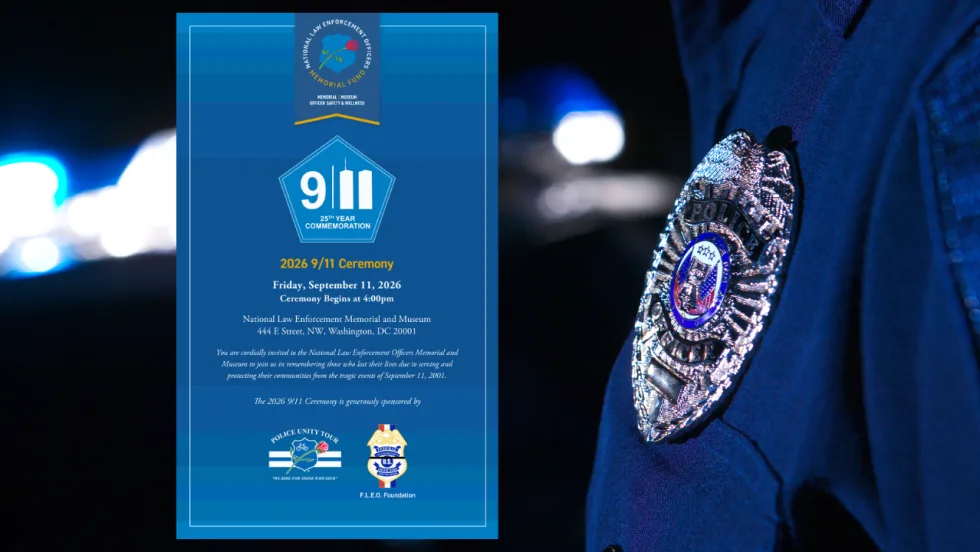
National Law Enforcement Memorial and Museum Hosting 9/11 25th-Year Commemoration Ceremony
The National Law Enforcement Memorial and Museum is hosting a 9/11 25th Year Commemoration Ceremony on Sept. 11 at 4 p.m.
Read More →
National Law Enforcement Officers Memorial Fund Announces June 2026 Officers of the Month
The National Law Enforcement Officers Memorial Fund (NLEOMF) named 15 officers of the Chico Police Department (California) as the Officers of the Month for June 2026 for their roles in responding to an active-shooter incident at a public library.
Read More →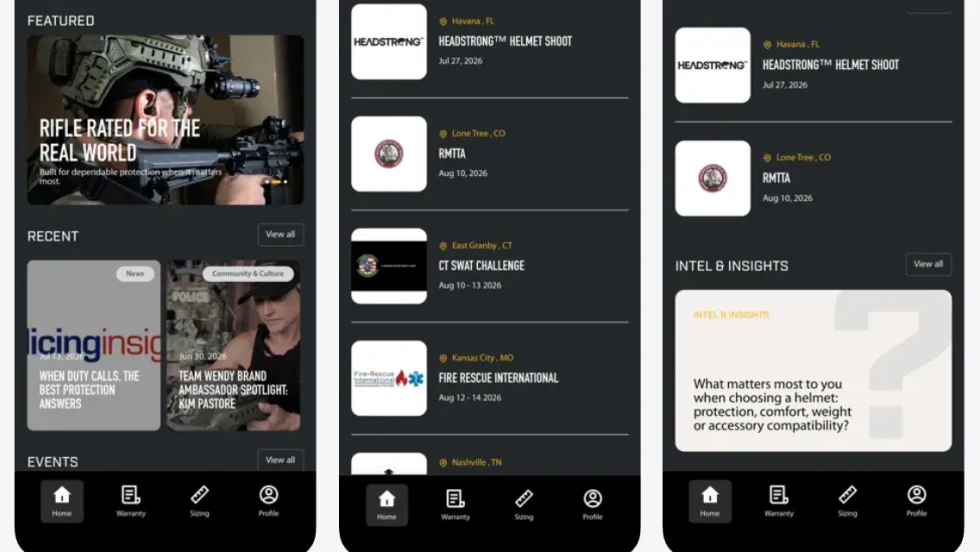
Team Wendy App Creates New Digital Hub for Helmet Owners
The Team Wendy Community App provides one location for warranty registration, size-fit tools, product updates, and community connection. For helmet owners, the new app creates a simpler path to the information and tools that matter most.
Read More →