



Charity Provides Free Brazilian Jiu-Jitsu Training to Patrol Cops
“A blue belt level of knowledge is a night-and-day difference from someone who has no experience in jiu-jitsu. It's not even a fair fight at that point."

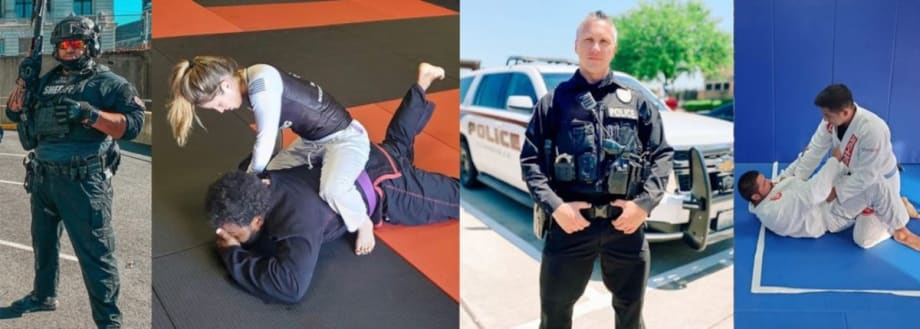
Adopt A Cop BJJ provides free Brazilian Jiu-Jitsu training, through reimbursement, to patrol officers wanting to train until they attain a blue belt.
PHOTO: Adopt A Cop BJJ
As public outcries to defund police swelled in recent years, a former Navy SEAL and mixed martial artist saw a need to provide additional training for officers and help them better resolve confrontational situations. He formed an organization to provide free Brazilian Jiu-Jitsu (BJJ) training to officers as long as they make a commitment and stick to it.
“There are people all over the country that support police officers. This is a great way to directly support them and provide police officers with the skills that could absolutely save their lives and we've already had testimonials that reiterate that,” says Mitch Aguiar, founder of Adopt A Cop BJJ.
Aguiar served 10 years as a Navy SEAL. During part of his service Aguiar was an instructor in the combatives program that teaches prisoner handling and dealing with combatives. He became the lead instructor and wrote the curriculum. Then, in 2012, he became a mixed martial artist fighter.
“I had experience in both worlds of operating and dealing with prisoners under control, and then in the sport world as well. So, I knew firsthand how effective jiu-jitsu can be in a combative-type situation, or a prisoner-handling situation,” says Aguiar.
He found himself watching recurring news reports where officers were caught in confrontations and says he thought if they had trained in Brazilian Jiu-Jitsu, outcomes would have been different.
Initially he thought that all police stations and departments should have a gym mat room attached to their facility and a dedicated jiu-jitsu instructor to teach officers. Pointing out how he can see similarities between bureaucracy in military and government, Aguiar says large programs like that would take too long to come to fruition. He wanted to help officers train sooner and knew that might be possible in the private sector instead of through government entities.
Then, he had an idea. Aguiar says he used to send money to organizations that allow you to adopt, or sponsor children in other countries. So, he thought; “Why can’t someone adopt a cop?”
With that thought, Adopt A Cop BJJ was born as a way law enforcement officers can basically learn jiu-jitsu free. Adopt A Cop BJJ is a 501(c)3 organization that allows active duty patrolling police officers around the country to train at any Adopt A Cop BJJ affiliated academy and 100% of the officer’s membership will be reimbursed until they reach the rank of blue belt.
Aguiar believed in the concept, so he used his personal credit card to sponsor the first 60 officers to establish what he calls “proof of concept.” His company, MASF Supplements, also was an early and ongoing supporter of the program. Now the program has grown.
“We sponsor over 1,500 police officers across the country, we're in all 50 states, and we have close to 1,000 gyms that are affiliated with us,” Aguiar says. “You have to train a minimum of one time per week in order to maintain the sponsorship, which I don't think is too much to ask. If I'm asking people to donate their hard-earned money to pay for your training, then the least you can do is show up at least once a week.”
Participating officers are expected to make an accountability post to social media showing they are training. Of course, that helps raise awareness of the charity, but Aguiar’s reason for that requirement is to show transparency. He wants people to see that the officers they sponsor are really committed to the training.
When Adopt a Cop BJJ is contacted by an officer who wants sponsorship to train they are matched with a gym in their area. Gyms are asked to honor a $50 special rate membership for the police officers. If there is not one already affiliated, Aguiar simply reaches out to one that is close to the officer and asks if they will participate in the program. If it is the gym’s first Adopt A Cop BJJ officer, then often they will be asked to adopt that officer and cover the cost.
“If you want to be a part of this charity, we're asking you to meet us halfway. So, you have to maintain one free membership at your gym,” says Aguiar.
Once an officer earns a blue belt, which takes anywhere from six months to a year-and-a-half according to Aguiar, the sponsorship ends. At that point the officer can decide whether to continue training to the next level. But the former SEAL says even that blue-belt training helps officers.
“A blue belt level of knowledge is a night-and-day difference from someone who has no experience in jiu-jitsu. It's not even a fair fight at that point,” he says.
More Patrol

Streamlight Portable Scene Light III Wins 2026 OH&S New Product of the Year Award
Streamlight’s Portable Scene Light III has won the 2026 Occupational Health & Safety (OH&S) New Product of the Year Award in the Lighting category.
Read More →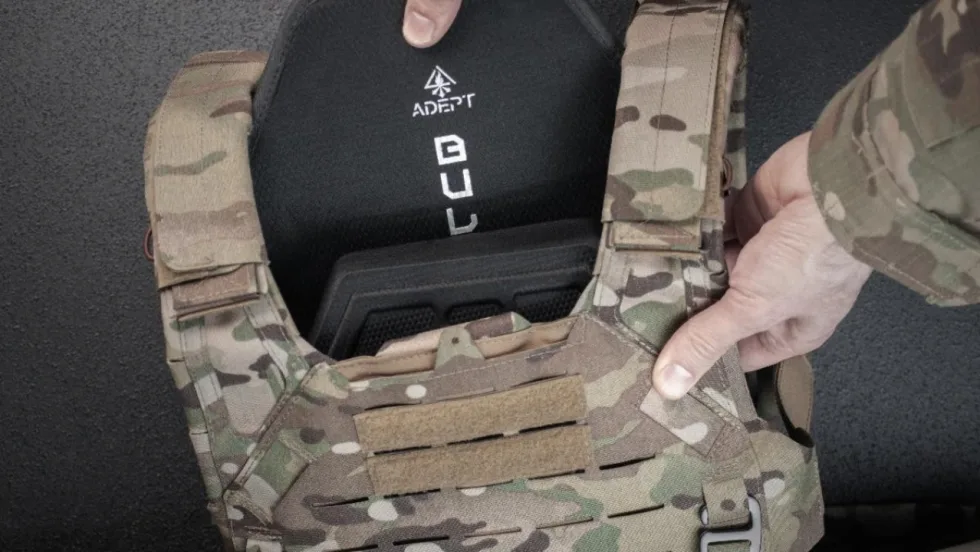
Adept Armor Introduces Two New Rifle Plates
Adept Armor has launched two new Level IV ballistic plates, the Emperor and the Archon Mark 2, which brings Adept Armor’s new Quatroid ceramic to the high-threat, performance-value center of the range at 5.2 pounds.
Read More →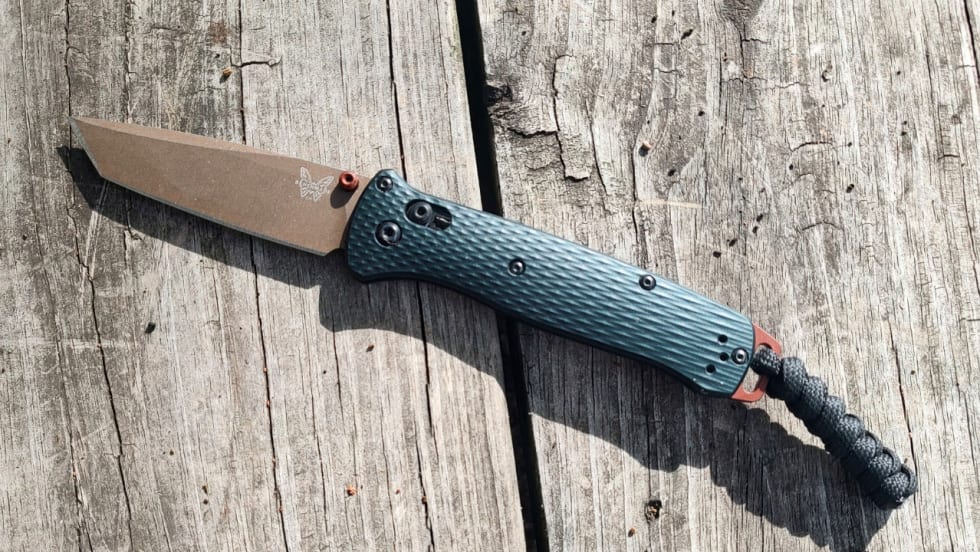
POLICE Product Test: Benchmade Bailout
The Benchmade Bailout is a slim, lightweight carry knife with a deep-ride pocket clip and comes in a variety of blade steels and scales. Here is a detailed review of the Taiga Green Bailout, released earlier this year.
Read More →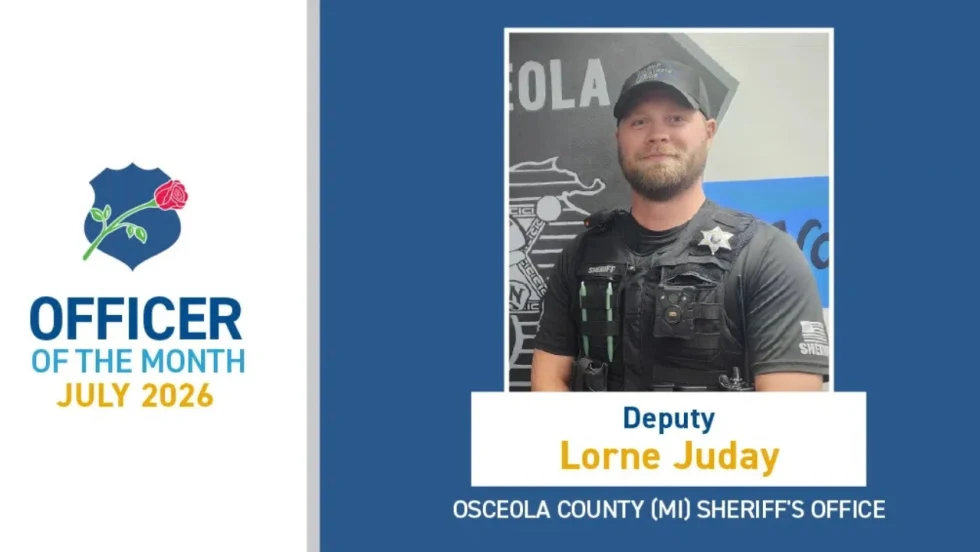
NLEOMF Announces July 2026 Officer of the Month
NLEOMF honored a Michigan deputy sheriff as the July 2026 Officer of the Month for rescuing a trapped driver from a burning vehicle following a Fourth of July crash.
Read More →
Streamlight to Showcase Newest Lighting Products at National Safety Council’s Safety Congress & Expo 2026
Streamlight will showcase its latest lights, including the Portable Scene Light III and the LiteBox 1Million, at the 2026 National Safety Council (NSC) Safety Congress & Expo.
Read More →
The 2027 World Police & Fire Games Set for Perth, Australia
The 2027 World Police & Fire Games (WPFG) will take place in Perth, Western Australia, from Friday, March 12 through Sunday, March 21, 2027.
Read More →
5.11 Partners with National Fallen Firefighters Foundation to Support #ForThe343
5.11 has joined the nationwide movement honoring the 343 New York City Fire Department firefighters lost on Sept. 11, 2001.
Read More →
Team Wendy Announces Title Sponsorship of the Jorge Pastore Foundation
Team Wendy’s 3-year partnership with the Jorge Pastore Foundation expands access to programs that strengthen those who serve.
Read More →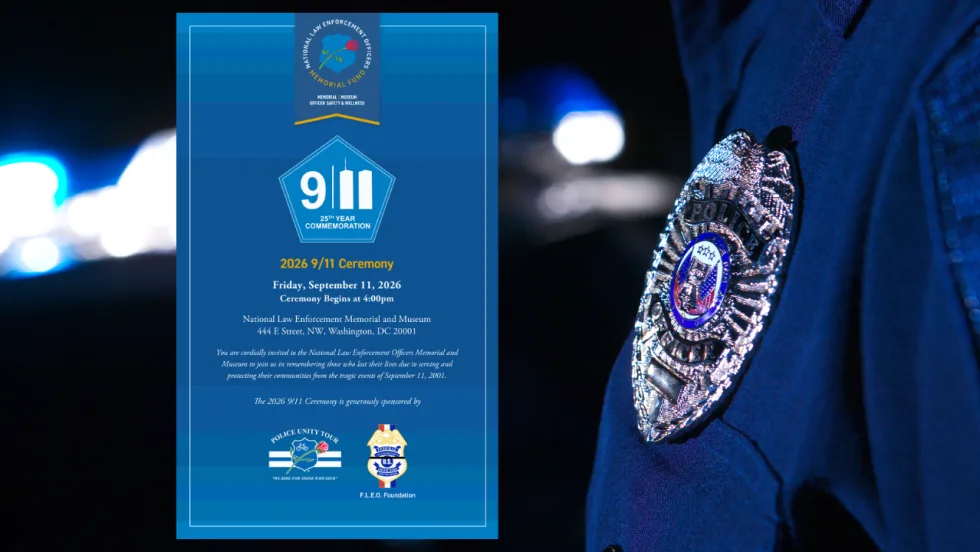
National Law Enforcement Memorial and Museum Hosting 9/11 25th-Year Commemoration Ceremony
The National Law Enforcement Memorial and Museum is hosting a 9/11 25th Year Commemoration Ceremony on Sept. 11 at 4 p.m.
Read More →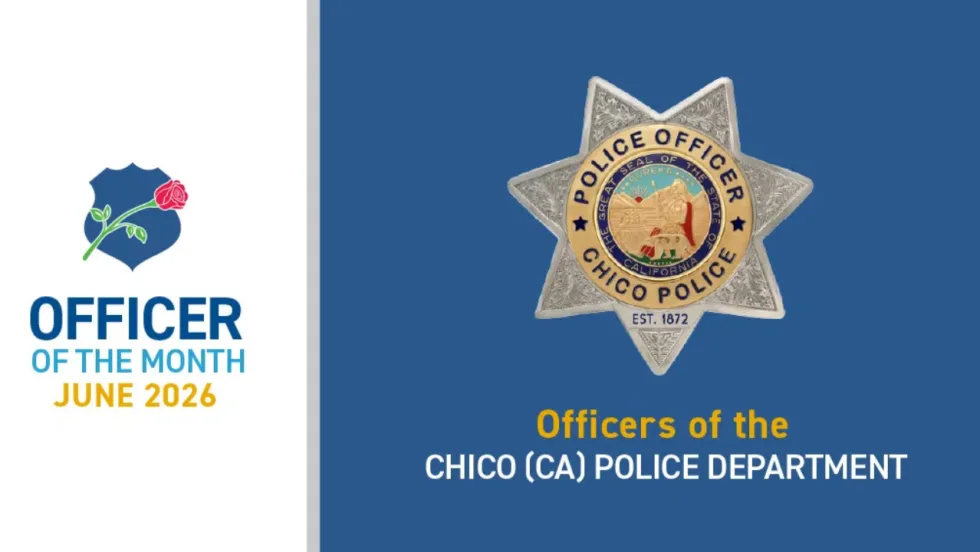
National Law Enforcement Officers Memorial Fund Announces June 2026 Officers of the Month
The National Law Enforcement Officers Memorial Fund (NLEOMF) named 15 officers of the Chico Police Department (California) as the Officers of the Month for June 2026 for their roles in responding to an active-shooter incident at a public library.
Read More →