



Avoiding De Facto Arrests
If police take someone from one location and transport him or her involuntarily to a police facility for investigation, this will be considered a de facto arrest. Without probable cause, that arrest will be unlawful, with predictable consequences for both evidence suppression and civil liability.

Let's say you have a suspect for some serious crime you're investigating. Although you don't yet have probable cause to arrest him or to get a warrant, you'd like to bring him in for questioning. Maybe, with a little skillful interrogation and a little luck, you could get a cop-out, or take prints, or get a DNA sample or something to connect him to the crime. Sound good?
The tricky part is where you "bring him in for questioning." If that takes on the appearance of an arrest without probable cause-even though you don't inform the suspect he's under arrest, and even though you don't personally consider him to be under arrest-the courts will likely find that you've made an illegal de facto arrest, and suppress all the evidence you get.
A recent Supreme Court decision illustrates the problem, and it's one the court has dealt with several times before.
Officers investigating the murder of a 14-year-old Texas girl had the confessed killer, whose statement also implicated his friend Robert Kaupp. Without enough corroboration to establish probable cause or to get an arrest warrant for Kaupp, officers decided to "get him in and confront him" with the evidence they had. So they did.
At 3 o'clock in the morning, three officers went to Kaupp's home, were admitted by his father, awakened him with a flashlight, and without allowing him to get dressed, handcuffed him and took him down to the station in a patrol car. A statement they obtained from Kaupp was used to convict him of complicity in the murder, and he was sentenced to 55 years in prison.
But the Supreme Court reversed the conviction. The court pointed out that in several previous decisions, it had ruled that the involuntary removal and transportation of a suspect from his home or other place to a police station is tantamount to an arrest, requiring a warrant or, at least, probable cause. Since police lacked probable cause, the de facto arrest was illegal, and the statement Kaupp made at the station was the "tainted fruit" of that illegality.
Similar Supreme Court Cases
The Kaupp case marks at least the fourth time the court has dealt with a variation on the issue of taking a suspect in for further investigation.
In Davis v. Mississippi, police were investigating a rape where latent fingerprints had been lifted at the crime scene. They rounded up 24 men who fit the perpetrator's general description, brought them into the station for printing, and arrested the one whose prints matched. Case solved.
But the Supreme Court reversed the conviction. The suspect's involuntary transportation to and detention at the station was factually indistinguishable from an arrest, said the court and, therefore, required probable cause, which police did not have.
The Supreme Court applied this same ruling to a robbery-murder suspect in Dunaway v. New York. Detectives had some uncorroborated information linking Dunaway to the crimes, short of probable cause. Nevertheless, a detective told other officers to "pick him up and bring him in." They did, and Dunaway confessed. But-you guessed it-the conviction was reversed by the Supreme Court because his confession was the fruit of an unlawful de facto arrest.
While word about Davis and Dunaway was filtering down to judges and lawyers and police officers, investigators in Florida were working a series of burglary-rape cases and looking for the guy whose prints had been found on the doorknob at the home of one of the victims. Suspicion (but not probable cause) had developed around one particular suspect, whose prints were not on file. Police went to his house and offered him a choice: come down to the station "voluntarily" to give prints and be questioned, or be arrested. (By now, you can probably finish writing this paragraph yourself.)
The Supreme Court in its decision on Hayes v. Florida took pains to summarize the rule from Davis and Dunaway about the line separating investigative detention from de facto arrest:
"The line is crossed when the police, without probable cause or a warrant, forcibly remove a person from his home or other place in which he is entitled to be and transport him to the police station, where he is detained, although briefly, for investigative purposes. We adhere to the view that such seizures, at least where not under judicial supervision, are sufficiently like arrests to invoke the traditional rule that arrests may constitutionally be made only on probable cause."
The Civil Liability Effect
Remember that most of the mistakes that get evidence suppressed in a criminal case can also generate liability in a civil rights lawsuit. The damages will be even higher if it turns out the suspected person was not the perpetrator of the crime under investigation.
Maxwell v. City of Indianapolis is an example.
After watching "America's Most Wanted," Maxwell's coworkers decided that he looked like a fugitive California schoolteacher who had molested his fifth-graders, and they tipped the local police. Officers arrived, cuffed Maxwell, and took him to the station. They rolled his prints, which conclusively established that Maxwell was not the guy.
Maxwell sued for unlawful arrest. The officers argued that they had only temporarily detained Maxwell for printing, and that he had never technically been arrested. But the court simply invoked the de facto arrest rule: "The officers themselves acknowledge that they handcuffed Maxwell and took him to police headquarters for fingerprinting. This is the 'functional equivalent' of an arrest." Finding that the coworkers' tips did not amount to probable cause, the court denied immunity to the officers and sent them to trial.
Alternatives
So what exactly should you do? In many cases like Davis, Dunaway, Hayes, and Kaupp, you may have the right guy in your sights and need only a fingerprint exemplar, a photograph, or a statement in order to develop the probable cause to make a formal arrest. But the last thing you want to do is have your case turn out like these cases did, with a conviction reversed, or a lawsuit filed, or both.
In addition to the obvious steps (running for warrants, checking DMV or DPS records, invoking parole/probation terms), you may have to consider simply asking the suspect to come to the station voluntarily, in his own transportation. (If you think he's a flight risk, be sure to have surveillance in place when you call him-if he runs, his flight may justify detention. (See Illinois v. Wardlow.)
Well-Established Law
Courts like to talk about their points of law as being "well established." Some are, some aren't. Some courts, for example, have found de facto arrests in lengthy detentions without any transport, and others have held that just forcing a person to move to a nearby location is tantamount to arrest.
But this much has been unambiguously declared at least four times, so it qualifies as a well-established point of law:If police take someone from one location and transport him or her involuntarily to a police facility for investigation, this will be considered a de facto arrest. Without probable cause, that arrest will be unlawful, with predictable consequences for both evidence suppression and civil liability.
More Patrol

Team Wendy Introduces the EXFIL Endurance Ballistic Helmet, Engineered to Reduce the Burden of Extended Wear
Team Wendy has launched its EXFIL Endurance, a new lightweight ballistic helmet engineered to deliver protection, comfort, and fit during demanding, extended operations.
Read More →
The First Responders Children’s Foundation National First Responders Day Roll Call of Heroes Ceremony Returns to Times Square, NYC
First Responders Children’s Foundation (FRCF), in collaboration with T-Mobile, will host the Roll Call of Heroes ceremony in Times Square to commemorate National First Responders Day on Wednesday, Oct. 28. During the event, FRCF will present 18 Hero Awards.
Read More →
Streamlight to Showcase Newest Lighting Products for Law Enforcement Professionals at IACP 2026
Streamlight will showcase its newest lights for law enforcement at the International Association of Chiefs of Police Annual Conference & Expo. Featured lights will include the TLR-3 X, the PolyTac 1X, and more.
Read More →
Streamlight Portable Scene Light III Wins 2026 OH&S New Product of the Year Award
Streamlight’s Portable Scene Light III has won the 2026 Occupational Health & Safety (OH&S) New Product of the Year Award in the Lighting category.
Read More →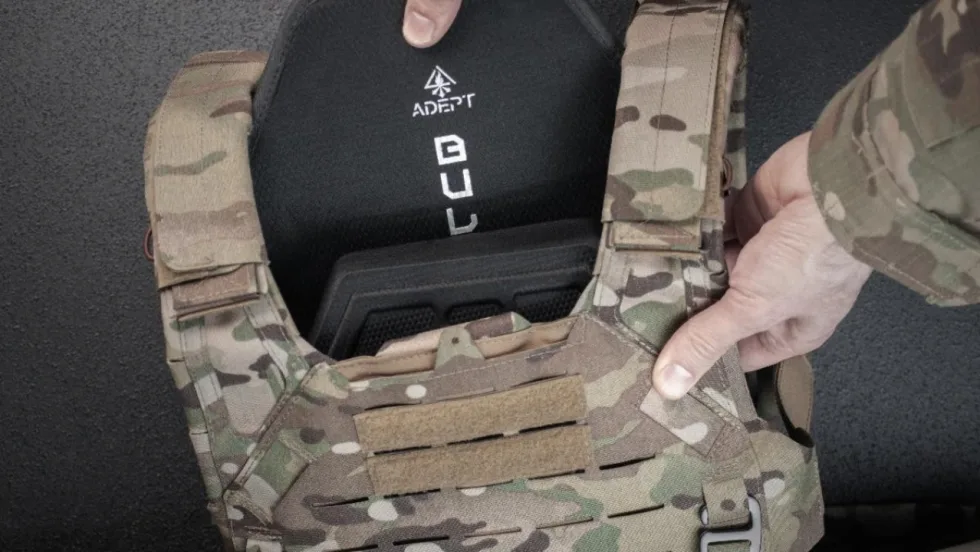
Adept Armor Introduces Two New Rifle Plates
Adept Armor has launched two new Level IV ballistic plates, the Emperor and the Archon Mark 2, which brings Adept Armor’s new Quatroid ceramic to the high-threat, performance-value center of the range at 5.2 pounds.
Read More →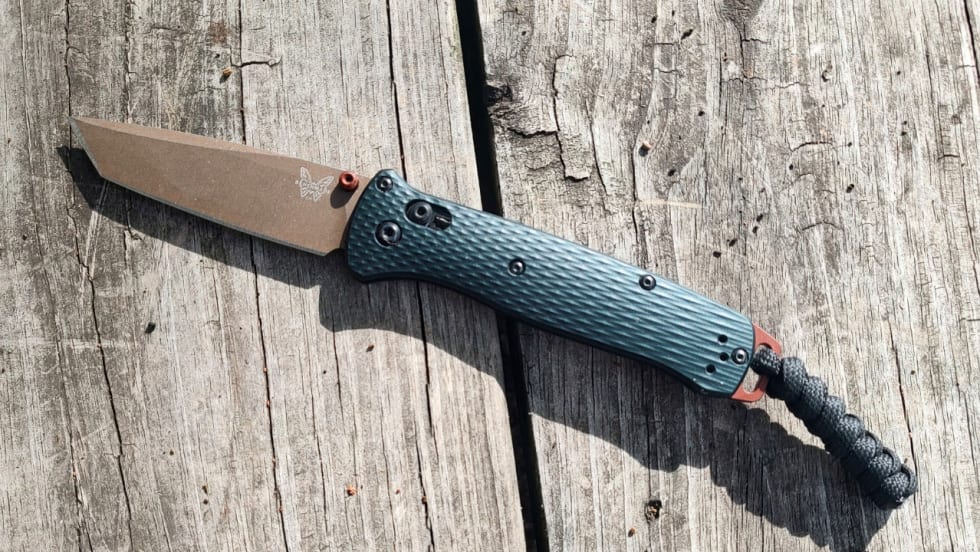
POLICE Product Test: Benchmade Bailout
The Benchmade Bailout is a slim, lightweight carry knife with a deep-ride pocket clip and comes in a variety of blade steels and scales. Here is a detailed review of the Taiga Green Bailout, released earlier this year.
Read More →
NLEOMF Announces July 2026 Officer of the Month
NLEOMF honored a Michigan deputy sheriff as the July 2026 Officer of the Month for rescuing a trapped driver from a burning vehicle following a Fourth of July crash.
Read More →
Streamlight to Showcase Newest Lighting Products at National Safety Council’s Safety Congress & Expo 2026
Streamlight will showcase its latest lights, including the Portable Scene Light III and the LiteBox 1Million, at the 2026 National Safety Council (NSC) Safety Congress & Expo.
Read More →
The 2027 World Police & Fire Games Set for Perth, Australia
The 2027 World Police & Fire Games (WPFG) will take place in Perth, Western Australia, from Friday, March 12 through Sunday, March 21, 2027.
Read More →
5.11 Partners with National Fallen Firefighters Foundation to Support #ForThe343
5.11 has joined the nationwide movement honoring the 343 New York City Fire Department firefighters lost on Sept. 11, 2001.
Read More →