



Disarming
Most police departments nationwide didn't start training their recruits and sworn officers how to protect their guns until the early '80s when law enforcement became widely aware of the staggering statistics regarding officer shootings.

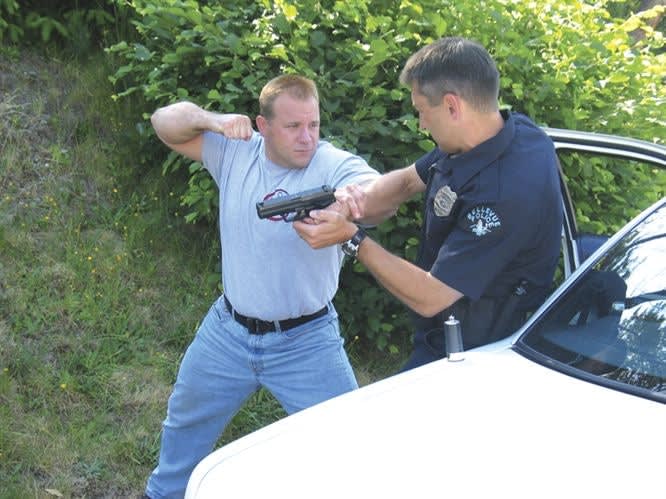
With today's high-level retention holsters the perceived need for and frequency of weapons retention training seems to have waned. In fact, informal communications with trainers across the country indicate that they believe that providing an officer with a retention holster can have essentially the same effect on officer disarmings as training.
This information is, of course, a bean counter's dream. It says that all an agency needs to do is buy a piece of equipment, and it can do away with the expense and headache of weapons retention training. But is that really true?
Horror stories
You don't have to look far to see that police disarmings are still an important concern. The following are just a few recent examples of what can happen when the bad guy takes your gun.
In Fayette, Ala., a suspect being booked at the small town's police station grabbed an officer's gun and opened fire, killing two officers and a dispatcher before fleeing in a police car.
In Christianburg, Va., authorities say Officer Scott Allen Hylton, 43, died after being shot with his own gun by a man suspected of shoplifting. Minutes later, police fatally shot the suspect as he ran from a convenience store.
In San Antonio, Texas, a man disarmed and shot four officers with their own weapons. The attacker literally picked up one officer by his belt and actually ripped the entire belt and holster from the officer's waist.
If you need any evidence for why your agency should pay more attention to weapons retention training, use this little tidbit. Newspaper reports say the San Antonio Police Department has not specifically taught officers how to retain their weapons in at least four years.
Time Machine
Most police departments nationwide didn't start training their recruits and sworn officers how to protect their guns until the early '80s when law enforcement became widely aware of the staggering statistics regarding officer shootings. This is also the time that bullet-resistant vests started to be commonplace in policing and agencies drafted policies that required the vests to withstand the ammunition the officer carried because an officer might be shot with his or her own weapon.
When many weapons retention systems began they were offered as a separate training block. This modular paradigm has continued for most force training formats over the years, probably due to the compartmentalization of different levels of force. Many agencies separate baton training from other impact weapons (flashlights, radios, etc), control tactics from ground survival training, and firearms retention from firearms shooting training.
There are many good weapons retention training systems to choose from out there. But regardless of the system that you may adopt, it is imperative that you take the system into the "lab" and test it.
The equipment you carry-type of holsters, backup weapons, Tasers-may also have a dramatic effect on how much time you need to spend on weapons retention training.
The type of duty station is also a factor. Does the officer usually work alone or with a second officer? Do you carry a Taser, and if so, where is it carried? Are other weapons carried? Does your agency offer plainclothes or off-duty carry training? This is only a partial list of the things that should be considered when determining your need for weapons retention training.
Backup Guns
Backup guns should always be a consideration when designing a firearm retention and disarming system. The carry of backup or secondary guns has long been a subject of discussion, but mostly within the context of a gunfight and not necessarily a fight for a gun.
But if you need a reason to consider carrying a backup gun or to lobby your command staff to let you carry one, then consider that in most potentially fatal disarmings when officers lose their primary guns they are left with no easy and effective response. However, with an accessible backup gun, you have a much better chance of survival in such a grave situation.
Just remember, your backup gun must be readily accessible to be effective as a response to someone taking your duty weapon. Unfortunately, many carry methods for backup guns require both hands to access the weapon or position the gun in a place that is difficult to access when you are fending off an attacker.
The old adage that "a weapon is only as good as its availability" is even more crucial when someone is trying to take your primary gun away from you. If you cannot access and operate your backup gun while holding onto the assailant, your primary gun, or both, then your backup gun may be worthless.
Tasers
The Taser is a recent addition to the average patrol officer's arsenal. Of course, Tasers have been around for decades, but they used to be a "special tool" issued only to special teams or to shift supervisors. Today, many agencies are pursuing the Taser-per-officer paradigm.
Now that the Taser is no longer thought of as a "special-use-only" weapon, it has becomes a useful backup weapon. Unfortunately, it's also become a retention concern. If someone takes your Taser from you before you can draw your primary weapon, then you are in big trouble.
There are a variety of Taser holsters on the market-cross-draw, same-side carry or opposite-side carry-and all present concerns that must be addressed in firearms retention training and Taser retention training.[PAGEBREAK]
Long Guns
Officers have long had the option to carry a long gun, most notably a shotgun. However, with the welcome trend of arming officers with patrol rifles, you may now be more likely to carry a long gun on building searches or into other places where such a weapon may present a bad guy with an opportunity for a disarming attack.
Too often, trainers simply rely on transitioning to the handgun as a retention tactic, but this creates in the officer a false sense of security. If an attacker is able to close the distance and make contact, a battle for balance and the gun will quickly ensue. It is difficult (and goes against your reflexes) to draw your handgun when your balance is disrupted or you are falling to the ground. Simply put, if you carry a long gun, you need to learn long-gun retention tactics.
Essential Training
When training to fight off a disarming attack, you need to take into account the following factors: it's usually a surprise attack, you and your attacker will be moving, you will need to deliver counter strikes to not only cause pain but also true dysfunction, and you will have to follow up once there is an apparent separation from the attacker and your gun. Your training should focus on both general fighting skills and weapons retention/disarming tactics.
Phil Messina, training consultant and retired New York City police officer, says the fight is not about your gun, it's about the individual who is trying to take your gun.
"From a tactical standpoint the biggest mistake seems to be that the officer tries to turn it into a contest over a gun, rather than a fight with a person who happens to be trying to take [his or her] gun," Messina says. "In the real world, it is likely that you will have to literally disable that person (at least temporarily) before you can realistically have sole control of your own gun. The officer often moves away, turning the fight into a tug of war, which usually goes to the stronger or bigger person, rather than moving in and winning the fight. Moving inward gives you multiple opportunities to retain your weapon, while moving away usually only gives you one."
Messina offers this advice to trainers: "Trainers have officers spend too much time practicing by sight and not enough time practicing blindfolded. Often the first indication that someone is trying to take your gun is feeling the attack rather than seeing it, so more work should be done blindfolded."
Ounce of Prevention
Although the ability to retain your firearm during a disarming attempt is extremely important, it's even more important to prevent the attack.
"By the time an assailant has grabbed onto an officer's weapon, that officer has already made several mistakes," says Jim Lindell, one of the world's leading authorities on weapons retention.
According to Lindell, the main point to remember is that "once an assailant has grabbed your weapon and you are struggling for control of it, your options are now limited, including your ability to shoot the assailant."
The best way to prevent someone disarming you is to not give them the chance. Your training should not only raise weapon awareness and teach proper distancing, but also appropriate weapons carry when the gun is deployed in uncertain environments. And don't forget to practice with your off-duty weapons as well.
Fitness and Winning
When some street hoodlum or crazed citizen tries to take your gun, you are involved in the fight of your life. You need to be physically fit to win such a fight.
Curtis J. Cope, California police consultant and longtime defensive tactics master instructor, says the following about the recent disarming attack in Alabama. "I don't know if physical fitness played any role in the story of an 18-year-old suspect who disarmed, shot, and killed two officers and a dispatcher. But I do know that, typically, law enforcement officers give up at least 10 years of youth to our attackers. That means that the attacker is often quicker in reflexes and probably stronger. Each officer and department must do everything that they can to make sure the officer is prepared for a confrontation that might happen tomorrow."
Training
Probably the most efficient way to train for weapons retention training is to develop a set of movement patterns that are applicable to a wide variety of situations. This concept has been called "commonality of training" or "commonality of movement" and has the underlying premise that there is a contiguous or connected conditioning of movement patterns. Some agencies, such as the Texas Dept. of Public Safety, arrange their equipment (gun, baton, and OC) all placed next to each other, to take advantage of this concept.
But remember, your weapons retention training is only as good as you are able to adapt it to your total environment. If you attend a compartmentalized training program, be sure to take it home and work it into your current training regimen.
Bob Bragg is director of instructor training at the Washington State Criminal Justice Academy in Seattle.
For more information on Lindell Weapon Retention Systems, contact Jim Lindell at the National Law Enforcement Training Center at (800) 445-0857.
More Patrol

Team Wendy Introduces the EXFIL Endurance Ballistic Helmet, Engineered to Reduce the Burden of Extended Wear
Team Wendy has launched its EXFIL Endurance, a new lightweight ballistic helmet engineered to deliver protection, comfort, and fit during demanding, extended operations.
Read More →
The First Responders Children’s Foundation National First Responders Day Roll Call of Heroes Ceremony Returns to Times Square, NYC
First Responders Children’s Foundation (FRCF), in collaboration with T-Mobile, will host the Roll Call of Heroes ceremony in Times Square to commemorate National First Responders Day on Wednesday, Oct. 28. During the event, FRCF will present 18 Hero Awards.
Read More →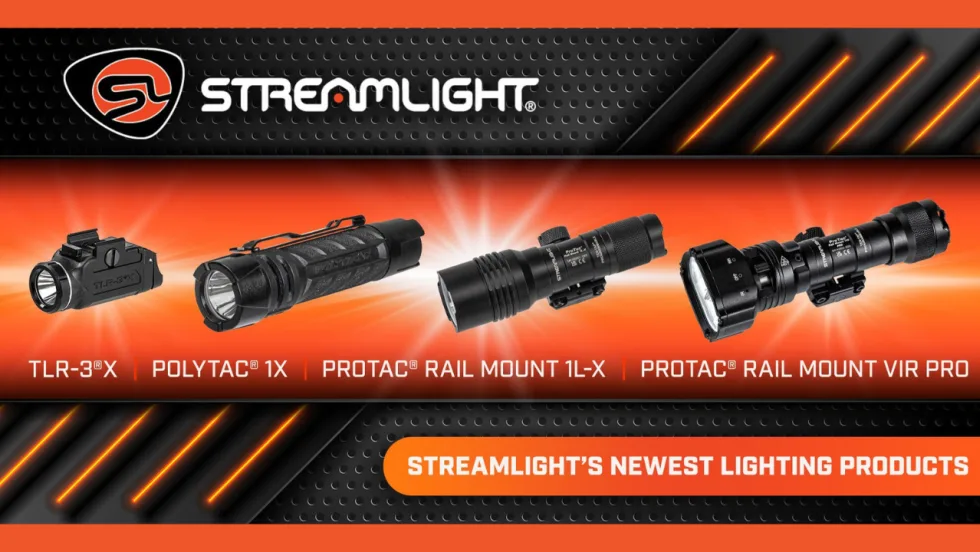
Streamlight to Showcase Newest Lighting Products for Law Enforcement Professionals at IACP 2026
Streamlight will showcase its newest lights for law enforcement at the International Association of Chiefs of Police Annual Conference & Expo. Featured lights will include the TLR-3 X, the PolyTac 1X, and more.
Read More →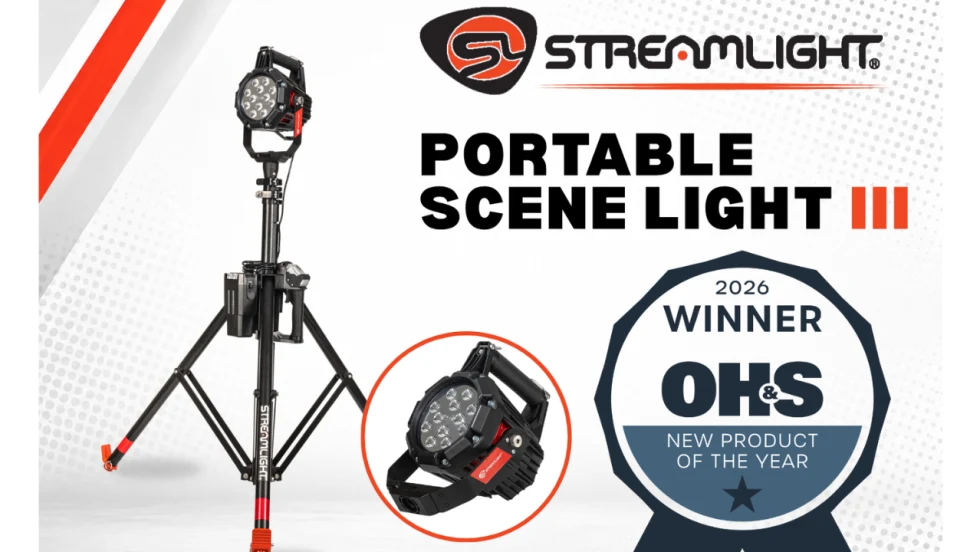
Streamlight Portable Scene Light III Wins 2026 OH&S New Product of the Year Award
Streamlight’s Portable Scene Light III has won the 2026 Occupational Health & Safety (OH&S) New Product of the Year Award in the Lighting category.
Read More →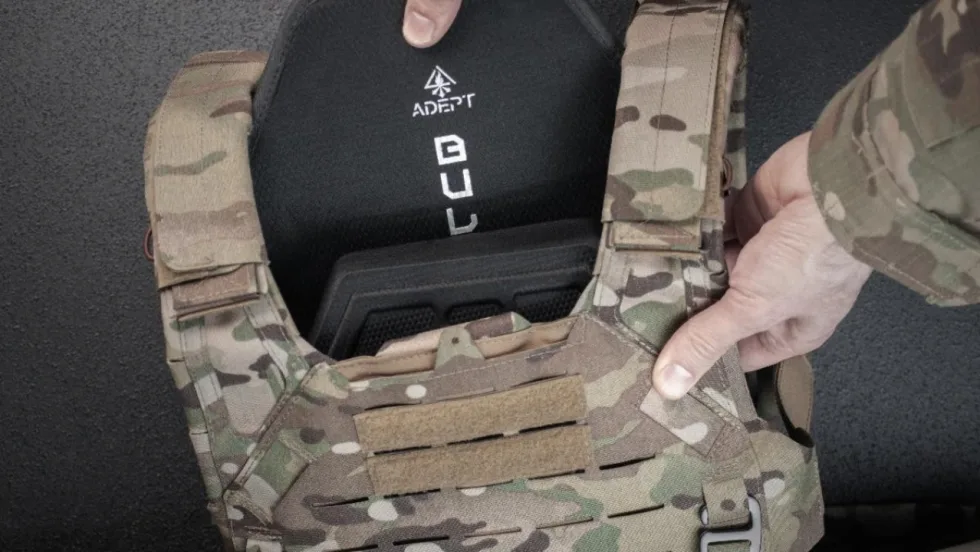
Adept Armor Introduces Two New Rifle Plates
Adept Armor has launched two new Level IV ballistic plates, the Emperor and the Archon Mark 2, which brings Adept Armor’s new Quatroid ceramic to the high-threat, performance-value center of the range at 5.2 pounds.
Read More →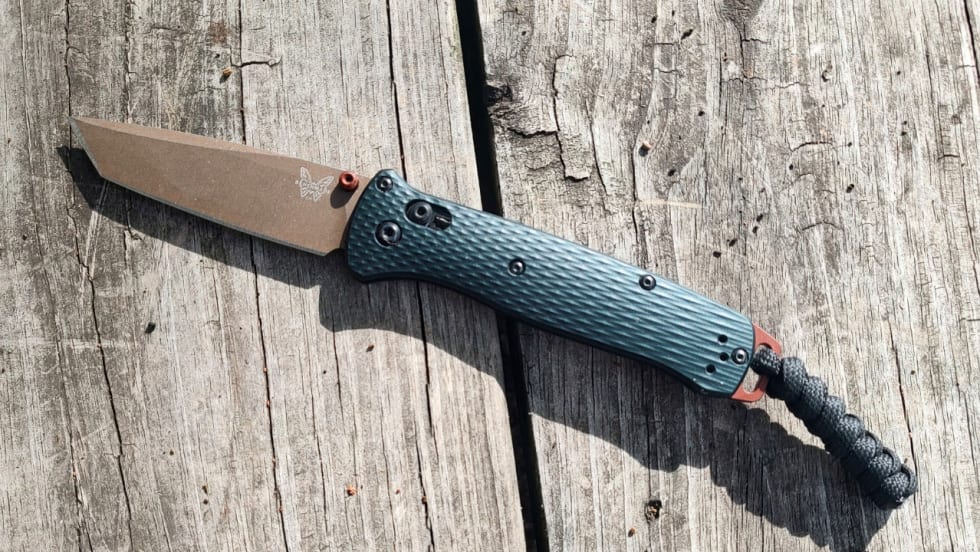
POLICE Product Test: Benchmade Bailout
The Benchmade Bailout is a slim, lightweight carry knife with a deep-ride pocket clip and comes in a variety of blade steels and scales. Here is a detailed review of the Taiga Green Bailout, released earlier this year.
Read More →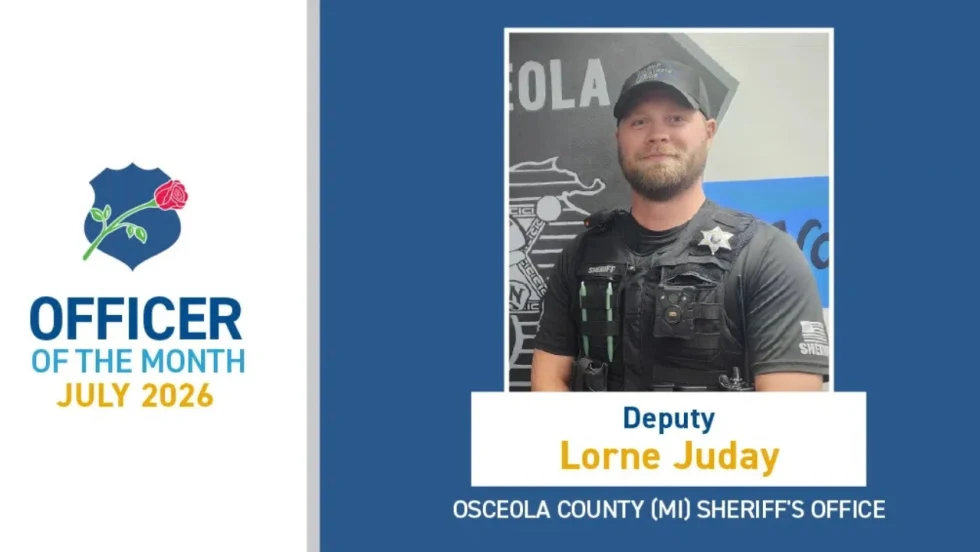
NLEOMF Announces July 2026 Officer of the Month
NLEOMF honored a Michigan deputy sheriff as the July 2026 Officer of the Month for rescuing a trapped driver from a burning vehicle following a Fourth of July crash.
Read More →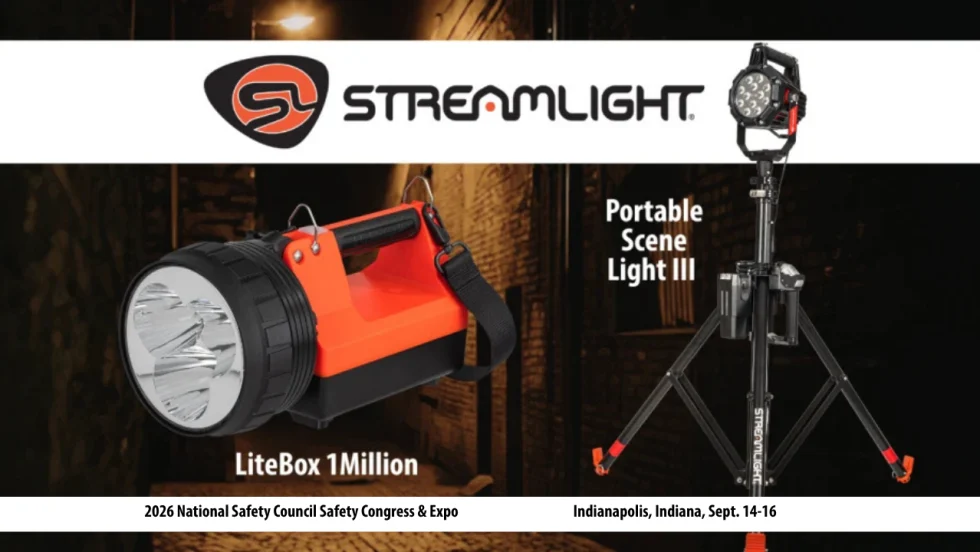
Streamlight to Showcase Newest Lighting Products at National Safety Council’s Safety Congress & Expo 2026
Streamlight will showcase its latest lights, including the Portable Scene Light III and the LiteBox 1Million, at the 2026 National Safety Council (NSC) Safety Congress & Expo.
Read More →
The 2027 World Police & Fire Games Set for Perth, Australia
The 2027 World Police & Fire Games (WPFG) will take place in Perth, Western Australia, from Friday, March 12 through Sunday, March 21, 2027.
Read More →
5.11 Partners with National Fallen Firefighters Foundation to Support #ForThe343
5.11 has joined the nationwide movement honoring the 343 New York City Fire Department firefighters lost on Sept. 11, 2001.
Read More →