



When Is a Death Sentence Not a Death Sentence?
Even with appeals, Jesse Timmendequas should have been scragged, toe-tagged, and bagged long before the Y2K celebrations.

Back in December, New Jersey's state officials repealed the death penalty. They didn't use it anyway, so the decision probably had little real effect.
After all, the most infamous denizen of the Garden State's death row was Jesse Timmendequas. And if anybody ever needed killing, this waste of human skin does.
In 1994, the state of New Jersey plopped this monster and his two fellow sex offender roomies into a neighborhood full of unsuspecting people and across the street from the home of seven-year-old Megan Kanka.
Sex offenders, especially child molesters, are extremely difficult to rehabilitate.
Jesse was no exception. And in the twisted wiring that passes for his brain, he found a lust object in seven-year-old Megan. He used the old "Want to see my puppy?" bait line to persuade the little girl to come into his home. He raped her. Smashed her head into a dresser. Strangled her with his belt. And raped her corpse. The next day he confessed to the crime.
Three years later Jesse Timmendequas was convicted of kidnapping, aggravated sexual assault, and murder. He was sentenced to death. And can you think of anybody who deserved the needle more than this guy?
But two months ago, Jesse Timmendequas received a Christmas present when Gov. Jon S. Corzine signed a bill that repealed the state's death penalty. He is now serving life in prison without parole.
I recap this story, not because of some particular desire to explain the origin of Megan's Law, which requires sex offenders to register and is named for Megan Kanka, but to point out the following: This guy was on death row three years longer than Megan Kanka drew breath.
Which begs the question: Did New Jersey even really have a death penalty? I mean even with appeals, Jesse Timmendequas should have been scragged, toe-tagged, and bagged long before the Y2K celebrations. But no one has been executed in the Garden State since 1963. I repeat…1963.
The powers that be in New Jersey had so little support for capital punishment that they didn't even seek it in cop killings. Maybe such a capital punishment-supporting jury could have prevented the travesty of justice that occurred in Newark two months before Gov. Corzine repealed the state's death penalty.
Back in July 2005, Newark Special Officer Dwayne Reeves, 28, was gunned down in front of the high school where he served. At the time, he was trying to handcuff Blood gang enforcer Khalil Tutt, 28, who was intent on attacking a student who had fought with his younger sister.
His trial was held last October. And despite eyewitness testimony that Tutt had killed Reeves, the jury reduced Tutt's first-degree murder charge to reckless manslaughter. Prosecutors believe the jury was intimidated.
Fortunately, justice wasn't totally blind in this case. Superior Court Judge Michael Casale was so pissed by the jury's verdict that he used the jury's guilty verdicts on some ancillary charges to give Tutt 30 years. Of course, Tutt's attorney is appealing the sentence.
Would Tutt have been convicted of murder if the prosecutors had sought the death penalty? Who knows? One thing is certain, however, even if he had been sentenced to face the executioner that day never would have come. And that's true whether the state's death penalty had been repealed or not.
New Jersey didn't have the stones to carry out the death sentences handed down by its capital case juries since 1976. So there was no point in the state having capital punishment.
More Patrol

The First Responders Children’s Foundation National First Responders Day Roll Call of Heroes Ceremony Returns to Times Square, NYC
First Responders Children’s Foundation (FRCF), in collaboration with T-Mobile, will host the Roll Call of Heroes ceremony in Times Square to commemorate National First Responders Day on Wednesday, Oct. 28. During the event, FRCF will present 18 Hero Awards.
Read More →
Streamlight to Showcase Newest Lighting Products for Law Enforcement Professionals at IACP 2026
Streamlight will showcase its newest lights for law enforcement at the International Association of Chiefs of Police Annual Conference & Expo. Featured lights will include the TLR-3 X, the PolyTac 1X, and more.
Read More →
Streamlight Portable Scene Light III Wins 2026 OH&S New Product of the Year Award
Streamlight’s Portable Scene Light III has won the 2026 Occupational Health & Safety (OH&S) New Product of the Year Award in the Lighting category.
Read More →
Adept Armor Introduces Two New Rifle Plates
Adept Armor has launched two new Level IV ballistic plates, the Emperor and the Archon Mark 2, which brings Adept Armor’s new Quatroid ceramic to the high-threat, performance-value center of the range at 5.2 pounds.
Read More →
POLICE Product Test: Benchmade Bailout
The Benchmade Bailout is a slim, lightweight carry knife with a deep-ride pocket clip and comes in a variety of blade steels and scales. Here is a detailed review of the Taiga Green Bailout, released earlier this year.
Read More →
NLEOMF Announces July 2026 Officer of the Month
NLEOMF honored a Michigan deputy sheriff as the July 2026 Officer of the Month for rescuing a trapped driver from a burning vehicle following a Fourth of July crash.
Read More →
Streamlight to Showcase Newest Lighting Products at National Safety Council’s Safety Congress & Expo 2026
Streamlight will showcase its latest lights, including the Portable Scene Light III and the LiteBox 1Million, at the 2026 National Safety Council (NSC) Safety Congress & Expo.
Read More →
The 2027 World Police & Fire Games Set for Perth, Australia
The 2027 World Police & Fire Games (WPFG) will take place in Perth, Western Australia, from Friday, March 12 through Sunday, March 21, 2027.
Read More →
5.11 Partners with National Fallen Firefighters Foundation to Support #ForThe343
5.11 has joined the nationwide movement honoring the 343 New York City Fire Department firefighters lost on Sept. 11, 2001.
Read More →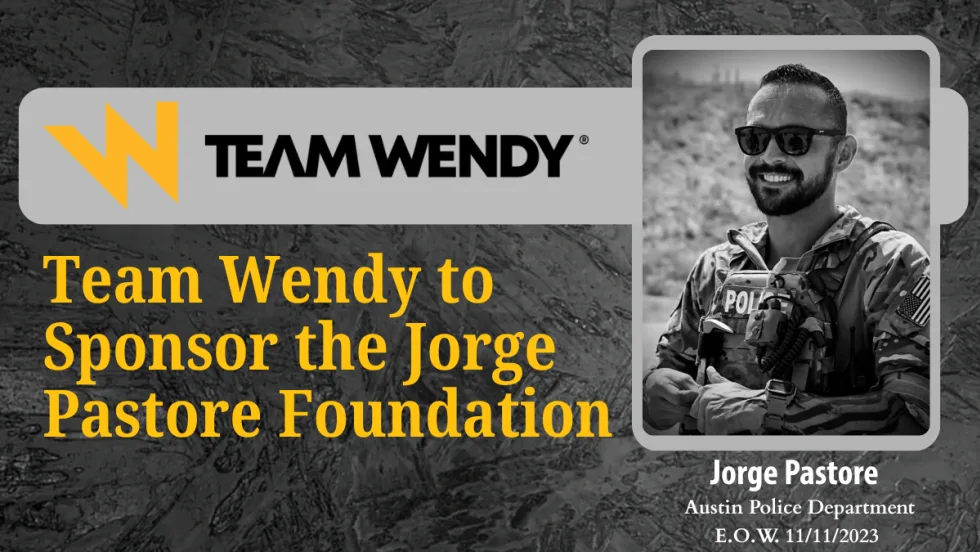
Team Wendy Announces Title Sponsorship of the Jorge Pastore Foundation
Team Wendy’s 3-year partnership with the Jorge Pastore Foundation expands access to programs that strengthen those who serve.
Read More →