



Congress' Super Failure
While certain members of Congress hope to furlough government workers as a remedy for the deficit, they continue to ignore the societal cost of ignoring dangerous criminals. The same failed logic has impacted state and local law enforcement as well.

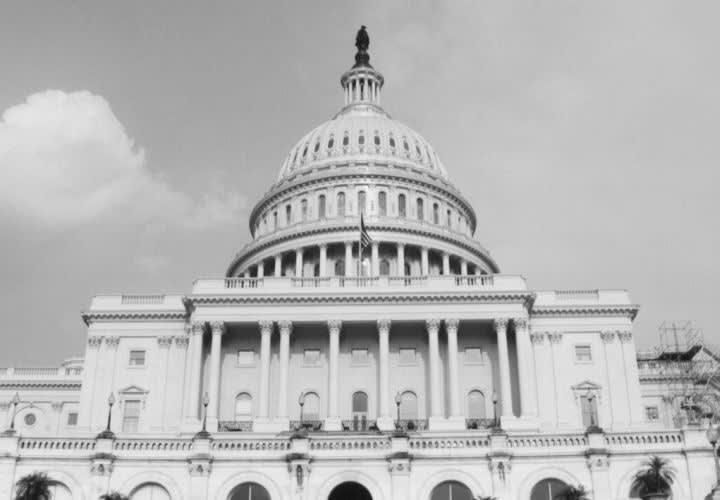
CC_Flickr: Hey Paul
The congressional Super Committee's deadline of Nov. 23, has come and gone, and now federal law enforcement may face the harmful impact of sequestration and "across the board" budget cuts. Unfortunately, there is also a negative derivative impact that the American public may have to endure: a reduction in their protection.
Prior to the Nov. 23 deadline, the Federal Law Enforcement Officers Association (FLEOA) released an illustration to members of the Super Committee to depict the dire consequences of "across the board" cuts. Specifically, any reduction in the federal law enforcement ranks would result in an increase in criminal activity, including terrorism. Criminals thrive on a sense of rational opportunity and will fully exploit any reduction in law enforcement personnel and resources. Federal law enforcement has already been weakened by hiring freezes and increasing rates of attrition. So dangerous criminals will not take pause to accommodate an uncompromising Congress.
While certain members of Congress hope to furlough government workers as a remedy for the deficit, they continue to ignore the societal cost of ignoring dangerous criminals. The same failed logic has impacted state and local law enforcement as well. Police officers are being laid off due to the short-sightedness of many local and state elected officials.
The platform for our democracy is built on the unwavering foundation provided by law enforcement officers. When politicians chisel away at that foundation, they jeopardize the safety and sanctity of everything it supports. Federal law enforcement officers cannot protect our citizens from suspected terrorists, drug trafficking cartel members, and sex predator fugitives if they're placed on furlough.
In addition to the essential protections federal law enforcement officers provide, they also bring in a substantial amount of funds via their respective asset-forfeiture or recovery programs. Concurrent with the money federal law enforcement officers bring back to our government, they cost the government less than 1% of the overall budget. Yet somehow, by way of their baffling budget debate, the Super Committee spent a lot time focusing on the cost of the government workforce. While certain members of Congress continue to blame the deficit on the cost of the government workforce, federal law enforcement has been reduced to an anonymous feather on the back of a duck treading water in a shrinking barrel.
This year the Department of Justice law enforcement components seized criminal assets that resulted in the government recouping $1.6 billion in forfeiture money. The Department of Health and Human Services' Office of the Inspector General recovered $15.5 billion from both criminal and civil investigations. Investigations conducted by the Defense Criminal Investigative Service yielded over $20 billion in recovered funds for the government. Unfortunately, the congressional budget debates have not recognized the value of these accomplishments.
Another casualty of this shameful budget debate is the multi-agency task force(s), arguably the most effective law enforcement concept for combating terrorism and organized crime. When Congress reduces funding for federal law enforcement, it is severing the means for task forces to fund state and local participation. This can cause irreparable harm to task forces' ability to pursue dangerous criminals. Any member of Congress who defines task force money as "waste, fraud, and abuse" should be institutionalized.
Irrespective of the Super Committee's failure to come up with $1.2 trillion in cuts, Congress continues to appropriate billions of dollars in foreign aid. This includes billions to train foreign law enforcement personnel, when federal law enforcement endures a drought in training funding. Given the unrefuted principle that protecting our citizens and institutions is our government's top priority, how does Congress justify this spending?
Absent any legislative chicanery, the Super Committee's failure will result in the automatic "across the board" cuts going into effect in January 2013. In spite of that dire forecast, FLEOA will continue to advocate for a legislative "carve-out" to protect federal law enforcement funding.
In the future, Super Committee members should consider the following: When children swing blindly at a beehive hoping for honey, all they walk away with are bee stings.
More Patrol

Team Wendy Introduces the EXFIL Endurance Ballistic Helmet, Engineered to Reduce the Burden of Extended Wear
Team Wendy has launched its EXFIL Endurance, a new lightweight ballistic helmet engineered to deliver protection, comfort, and fit during demanding, extended operations.
Read More →
The First Responders Children’s Foundation National First Responders Day Roll Call of Heroes Ceremony Returns to Times Square, NYC
First Responders Children’s Foundation (FRCF), in collaboration with T-Mobile, will host the Roll Call of Heroes ceremony in Times Square to commemorate National First Responders Day on Wednesday, Oct. 28. During the event, FRCF will present 18 Hero Awards.
Read More →
Streamlight to Showcase Newest Lighting Products for Law Enforcement Professionals at IACP 2026
Streamlight will showcase its newest lights for law enforcement at the International Association of Chiefs of Police Annual Conference & Expo. Featured lights will include the TLR-3 X, the PolyTac 1X, and more.
Read More →
Streamlight Portable Scene Light III Wins 2026 OH&S New Product of the Year Award
Streamlight’s Portable Scene Light III has won the 2026 Occupational Health & Safety (OH&S) New Product of the Year Award in the Lighting category.
Read More →
Adept Armor Introduces Two New Rifle Plates
Adept Armor has launched two new Level IV ballistic plates, the Emperor and the Archon Mark 2, which brings Adept Armor’s new Quatroid ceramic to the high-threat, performance-value center of the range at 5.2 pounds.
Read More →
POLICE Product Test: Benchmade Bailout
The Benchmade Bailout is a slim, lightweight carry knife with a deep-ride pocket clip and comes in a variety of blade steels and scales. Here is a detailed review of the Taiga Green Bailout, released earlier this year.
Read More →
NLEOMF Announces July 2026 Officer of the Month
NLEOMF honored a Michigan deputy sheriff as the July 2026 Officer of the Month for rescuing a trapped driver from a burning vehicle following a Fourth of July crash.
Read More →
Streamlight to Showcase Newest Lighting Products at National Safety Council’s Safety Congress & Expo 2026
Streamlight will showcase its latest lights, including the Portable Scene Light III and the LiteBox 1Million, at the 2026 National Safety Council (NSC) Safety Congress & Expo.
Read More →
The 2027 World Police & Fire Games Set for Perth, Australia
The 2027 World Police & Fire Games (WPFG) will take place in Perth, Western Australia, from Friday, March 12 through Sunday, March 21, 2027.
Read More →
5.11 Partners with National Fallen Firefighters Foundation to Support #ForThe343
5.11 has joined the nationwide movement honoring the 343 New York City Fire Department firefighters lost on Sept. 11, 2001.
Read More →