



Stalking on Campus: A Silent Epidemic
Twenty-four people per minute are victims of rape, physical violence, or stalking by an intimate partner in the United States, and a significant portion of these individuals attend, are employed by or are patients of universities, K-12 districts and hospitals.


Photo: iStockphoto.com.
Editor's note: This article first appeared in the January issue of Campus Safety Magazine.
Twenty-four people per minute are victims of rape, physical violence or stalking by an intimate partner in the United States, and a significant portion of these individuals attend, are employed by or are patients of universities, K-12 districts and hospitals.
It is for this reason that Campus Safety magazine has developed a series of articles that aims to provide greater awareness and information on these troublesome, yet underreported crimes. The first installment, which follows, is on stalking. Upcoming issues of Campus Safety will cover relationship/intimate partner violence (traditionally called domestic violence) and sexual assault.
Readers should keep in mind that these crimes often intersect. A teen or young adult romantic relationship or a marriage/domestic partnership with a history of violence could escalate to one that includes stalking, sexual assault or both. Sexual assault, particularly among intimate partners or acquaintances, may have elements of stalking in it.
Related Articles: Essential Elements of a Campus Stalking Policy
Stalkers Use Many Methods
Probably the least discussed or understood of these topics is stalking, and the definition of it varies from state to state and campus to campus. The most common ways offenders stalk is by unwanted phone calls, voicemails, text messages, spying, sending unwanted gifts, letters and E-mails and showing up uninvited to the victim's location or waiting for him or her at a particular location.
Eighteen- to 24-year-olds have the highest rate of stalking victimization, says Michelle Garcia, director for the National Center for Victims of Crime's Stalking Resource Center. "The rates of stalking on college campuses are higher than in the general population; similar to the rates of sexual assault.
Indeed, of the six million stalking victims in the United States each year, more than half of the female survivors and more than one-third of the male survivors say the were stalked before the age of 25.
The motivations as to why stalkers stalk vary. In a relationship with a history of domestic violence, the offender might use stalking to regain or maintain the relationship and control of the victim. With sexual assault cases, stalking might take place before and/or after the incident. It also happens with unrequited affection or romantic rejection.[PAGEBREAK]
"The stalker thinks if they try hard enough, the other person will come back to them despite the person telling them they don't want anything to do with them," claims Garcia.
A student might even stalk a teacher or faculty member because of a bad grade or a crush.
Is the Behavior Immaturity or Stalking?
Unfortunately, the level of emotional maturity in adolescents and young adults can make the issue quite murky.
"There is this notion of developmentally appropriate pursuit behavior," says Garcia. "There is some research that has looked at behaviors that are really typical of adolescents, such as having crushes on teachers, idolizing an actor or musician or someone in the public eye and having that person's poster on their wall.
Related Article: Stalking Stats
"It's common [adolescent behavior] to happen to be at [the target of their affection's] locker when they get out of class or going by a person's house to see if they are home or calling them repeatedly and hanging up or asking their friends for information about them or looking at their Facebook page repeatedly. All of this is typical adolescent developmentally appropriate affection-seeking behavior, and rarely does the target experience fear in response to these behaviors."
Evaluate Situations In Context
It can also look like stalking if not put in the proper context. It is important to view the behavior from the victim's perspective. Behaviors that seem benign to an outsider might be terrifying to a victim.
"One thing to look at is has the victim or target attempted to set a boundary that this person continues to ignore?" Garcia explains. "Has the person been told by the target, a friend, police officer, HR, RA, etc. that the stalking behavior is not OK?"
Generally, a verbal and/or written warning can be issued to the offender. Another option is an order of protection. That said, Garcia warns, "With stalkers, we know there is a really high recidivism rate. Over 60% will reengage in the stalking behavior after an intervention and after they have been arrested or served with an order of protection."
Identifying stalking, however, can be challenging, particularly for victims who often minimize the problem.
"If you think about any of those behaviors that are typical of stalking cases - the phone calls, showing up to places, the texts, the E-mails - many of those behaviors in and of themselves are not criminal behaviors," says Garcia.
Victims, law enforcement and campus personnel must be able to recognize the pattern and course of conduct that would indicate the behavior is actually stalking.
Clear Policies, Training Can Help
One way a campus can help victims, administrators and public safety officials identify stalking is to have a clear and well-publicized policy that defines stalking and explains that it is not acceptable. Campuses must also encourage the reporting of incidents.
"Victims will come forward and report if they feel that they can do so safely, that they will be believed and that there will be a good and effective response," Garcia says. "Campuses need to evaluate whether they are able to provide that. Do they have systems in place for victims to report? Is it clear where victims can report?"[PAGEBREAK]
Training of campus staff so they appropriately respond to a report is also critical. University, school and hospital personnel should take stalking seriously, and the response by staff must be consistent by all campus staff and public safety department officers.
"The first person the victim reports to, that person's response can dramatically shape the trajectory the victim goes on," Garcia claims. "If [the person receiving the report] is knowledgeable, sympathetic, responsive, appropriate and helpful, then the victim is more likely to continue engaging in the criminal justice system or school judicial system or whatever system is in place."
Lip Service Can Backfire
Garcia believes the biggest mistake any campus can make with regard to stalking is not taking it seriously.
"We've found that most campuses that have a stalking policy tack the word 'stalking' onto an existing sexual assault or dating violence or anti-harassment policy but then never address stalking or any of its realities."
For campuses that don't have policies on stalking, the National Center for Victims of Crime Model Campus Stalking Policy can be downloaded for free by clicking here.
Stalkers Often Use Technology
"National research from 2009 shows that a quarter of stalking victims report that some sort of technology was used, but I think those numbers are huge underestimates," says Michelle Garcia, director for the National Center for Victims of Crime's Stalking Resource Center. "When you look at the national study, it couldn't ask about every form of technology. It didn't ask about text messaging, which is a very common technology used to stalk.
"Also, for victims to say that technology was used against them they had to be aware of it. So many of these technologies can be used against victims without their knowledge. I can put a GPS tracker on someone's car and see everywhere they go, and they will have no idea."
Spyware can also be installed on a computer or phone.
It is for these reasons that Garcia urges campuses to increase awareness as to how offenders are misusing technology and educate their communities how to engage with that technology more safely. That means encouraging students, faculty, staff and patients to:
Protect their phones and computers against spyware
Use passwords
Keep their cell phones with them at all times
Notice if something strange is happening on their phone (the battery is draining too quickly)
Not provide detailed information on social networking sites
Follow guidelines on privacy and database management
Additionally, campuses can work with their IT departments to provide documentation of cyber stalking behavior.
Learn More About Stalking at the Conference on Crimes Against Women
Campus public safety professionals are encouraged to attend the 7th Annual Conference on Crimes Against Women, which will take place in Dallas, March 26-28. The event will bring together all those who may respond to crimes of female victimization and arm them with the most effective, relevant and up-to-date training available to battle this worldwide epidemic.
Topics covered will be particularly pertinent to university, school and hospital law enforcement and security personnel. The subjects will include stalking, domestic violence, sexual assault, interrogation techniques, how sexual predators find their victims, "sextortion," how investigators and prosecutors can recover mobile device data, testifying in domestic violence cases and how technology is used by stalkers.
More Patrol
The First Responders Children’s Foundation National First Responders Day Roll Call of Heroes Ceremony Returns to Times Square, NYC
First Responders Children’s Foundation (FRCF), in collaboration with T-Mobile, will host the Roll Call of Heroes ceremony in Times Square to commemorate National First Responders Day on Wednesday, Oct. 28. During the event, FRCF will present 18 Hero Awards.
Read More →
Streamlight to Showcase Newest Lighting Products for Law Enforcement Professionals at IACP 2026
Streamlight will showcase its newest lights for law enforcement at the International Association of Chiefs of Police Annual Conference & Expo. Featured lights will include the TLR-3 X, the PolyTac 1X, and more.
Read More →
Streamlight Portable Scene Light III Wins 2026 OH&S New Product of the Year Award
Streamlight’s Portable Scene Light III has won the 2026 Occupational Health & Safety (OH&S) New Product of the Year Award in the Lighting category.
Read More →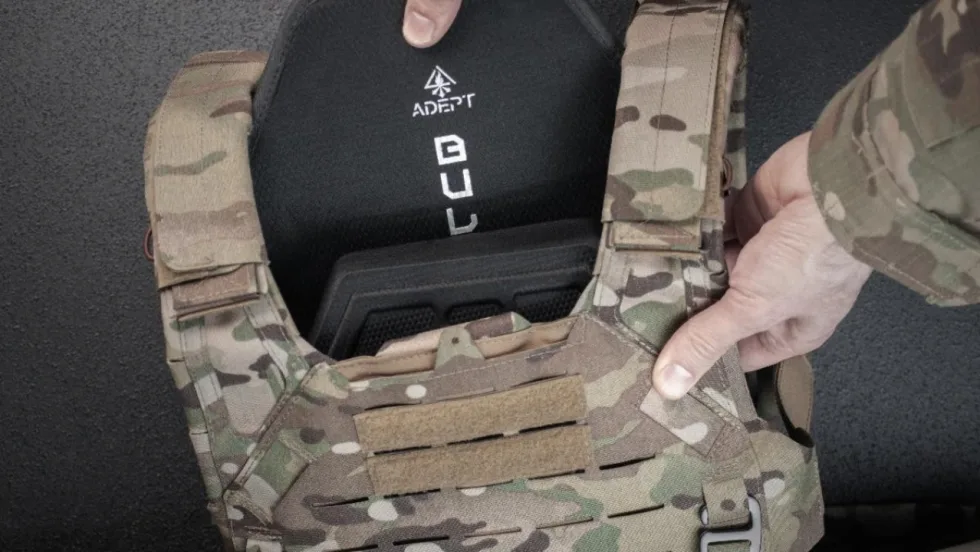
Adept Armor Introduces Two New Rifle Plates
Adept Armor has launched two new Level IV ballistic plates, the Emperor and the Archon Mark 2, which brings Adept Armor’s new Quatroid ceramic to the high-threat, performance-value center of the range at 5.2 pounds.
Read More →
POLICE Product Test: Benchmade Bailout
The Benchmade Bailout is a slim, lightweight carry knife with a deep-ride pocket clip and comes in a variety of blade steels and scales. Here is a detailed review of the Taiga Green Bailout, released earlier this year.
Read More →
NLEOMF Announces July 2026 Officer of the Month
NLEOMF honored a Michigan deputy sheriff as the July 2026 Officer of the Month for rescuing a trapped driver from a burning vehicle following a Fourth of July crash.
Read More →
Streamlight to Showcase Newest Lighting Products at National Safety Council’s Safety Congress & Expo 2026
Streamlight will showcase its latest lights, including the Portable Scene Light III and the LiteBox 1Million, at the 2026 National Safety Council (NSC) Safety Congress & Expo.
Read More →
The 2027 World Police & Fire Games Set for Perth, Australia
The 2027 World Police & Fire Games (WPFG) will take place in Perth, Western Australia, from Friday, March 12 through Sunday, March 21, 2027.
Read More →
5.11 Partners with National Fallen Firefighters Foundation to Support #ForThe343
5.11 has joined the nationwide movement honoring the 343 New York City Fire Department firefighters lost on Sept. 11, 2001.
Read More →
Team Wendy Announces Title Sponsorship of the Jorge Pastore Foundation
Team Wendy’s 3-year partnership with the Jorge Pastore Foundation expands access to programs that strengthen those who serve.
Read More →