



Response to Psycho-Medical Emergencies
Psycho-medical emergencies are serious, life threatening events that can rapidly degrade to sudden in-custody death incidents if not handled properly.


Photo: iStockphoto.com
Example 1
On a hot July day fire and police were called to the home of a 55-year-old man suffering from heat stroke distress. Police arrived first and found the man sitting on a bench in his front yard holding a cane. When the officers approached the man and asked him to give them his cane, he became agitated and non-compliant. One officer suddenly grabbed the cane away from the man, who screamed and suddenly stood up. The man was tased, taken to the ground, beaten, and handcuffed.
He was transported to the hospital where ER physicians confirmed a diagnosis of heat stroke. The man had no criminal history. He sustained numerous moderate injuries, which kept him from returning to work for several weeks. The officers and agency were sued and settled out of court.
Example 2
Deputies were dispatched to a residence after the county's Emergency 911 center received a number of 911 hang-up calls where the caller sounded agitated. They contacted the parents and brother of a subject in his 30s who was agitated, chaotic, and possibly under the influence of drugs.
After being assured by the parents that the family could handle the son, the deputies began to leave. Then they saw the son pull his mother back into the house. The deputies re-entered the home and confronted the son who was clearly acting bizarrely. When the son hid behind his mother and hugged her strongly from behind, the deputies decided to tase the man. A violent struggle ensued to capture and restrain him, which resulted in the use of pepper spray and repeated hard baton strikes. The man became unresponsive and died at the scene.
The deputies and agency were sued. A civil trial jury found that the deputies were poorly trained and used excessive force. The damages verdict was in the millions and is the largest in the county's history.
Example 3
On a warm early September morning, police received numerous calls of a naked man running into the street, yelling that he was God, and pounding on passing vehicles. The first officer to arrive on-scene observed the naked man walk out from behind a building and stand quietly on the curb. Without waiting for backup to arrive, the officer approached and engaged the man while yelling at him to put his hands up. The naked man immediately became agitated. He yelled at the officer and then rapidly approached him while swinging a closed fist.
The officer responded by tasing the man, who fell to the ground disoriented. The man then sat up and was ordered to lie on his stomach while still being tased. And despite the presence of two more officers who could have physically controlled the subject, he was tased four more times before officers handcuffed him.
The naked man experienced respiratory distress and cardiac arrest and died in custody. An autopsy found no drugs in his system. The death was classified as "natural." The cause was listed as "agitated-excited delirium in concert with psychosis." The use of an electronic control weapon (ECW) that delivered 21 seconds of electrical load in the upper chest within a 23-second timespan is not listed as a contributing cause of death. The officers and agency were sued for wrongful death and excessive force.
Example 4
Paramedics and police were called to the home of a 53-year-old UPS driver who had suffered a seizure after returning home from work. Paramedics found the man disoriented and standing on his bed.
Officers arrived simultaneously and yelled at the man to get off the bed and to lie on his stomach. The man moved to a window and was tackled by paramedics and then repeatedly tased by the officers.
The man suffered moderate injuries from the police encounter and was transported to the hospital. ER physicians diagnosed that the man suffered from a seizure. His toxicology was negative for drugs and he had no criminal history. He did not return to work following the incident. And he has sued the municipality.
Life-Threatening Events
Hyperthermia, agitated-chaotic events, excited delirium syndrome, seizures, drug influence, mental health disorders, and psychosis are all classified as psycho-medical emergencies (PMEs). Psycho-medical emergencies are serious, life threatening events that can rapidly degrade to sudden in-custody death incidents if not handled properly. PME incidents are on the increase, as are in-custody deaths.
PMEs are some of the most dangerous and challenging critical incident circumstances that officers face. They are also increasingly a source of criminal prosecution of officers and civil litigation against officers, agencies, and municipalities.
Best Practices
How serious are psycho-medical emergencies and what are the "best practices" in responding to them?
First, any response to a PME should be integrated and involve both first responder and emergency medical role players: dispatchers, police, EMS, and ER personnel. This type of multidisciplinary response cannot happen without first developing and implementing a solid training platform that teaches dispatchers and responders how to recognize the cues of a classic psycho-medical emergency and then the best protocol of response and police/medical intervention and mitigation.
The best practices PME response protocol involves identification, pre-contact threat and PME assessment, isolation and containment, communication, capture, control and restraint, sedation, medical intervention, and transport to hospital for treatment. All role players must know their defined areas of responsibility and should understand that the ultimate objective of their symbiotic relationship is the safety of the public, themselves, and the involved subject.
Officers and dispatchers are not physicians, nor are they necessarily medically trained. So law enforcement personnel cannot diagnose PMEs. However, they should be properly trained to assess and evaluate subjects to determine whether they might be experiencing a psycho-medical emergency.
Training can teach officers and dispatchers how to recognize the four basic cues or signs of psycho-medical distress. The cues are categorized as verbal, physical, behavioral, and/or psychological. First responders need to quickly determine whether the subject's cues indicate that he or she is gravely disabled, in need of immediate medical intervention, and/or are a danger to themselves or others sufficient to justify an involuntary commitment to a hospital or psychiatric facility for evaluation.
A Team Effort
Dispatchers should be trained to recognize the cues of agitated, chaotic, abnormal, bizarre, and under the influence behavior from 911 callers, reporting persons, and witnesses. These cues must be accurately documented in the computer-aided dispatch (CAD) log and thoroughly described to responding officers, supervisors, and EMS personnel who are dispatched at the same time as officers. Dispatchers should be trained to provide as much information as possible so that responding officers and EMS personnel can develop tactical plans and make decisions regarding staging plans while en route to the call.
Officers need to be trained to handle every potential PME call as a high-risk critical incident. In absence of a supervisor, officers can immediately engage the trained PME protocol. A critical component of the arrival protocol once the suspected PME subject is located is to conduct a pre-contact threat and PME assessment.
In the case of subjects presenting with agitated-chaotic behavior, it is extremely important that officers not compress distance in approaching the subject unless exigent circumstances exist. Case histories have clearly shown that distance compression with delirious and/or paranoid subjects significantly increases agitation, which in turn can exacerbate the subjects' psycho-medical condition. Getting too close too quickly also compromises the reactionary gap of officer action-reaction lag time in controlling and/or defending against violent subjects.
This scenario rarely ends well for officers and subjects. Whenever safe and practical to do so, officers should make sure that all components and resources are marshaled and immediately available to engage and complete the capture/control, sedation, and medical intervention of the PME subject. EMS should be staged at a safe location proximate to the scene to allow for a rapid response for the immediate sedation and medical intervention of the subject.
EMS should be equipped to administer sedatives such as Versed nasally or ketamine intramuscularly as needed. It is critical that officers understand that most agitated-chaotic subjects are hyperthermic (overheated) and may be presenting with agitated-excited delirium syndrome, which is often fatal during or immediately following police uses of force. Therefore, it is important that these subjects be medically sedated as soon as possible to reduce cardiovascular stressors that lead to respiratory and cardiac failures that are major causes of sudden in-custody death.
The best engagement with an agitated-chaotic PME subject is one that avoids unnecessary uses of force. Always have a studied response, rather than an emotional reaction, to perceived or actual resistance. If the subject is not presenting with extreme agitation, delirium, or hallucinating, attempt to calmly and patiently converse with him to assuage him and calm him down. Try not to yell orders, directions, or commands. Maintain distance and continue to assess the subject's ability to comprehend and comply.
If the need for force is anticipated and must be used, make sure that your arrest and restraint team is ready. Have a plan and move quickly with commitment. Remember if you use an electronic control weapon (ECW) to minimize load cycles and cuff the subject under load. ECWs and/or body compression alone rarely cause death, but they most certainly exacerbate the factors that cause a subject to have a psycho-medical emergency and can significantly increase respiratory and cardiovascular stressors.
Supervisors should immediately respond to the scene to manage personnel, provide direction and logistical support, and to assist in managing any potential crime scene that might result from any major use of force. Remember that evidence collection at the scene is critical.
Supervisors should always be present at the hospital to provide ER staff with an immediate medical history of the PME subject's cues at the scene and all force that was used. If the supervisor does not know this information, radio for one of the involved officers to provide this important information.
Evidence collection at the hospital is every bit as critical as at the scene because ER staff are concerned with saving lives, not collecting evidence. Photograph and video the subject, especially if the subject is still alive. Capture any verbal, physical, behavioral, and/or psychological cues via video. It is critical to have the ER staff capture and document internal body core temperatures to confirm hyperthermia.
Medical directors need to work with law enforcement to establish medical response and intervention protocols for handling PMEs as well as forensic investigation protocols for the proper identification, documentation, and collection of medical evidence to diagnose subjects who die in-custody and forensically determine the accurate cause of death, manner of death, contributing causes of death, and any mechanisms of injury associated with an in-custody death.
Psycho-medical emergencies have become one of the most serious, challenging, and risky types of scenarios that law enforcement and medical professionals face today. They often result in serious injury and even in-custody death to the PME subject and will most likely be heavily scrutinized by the media and litigated as either a civil rights or criminal case. It is imperative that all public safety responders to a PME incident know their roles and follow the PME response and evidence collection protocols when dealing with subjects in distress.
Ron Martinelli, Ph.D., CMI-V, is the nation's only forensic police practices expert who is also a certified medical investigator. Dr. Martinelli is a retired police detective and directs a multidisciplinary forensic death investigations and independent review team. He has investigated more than 200 police-involved death cases. www.DrRonMartinelli.com
More Patrol

Adept Armor Introduces Two New Rifle Plates
Adept Armor has launched two new Level IV ballistic plates, the Emperor and the Archon Mark 2, which brings Adept Armor’s new Quatroid ceramic to the high-threat, performance-value center of the range at 5.2 pounds.
Read More →
POLICE Product Test: Benchmade Bailout
The Benchmade Bailout is a slim, lightweight carry knife with a deep-ride pocket clip and comes in a variety of blade steels and scales. Here is a detailed review of the Taiga Green Bailout, released earlier this year.
Read More →
NLEOMF Announces July 2026 Officer of the Month
NLEOMF honored a Michigan deputy sheriff as the July 2026 Officer of the Month for rescuing a trapped driver from a burning vehicle following a Fourth of July crash.
Read More →
Streamlight to Showcase Newest Lighting Products at National Safety Council’s Safety Congress & Expo 2026
Streamlight will showcase its latest lights, including the Portable Scene Light III and the LiteBox 1Million, at the 2026 National Safety Council (NSC) Safety Congress & Expo.
Read More →
The 2027 World Police & Fire Games Set for Perth, Australia
The 2027 World Police & Fire Games (WPFG) will take place in Perth, Western Australia, from Friday, March 12 through Sunday, March 21, 2027.
Read More →
5.11 Partners with National Fallen Firefighters Foundation to Support #ForThe343
5.11 has joined the nationwide movement honoring the 343 New York City Fire Department firefighters lost on Sept. 11, 2001.
Read More →
Team Wendy Announces Title Sponsorship of the Jorge Pastore Foundation
Team Wendy’s 3-year partnership with the Jorge Pastore Foundation expands access to programs that strengthen those who serve.
Read More →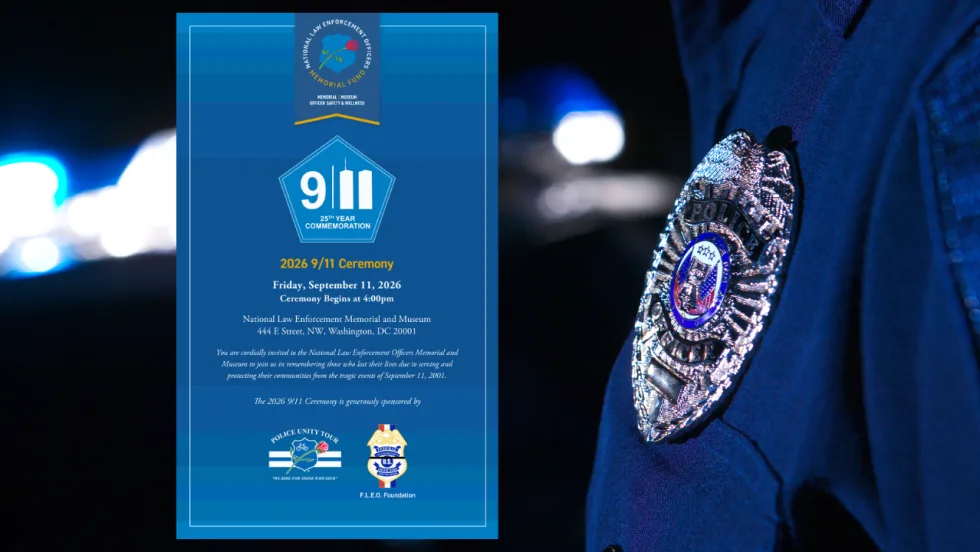
National Law Enforcement Memorial and Museum Hosting 9/11 25th-Year Commemoration Ceremony
The National Law Enforcement Memorial and Museum is hosting a 9/11 25th Year Commemoration Ceremony on Sept. 11 at 4 p.m.
Read More →
National Law Enforcement Officers Memorial Fund Announces June 2026 Officers of the Month
The National Law Enforcement Officers Memorial Fund (NLEOMF) named 15 officers of the Chico Police Department (California) as the Officers of the Month for June 2026 for their roles in responding to an active-shooter incident at a public library.
Read More →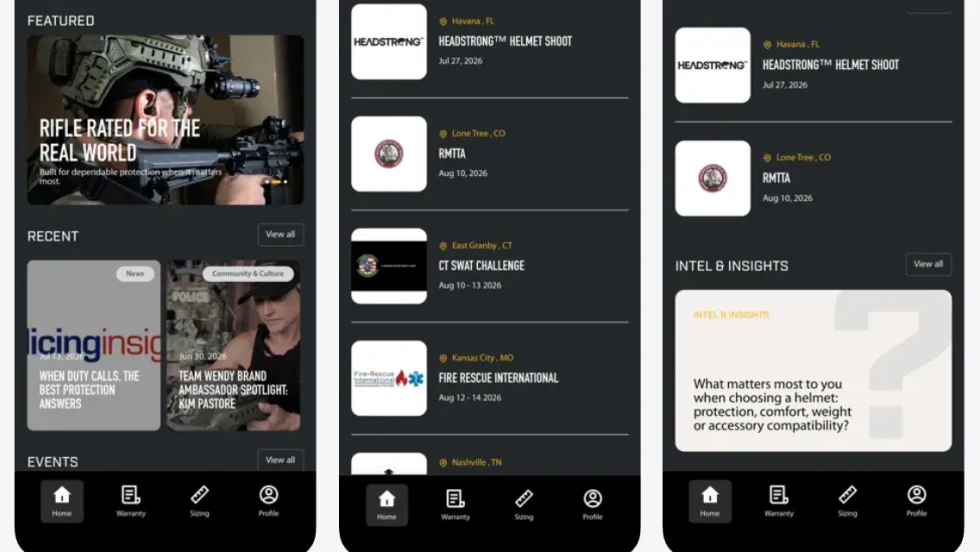
Team Wendy App Creates New Digital Hub for Helmet Owners
The Team Wendy Community App provides one location for warranty registration, size-fit tools, product updates, and community connection. For helmet owners, the new app creates a simpler path to the information and tools that matter most.
Read More →