



Lessons Learned from a Very Bloody Week
It will be many months before we have the final reports on the Colorado Springs and San Bernardino active shooter attacks. But initial reports can give us an outline of what occurred during these two bloody incidents and perhaps enough insight to yield some important lessons learned.

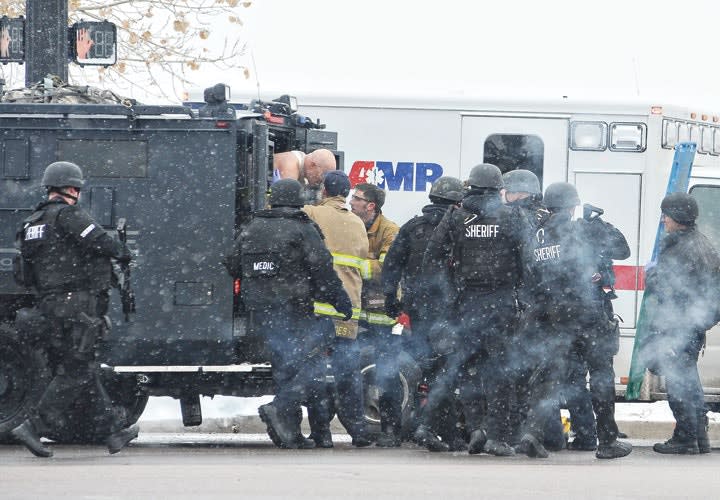
In Colorado Springs officers used armored rescue vehicles to remove wounded from the Planned Parenthood Building and ferry them to waiting ambulances. (Photo: Zuma Press)
It will be many months before we have the final reports on the Colorado Springs and San Bernardino active shooter attacks. But initial reports can give us an outline of what occurred during these two bloody incidents and perhaps enough insight to yield some important lessons learned.
First let's look at the two incidents in terms of law enforcement response, not the political motives of the shooters and the ongoing investigations that now dominate the mainstream media coverage.
Black Friday
Shortly after 11:30 a.m. on Friday Nov. 27, a gunman opened fire in the parking lot of the Colorado Springs Planned Parenthood at 3480 Centennial Blvd. A wounded man was seen crawling toward the facility's north entrance by a witness who was waiting in his car to pick up a friend. The witness got out of his car and the rifle-wielding gunman reportedly opened up on him, too. The man got back in his car and drove three-tenths of a mile south on Centennial to a strip mall anchored by a King Soopers grocery store. He stumbled into the grocery store bleeding from a head wound.
At 11:38 the first 911 call was received by the El Paso County emergency call center. Officers from the Colorado Springs Police Department and other agencies began to respond.
They arrived to find the gunman had entered the building and he had taken a position in one of the windows, giving him a field of fire over the parking lot facing toward the strip mall. At 12:05 one of the responding officers tried to get a fix on the gunman and a description. He radioed that the back window of his patrol car had just been shattered by rifle fire. He reported that the gunman was wearing a long coat and "hunting-type" hat. More officers arrived on the scene.
Officer Garrett Swasey of the University of Colorado at Colorado Springs Police Department was one of the first officers on the scene. His campus jurisdiction was about 10 minutes away, and he knew an active shooter was an all-hands-on-deck situation. Cellphone video captured footage of the 44-year-old church elder moving across the parking lot with his patrol rifle to take up a position at the south side of the building. He was killed in action against the gunman. The details of how he died are not publicly known and will not be released very soon because of a court-imposed gag order.
Officers from numerous agencies, including the El Paso County Sheriff's Office, worked through the afternoon to keep the gunman at bay. They used armored rescue vehicles to move tactical units into the building and to ferry wounded civilians to awaiting ambulances.
Inside the building the officers faced several tactical problems. The gunman was mobile, he was firing through the walls at them, and there were civilians still in the building so they could not fire back without being sure of their target.
Radio transcripts indicate that the tactical problems were solved by an ingenious use of a Lenco BearCat armored vehicle. The chatter from 3:38 p.m. to 4:08 p.m. reveals officers were discussing the position of the gunman, possible victims, and possible hostages, and what to do when one of the officers asked: "What if we brought that BearCat in the same way (meaning through the front door)…continue through that door and block that hallway? Then we'd have him pinned." Shortly afterward one of the officers radioed: "BearCat is in position, ready to go…position confirmed, everybody is away from the northwest corner where our rounds are going to go."
The officers drove the BearCat into the building. And with access to any more victims blocked, the gunman surrendered rather than face a fusillade of officers' bullets.
Robert Lewis Dear Jr. was taken into custody at the scene. He has been indicted on first-degree murder. Three people were killed in the Planned Parenthood attack, including Officer Swasey. Nine were wounded, including five officers. All of the wounded officers had been released from the hospital by Tuesday Dec. 1.
The Holiday Party
The first reports on Dec. 2 were that three gunmen, carrying rifles, and wearing body armor had attacked a county government building in San Bernardino, CA. They had shot many people attending a work meeting and holiday party and two of them had fled in a black SUV.
The first reports were inaccurate. There were two shooters, a man and a woman. They wore black tactical gear and load-bearing vests but not body armor. Really the only accurate information coming out in the first hour after the incident was the location and the fact that many people had been shot—14 dead and 22 wounded.
Lt. Mike Madden of the San Bernardino Police Department and another officer were first on scene. They entered the building and the conference room where the attack occurred about four minutes after the first 911 call of shots fired. Madden later described the scene as "surreal." People were dead. Wounded were begging for help. Fire alarms were sounding and sprinkler water rained down from the ceiling. The air smelled of gunpowder, blood, and death.
Some 300 officers from the San Bernardino PD, the San Bernardino County Sheriff's Office, and other local, state, and federal law enforcement agencies responded to the scene. San Bernardino SWAT was training nearby with full gear and armored vehicles.
Some responding officers cleared the building to ensure a shooter was not still inside. Others helped rescue the wounded and the people who had sheltered in place. And still others investigated the scene to find the shooters before they could strike again.
The investigators caught a quick, unexpected, and chilling break. At least one survivor recognized one of the shooters. The witness pointed to a co-worker, Syed Rizwan Farook.
While the clearing of the Inland Regional Center continued, investigators acted on that tip and set up surveillance on Farook's home in nearby Redlands. They watched the dwelling and saw Farook and his wife Tashfeen Malik drive by in a black SUV that looked very similar to what witnesses had reported leaving the Inland Regional Center shortly after the shooting. The suspects spotted the officers, and a pursuit began.
Farook and Malik led officers on a high-speed chase on the I-10 freeway back to San Bernardino. Back on surface streets, the couple decided to stop and shoot it out with the pursuing officers.
Malik moved to the rear of the SUV and opened fire with an AR-15 on the officers. Officer Nicholas Koahou of the San Bernardino PD was hit in the leg as he rushed to back up a San Bernardino County Sheriff's deputy. He stayed in the fight.
The fight was intense. Some 23 officers from a variety of agencies engaged the couple. Farook was killed in the street as he got out of the SUV and tried to advance on the officers. Malik was killed in the rear of the vehicle by a torrent of bullets. Law enforcement fired 380 rounds; the suspects fired 76.
Lessons Learned
The following is analysis drawn from interviewing law enforcement experts who specialize in active shooter response training. Some of it is drawn from discussions held after the recent attacks and some from information the author has gleaned from more than a decade of interviewing specialists on active shooter response.
No Two Active Shooter Attacks are the Same—These are fluid events. Sometimes they are very well planned, sometimes the shooter just wakes up that morning, loads a gun, and heads out to seek vengeance on the world. Officers cannot make assumptions about how active shooters will behave. Some will kill themselves when confronted by overwhelming force, others will seek to take as many officers with them as possible, and others—perhaps the most dangerous of all—will strike and run in order to strike again. One of the greatest fears of law enforcement tactical analysts is the multiple-person swarming attack as seen in Paris and Mumbai. It's believed the San Bernardino suspects were on their way to another attack when intercepted. Inside the couple's home, investigators found 4,500 rounds of pistol and rifle ammunition and 12 pipe bombs.
Everybody Needs to Know What to Do—It's well known even by civilians that since Columbine first responders are expected to go in and engage the shooter. This is what happened in Colorado, and the death of Officer Garrett Swasey is evidence of how hazardous it can be.
First response is critical in active shooter incidents, but so is the follow-up. Both Colorado Springs and San Bernardino drew the response of dozens of officers from multiple agencies. These incidents are clear examples of why multi-agency training is essential. A major active shooter event can quickly tax the resources of even a large agency. Officers will be needed to guard perimeters, close roads, clear surrounding businesses and homes, take the fight to the shooters, and perform many other essential tasks. Agencies need to have a plan of what to do that details who will perform what roles, including officers from other jurisdictions and fire and emergency medical personnel. If you are not training with other law enforcement agencies in your region and with fire and EMS, it's time to start.
You May Face Multiple Shooters—The most infamous of all American active shooter incidents, Columbine, involved two shooters. Most attacks since that high school massacre have involved one. But as the San Bernardino attack reveals, you have to be ready for the possibility of two or more shooters.
Many Active Shooter Attacks are Also Bomb Attacks—It's hardly ever mentioned in discussions of active shooter history but Columbine was actually a failed bombing. The murderers planned to detonate IEDs in the school cafeteria and shoot the survivors. When the bombs didn't explode, they chose to start shooting anyway.
There were also bombs at San Bernardino. Farook and Malik reportedly connected three pipe bombs with a remote controlled car and put them in a canvas bag. It appears their plan was to detonate the bombs once the first responders were on the scene. Fortunately, the bombs did not go off.
Even the Colorado Springs Planned Parenthood attack had a bombing element that was not widely reported. Police communication transcripts from the standoff reveal the gunman had placed propane canisters in the parking lot anticipating police response and was shooting at them as officers engaged him from the parking lot. At one point one of the canisters started "spraying."
Tactical Medical Response Saves Lives—In Colorado Springs the Fire Department fields a tactical emergency medical unit (TEMS). Fox 31 Denver reported that although the TEMS unit members do not carry guns, they entered the "hot zone" covered by law enforcement officers during the Planned Parenthood standoff to render aid to the wounded and likely saved lives.
During the San Bernardino response, a SWAT-trained paramedic who does carry a weapon entered the "hot zone" with the tactical teams. Ryan Starling was training with the San Bernardino SWAT team nearby when the unit was called out to the scene. He performed triage on the victims, marking the dead with white tape, so he and other emergency medical responders could concentrate their efforts on saving those who could be saved. Starling also organized and directed the evacuation of victims from the building. Later that afternoon, he was at the scene of the shootout between law enforcement and the terrorists to treat a wounded officer and declare the suspects dead.
Sometimes You Have to Think Outside the Box—Officers using unconventional tactics have prevented many civilian and law enforcement casualties during active shooter incidents.
During the infamous 1979 "I Don't Like Mondays" San Diego school shooting, an officer commandeered a garbage truck to screen the schoolyard from the sniper's fire.
At Colorado Springs the officers' decision to drive their BearCat armored rescue vehicle literally into the building to block a hallway and isolate the shooter probably prevented a lot of additional carnage by forcing the suspect to choose surrender or death.
The Courage of a Single Officer Can Make a Huge Difference—Tragedies prevented are often overshadowed by the horrible events that follow. Such is the case with the Garland, TX, incident.
On Sunday May 3 two Islamist terrorists attacked the Curtis Culwell Center where people were holding a "Draw Mohammed" contest.
The terrorists arrived at the center, got out of their vehicle, and opened fire on a Garland police officer and a security guard working the barricades. The security guard was hit in the ankle. Although he was outnumbered and outgunned by the rifle-wielding terrorists, the officer returned fire, wounding his attackers. The shots were heard by the officers of a SWAT team, which was also working the event. They responded to the scene and engaged and ultimately killed the terrorists in a pitched gun battle.
Some have dismissed the single—unnamed-for-his-safety—Garland officer's contributions to ending this threat because SWAT killed the terrorists. But it's important to note that the single officer engaged better armed attackers, slowed them down, and prevented them from gaining tactical advantage that could have led to many casualties. His actions are an example of how much the courage of a single officer can affect the outcome of an active shooter attack. And many individual officers, including Garret Swasey, displayed that kind of courage in Colorado Springs and San Bernardino.
More Patrol
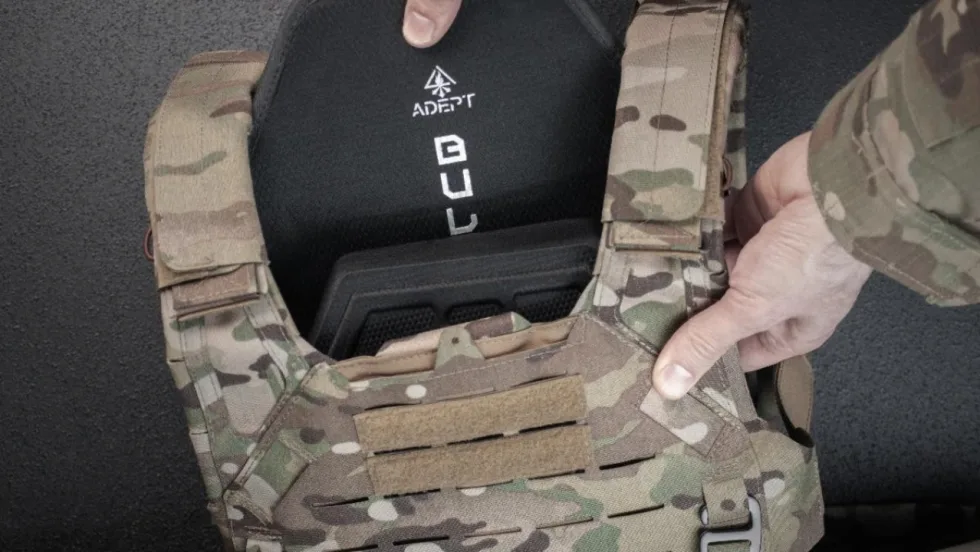
Adept Armor Introduces Two New Rifle Plates
Adept Armor has launched two new Level IV ballistic plates, the Emperor and the Archon Mark 2, which brings Adept Armor’s new Quatroid ceramic to the high-threat, performance-value center of the range at 5.2 pounds.
Read More →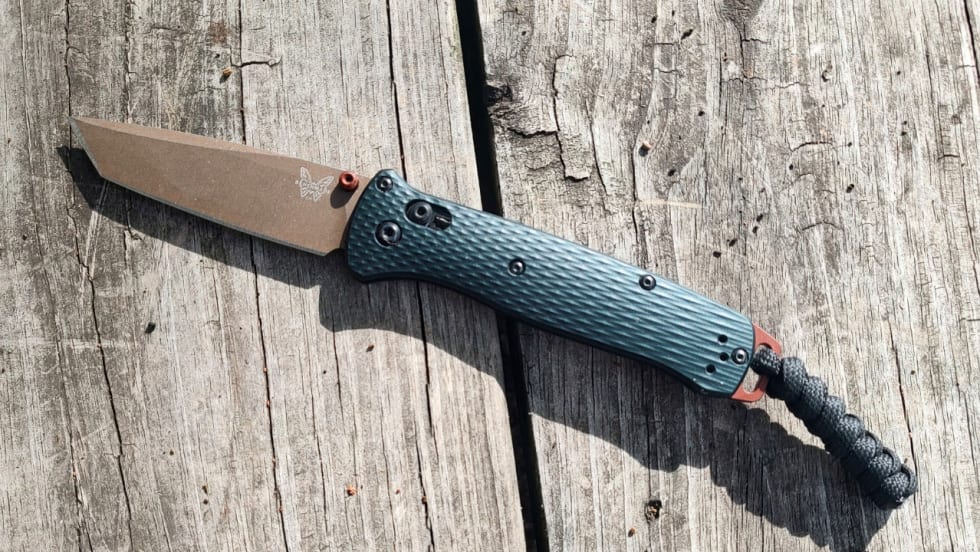
POLICE Product Test: Benchmade Bailout
The Benchmade Bailout is a slim, lightweight carry knife with a deep-ride pocket clip and comes in a variety of blade steels and scales. Here is a detailed review of the Taiga Green Bailout, released earlier this year.
Read More →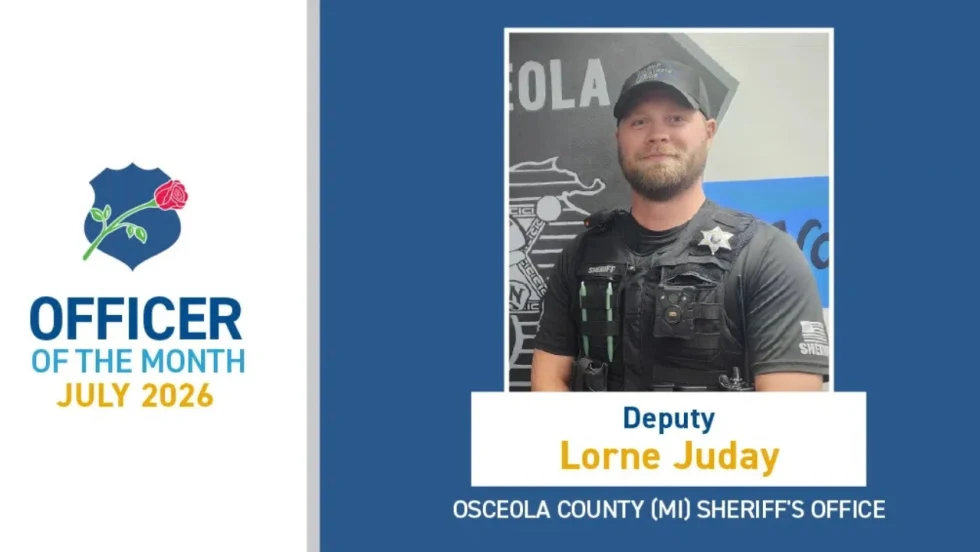
NLEOMF Announces July 2026 Officer of the Month
NLEOMF honored a Michigan deputy sheriff as the July 2026 Officer of the Month for rescuing a trapped driver from a burning vehicle following a Fourth of July crash.
Read More →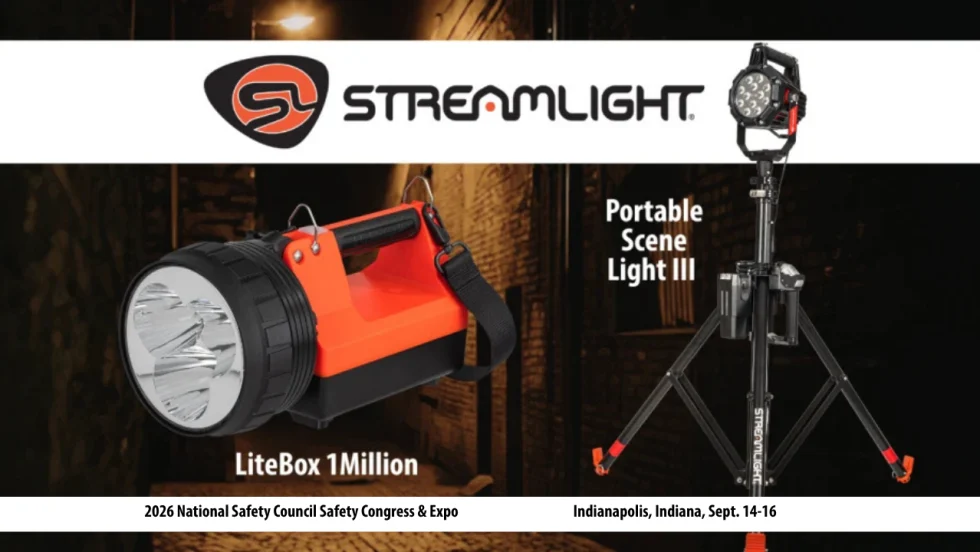
Streamlight to Showcase Newest Lighting Products at National Safety Council’s Safety Congress & Expo 2026
Streamlight will showcase its latest lights, including the Portable Scene Light III and the LiteBox 1Million, at the 2026 National Safety Council (NSC) Safety Congress & Expo.
Read More →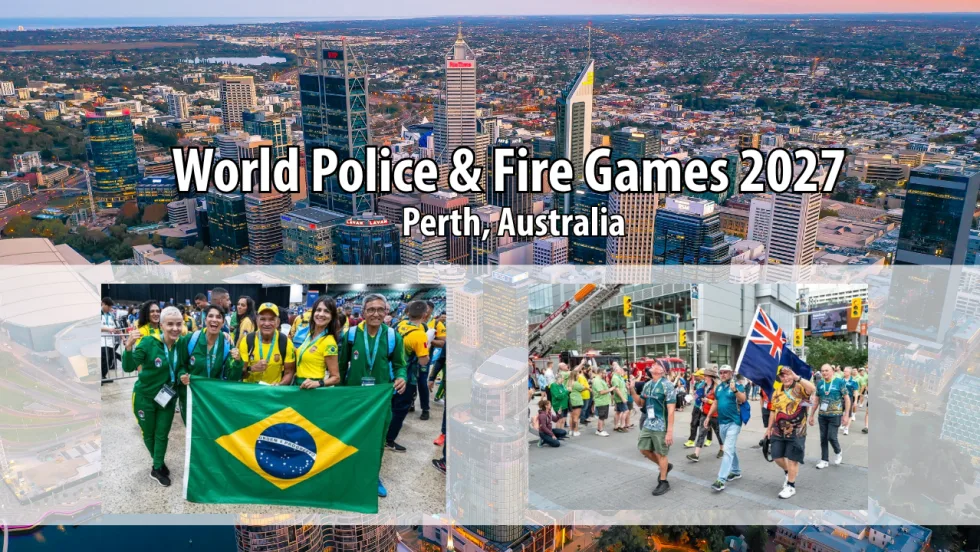
The 2027 World Police & Fire Games Set for Perth, Australia
The 2027 World Police & Fire Games (WPFG) will take place in Perth, Western Australia, from Friday, March 12 through Sunday, March 21, 2027.
Read More →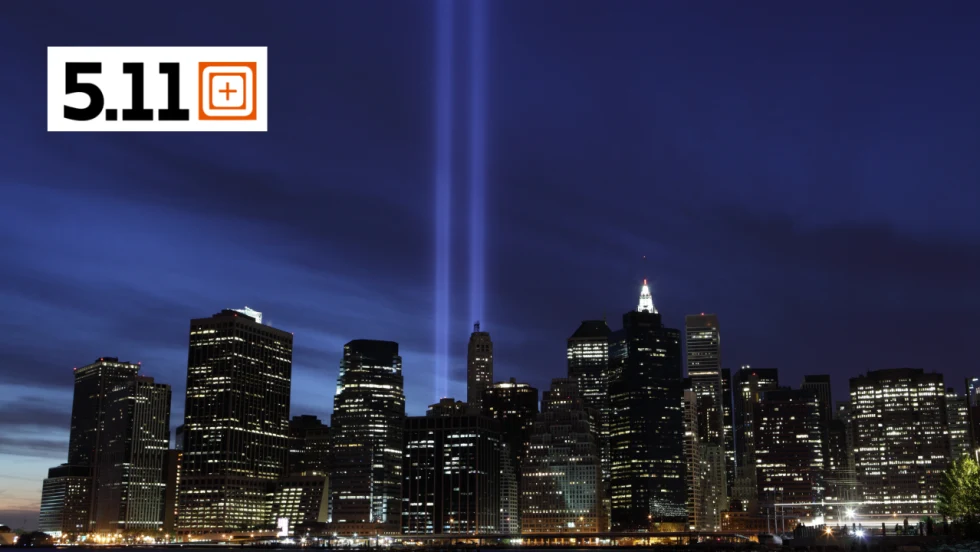
5.11 Partners with National Fallen Firefighters Foundation to Support #ForThe343
5.11 has joined the nationwide movement honoring the 343 New York City Fire Department firefighters lost on Sept. 11, 2001.
Read More →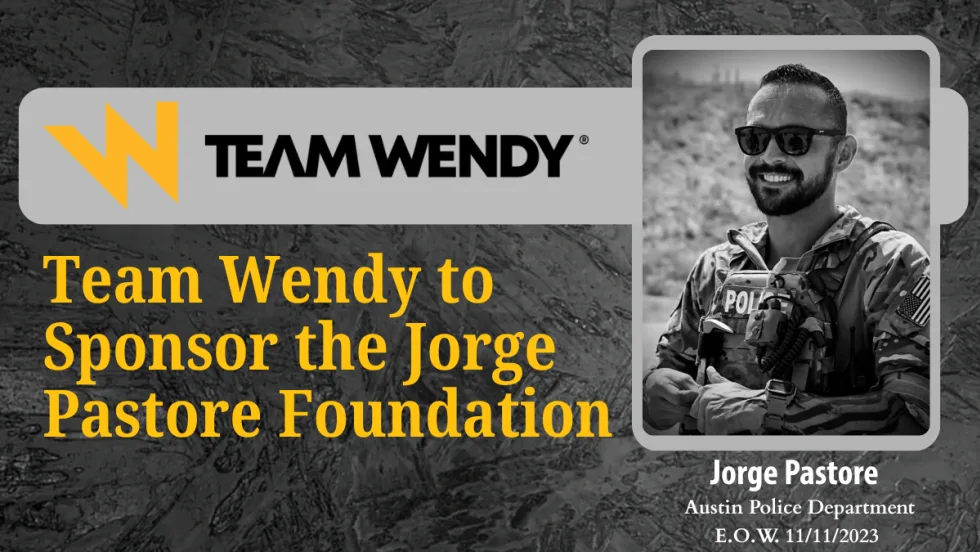
Team Wendy Announces Title Sponsorship of the Jorge Pastore Foundation
Team Wendy’s 3-year partnership with the Jorge Pastore Foundation expands access to programs that strengthen those who serve.
Read More →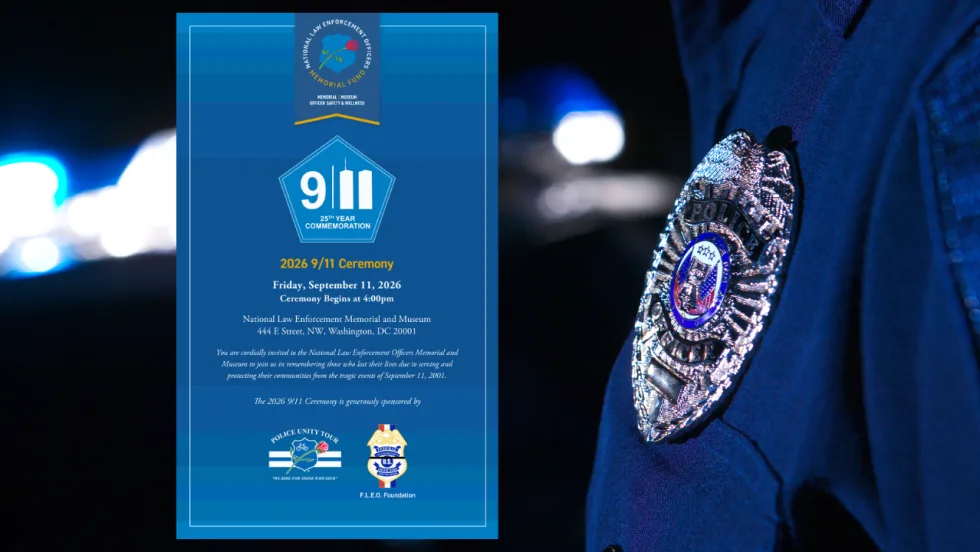
National Law Enforcement Memorial and Museum Hosting 9/11 25th-Year Commemoration Ceremony
The National Law Enforcement Memorial and Museum is hosting a 9/11 25th Year Commemoration Ceremony on Sept. 11 at 4 p.m.
Read More →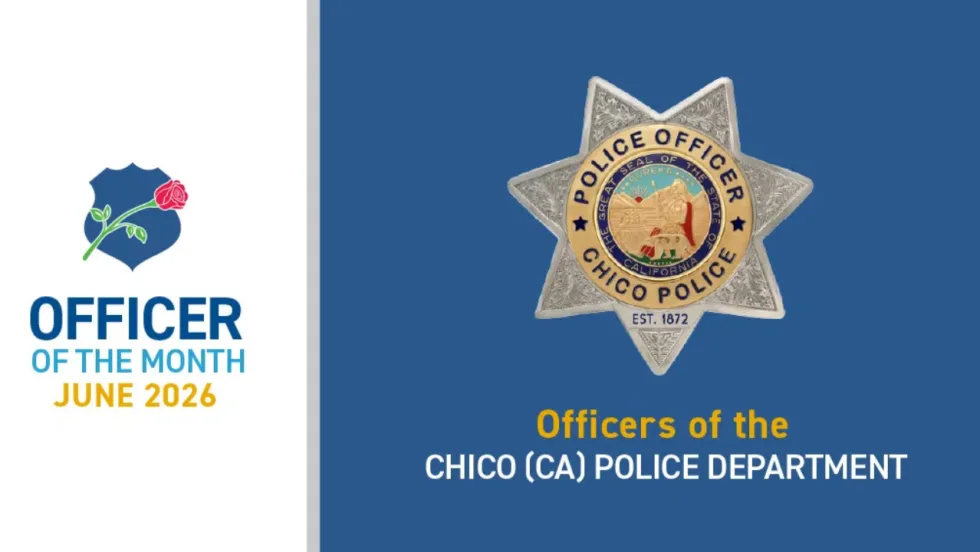
National Law Enforcement Officers Memorial Fund Announces June 2026 Officers of the Month
The National Law Enforcement Officers Memorial Fund (NLEOMF) named 15 officers of the Chico Police Department (California) as the Officers of the Month for June 2026 for their roles in responding to an active-shooter incident at a public library.
Read More →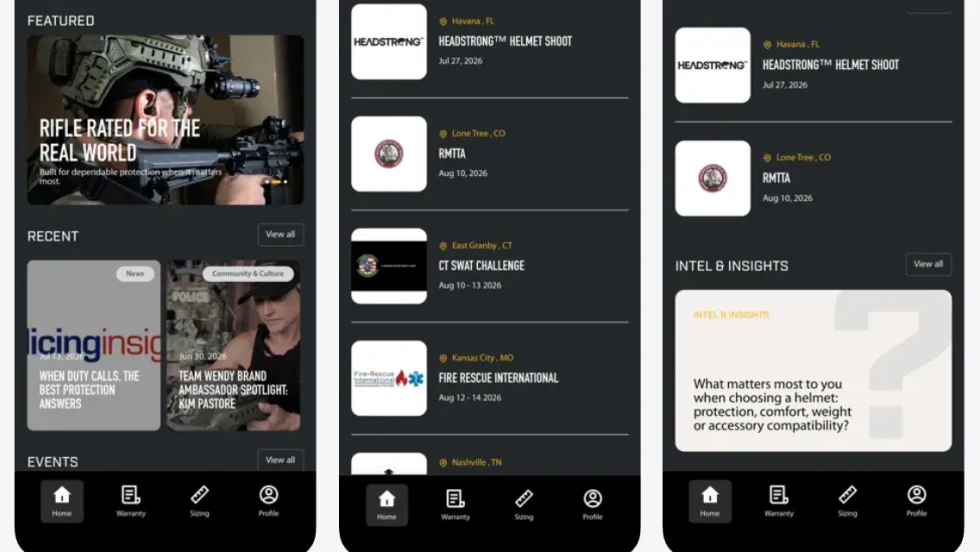
Team Wendy App Creates New Digital Hub for Helmet Owners
The Team Wendy Community App provides one location for warranty registration, size-fit tools, product updates, and community connection. For helmet owners, the new app creates a simpler path to the information and tools that matter most.
Read More →