



Driver Runs Your DUI Checkpoint
All of a sudden you see a car run the checkpoint, and just as it turns out of view you hear shots fired and an officer calling for help over the radio.

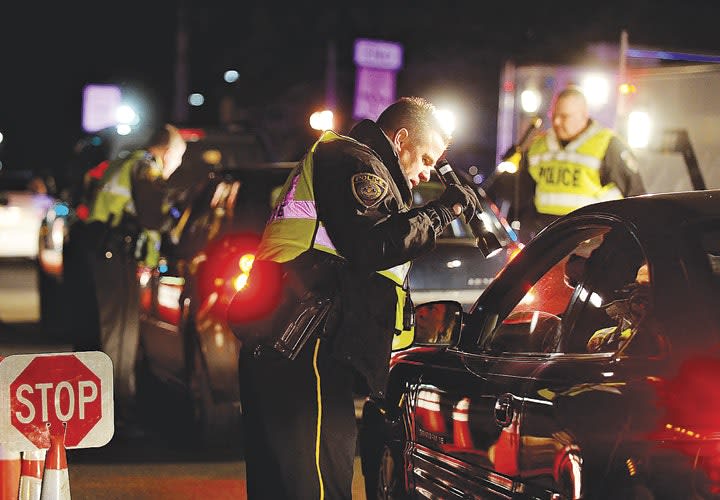
Photo: Monitech.com
In every call for service, you should think things through before you begin your response. Each call can be broken down into three phases: pre-response, response, and post response. The following scenario is designed to help you think things through rather than give you a specific way to handle the call.
Situation
You are in charge of a DUI checkpoint. You have staffed the checkpoint with people consisting of officers from your agency and from four others, including your state police. You have reserves and auxiliary officers from your agency, corrections transportation officers, and corrections booking officers to handle on-site booking. Representatives from MADD are there in full force and have brought food and drinks for the troops. All things considered, your operations plan is tight. You have used this site before and expect the usual fare to drive through.
All of a sudden you see a car run the checkpoint, and just as it turns out of view you hear shots fired and an officer calling for help over the radio. In an effort to escape, the suspect tries to run a reserve officer over and the officer shoots four times from the ground at the fleeing suspect. The officer is injured and the suspect is racing through traffic trying to get away.
Initial Thoughts
Officers are already getting into their cars to chase the suspect. You start running toward the injured officer. You have a thousand thoughts that you have to block out and focus on W.I.N. (what's important now). You need to attend to the injured officer. You also need to broadcast the description of the suspect and vehicle over the radio. Lastly, you need to take control of the scene. The last thing you want is for this incident to turn into the Wild West. Everyone's adrenaline is firing up and you cannot let emotions take over.
Pre-Response
Think It Through Questions
1. What should I do first?
2. How do I manage the injured officer?
3. How do I lock down the area and deal with the citizens that are currently in checkpoint?
4. How do I protect the crime scene?
Step back and switch gears because your checkpoint has now turned into an in-progress battery on a law enforcement officer with a deadly weapon. You have three immediate priorities: get the officer medical help, secure the scene, and make every effort to catch the bad guy. You realize that you have to break the operation down into two parts: controlling the scene and capturing the suspect. You can't do both so you decide that you will stay in command of your checkpoint (and therefore the crime scene) and contact the road patrol watch commander to take over the pursuit that is just beginning. The citizens caught in the checkpoint will have to remain there until you can render the area safe.
Response
Think It Through Questions
1. What if I can't reach the road patrol supervisor?
2. What type of medical assistance does the injured officer need?
3. Am I going to close the checkpoint or continue operations when the dust settles?
4. What type of notifications do I need to make?
Your initial decisions set the tone for the rest of the operation. The officer who was struck by the car is not seriously injured. You call the patrol watch commander and he agrees to handle the pursuit. You must take control of people's emotions by taking charge and exercising sound leadership. You limit the response from your checkpoint to the officers from your agency that have already left the checkpoint. One of your K-9 units is part of that group so you keep the other K-9 close by. You have about 20 cars still inside your checkpoint, and if something else goes bad you want to make sure K-9 is there to help.
You tend to the officer's injuries. You call for EMS and he is transported to the hospital. You assign one officer to follow and take charge of the injured officer's duty belt and gun in case he has to spend the night. He will also need a ride back if released.
You secure the crime scene with evidence tape and call for your forensics unit to respond. You work with the drivers that were getting ready to exit and obtain witness statements. You pick a different exit in case you reopen the checkpoint.
As you monitor the radio, you get asked if the pursuing officers can use the PIT Maneuver to stop the vehicle. You grant permission and the suspect spins out of control to a complete stop. He bails out and tries to scale a subdivision wall. Your K-9 unit puts an end to that plan. Apparently he isn't strong enough to pull himself and the dog biting his leg over the wall.
Once your three priorities have been met (take care of the officer, control the scene, and capture the bad guy), you can regroup and think about reopening the checkpoint. You call your agency head and get clearance.
Post-Response
Think It Through Questions
1. How did the car make it all the way through the checkpoint without being stopped?
2. Was there a weakness in our planning?
3. Were the physical location and lane assignments not restrictive enough?
4. Was there a way to prevent this?
As you debrief, you realize your tire deflation control point did not work. The officer assigned was not at his post. Had he been, the car would have been hit with the tire deflation system and maybe the results would have been different. And here is the crux of any operation; everyone has to do their job, no matter how trivial it may seem to them, in order to pull off an operation of this size. You also realize that you need to rethink your plan and add extra control measures in case someone does run. You consider having a response team of two officers near the exit in order to have a built-in pursuit team. You consider suggesting PIT maneuver training for everyone instead of just the SWAT team.
Final Thoughts
Something similar actually happened during one of my checkpoint operations. What amazed me the most about that day was that for a brief moment in time, everyone came together like a well-oiled machine. Half the time I asked for something, someone had already started doing it. Orders were given and followed without exception. Different units worked together seamlessly as if they were one. Egos were set aside and placed under lock and key. The brass stayed out of the way. It was a defining moment for me as a supervisor because, for a very short time, everyone was at his or her best and worked as a team should. In that moment we could have handled anything thrown at us. It's a shame it takes an officer getting injured to make that happen. It should be how we roll all the time.
There are always multiple possibilities and potential responses. Thinking it through now saves you time later.
Amaury Murgado retired a senior lieutenant from the Osceola County (FL) Sheriff's Office with over 29 years of experience. He also retired from the Army Reserve as a master sergeant. He holds a Master of Political Science degree from the University of Central Florida.
More Patrol

Adept Armor Introduces Two New Rifle Plates
Adept Armor has launched two new Level IV ballistic plates, the Emperor and the Archon Mark 2, which brings Adept Armor’s new Quatroid ceramic to the high-threat, performance-value center of the range at 5.2 pounds.
Read More →
POLICE Product Test: Benchmade Bailout
The Benchmade Bailout is a slim, lightweight carry knife with a deep-ride pocket clip and comes in a variety of blade steels and scales. Here is a detailed review of the Taiga Green Bailout, released earlier this year.
Read More →
NLEOMF Announces July 2026 Officer of the Month
NLEOMF honored a Michigan deputy sheriff as the July 2026 Officer of the Month for rescuing a trapped driver from a burning vehicle following a Fourth of July crash.
Read More →
Streamlight to Showcase Newest Lighting Products at National Safety Council’s Safety Congress & Expo 2026
Streamlight will showcase its latest lights, including the Portable Scene Light III and the LiteBox 1Million, at the 2026 National Safety Council (NSC) Safety Congress & Expo.
Read More →
The 2027 World Police & Fire Games Set for Perth, Australia
The 2027 World Police & Fire Games (WPFG) will take place in Perth, Western Australia, from Friday, March 12 through Sunday, March 21, 2027.
Read More →
5.11 Partners with National Fallen Firefighters Foundation to Support #ForThe343
5.11 has joined the nationwide movement honoring the 343 New York City Fire Department firefighters lost on Sept. 11, 2001.
Read More →
Team Wendy Announces Title Sponsorship of the Jorge Pastore Foundation
Team Wendy’s 3-year partnership with the Jorge Pastore Foundation expands access to programs that strengthen those who serve.
Read More →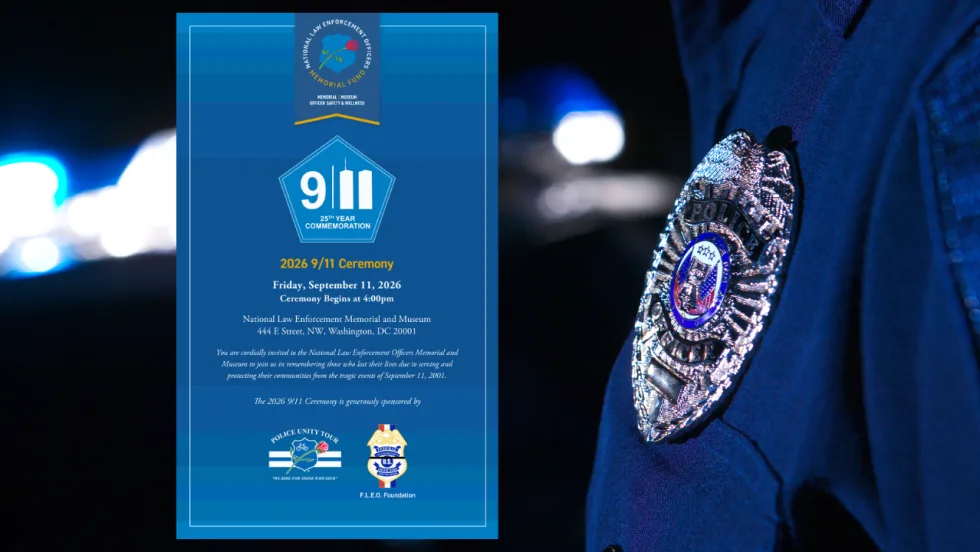
National Law Enforcement Memorial and Museum Hosting 9/11 25th-Year Commemoration Ceremony
The National Law Enforcement Memorial and Museum is hosting a 9/11 25th Year Commemoration Ceremony on Sept. 11 at 4 p.m.
Read More →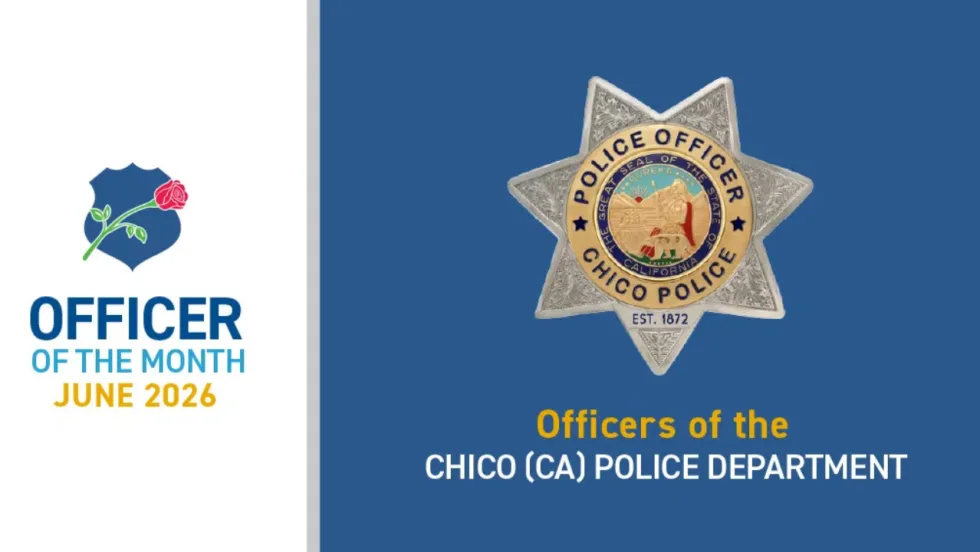
National Law Enforcement Officers Memorial Fund Announces June 2026 Officers of the Month
The National Law Enforcement Officers Memorial Fund (NLEOMF) named 15 officers of the Chico Police Department (California) as the Officers of the Month for June 2026 for their roles in responding to an active-shooter incident at a public library.
Read More →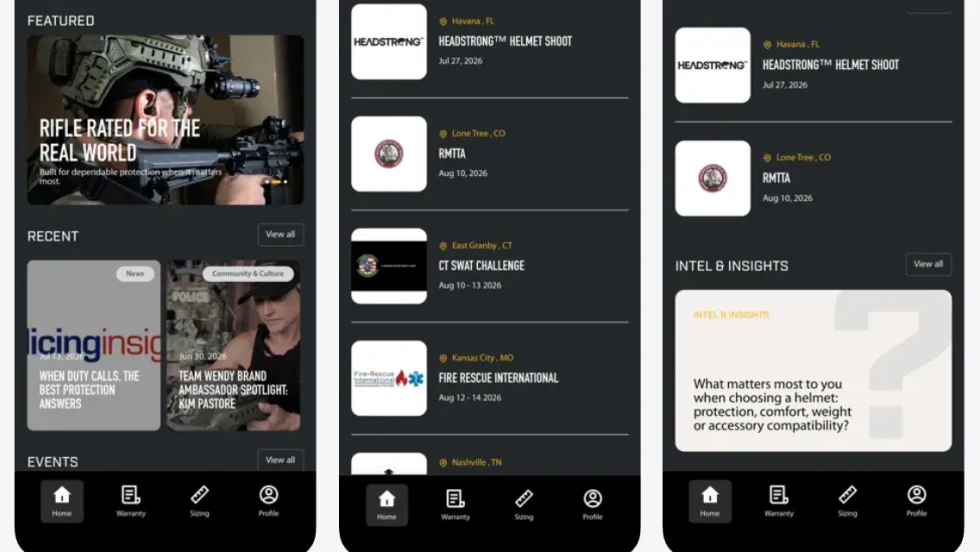
Team Wendy App Creates New Digital Hub for Helmet Owners
The Team Wendy Community App provides one location for warranty registration, size-fit tools, product updates, and community connection. For helmet owners, the new app creates a simpler path to the information and tools that matter most.
Read More →