



Thermal Goes on Patrol in East Chicago, Indiana
Law enforcement officers experience the benefits of compact thermal imaging.

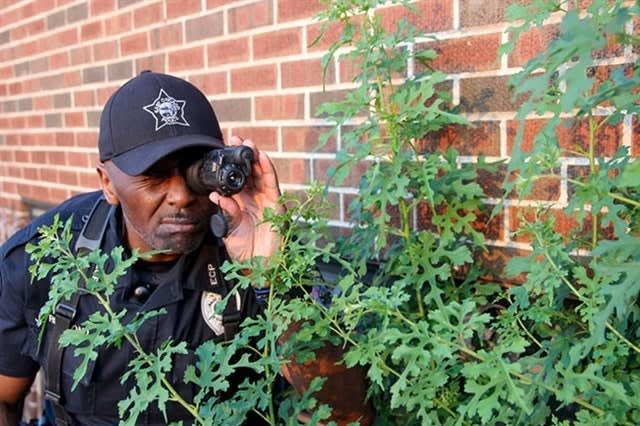
We were standing in the North Harbor neighborhood of East Chicago, Indiana.
If you haven’t heard of EC, you probably have heard about the city next door; Gary, Indiana is the occasional murder capital of the U.S and a very sharing neighbor. With Gary to the south and east, one of the biggest steel mills in the world to the north, the south side of Chicago to the west, refineries, smelting plants, harbors, more miles of railroad than street, a legacy of environmental problems and a history as a melting-pot city in a region originally made up of immigrants, East Chicago isn’t the easiest place to be a cop. That’s why we took the new FLIR Breach® PTQ136 multifunctional thermal imaging monocular to the streets with the East Chicago Police Department—to show them the many ways FLIR Breach can make their jobs both easier and safer.
Small Town, Big City Problems
Our host for the hot, busy July evening was patrolman John Richmond and his partner Joe Kelnhofer. A 14-year veteran of ECPD, Richmond grew up in a tough section of East Chicago just across the tracks from the steel mill. He works those same streets today, much to the aggravation of lawbreakers who think they can buffalo a man who knows multiple generations of residents. Kelnhofer just completed his first year on the force.
When asked to describe the overall policing situation in the community, Richmond thought for a moment and observed, “We’re a small town with big city problems.”
East Chicago is relatively small in both area and population. The city footprint is 16 square miles, but two of those are harbor and waterway and numerous other acres are occupied by industrial land, railroads and the cattail swamps along the Grand Calumet River and Lake Michigan. That means the city’s 30,000 inhabitants are densely packed into only ten neighborhoods.
Those neighborhoods run the gamut, making East Chicago a city of great contrast. There are 1950’s and 60’s public housing projects sprinkled through areas that could otherwise pass for old working-class historical neighborhoods in major cities. Some other sections give off a country club-like vibe, looking much like middle-manager suburban subdivisions. Mix in countless factories that range from “well-used” to whatever classification lies beyond “post-apocalyptic,” and you have an urban landscape that is both fascinating and challenging.
The city is approximately half Latino and 30-percent African-American, while the remainder is a mix of Polish, German, Serbian and other ethnic backgrounds. Fortunately, racial tension isn’t a huge problem for the city or its police force. That’s a good thing because drugs and gangs—often transplants from nearby Chicago and Gary—bring plenty of trouble to the community.
In fact, during the 1990’s when murder rates were significantly higher, the county’s prosecuting attorney declared that Guthrie Street in East Chicago was even more dangerous than any of the more notorious trouble spots in nearby Gary.
East Chicago officers take pride in noting that things are better now, but their city still faces challenges.
At 9 p.m. on a sultry night when Lake Michigan breezes only added humidity to the full-moon heat, we cruised by one dimly lit local park that was full of people loitering in the dark. Richmond sourly noted, “We could probably make some arrests right here, right now.”
It was a perfect place to press the FLIR Breach into duty.
You Can’t Hide
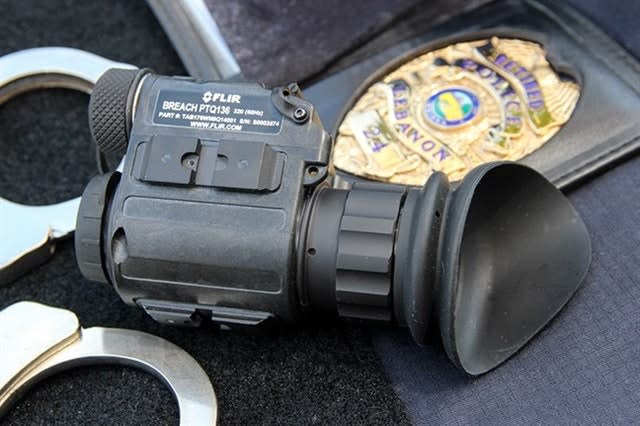
At only 210 grams, FLIR Breach adds minimal weight to an officer’s otherwise heavy gear. It can be concealed in a pocket or be mounted to a helmet with its mini-rail feature.
We pulled over and I handed the thermal monocular to Richmond. He discretely brought it to his face while looking out the open driver’s-side window of his unmarked SUV. “Wow,” was the initial response, followed by, “that’s really cool.”
Another “wow” was repeated more softly and then, “I can clearly see what everybody is doing.” The officer was awed. He handed the FLIR Breach to his partner, who offered the same reaction before refusing to hand the unit back.
We got out of the vehicle, and Richmond approached several shadowy figures hanging out under a shelter. A few of the men stayed put, offering desultory greetings to the officers, while several others sidled away into the darkness.
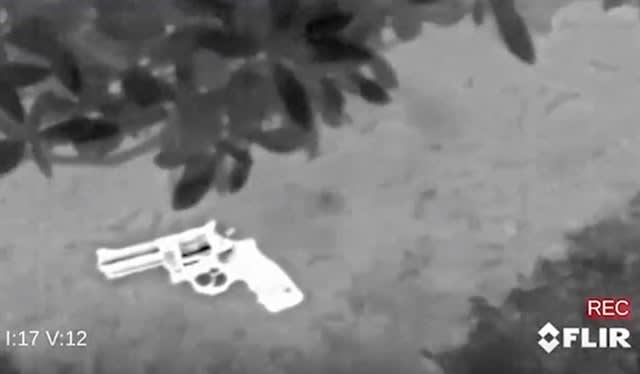
They didn’t realize that Kelnhofer was watching everything they were doing through the FLIR Breach. Even through the darkness, Kelnhofer could easily see if the men were dropping drugs or drug paraphernalia into the grass or hiding a gun as they walked away.
Kelnhofer liked the idea that he could record over 1,000 still images or 2.5 hours of video of the scene with the push of a button. “That would be really handy in court,” he pointed out while watching some of the men enter a vehicle with Illinois plates.
On this occasion, Kelnhofer didn’t see anything actionable, though we did check out several locations where the men had lingered while walking away. As we looked around a spruce tree where one of the group had paused, Kelnhofer noted that if the man had dropped a handgun into the shrubbery it would have been easy to locate due to transferred body heat emitting from the firearm. Tonight, however, there was nothing.
Between calls for service and one arrest, the remainder of our night on patrol in EC was spent cruising the streets and alleys looking for suspicious activity. In one instance, we parked on an unlit street corner and conducted a short observation of a known group of troublemakers goofing off in front of a house.
Nearby, another group of residents was sitting in the dark on a doorstep. Richmond engaged them in some friendly conversation. After a few minutes, he allowed them a brief view through the Breach. They were shocked at the ease in which it could quickly and clearly identify people—especially in the Outdoor Alert color palette, which highlights the warmest parts of the scene in orange. “You can’t hide from that thing,” one of the men said with a note of pain in his voice.
While driving away, Richmond laughed and offered that someone in the group had likely already called their friends down the street and warned them that the police were now equipped (in the words of the resident) with “some kind of Star Wars (expletive deleted).”
Indeed, they were.
The Day is Done
As we stood talking in the police department parking lot after the shift, Richmond was enthusiastic about the wide variety of uses FLIR Beach holds for officers. “It’s a great tool,” he said, unsure where to begin on the list. “It would be very handy out here (in East Chicago) on patrol, and our gang and narc (narcotics unit) guys would love to have this because of its small size,” Richmond noted.
“It would be great to sit in a UC (Undercover) vehicle and look out for people while remaining undetected and still maintaining your peripheral vision,” Richmond mused. “You can also pick out heat signatures from vehicles and know if they’ve been running or sitting,” he added, observing that as the Illinois vehicle at the park drove away, it had clearly visible warm spots on the tires where they had been resting on the pavement.
Kelnhofer was equally impressed. “I liked it a lot!” he said enthusiastically. “It’s definitely needed for law enforcement, but I’d also use it for hunting—especially to help find downed deer. It’s a great all-around-awesome product.”
All told, nearly a dozen officers on the ECPD got a chance to handle the Breach during the afternoon and evening ride-along. All were similarly impressed with the compactness, image quality and sheer usefulness of the tiny thermal monocular. They definitely saw its potential as a great new tool that could help the officers become more effective and much safer on the challenging streets of America’s “small town with big city problems.”
For more information on the new FLIR Breach, as well as other thermal and night vision products for law enforcement, visit flir.com.
Want more information on FLIR Systems?
Sign up to receive additional information from FLIR Systems.
More Technology

A police agency's guide to data-driven fleet management
Costs are rising and the public expects more transparency into how their tax dollars are spent. This e-book shows how police agencies can use fleet data to take control of fleet expenses while improving officer safety and demonstrating fiscal responsibility to the communities they serve.
Read More →
AI and analytics for law enforcement: Turning data into insights
Law enforcement agencies are managing more video, sensor data and digital evidence than ever before. Discover how AI and analytics can help turn that data into actionable insights that strengthen situational awareness, accelerate investigations and support more informed decisions.
Read More →
Vasco Electronics Adds Automatic Language Detection to Vasco Translator Q1
Vasco Electronics’ software update introduces hands-free language switching and expanded offline translation across 45 language pairs, empowering law enforcement, healthcare, and front-office enterprise teams
Read More →

North Miami Police Department Deploys Mark43
The North Miami Police Department has deployed Mark43 as part of its Five-Year Strategic Plan that represents its collective vision and goals for a more proactive police department, anchored by a core commitment to leveraging modern technology to enhance efficiency and public safety.
Read More →
Cellebrite Genesis for Enterprise Now Generally Available
Made available to the public sector in June, Cellebrite Genesis is serving a growing mix of national, regional, and local agencies worldwide, including some of the largest regional and metropolitan police departments. It is now available for enterprise organizations.
Read More →
2026 Vision FirstNet Users Summit to Host Emerging Leaders Training on Grassroots Advocacy for Public Safety
“Emerging Leaders Training: Understanding the Importance of Grassroots Advocacy for Public Safety," a session during the 2026 Vision FirstNet Users Summit, will offer a roadmap for unified advocacy at the federal level.
Read More →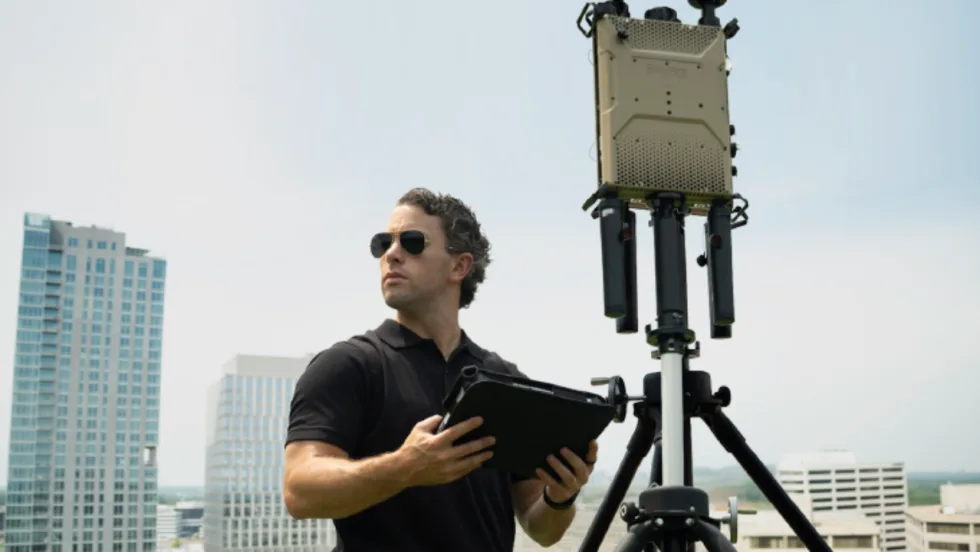
Motorola Solutions Completes Acquisition of D-Fend Solutions
Motorola Solutions has acquired D-Fend Solutions, an industry leader in counter-drone technology. This deal provides public safety and enterprise customers with access to advanced counter-unmanned aerial systems.
Read More →
ZeroEyes, Advantech & Camden Police Partner to Bring AI Gun Detection Technology to Delaware School District
ZeroEyes has partnered with Advantech and the Camden Police Department to deploy ZeroEyes’ AI gun detection and intelligent situational awareness platform at Delaware’s Caesar Rodney School District (CRSD).
Read More →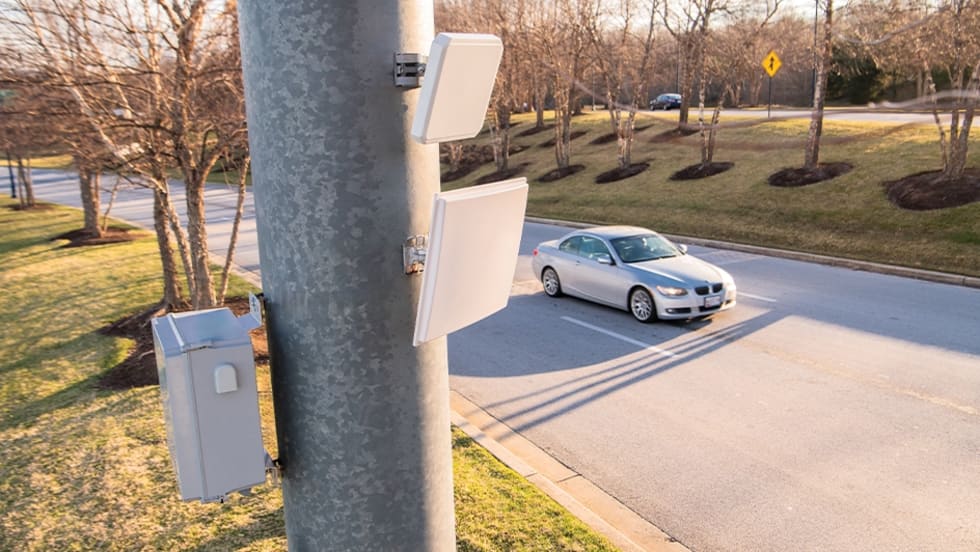
Leonardo U.S. Cyber & Security Solutions Introduces SignalTrace, the Next Evolution in Electronic Signature Detection Technology
SignalTrace reflects years of product refinement and a clearer expression of the technology’s purpose of recognizing and correlating electronic signatures in publicly broadcast wireless signals to reveal patterns, relationships, and trends that might otherwise go undetected.
Read More →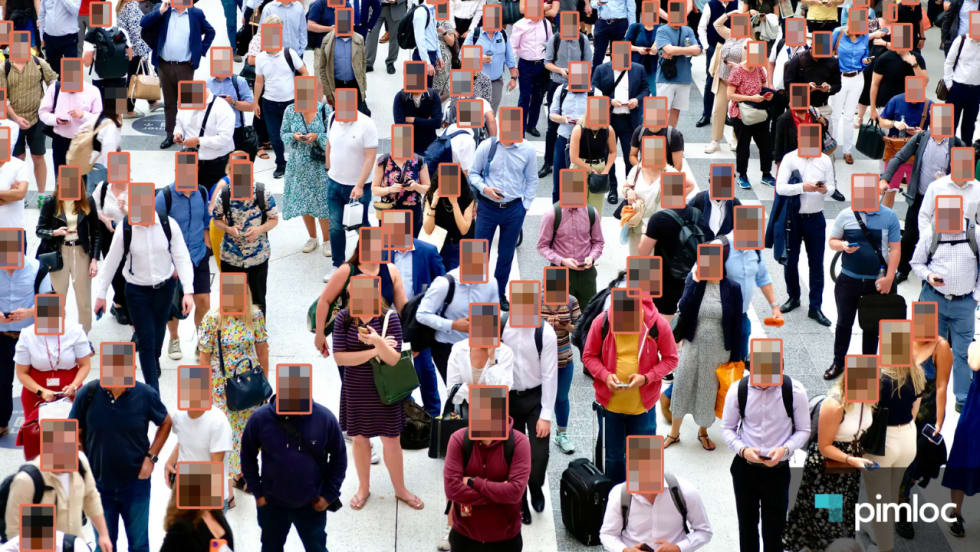
Pimloc Launches Secure File Sharing to Streamline Release of Redacted Video
Pimloc’s Secure File Sharing lets organizations deliver redacted video, audio, and documents through expiring, passcode-protected links, accelerating delivery while reducing security, compliance, and chain-of-custody risks.
Read More →