



Persistent's Smart Networking Radio Gets NIST Security Validation
Persistent Systems LLC announced that it has received a Federal Information Processing Standards (FIPS) 140-2 security validation from the National Institute of Standards and Technology for its MPU5 networking radio and Embedded Module products.

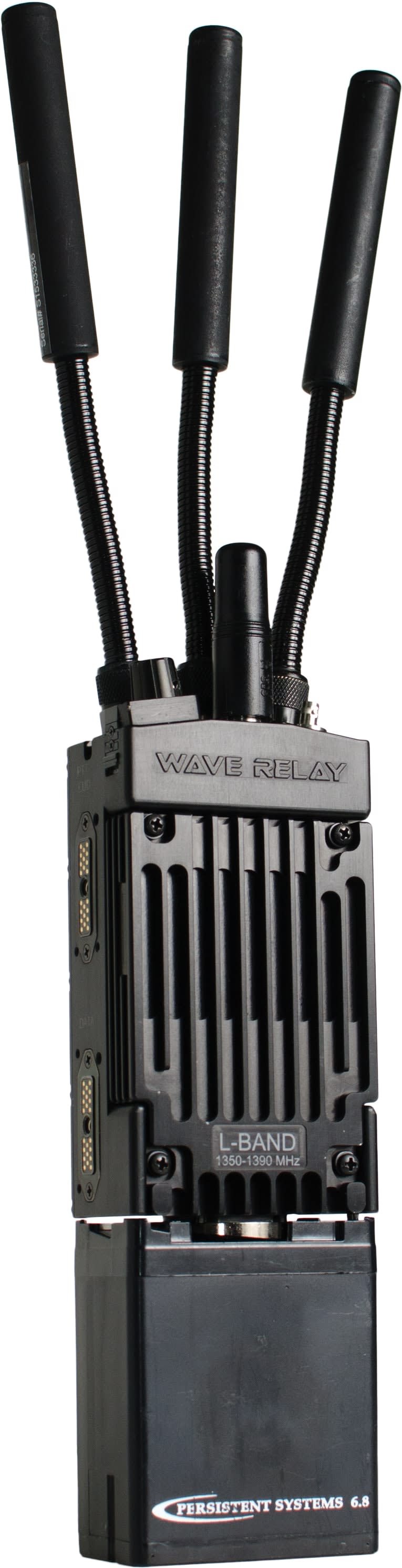
Persistent Systems LLC has received a FIPS 140-2 security validation from NIST for its MPU5 networking radio and Embedded Module products. (Photo: Persistent)
Persistent Systems LLC announced that it has received a Federal Information Processing Standards (FIPS) 140-2 security validation from the National Institute of Standards and Technology for its MPU5 networking radio and Embedded Module products. Government agencies that require this information security validation will now be able to make wider use of Persistent products, according to the company.
The MPU5 runs the Wave Relay mobile ad-hoc networking (MANET) routing protocol, allowing users to transmit and relay voice, video, text, and sensor data in a true peer-to-peer fashion. The Embedded Module delivers similar capabilities in a smaller model made for integrating into unmanned systems and sensors.
"We offer a self-forming, self-healing, scalable MANET that is robust and dynamic and can operate in austere and challenging environments that would normally disrupt other communication systems," said Eric Stern, Director of Engineering at Persistent Systems. "This makes the MPU5 and Embedded Module very attractive for government users."
Customers in the U.S. Department of Justice, the Department of Homeland Security, and elsewhere already use the MPU5 in daily operations. However, to connect to federal enterprise networks, many agencies require a FIPS 140-2 validation, a standard for hardware and software cryptography that ensures devices can protect the security and integrity of sensitive data.
To get validated for FIPS 140-2, the MPU5 and Embedded Module were put through the Cryptographic Module Validation Program (CMVP), which are the security requirements for cryptographic modules. The CMVP is a joint initiative between the National Institute of Standards and Technology in the United States and the Communications Security Establishment (CSE) in Canada. Persistent has been putting its MANET radios through FIPS 140-2 validation since 2010, and the MPU5 and Embedded Module's validation continues Persistent's commitment to security.
"Our customers utilize our products on operations and events which are critical to national security," said Stern. "Therefore, we design our MANET systems from inception to meet the federal cryptographic standards of the United States of America and Canada. Security is always our priority."
A list of wireless networking products that are FIPS 140-2 validated can be found on the National Institute of Standards and Technology:
https://csrc.nist.gov/Projects/Cryptographic-Module-Validation-Program/Validated-Modules/Search
The latest MPU5 firmware can be obtained by Persistent customers from the product support portal.
For more information, visit https://www.persistentsystems.com/.
More Technology

A police agency's guide to data-driven fleet management
Costs are rising and the public expects more transparency into how their tax dollars are spent. This e-book shows how police agencies can use fleet data to take control of fleet expenses while improving officer safety and demonstrating fiscal responsibility to the communities they serve.
Read More →
AI and analytics for law enforcement: Turning data into insights
Law enforcement agencies are managing more video, sensor data and digital evidence than ever before. Discover how AI and analytics can help turn that data into actionable insights that strengthen situational awareness, accelerate investigations and support more informed decisions.
Read More →
Vasco Electronics Adds Automatic Language Detection to Vasco Translator Q1
Vasco Electronics’ software update introduces hands-free language switching and expanded offline translation across 45 language pairs, empowering law enforcement, healthcare, and front-office enterprise teams
Read More →

North Miami Police Department Deploys Mark43
The North Miami Police Department has deployed Mark43 as part of its Five-Year Strategic Plan that represents its collective vision and goals for a more proactive police department, anchored by a core commitment to leveraging modern technology to enhance efficiency and public safety.
Read More →
Cellebrite Genesis for Enterprise Now Generally Available
Made available to the public sector in June, Cellebrite Genesis is serving a growing mix of national, regional, and local agencies worldwide, including some of the largest regional and metropolitan police departments. It is now available for enterprise organizations.
Read More →
2026 Vision FirstNet Users Summit to Host Emerging Leaders Training on Grassroots Advocacy for Public Safety
“Emerging Leaders Training: Understanding the Importance of Grassroots Advocacy for Public Safety," a session during the 2026 Vision FirstNet Users Summit, will offer a roadmap for unified advocacy at the federal level.
Read More →
Motorola Solutions Completes Acquisition of D-Fend Solutions
Motorola Solutions has acquired D-Fend Solutions, an industry leader in counter-drone technology. This deal provides public safety and enterprise customers with access to advanced counter-unmanned aerial systems.
Read More →
ZeroEyes, Advantech & Camden Police Partner to Bring AI Gun Detection Technology to Delaware School District
ZeroEyes has partnered with Advantech and the Camden Police Department to deploy ZeroEyes’ AI gun detection and intelligent situational awareness platform at Delaware’s Caesar Rodney School District (CRSD).
Read More →
Leonardo U.S. Cyber & Security Solutions Introduces SignalTrace, the Next Evolution in Electronic Signature Detection Technology
SignalTrace reflects years of product refinement and a clearer expression of the technology’s purpose of recognizing and correlating electronic signatures in publicly broadcast wireless signals to reveal patterns, relationships, and trends that might otherwise go undetected.
Read More →
Pimloc Launches Secure File Sharing to Streamline Release of Redacted Video
Pimloc’s Secure File Sharing lets organizations deliver redacted video, audio, and documents through expiring, passcode-protected links, accelerating delivery while reducing security, compliance, and chain-of-custody risks.
Read More →