



How the Rodney King Riot Changed the LAPD
Sunday marks the 20th anniversary of the Los Angeles riot that followed the acquittal of four Los Angeles Police Department officers who were prosecuted by the state for using excessive force on Rodney King. There was extensive looting and burning, and 53 people lost their lives.

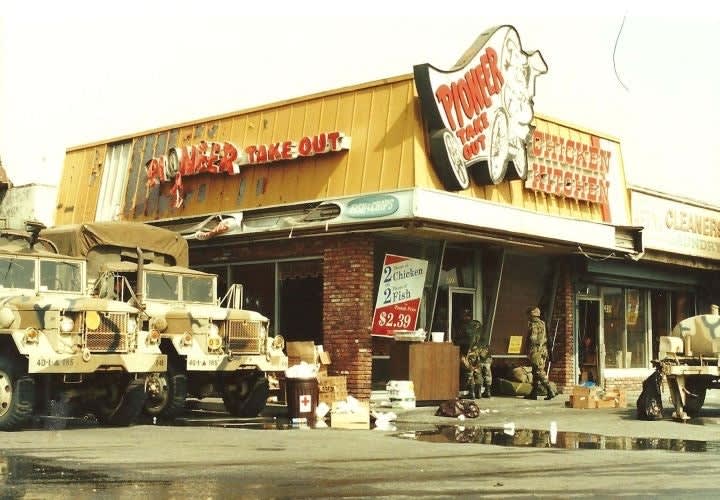
Photo: Glynn Martin, Los Angeles Police Museum
Sunday marks the 20th anniversary of the Los Angeles riot that followed the acquittal of four Los Angeles Police Department officers who were prosecuted by the state for using excessive force on Rodney King. There was extensive looting and burning, and 53 people lost their lives.
What happened in the King incident? And in the two decades since the riot, how has the LAPD changed?
Those seeking to understand the Rodney King incident should make no mistake about Mr. King and what happened the night of March 3, 1991. The undisputed facts—established by three jury trials, two criminal and one civil—are these: King was a drunken paroled robber, briefly out of prison and by his own testimony intent on not going back. He led police on a lengthy chase, driving in excess of 100 mph. His two passengers (also African-American males) surrendered without any use of force.
During the traffic stop, King exhibited bizarre behavior. He was profusely sweating and dancing around. He pushed away four officers before the video began and before any significant force was used on him. He was not struck while handcuffed. In short, Mr. King was something more than what the media calls "a motorist." Still, he should never have been subjected to the tactics we saw on the video.
In the early 1980s, some Los Angeles officials predicted that baton beatings would result from the LAPD's policy change that banned the most widely used police tactic—the carotid control hold. Several suspects had died while in police custody during the late 1970s and early 1980s, just as they do today due to "excited delirium," regardless of the police tools or tactics used.
On May 12, 1982, the city took away the carotid hold from LAPD's use-of-force options. The baton became the primary control option. Months later, Police Chief Daryl F. Gates reported huge increases in injuries to suspects and officers but his request to modify the policy fell on deaf political ears. A huge gap in the police use-of-force continuum was created, and it was not adequately filled. The stage was set for Rodney King and thousands of less famous resisting suspects to be subjected to injury risks far higher than the carotid hold.
Some have theorized that the King beating was a frenzied, undisciplined, post-pursuit administration of curbstone justice. Had that been the case, the stereotypical scenario is that the accused officers would have run up to the car, pulled the driver out, and the beating would be on. The King incident did not occur that way.
The officers cautiously deployed, gave appropriate commands, and tried several less injurious tactics that failed before escalating to the baton. Even the baton was used in a way that both the judge and the prosecution's own use-of-force expert acknowledged was appropriate and within policy. If you look closely at the first few seconds of the video, you'll see King's right cheek bounce hard off the asphalt during his second TASER fall. He was not hit in the head with Officer Powell's baton, as is widely believed.
After the acquittal at the state trial, and after the riot, Sgt. Stacey Koon and Officer Laurence Powell were convicted of civil rights violations in federal court, and they were sent to prison.
A federal civil jury awarded King $3.8 million in tax dollars from the Los Angeles city treasury for general damages, and not a dime for punitive damages. The jury learned during the punitive-damages phase that the roots of the King beating were to be found in post-carotid-hold training that encouraged LAPD officers who encountered resisting suspects to hit them with police batons.
Most people are surprised to learn that nearly all the procedures caught on the King video tape were deemed proper by use-of-force experts who testified on both sides of the case. The federal judge ruled that only the final seconds were excessive.
The mainstream media failed miserably to explain why the Rodney King beating occurred. The increasing proliferation of video cameras guarantees that more and more police incidents will be captured. But the truth almost always lies deeper than the video.
How has the LAPD changed in 20 years? Ask a hundred people, and you'll likely get a hundred answers.
Here are five:
Shortly after the riot, Chief Willie Williams was sworn in as the first outside police chief in 45 years. The voters created a new system where the chief could serve only a five-year term, renewable once at the city's option. On two occasions so far, the city has sent the chief packing after five years.
"Community policing" has taken hold in ways not seen in the past. The LAPD diversified to the point where Caucasian officers have been in the minority for many years. The city is on the verge of becoming majority Latino, and so is the department.
The role of the civilian police commission (which had been the "boss" of the chief of police for many decades) was intensified, and an independent inspector general position was created.
Use of force, whether minor or major, receives intense investigative scrutiny and command review. The TASER, pepper spray, and beanbag shotguns are used in greater numbers of incidents. (A less-powerful TASER was used twice in the King incident with limited success.) Baton use is minimal.
More than 2,000 additional officers were hired in an effort to achieve a (not yet realized) goal of 10,000.
Lou Cannon's "Official Negligence: How Rodney King and the Riots Changed Los Angeles and the LAPD", published in 1997, is the best book I've read on the subject. Its conclusion is worth quoting: "The incident had changed the way Los Angeles thought about its police force, and in time it had changed the police force itself."
Greg Meyer is a retired LAPD captain and a member of the POLICE Advisory Board. He had several involvements in the investigation and litigation of the King case.
More Blog Posts
Preventing Heat Injury in Police K-9s
In the relentless heat of summer and even early fall in some parts of the country, officers face the important task of protecting their K-9 partners while working in sweltering temperatures. Recognizing changes in a dog’s behavior is the key.
Read More →
Why Your Agency Needs to Attend the ILEETA Conference
ILEETA is a complete resource for trainers to address trainers' needs. Its mission is to enhance the skills and safety of criminal justice practitioners while fostering stronger and safer communities.
Read More →
IACP 2023: New Training Products
Technologies for improving law enforcement training and training management were some of the highlights at this year's show.
Read More →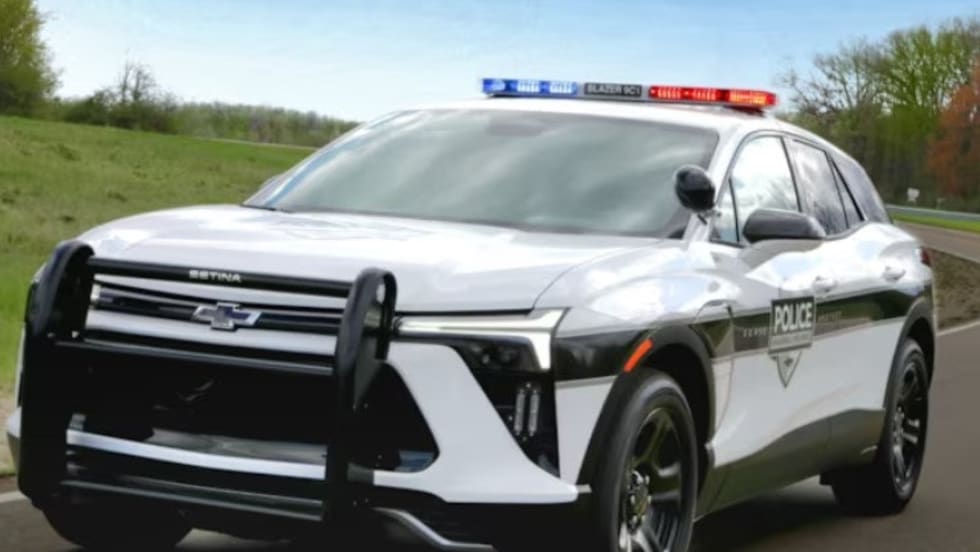
Initial Results Released from MSP 2024 Police Vehicle Testing
The 2024 pursuit-rated vehicles--all pickup trucks or SUVs, including two battery electric models the Chevrolet Blazer EV AWD and Ford Mustang Mach-E--were put through their paces.
Read More →
Officer Safety Considerations Related to Alternative-Fuel Vehicles
As more alternative-fuel and hybrid vehicles hit the road, police and other first responders need to understand that they are no more dangerous than conventional vehicles. However, there are certain safety considerations every cop should know.
Read More →
Garmont Working to Grow LE Market Presence
Garmont Tactical has found wide acceptance by military boot buyers, but now the company is trying to better respond to the needs of police officers. Many cops now are not fans of 8-inch boots, so Garmont is adapting.
Read More →
Publisher’s Note: Our Commitment to You
Through our magazine and website and our Police Technology eXchange event, we promise to provide you with information and access to resources to help you do your job safer and better.
Read More →
10 Tips for Responding to Mental Health Crisis Calls
The Harris County Sheriff's Office is a model for other agencies that want to learn about crisis intervention and mental health crisis response. Sgt. Jose Gomez shares the story of their programs and provides 10 tips for mental health crisis call response
Read More →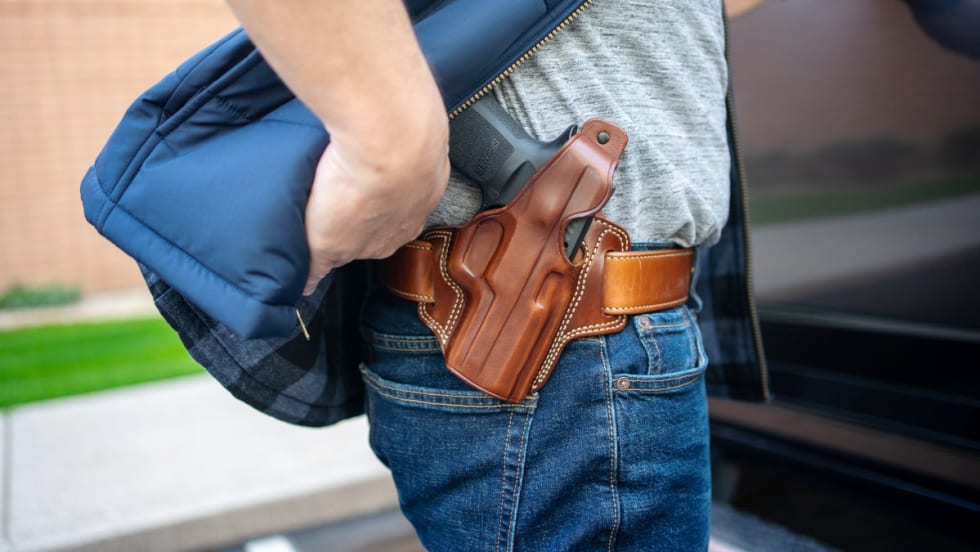
5 Things to Know When Buying Concealed-Carry or Off-Duty Holsters
Mike Barham, of Galco Holsters, shares five important considerations to keep in mind when you buy off-duty concealed or plain-clothes carry holsters.
Read More →
10 Tips for Reviewing Use-of-Force Reports
While the burden of accurately reporting use-of-force situations is on an individual deputy or officer, the person reviewing those reports shares in the responsibility of making sure the reporting is done properly, with clear details included.
Read More →