



Wireless When You Need It
Not every natural disaster is as devastating as Katrina. But does your agency have a plan in place that would allow you to communicate in case a similar event occurred in your jurisdiction?

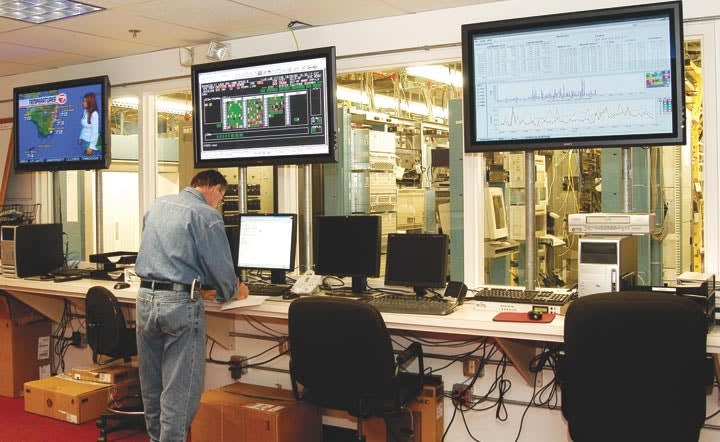
In September 2005, Hurricane Katrina knocked out communications throughout the New Orleans area, creating mass chaos. Residents couldn't call for help or find out if loved ones were safe. Making matters worse, law enforcement agencies couldn't communicate to coordinate with each other. Major communications carriers AT&T, Sprint, and Verizon mobilized their resources to bring in equipment and personnel to restore coverage for public safety. But it took several days to build the networks from the ground up. At the time, the companies didn't have divisions devoted to providing communications coverage to disaster areas.
Not every natural disaster is as devastating as Katrina. But does your agency have a plan in place that would allow you to communicate in case a similar event occurred in your jurisdiction?
Catastrophic events including lightning storms and floods can affect traditional forms of communications. Cell towers and land lines are particularly vulnerable. This is why wireless carriers now have dedicated units that provide law enforcement agencies with products and services to ensure they can communicate in even the worst disasters. Using these systems, you can respond effectively, no matter the circumstances.
COLTs and COWs
No, COLTs and COWs have nothing to do with working a ranch. They are acronyms for satellite-based communications centers that act as mobile cellular sites. And they're often the best way to put police agencies' communications back online after a disaster.
"SatColts are satellite cell on light trucks. COWs (cell on wheels) are traditionally trailers that must be hooked up to a tractor trailer rig and towed to a location," explains Tanya Linn, operations manager for Sprint's Emergency Response Team (ERT).
Both serve the same purpose, but COLTs are often preferred over COWs because they are more rugged, and can therefore get to more remote locations. They can even drive directly onto ferries or C-130 transport planes. Both COWs and COLTs can be used to replace a downed cell tower, or to bring cell service to an area too remote for coverage by other means. And with satellite IP service, they can be used to provide voice, video, and data communications for first responders in the area.
Companies can't disclose how many COLTs and COWs they have on hand or where they are located. But all wireless carriers keep several in different regions across the country, so there will always be one relatively nearby. Delivery time varies based on a number of factors. Chief among them are availability of assets and accessibility to the site. Damaged roadways and bridges can of course impact delivery time.
But another issue to keep in mind is that wireless carriers employ COWs and COLTs to restore communications to their clients, first and foremost. Companies will try to accommodate law enforcement, but they have other obligations as well.
"Our first job as a communications carrier is to provide communications coverage to consumers and businesses and people that are our clients," says Stacey Black, director of market development for AT&T. "That's our primary licensed requirement by the FCC."
This is one reason a police department might want to lease a COLT or COW. The agency can pay a monthly fee to have the vehicle kept in a nearby location on reserve.
"If an agency is interested, it can put a SatCOLT on reserve and then indicate a predesignated place where they need it sent," says Linn of Sprint's program. "By having that lease, they're the first priority for restoration, or for bringing one of those SatCOLTs in to provide their communications coverage. Four one-week deployments are included in the monthly lease pricing."
[PAGEBREAK]
Handheld Communication
Mobile satellite coverage centers can't solve all law enforcement communications problems. Sometimes an agency just needs more cell phones. These could be for additional officers called in to help respond to a disaster, or even for a special event such as a parade that warrants additional personnel. But it doesn't make sense to pay for a phone year-round if it's only going to be used once in a while.
This is why many agencies use programs that allow them to purchase a set number of phones and keep them in a suspended mode until they're needed. Once reactivated, each phone will have all of the features and capabilities selected during the set-up process. It could be just a standard voice cell phone, or could transmit XMS or data. And there's no need to wait for them to be shipped.
"Our ERT Go Kits come in ruggedized military cargo cases, typically yellow so it's easy for the agency to find them when needed," says Linn. "Agencies pay a nominal fee to keep those phone numbers reserved so that they can publish those numbers in their emergency operations center documents and their business continuity documents."
But you don't need a kit to have phones on standby for an emergency. In fact, you don't even need any particular phone.
"We try to keep the program as flexible and as inexpensive as possible," says Black of AT&T's voluntary spend program (VSP). "We have a lot of agencies that use phones that have been turned in or traded in as emergency phones. We encourage use of old ones you have."
Such a service is valuable for any police department. But it especially makes sense for those agencies that routinely need additional phones for short periods of time throughout the year.
"Because the California Department of Forestry can count on wildfires every year, they have emergency phones ready to go," says Verizon spokesperson Ken Muché. But just because an agency has a certain number of emergency phones set up doesn't mean they can't request more when they're needed. "In the case of last year, there were so many fires that were so widespread that we had to roll out more to them," says Muché. Wireless carriers will work with agencies to provide whatever they can to help you do your job.
In addition to emergency phones, platforms that provide Internet-type functions on Blackberrys and smart phones can assist agencies that have lost cell communications and Internet access. AT&T provides a continuity of operations (COOP) platform that uses a third-party application to put a server into the network. You can send messages from this server-based PDA to all other connected users on their PDAs without touching the Internet. Another AT&T application is a collaboration solution that uses LOTUS nodes or Microsoft Sharepoint to transmit IP data via PDA across different jurisdictions. Because IP data is universal, this is a way to get around the issue of radio interoperability.
Planning Ahead
No law enforcement agency can plan for every eventuality. But ideally, yours should have a detailed plan for whom to contact in an emergency and know what information needs to be communicated. This includes contacting all other surrounding law enforcement agencies in your area and your agency's wireless provider. All of you should be on the same page when it comes to where COWs and COLTs will be set up during a crisis.
Funding must also be factored into the planning process. Consider researching grants to cover the costs of equipment and services. And if your agency must respond to a declared disaster, you may be eligible to be reimbursed by FEMA for communications expenditures. If you're aware of the requirements ahead of time, you won't have to scramble to apply for compensation when a major incident occurs.
Your wireless carrier can also work with you to determine what type of phones you need, what services you'd like to have, and how many you want to have on hand for an emergency. You can also determine whether you would request a SatCOLT or COW for certain events or incidents, and whether you're interested in leasing one or more.
"We have working relationships with various law enforcement agencies, and have contingency plans," says Verizon's Muché. "Should there be a widespread natural or manmade disaster and networks go down, there's a process for bringing us into the information loop, working with them to get clearance."
If nothing else, set up a meeting with your wireless carrier. What have you got to lose?
More Technology
A police agency's guide to data-driven fleet management
Costs are rising and the public expects more transparency into how their tax dollars are spent. This e-book shows how police agencies can use fleet data to take control of fleet expenses while improving officer safety and demonstrating fiscal responsibility to the communities they serve.
Read More →
AI and analytics for law enforcement: Turning data into insights
Law enforcement agencies are managing more video, sensor data and digital evidence than ever before. Discover how AI and analytics can help turn that data into actionable insights that strengthen situational awareness, accelerate investigations and support more informed decisions.
Read More →
Vasco Electronics Adds Automatic Language Detection to Vasco Translator Q1
Vasco Electronics’ software update introduces hands-free language switching and expanded offline translation across 45 language pairs, empowering law enforcement, healthcare, and front-office enterprise teams
Read More →
North Miami Police Department Deploys Mark43
The North Miami Police Department has deployed Mark43 as part of its Five-Year Strategic Plan that represents its collective vision and goals for a more proactive police department, anchored by a core commitment to leveraging modern technology to enhance efficiency and public safety.
Read More →
Cellebrite Genesis for Enterprise Now Generally Available
Made available to the public sector in June, Cellebrite Genesis is serving a growing mix of national, regional, and local agencies worldwide, including some of the largest regional and metropolitan police departments. It is now available for enterprise organizations.
Read More →
2026 Vision FirstNet Users Summit to Host Emerging Leaders Training on Grassroots Advocacy for Public Safety
“Emerging Leaders Training: Understanding the Importance of Grassroots Advocacy for Public Safety," a session during the 2026 Vision FirstNet Users Summit, will offer a roadmap for unified advocacy at the federal level.
Read More →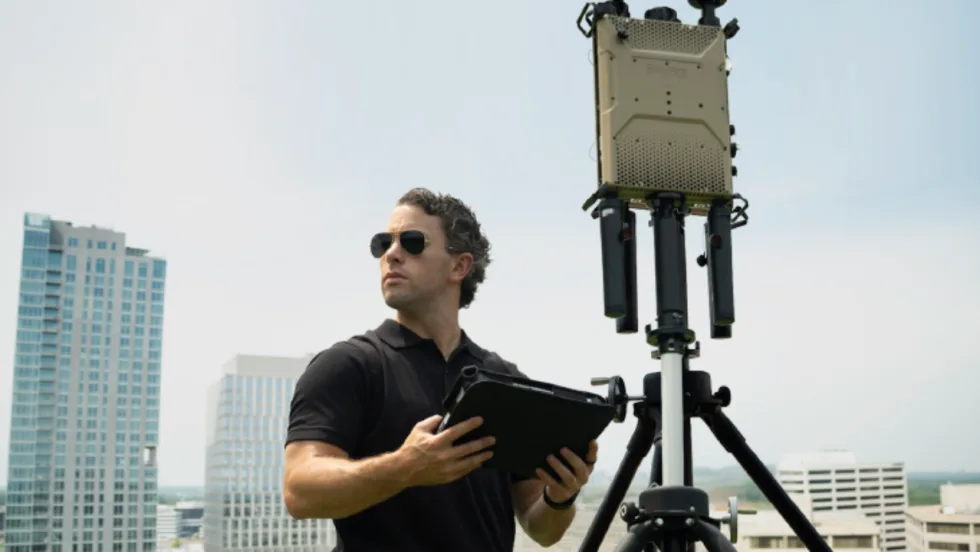
Motorola Solutions Completes Acquisition of D-Fend Solutions
Motorola Solutions has acquired D-Fend Solutions, an industry leader in counter-drone technology. This deal provides public safety and enterprise customers with access to advanced counter-unmanned aerial systems.
Read More →
ZeroEyes, Advantech & Camden Police Partner to Bring AI Gun Detection Technology to Delaware School District
ZeroEyes has partnered with Advantech and the Camden Police Department to deploy ZeroEyes’ AI gun detection and intelligent situational awareness platform at Delaware’s Caesar Rodney School District (CRSD).
Read More →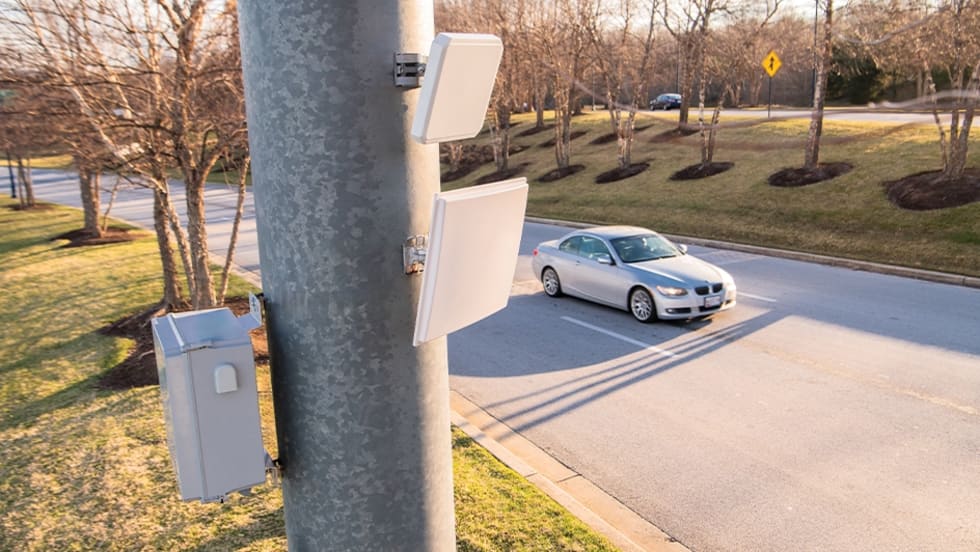
Leonardo U.S. Cyber & Security Solutions Introduces SignalTrace, the Next Evolution in Electronic Signature Detection Technology
SignalTrace reflects years of product refinement and a clearer expression of the technology’s purpose of recognizing and correlating electronic signatures in publicly broadcast wireless signals to reveal patterns, relationships, and trends that might otherwise go undetected.
Read More →
Pimloc Launches Secure File Sharing to Streamline Release of Redacted Video
Pimloc’s Secure File Sharing lets organizations deliver redacted video, audio, and documents through expiring, passcode-protected links, accelerating delivery while reducing security, compliance, and chain-of-custody risks.
Read More →