



What to Look for in In-Vehicle Tablets
Law enforcement agencies need to make the best call on what tablet suits their missions and can give them the performance they need at the price they can afford.

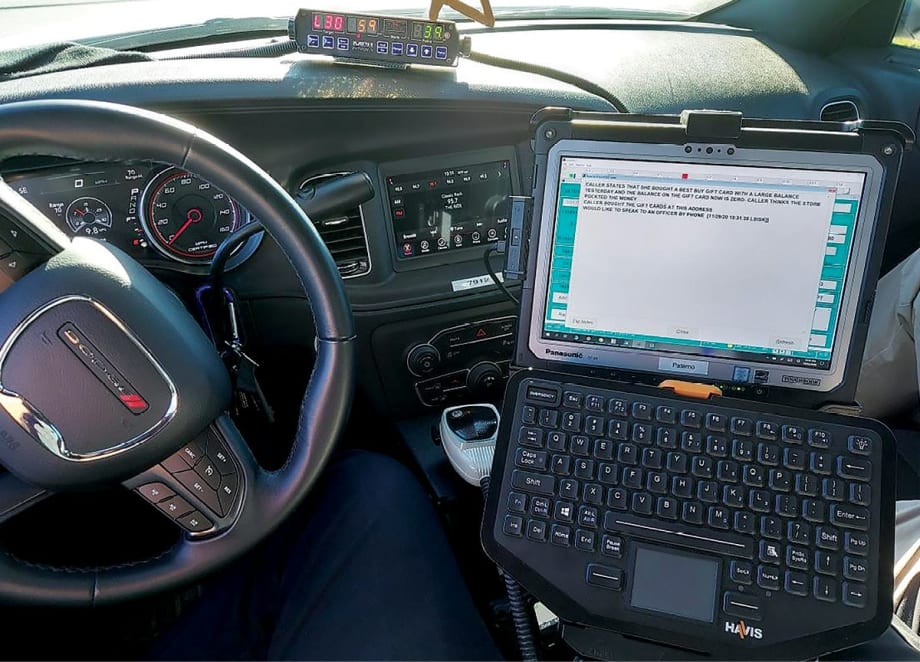
When deciding what in-vehicle tablet is right for your operation, price is obviously a large factor. Police departments working within tight budgets need to make the best call based on what will provide the most value for the money they spend, while also considering factors like ease of integration with other technology, processing power, and more.
Captain Jason Whisnant of the Morganton (NC) Department of Public Safety, and Alex Nollmann, mobility sales director for public sector at Panasonic, have these thoughts on what to look for when selecting in-vehicle tablets for your agency.
Integration
The officers at the Morganton Department of Public Safety make use of many devices, and Whisnant said the more you can stick with one brand, the better.
Interoperability across different platforms allows for more efficiency in terms of time management and how adept officers are at moving between different software. This leads to a reduction in time spent dealing with IT departments trying to get various technological issues fixed, reconfigured, and up and running.
“I look at it in man hours, and it’s been a huge savings for us,” Whisnant says. “The officers are having to familiarize themselves with one software platform across different pieces of equipment. Essentially, it all operates the same when you’re looking at the front-end client, and then the back-end client for supervision. Officers are able to navigate them pretty easily. The less training there is involved, the more time and money are saved.”
In addition to the Panasonic Toughbook 33 2-in-1, the department also currently uses Panasonic i-PRO’s Arbitrator360° and Arbitrator360°-HD in-car digital video recording systems, featuring the Full-HD AS-1/VC35 front camera. The Full-HD AS-1/VC35 boasts a wide viewing angle in a small form factor, providing an increased field of vision both in and out of the vehicle. Each of the department’s vehicles has a primary and secondary camera to monitor the passenger in the transport area. Morganton is also field-testing Panasonic i-PRO’s BWC4000 body-worn camera.
Processing Power and Features
The department runs a full mobile computer-aided dispatch (CAD) system along with printer software; e-warrants; and CJLEADS, a secure, centralized database of up-to-date information about offenders for use by state and local government criminal justice professionals. This means Morganton officers need a tablet that can run all these programs smoothly.
Officers also load the front-end client onto their mobile devices, allowing them to review their in-car camera and body-worn camera videos. In turn, this helps with accuracy in reporting and provides more quality control in documentation.
The size of the screen is also important to note, as well as the accuracy of the touch screen. Officers wear latex gloves frequently to avoid contamination, patrol gloves when the weather is cold, and protective gloves, so selecting a device that will enable them to use the touchscreen without having to regularly remove and replace gloves is a bonus.
“Most computer screens have a 16:9 display, which is the ideal format for watching movies; that’s not as helpful for what police officers need a tablet for. The Toughbook 33 is 3:2. It was designed to be the best fit for CAD applications officers use, which aren’t written for widescreen. Officers need to be able to see more data up and down, not left to right. Widescreens also just don’t work as well in cars because of airbags and air conditioning vents,” Panasonic’s Nollmann explains.
The ability for a screen to increase and decrease in brightness is not something a lot of people think about but can be a factor in officer safety as well.
“When you’re in a dark patrol car at night, you want to keep the screen on without hurting your eyes or lighting up too brightly and exposing the officer in the vehicle,” Nollmann said.
Whisnant agrees that backlighting needs to be easy on officers’ eyes since they are often shifting between looking at the road, their environment, and a screen for information. Flexible screen brightness helps minimize eye fatigue.
Flexibility
The Morganton DPS is both a professional police and fire agency. Officers take on a variety of assignments, which means they need a tablet that is powerful and portable inside and outside of a fleet vehicle. They may be assigned to desk duty one day, be on patrol the next, and even help cover as a firefighter later in the week.
“They’re able to take their workstations with them. Providing a docking station with the tablet saves on the cost that would have been incurred by purchasing a desktop,” Whisnant said.
The model the department uses comes with two batteries and, depending on configuration settings, can last a full day on a single charge.
Nollmann extolled the advantage of being able to “hot swap,” meaning a user can swap batteries with another officer who is low on power without having to turn his or her own device off.
“It’s better to have two small batteries because they charge faster and don’t get as hot as devices that use one big battery,” he explained.
It’s also important to look at tablet charging options. The Toughbook 33 can be plugged in through a regular cigarette lighter, as well as through the keyboard.
Do Your Research
Nollmann encouraged fleet managers to take a step back and look at the whole lifecycle of a product before making a decision. Sometimes it’s better to spend more money up front if it will save you money down the road. Consider how long the device will last and if you’ll be able to obtain any parts you’ll need should you lose or break one.
“If the failure rate of a device is 10 or 15% in the public safety space, that translates to a 10 or 15% chance you won’t receive a call for help or you won’t be able to respond to a call. There’s a cost to that,” he warned.
Whisnant advises those in fleet management request products for evaluation to make sure they are a good fit for the agency before diving right in. It’s also a good idea to communicate with other agencies that use the product you’re looking at to see what the pros and cons are to make the call that will be to the best interest of the agency and public.
“These kinds of mistakes get pretty expensive. When you find the latest and greatest thing from a supplier or distributor that hasn’t been in the business very long, you’re essentially taking a gamble,” Whisnant said.
A final recommendation is to align the technology to the lifecycle of the vehicle it will be used in.
“If as a fleet manager you plan on having a police car on the road for five years, you don’t want to be tearing equipment out and then replacing it in year three and year six, because that just doesn’t line up,” Nollmann says.
Lexi Tucker is senior editor of Government Fleet, a sister publication of POLICE.
More Technology
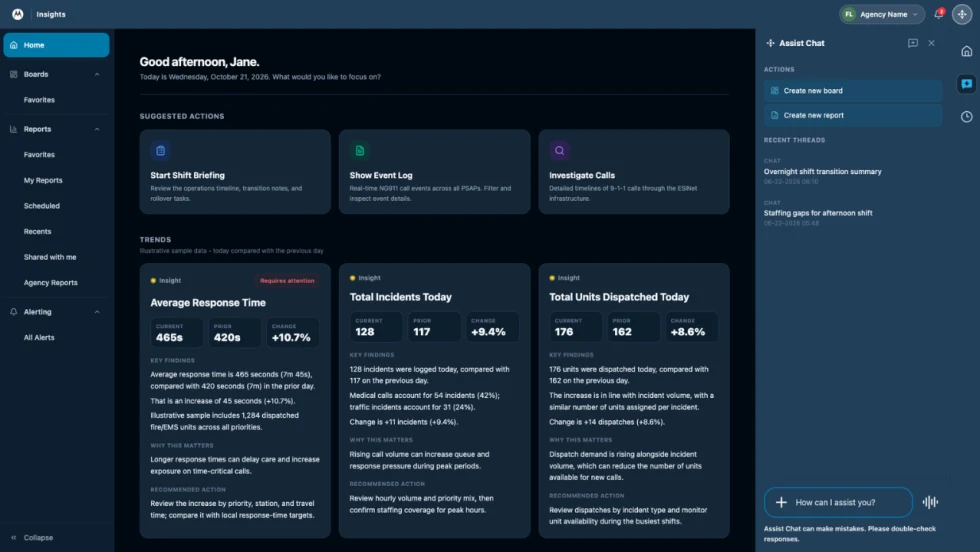
How Motorola Solutions’ New “Insights” Platform Helps Public Safety Agencies Identify Trends to Improve Their Operations
Motorola Solutions has introduced Insights, which leverages Assist, its mission-critical artificial intelligence (AI), to address these challenges and shape what’s next for public safety analytics and reporting technology.
Read More →
What Qualifies a Laptop as Rugged or Fully Rugged?
Police officers face a wide range of working conditions that can damage or even destroy a regular consumer laptop. Learn what qualifies a computer as rugged or fully rugged and why those devices are vital for law enforcement.
Read More →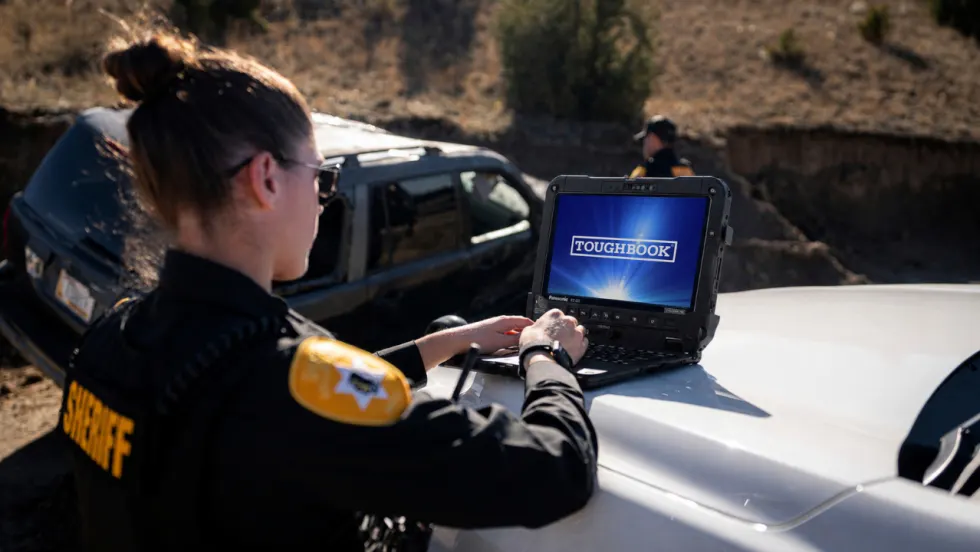
Panasonic Connect Launches the Toughbook 34 and Toughbook G3, Fully Rugged 2-in-1 Mobile Computers
Panasonic Connect has launched the Toughbook 34 and Toughbook G3 to facilitate in-vehicle dispatch, records management, and mobile command operations from any location.
Read More →
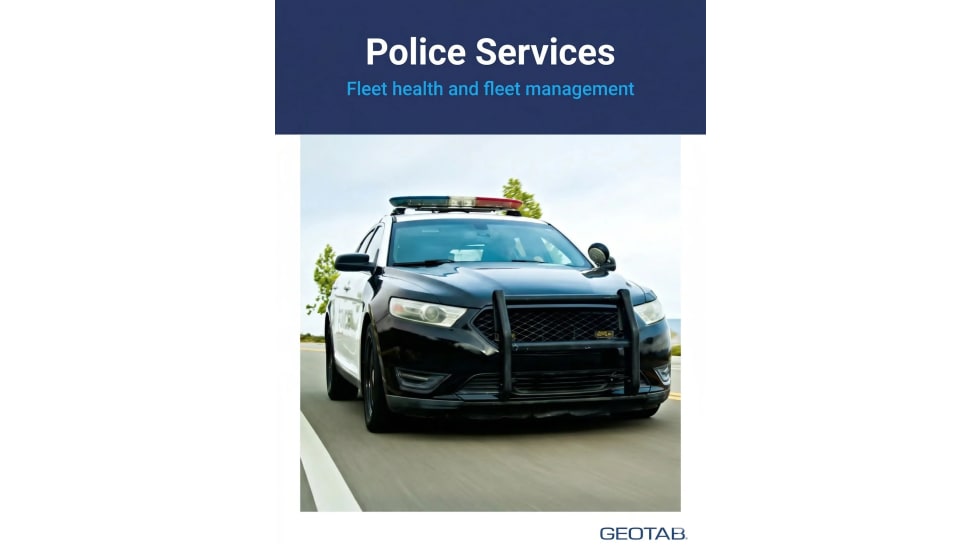
A police agency's guide to data-driven fleet management
Costs are rising and the public expects more transparency into how their tax dollars are spent. This e-book shows how police agencies can use fleet data to take control of fleet expenses while improving officer safety and demonstrating fiscal responsibility to the communities they serve.
Read More →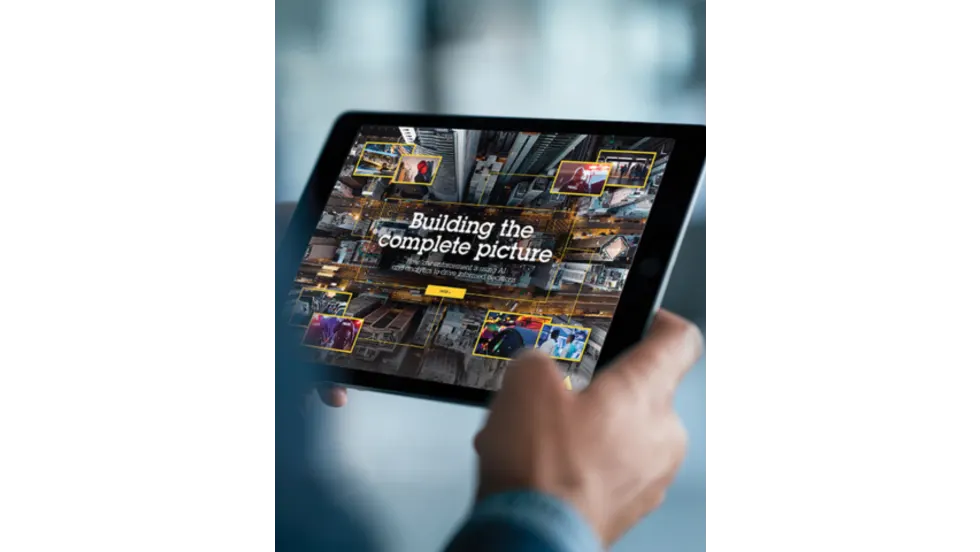
AI and analytics for law enforcement: Turning data into insights
Law enforcement agencies are managing more video, sensor data and digital evidence than ever before. Discover how AI and analytics can help turn that data into actionable insights that strengthen situational awareness, accelerate investigations and support more informed decisions.
Read More →
Vasco Electronics Adds Automatic Language Detection to Vasco Translator Q1
Vasco Electronics’ software update introduces hands-free language switching and expanded offline translation across 45 language pairs, empowering law enforcement, healthcare, and front-office enterprise teams
Read More →
North Miami Police Department Deploys Mark43
The North Miami Police Department has deployed Mark43 as part of its Five-Year Strategic Plan that represents its collective vision and goals for a more proactive police department, anchored by a core commitment to leveraging modern technology to enhance efficiency and public safety.
Read More →
Cellebrite Genesis for Enterprise Now Generally Available
Made available to the public sector in June, Cellebrite Genesis is serving a growing mix of national, regional, and local agencies worldwide, including some of the largest regional and metropolitan police departments. It is now available for enterprise organizations.
Read More →
2026 Vision FirstNet Users Summit to Host Emerging Leaders Training on Grassroots Advocacy for Public Safety
“Emerging Leaders Training: Understanding the Importance of Grassroots Advocacy for Public Safety," a session during the 2026 Vision FirstNet Users Summit, will offer a roadmap for unified advocacy at the federal level.
Read More →
Motorola Solutions Completes Acquisition of D-Fend Solutions
Motorola Solutions has acquired D-Fend Solutions, an industry leader in counter-drone technology. This deal provides public safety and enterprise customers with access to advanced counter-unmanned aerial systems.
Read More →