



Video and You
If you aren't speaking and behaving at all times in public the way you want to appear when you're uploaded on YouTube, you could have some unpleasant surprises in store.

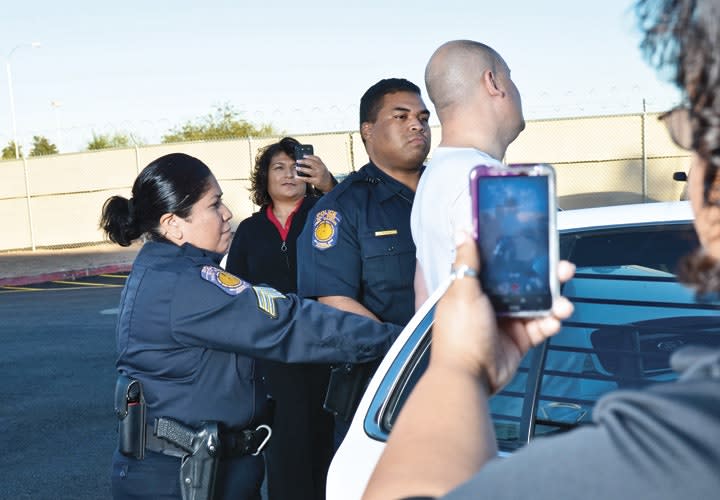
Photo courtesy of iStockPhoto.com.
Cameras, with and without audio, exist everywhere in 21st Century America. They are mounted on your police car, worn on your uniform, affixed to nearby buildings and utility poles, and built into smartphones and other devices carried in people's pockets and purses. If you aren't speaking and behaving at all times in public the way you want to appear when you're uploaded on YouTube, you could have some unpleasant surprises in store.
When you're in the middle of a vehicle stop or investigative encounter and you notice your suspect or a bystander pointing a recording device in your direction, can you order the person to stop recording? Seize the recording device? Arrest the person for unlawful recording? In most circumstances, the answers are probably no, no, and no.
The Constitution and Statutes
The federal government and many states have laws forbidding non-consensual recording of confidential communications. However, such statutes do not apply to your performance of official duties in public because your exchanges with suspects, victims, and witnesses are not "confidential." Your actions and communications are generally in public view—or at least within sight and hearing of the person doing the recording. Also, you may be making your own recording, and everything that's said and done will likely be described in an official crime or arrest report to be read by supervisors, attorneys, judges, and others.
And even if your statutes are written in such a way as to prohibit citizens recording what you do and say in public, statutes cannot reduce the constitutional protections people enjoy under the First and Fourth Amendments. The Constitution is the supreme law of the land. The act of recording matters of public interest is shielded by the right of free speech. Any arrest made in retaliation for a person's exercise of constitutional rights is an unreasonable arrest. Therefore, arresting someone for taping you in the performance of official duty, or seizing someone's recording device, could violate the First and Fourth Amendments, creating potential civil liability.
Federal Case Law
Although the U.S. Supreme Court has not issued a ruling in any case that presented these issues, numerous lower courts have confronted them in federal civil rights lawsuits. The consistent rulings in these cases is that officers may not intimidate citizens into surrendering their First Amendment rights, may not lawfully seize a person's cameras or tapes at will, and may not lawfully arrest a person for exercising his or her constitutional rights. Examples include the following cases.
Robinson v. Fetterman (E.D. Pennsylvania). A plaintiff was awarded $35,000 compensatory damages, plus $2,000 punitive damages against each of three state troopers because they unlawfully arrested him for videotaping them at a highway checkpoint. According to the court, "Videotaping is a legitimate means of gathering information for public dissemination. The free speech clause of the Constitution protected plaintiff as he videotaped the troopers. The police, under the cover of an invalid state law, do not have unfettered discretion to arrest individuals for words or conduct that annoy or offend them. The troopers retaliated against plaintiff for exercising his First Amendment right to videotape police conduct. Thus, we find the troopers liable for violating plaintiff's First and Fourth Amendment rights."
Glik v. Cuniffe (1st Circuit, Massachusetts). Officers arrested Glik for using his cell phone's digital video camera to record the arrest of a man on the Boston Common. In denying the police immunity from lawsuit, the court said this: "Glik was exercising clearly established First Amendment rights in filming the officers in a public space, and his Fourth Amendment rights were violated by his arrest without probable cause. The fact that the officers were unhappy they were being recorded during an arrest does not make the lawful exercise of a First Amendment right into a crime."
Smith v. Cumming (11th Circuit, Georgia). The appellate court affirmed that citizens have a constitutional right to record police in public, saying, "Plaintiffs had a First Amendment right to photograph or videotape police conduct. The First Amendment protects that right to gather information about what public officials do on public property, and specifically, a right to record matters of public interest."
Kelly v. Carlisle (3rd Circuit, Pennsylvania). Officers were subject to suit for arresting a citizen who was recording them during a traffic stop, even though the local prosecutor had erroneously advised them there was probable cause to arrest. "A wave of the prosecutor's wand cannot magically transform an unreasonable probable cause determination into a reasonable one," the court ruled.
Johnson v. Hawe (9th Circuit, Washington). Police chief could be sued for arresting a citizen who videotaped him as he sat in his patrol car.
Thompson v. Clio (M.D. Alabama). Police chief was held liable for seizing a cassette recorder and arresting the citizen who was trying to record proceedings at a public meeting.
Iowa v. Lambert (S.D. Iowa). Officers who seized a videotape from a witness who was taping a fatal street fight were found liable for violating his First and Fourth Amendment rights.
Fordyce v. Seattle (9th Circuit, Washington). Officer was subject to suit for arresting a bystander for videotaping a public demonstration.
Recordings and "Plain View"
In some of the cases cited above, officers sought to justify their seizures of recording devices under the "plain view" doctrine. It has long been held that evidence seen in plain view of an officer can be seized without a warrant. (Harris v. US) However, the "plain view" doctrine has two essential requirements: (1) officers must be in a lawful position to have the view and to retrieve the evidence, and (2) the evidentiary nature of the item must be "immediately apparent."(Horton v. California)
The Supreme Court has said that if officers must move an object or open or examine it in order to determine its evidentiary nature, the "plain view" doctrine does not apply. (Arizona v. Hicks) Officers who believe that a citizen's camera or recording device may have captured evidence of a crime or a criminal's identity may indeed see the device in plain view; however, the device is not itself evidence. Rather, it is the recorded content of the device that may constitute evidence, and that content is not in plain view. (Walter v. US) Without examining the contents, it cannot be determined whether the device was actually recording, or what images or sounds were captured. Therefore, the requirement that the evidentiary nature be "immediately apparent" cannot be met.
Lawful Alternatives
Instead of seizing a witness' recording device that might contain evidence, it may be better to try to finesse the person's consent to let you borrow the device long enough to make a copy. If this doesn't work, the next step is probably applying to a magistrate for a search warrant.
Before you arrest someone for recording your official conduct, and before you seize someone's property because it might contain audio or video evidence, it's a good idea to check with your civil legal advisor (not just your prosecutor) to see what the limitations are in your jurisdiction.
In any event, you're well-advised to assume you're always being recorded, and to speak and act accordingly.
Devallis Rutledge is a former police officer and veteran prosecutor who currently serves as special counsel to the Los Angeles County district attorney. He is the author of 12 books, including "Investigative Constitutional Law."
Read additional "Point of Law" articles here.
More Technology

A police agency's guide to data-driven fleet management
Costs are rising and the public expects more transparency into how their tax dollars are spent. This e-book shows how police agencies can use fleet data to take control of fleet expenses while improving officer safety and demonstrating fiscal responsibility to the communities they serve.
Read More →
AI and analytics for law enforcement: Turning data into insights
Law enforcement agencies are managing more video, sensor data and digital evidence than ever before. Discover how AI and analytics can help turn that data into actionable insights that strengthen situational awareness, accelerate investigations and support more informed decisions.
Read More →
Vasco Electronics Adds Automatic Language Detection to Vasco Translator Q1
Vasco Electronics’ software update introduces hands-free language switching and expanded offline translation across 45 language pairs, empowering law enforcement, healthcare, and front-office enterprise teams
Read More →

North Miami Police Department Deploys Mark43
The North Miami Police Department has deployed Mark43 as part of its Five-Year Strategic Plan that represents its collective vision and goals for a more proactive police department, anchored by a core commitment to leveraging modern technology to enhance efficiency and public safety.
Read More →
Cellebrite Genesis for Enterprise Now Generally Available
Made available to the public sector in June, Cellebrite Genesis is serving a growing mix of national, regional, and local agencies worldwide, including some of the largest regional and metropolitan police departments. It is now available for enterprise organizations.
Read More →
2026 Vision FirstNet Users Summit to Host Emerging Leaders Training on Grassroots Advocacy for Public Safety
“Emerging Leaders Training: Understanding the Importance of Grassroots Advocacy for Public Safety," a session during the 2026 Vision FirstNet Users Summit, will offer a roadmap for unified advocacy at the federal level.
Read More →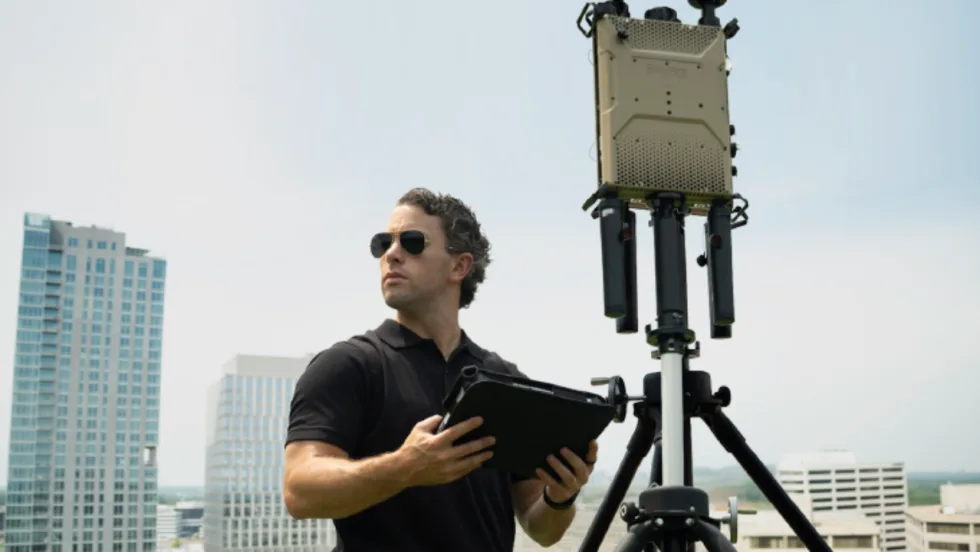
Motorola Solutions Completes Acquisition of D-Fend Solutions
Motorola Solutions has acquired D-Fend Solutions, an industry leader in counter-drone technology. This deal provides public safety and enterprise customers with access to advanced counter-unmanned aerial systems.
Read More →
ZeroEyes, Advantech & Camden Police Partner to Bring AI Gun Detection Technology to Delaware School District
ZeroEyes has partnered with Advantech and the Camden Police Department to deploy ZeroEyes’ AI gun detection and intelligent situational awareness platform at Delaware’s Caesar Rodney School District (CRSD).
Read More →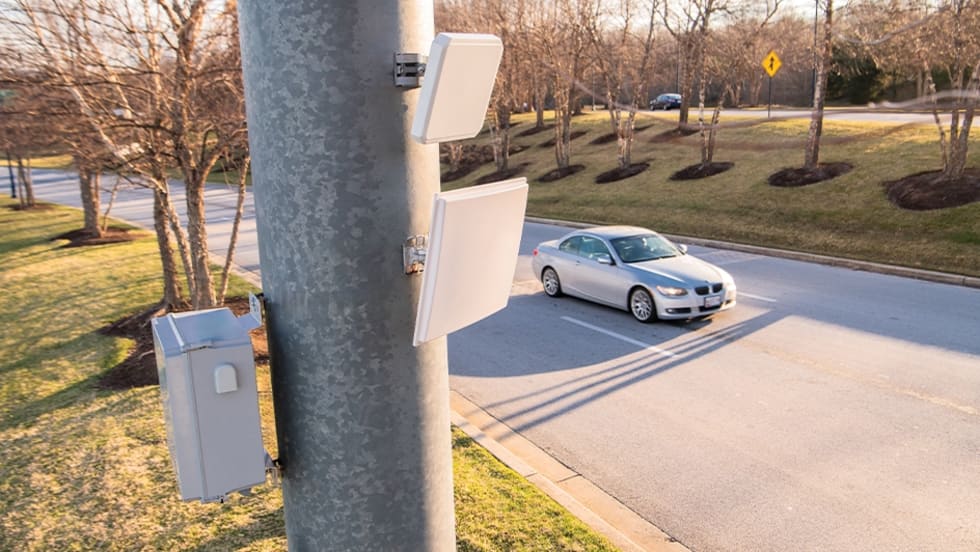
Leonardo U.S. Cyber & Security Solutions Introduces SignalTrace, the Next Evolution in Electronic Signature Detection Technology
SignalTrace reflects years of product refinement and a clearer expression of the technology’s purpose of recognizing and correlating electronic signatures in publicly broadcast wireless signals to reveal patterns, relationships, and trends that might otherwise go undetected.
Read More →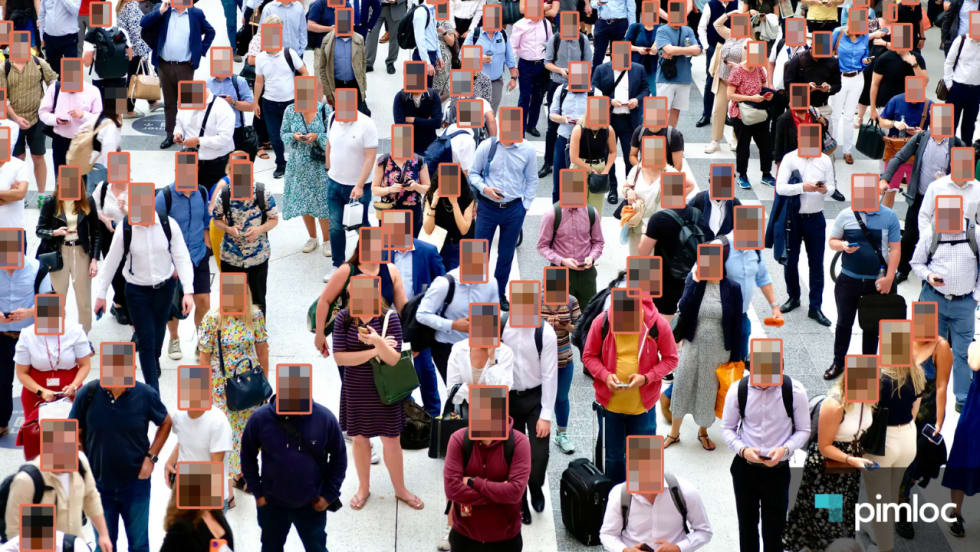
Pimloc Launches Secure File Sharing to Streamline Release of Redacted Video
Pimloc’s Secure File Sharing lets organizations deliver redacted video, audio, and documents through expiring, passcode-protected links, accelerating delivery while reducing security, compliance, and chain-of-custody risks.
Read More →