



Stainless-Steel Weapon Retention
The call comes in at 22:45 on a sleepy night. There’s a domestic dispute at a home in a middle-class neighborhood. You acknowledge the call and drive toward the address.

The call comes in at 22:45 on a sleepy night. There’s a domestic dispute at a home in a middle-class neighborhood. You acknowledge the call and drive toward the address.
A few minutes later, you pull up in front of the house next door to the residence from which the call originated. You radio the dispatch center and confirm your status on the scene.
You’ve been to many domestics in your career. So as you open the door and slide out of your aging cruiser, your ears are already perked, listening for the tell-tale sounds of a domestic.
There’s nothing making noise on this night but the crickets. Still, you have to check it out. So you draw your flashlight from the scabbard on your belt and start up the walk.
You’re halfway to the house when a blur of movement explodes from the shadows to your right. The call has become an ambush. Some guy is attacking you with a club. You raise your hand to block the blow and shield your head.
The club is an aluminum baseball bat, and the blow aimed for your head shatters your right forearm. You fall back in pain and scramble to gain distance from your attacker.
But the bad guy presses his attack. He’s clawing at your duty pistol.
The weapon-retention techniques that you were taught at the academy aren’t working flat on your back with a shattered forearm. You manage to clamp your elbow down over the top of your Level II retention holster, but your attacker is determined. He yanks and twists on the grip of the Glock.
The bad guy is winning this fight. If he gets your gun, you’re dead. You can’t reach your backup gun. You grab your weapon of last resort, your tactical folding knife.
More Than a Tool
You probably carry a folding knife. And if you’re like most cops, you’ve probably been told that your knife is not a weapon; it’s a tool.
Forget all that crap.
In a situation like the one I just detailed when deadly force is a reasonable and legal response and you can’t get to your duty pistol or your backup gun, you will need your knife. But unless you have trained to use it as a weapon, you may not be able to do so effectively when you need to. It’s a lot harder to use a knife in combat than most people, including most cops, realize.
I know, I know. Many defensive tactics instructors scoff at the concept of deploying a folding knife under the stress of a gun-grab attack. The argument against such a tactic generally suggests that the officer should respond to a gun-grab with his academy-trained and departmentally approved weapon-retention techniques and stick to them until successful.
As a weapon-retention and disarming instructor and a tactical knife instructor, I agree with this argument, but only under “ideal” conditions. Note: When the brown stuff really hits the fan, it rarely happens under ideal conditions.
Think about it; will the weapon-retention techniques that you’ve been taught work if your dominant hand is seriously injured? Will the same techniques work if you’re flat on your back or otherwise in a disadvantaged position? Think hard; your life may depend on the answers.
It’s unlikely that the average cretin that you encounter on the street will simply walk up to you and lay hands upon your holstered weapon. It’s far more likely that some prison-pumped dirtbag will assault you, stunning or injuring you. Then he will go for your gun.
It’s also likely that said dirtbag won’t come after you in a clear area. He will hurl you against a wall or pin you against a car. This will make it hard for you to execute your standard weapon-retention techniques.
This is why I think your tactical folding knife is a critical weapon for countering gun-grab attacks.
But to effectively use your knife under the stress of an attack, you have to train with it. You need to build the muscle memory that will help you quickly deploy your knife and use it on your attacker.
Carry Position
Your ability to securely grip your folding knife is greatly influenced by the carry position of the knife on your body. The rule of thumb on carry positions for police tactical folders is that knives with clips that mount at the hinge, oriented to carry the knife with the tip down should be carried at the waistband or higher. Knives with clips mounted to the butt of the knife oriented to carry the knife with the tip up should be carried at the waistband or lower.
Ideally, the position of your folding knife should feed the closed knife into your hand ready for deployment. As your hand accesses the closed and clipped knife, your fingers need to clear the spine of the blade as your thumb operates the folding knife’s opening mechanism, whether it is a thumb hole, stud, disc, or wafer.
Two additional points bear consideration. You should consider keeping your folding knife’s clip concealed if possible. Otherwise, you could have the knife snatched in a fight with a suspect.
Your folding knife should be carried in a position opposite your firearm to facilitate drawing the knife with your non-dominant hand. Avoid clipping the knife close to the holster, as it will be difficult to defend both firearm and knife simultaneously.
Grab Your Knife
The first thing you need to learn when training to use your folding knife as a defensive weapon is how to hold it. There are numerous ways to grip a folding knife for self-defense. And now is not the time to get fancy.
Fine motor skills degrade quickly once your heartbeat rises above 115 beats per minute, so you need to focus on gross motor skills. Grips that require very little manipulation will serve you best. This is why I recommend the modified foil, hammer, or ice pick grip.
The modified foil grip and the hammer grip are the most natural for an officer to use while under attack. Each of these grips is easily acquired or transitioned to, and either one offers the benefit of complimenting your body’s natural mechanics.
Whichever grip you prefer for practicing self-defense with an edged weapon, evaluate it during your training sessions. More importantly consider the situations in which you may possibly need to use your tactical folding knife as an emergency back-up weapon and make sure your preferred grip works under these conditions.
Making the Cut
The “stopping power” of edged weapons comes from generating blood loss and tissue destruction. Edged weapons require both contact and motion in order to inflict injury.
When training to use your folding knife as a last-ditch deadly force weapon, look for optimum ways to injure your attacker and neutralize the threat that he or she presents. Always consider the positions of both you and your attacker and available targets on the body of an attacker.
Your grip, the carry position of your knife, your body position, and the position of your attacker will determine what moves you can make.
Bear in mind that you want to maximize your physical strength within your range of motion, exploit leverage, and maintain contact between your blade’s edge and your attacker’s body. If your preferred grip seems weak in light of these criteria, it may be time to consider alternatives.
I cannot stress this enough. When you use your folding knife to fight off a gun-grab attack, you are using deadly force. Make sure that you are justified to do so. Then go after your attacker with the set goal of neutralizing the threat.
Go for any target that presents itself that will end the attack. If you can cut the hand and arm that’s grabbing the gun, do it. If you can cut your attacker’s groin, do it. If you can stab your attacker in the eye, do it.
I know this is brutal. But we are talking life and death here. You have to win this fight and, if it gets to the point that the only way you can win this fight is to stab your attacker in the eye, or the gut, or the groin, then do it.
A gun grab is violent. A gun grab is brutal. If you can’t stop it with your academy-taught retention techniques, then you will have to be 100-percent violent and 100-percent brutal to win.
Train to Win
Never assume that using a knife as a last-ditch weapon is easy. Fighting with a knife is messy business, and you need to train to do it well. Otherwise, your attempt to fight off a gun grab with your folding knife is likely to be ineffective.
Imagine being issued a duty pistol and ammunition and being sent out on patrol without ever training or qualifying with your service weapon. The tactical folder is not really all that different.
Having the knife with you is the first step, but knowing how to use it and how to hit vital targets on your attacker’s body is critical. Also, documented training in tactics for employing the folding knife in a manner appropriate for officer survival could make all the difference in winning the second fight that takes place in court.
Just as with your duty pistol, the application of deadly force with a tactical folding knife requires the articulation of opportunity, ability, and imminent jeopardy. Documented training will help to prove that you knew and understood the lethality of an edged weapon, and acted appropriately.
Eric Edgecomb is an instructor for Northeastern Tactical Schools. He is a certified instructor in firearms, knives, baton, and empty hands skills with 14 years of experience training professionals in public safety, private security, and the armed forces.
A Bloody Mess
When you shoot an attacker, even at close range, odds are that you will not be exposed to the attacker’s blood. Using a knife to fend off a gun-grab attack is a much more upclose and personal thing. You will be exposed to your attacker’s blood. At least you will be if your counter-attack is successful.
Arterial spray can infect you with bloodborne pathogens carried in your attacker’s body. So as you evaluate the potential effectiveness of your preferred grip on the folding knife, also evaluate targets and target angles on the body, to promote the spray of blood away from your face.
Get a book or chart displaying the circulatory system and muscle groups and think about what targets on the human body would likely be available from different angles, so that if you find yourself fighting for your life in a disadvantaged position you won’t have to rely on trial and error. There is an ancient Roman adage about the sword thrust that applies here: “Two inches in the right spot is fatal.”
Fighting with the Blade Closed
In terms of employing your knife as a last-ditch backup weapon, it is possible that the most expedient way to use it is with the blade closed. This makes your knife an improvised impact weapon.
However, you should know that legally your knife is always a deadly force weapon. If you use the knife in its closed position, you must be justified in using it with the blade deployed.
Your folding knife’s handle may make a fine weapon. But unless you can justify using the blade’s edge, you cannot use the closed knife’s handle without incurring liability.
Safety Warning
Never use a real knife in physical training with a partner. Use a training blade that is not sharp or pointed. Many knife makers sell training blades of their popular models.
More Technology
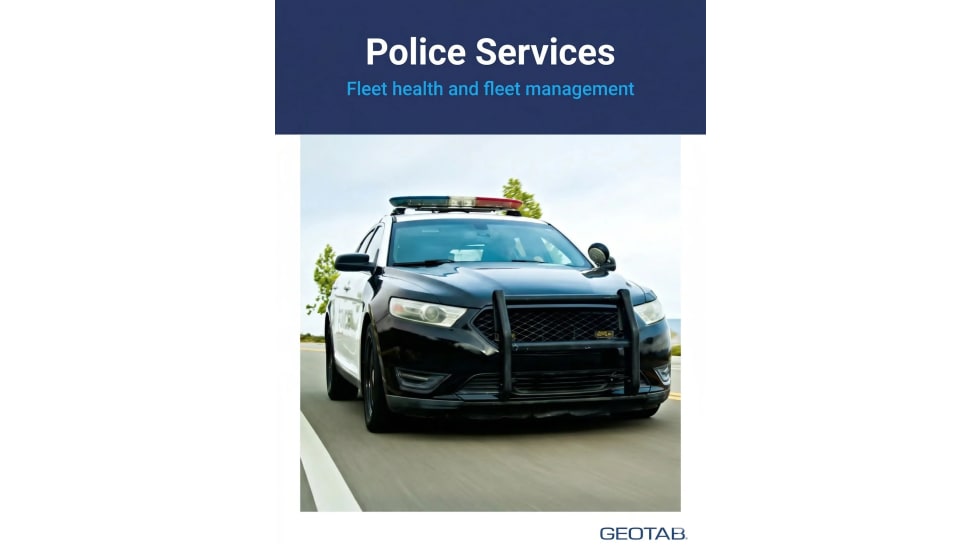
A police agency's guide to data-driven fleet management
Costs are rising and the public expects more transparency into how their tax dollars are spent. This e-book shows how police agencies can use fleet data to take control of fleet expenses while improving officer safety and demonstrating fiscal responsibility to the communities they serve.
Read More →
AI and analytics for law enforcement: Turning data into insights
Law enforcement agencies are managing more video, sensor data and digital evidence than ever before. Discover how AI and analytics can help turn that data into actionable insights that strengthen situational awareness, accelerate investigations and support more informed decisions.
Read More →
Vasco Electronics Adds Automatic Language Detection to Vasco Translator Q1
Vasco Electronics’ software update introduces hands-free language switching and expanded offline translation across 45 language pairs, empowering law enforcement, healthcare, and front-office enterprise teams
Read More →

North Miami Police Department Deploys Mark43
The North Miami Police Department has deployed Mark43 as part of its Five-Year Strategic Plan that represents its collective vision and goals for a more proactive police department, anchored by a core commitment to leveraging modern technology to enhance efficiency and public safety.
Read More →
Cellebrite Genesis for Enterprise Now Generally Available
Made available to the public sector in June, Cellebrite Genesis is serving a growing mix of national, regional, and local agencies worldwide, including some of the largest regional and metropolitan police departments. It is now available for enterprise organizations.
Read More →
2026 Vision FirstNet Users Summit to Host Emerging Leaders Training on Grassroots Advocacy for Public Safety
“Emerging Leaders Training: Understanding the Importance of Grassroots Advocacy for Public Safety," a session during the 2026 Vision FirstNet Users Summit, will offer a roadmap for unified advocacy at the federal level.
Read More →
Motorola Solutions Completes Acquisition of D-Fend Solutions
Motorola Solutions has acquired D-Fend Solutions, an industry leader in counter-drone technology. This deal provides public safety and enterprise customers with access to advanced counter-unmanned aerial systems.
Read More →
ZeroEyes, Advantech & Camden Police Partner to Bring AI Gun Detection Technology to Delaware School District
ZeroEyes has partnered with Advantech and the Camden Police Department to deploy ZeroEyes’ AI gun detection and intelligent situational awareness platform at Delaware’s Caesar Rodney School District (CRSD).
Read More →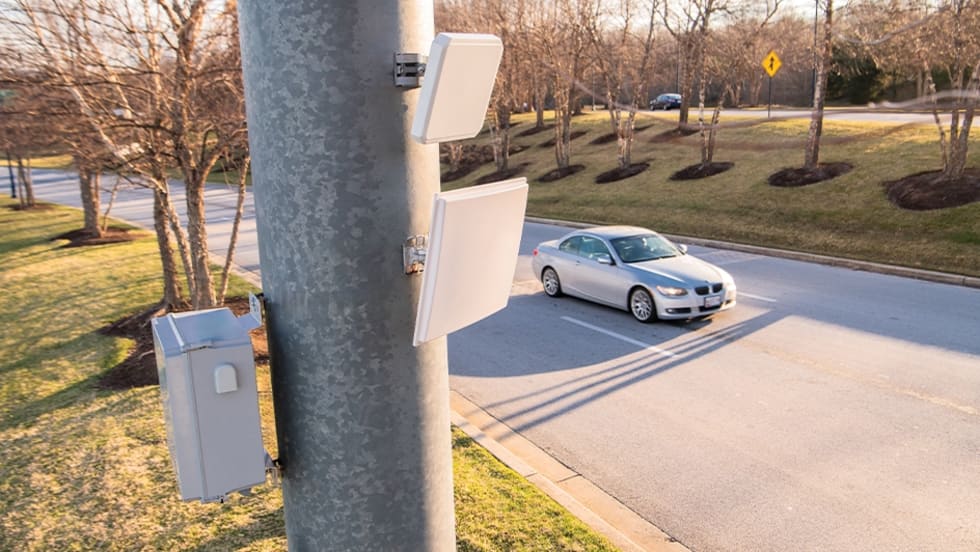
Leonardo U.S. Cyber & Security Solutions Introduces SignalTrace, the Next Evolution in Electronic Signature Detection Technology
SignalTrace reflects years of product refinement and a clearer expression of the technology’s purpose of recognizing and correlating electronic signatures in publicly broadcast wireless signals to reveal patterns, relationships, and trends that might otherwise go undetected.
Read More →
Pimloc Launches Secure File Sharing to Streamline Release of Redacted Video
Pimloc’s Secure File Sharing lets organizations deliver redacted video, audio, and documents through expiring, passcode-protected links, accelerating delivery while reducing security, compliance, and chain-of-custody risks.
Read More →