



Skinheads: The New Nazis
Recently, an outbreak of racist-related violence surged through the suburbs of Denver, Colo. This included the shooting of a police officer before the gunman, a reported white supremacist skinhead. Because of their beliefs and actions, the skinheads should be recognized as the "new Nazis."

Recently, an outbreak of racist-related violence surged through the suburbs of Denver, Colo. This included the shooting of a police officer before the gunman, a reported white supremacist skinhead, turned the officer's handgun on himself. A few nights later, a dead pig, with the deceased officer's name written on it, was found dumped in front of a police station.
My first encounter with these young racists took place in 1987, a time when I, like many police officers, was totally unaware of this new type of street gang and what its members believed in. In fact, during my first encounter with them, I wondered if they were possibly a support group made up of kids undergoing chemotherapy. My naïveté quickly gave way to recognition of a new and dangerous street phenomenon. Because of their beliefs and actions, the skinheads should be recognized as the "new Nazis."
Beginnings
An understanding of these people and their philosophy is a critical part of the arsenal police officers should carry when dealing with suspected skinheads.
The origin of this racist movement can be traced back to Great Britain in the 1970s. There, the population-and especially the youth-was experiencing serious economic and social problems. One youth subculture that appeared chose to wear Dr. Marten boots, suspenders and flight jackets. For added emphasis, they also began to shave their heads. The distinctive hairstyle (or lack thereof?) came from the realization that long hair was a disadvantage when engaged in the type of hand-to-hand street brawls that became the combat norm for this group. It also projected an aura that was intimidating, especially in combination with the rest of the "uniform."
These young teens were soon identified by the appropriate name of "skinheads." At first, they were involved more in a strange and different fashion statement along with a dedication-which often turned violent-to their favorite sport, soccer. There was no hint of ideology. However, this was to change rapidly.
With the influx of minorities into Great Britain, a "scapegoat" theory emerged which held that these immigrants, who constituted a cheap labor pool, were taking jobs form the British working class. With this as a basis, many skinheads began to move from mindless street "hooliganism" into the realm of right-wing radicalism. At the forefront of this change was the first racist skinhead rock band, "Screwdriver," led by a former street thug, Ian Stuart. The band's lyrics typically reflect a belief in white supremacy and aggressive behavior. Through its music and behavior, Screwdriver helped lead the skinheads into an ideology based on racism, hatred and violence.
Americanization of Trouble
By the mid-1980s, skinhead gangs had appeared in a number of American cities. Today, though their ranks are relatively few in numbers, the skins remain a threatening presence on our streets.
The modern-day skinheads have an ideology that is rooted in their views about race. Within this, the white race is superior to al other ethnic groups.
In a skin's vocabulary, the latter are often referred to as "mud people," "muds" or "subhumans." This attitude alone often justifies a skin's use of violence against those who are considered to be inferior.
These gang members will also target "race traitors." For example this term may be used when talking about police officers or whites who date or marry minorities. Children of interracial marriages are derisively called "two tones."
Ideology and Religious Elements
Some racist skinheads have aligned themselves with the Christian Identity Movement and related groups such as The Church of the Creator. One gang, the Fourth Reich Skinheads, was involved with the pseudo religious movement. Before the gang was broken up by a joint FBI/ATF investigation, the members had plotted to blow up the First AME Church in South Central Los Angeles as well as assassinate prominent blacks and Jews. With this game plan, they hoped to trigger a race war in Southern California that would eventually lead to a "new white revolution."
As an integral part of this ideology, they see themselves as patriotic but are racially selective in their interpretations of American history. In this context, they often use phrases such as "white men built this nation; white men are this nation." Skinheads are reluctant to recognize the basic truth that this country was built through the contributions and sacrifices of Americans of all races and beliefs.
Skinheads and other racists have been heard to preach that minorities should be moved, by force if necessary, to specific regions of the country or even to other countries. Similarly, it is viewed as a crime for a white woman to have an abortion; primarily because in so doing, she deprives the race of needed children.
This desire to then create a "white homeland" is a consistent thread in their ideology even though they disagree amongst themselves as to how this would be accomplished.
One blueprint for such an "Aryan Shangri La" comes from the book The Turner Diaries. This novel depicts the takeover of the federal government by white racist revolutionaries. Their intent is to create the whites only nation at the expense of racial minorities, Jews, and "race traitors." One chapter describes in detail a truck bomb attack against a federal building. The similarities of this fictional explosive incident with the horror of the Oklahoma City tragedy are very close. In both cases, "off the shelf" ingredients were used to construct a tremendously explosive device, which was then transported to the target building in a large rental truck.
Anti-Semitism
Coupled with their anti-minority attitude is an anti-Semitism that conveniently blames Jews for America's-and by extension, the world's-social and economic problems. This is "Hitler-speak" at its worst. Skinheads will talk of a non-existent entity they call ZOG (Zionist Occupational Government), a shadowy Jewish conspiracy which they believe is actually in charge of the United States of America. In their minds, the extent of this control even dictates how we, as police officers, carry out our duties, which include the "persecution" of young patriotic skinheads.
As an integral part of their anti-Semitism, the skinheads often label the Holocaust as an enormous fabrication. One skinhead leader tried to claim that Auschwitz was a tire factory. He called what we know as one of the most horrible events in modern history, a "Holohoax."
Bad Company
Hard-core skins believe in their ideology often with a level of dedication comparable to that of the most loyal Hitler Youth members of Nazi Germany. Those who are less committed-such as new members of the gang-may adopt a more cafeteria-style approach, subscribing to some but not all of the major ideological points. Remember however, that all are capable of violence based on this ideology. Like other street gangs, this may include targeting police officers.
Even if they are just wearing their Dr. Marten boots, skinheads should be considered as armed since this footwear is also one of their favorite weapons. Car stops with a number of skins in the vehicle carry the strong likelihood that other weapons will be found in their possession as well. Like most modern gangs, the skins have sought to obtain firearms to back up their beliefs. In one search of a "crash pad," we found three small handguns, a Tech-9 high-capacity pistol, and an M-1 carbine. A Benelli 12-gauge shotgun, similar to those carried by our SWAT team, was also discovered inside the residence.
Tragic Results
When these beliefs are compressed into the daily thoughts of a young teenager, they can become the central focus in that person's life. The Freeman brothers-David and Bryan-are classic examples of the skinhead syndrome. They were children of middle-class parents living near Allentown, Pa. One night they-with the help of a cousin who was a skin as well-brutally murdered not only their mother and father but also their younger brother.
Investigation of the incident led to the discovery of racist skinhead materials. Among these was found a handwritten testament by one of the brothers:
The New World Order
Attention to all of you our there who are being misled by this corrupt society. We are not a few small children; we are a very large portion of the population. Our numbers are growing every day. It is now your time to decide. Will you fight for the white race or die with the colored scum? We are at the dawn of a new world order.
We have been pushed around too long. It is time for you to join us and stand up against the evil that (has) been aloud (sic) to run amuck through this great country. We owe it to our children to fight and preserve our wonderful race. Soon it will be too late to decide so get off your ass and join us. The New World Order is at hands, whites will once again be the dominant race we should be. It is only a matter of time. Hitler was right-6 million wasn't enough.
The white supremacist ideology programs a skinhead to see the world in a much different light than you or I. It is an ideology that all too frequently, this translates into violence aimed at innocent victims and even members of our law enforcement family. An understanding of this ideology is a valuable tool for police officers to use in the suppression and prosecution of skinheads. The ultimate goals are to remove such threats form our streets and to do it in a safe manner so that we go home at the end of our shift.
Sgt. R.K. Miller is a patrol supervisor, instructor and SWAT team leader with the Huntington Beach (Calif.) Police Department. A 22-year veteran of law enforcement, Miller, who holds a bachelor's degree form Long BeachStateUniversity, is a court-qualified expert on white supremacist skinheads.
More Special Units

New K9 Decontamination Protocol Launched
A new K-9 protocol from the SoRite Company gives law enforcement agencies a standardized rapid-response framework to decontaminate K-9s, their handlers, and police vehicles, from dangerous narcotics.
Read More →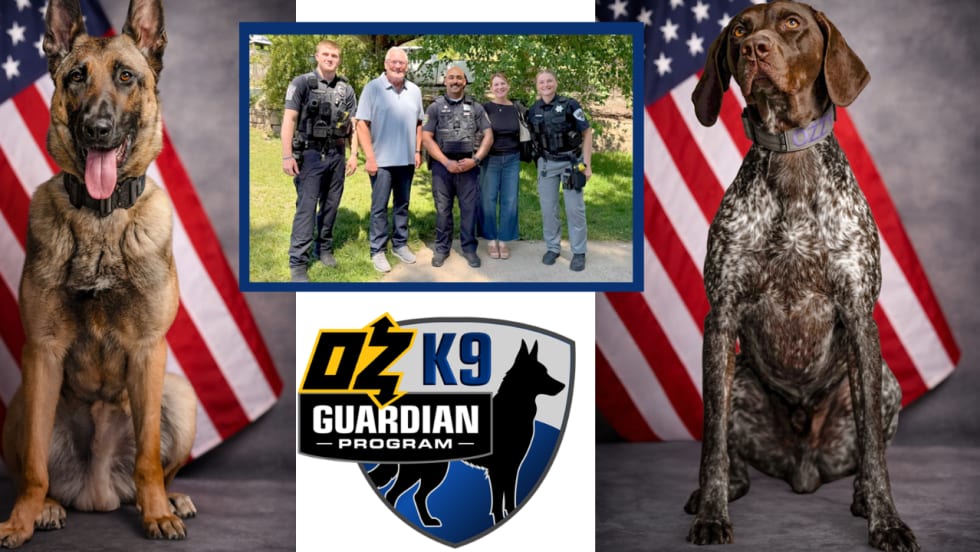
OZ Lifting Doubles Impact of K9 Guardian Program
In response to the positive impact the program has had on local communities. OZ Lifting Products has expanded its K9 Guardian Program by committing to fund a second police dog each year.
Read More →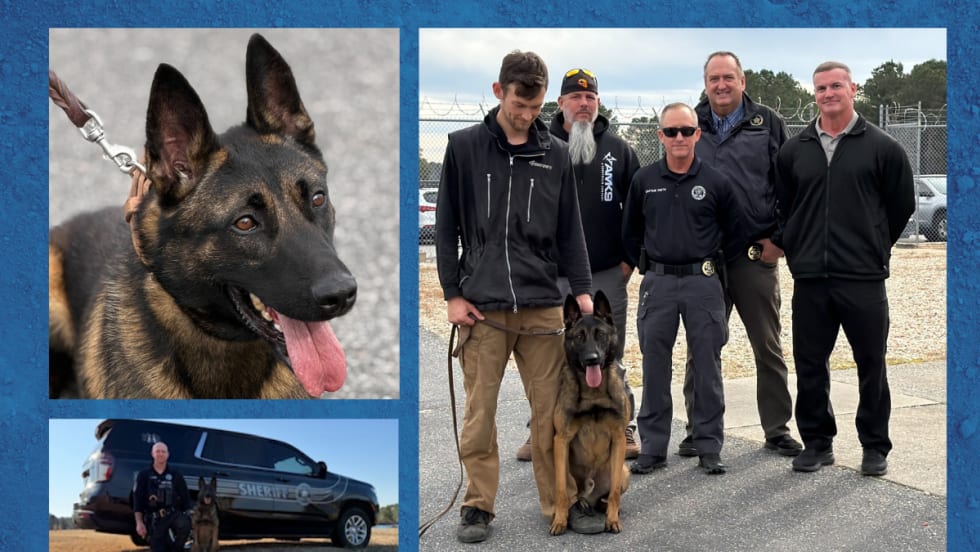
Constellis’ AMK9 to Donate K9 Officer to Currituck County Sheriff’s Office
AMK9 will donate a fully trained K9 officer to the Currituck County Sheriff’s Office K9 Unit. DAX, a 20-month-old Belgian Malinois, joined his new handler and has begun training at the Constellis Training Center.
Read More →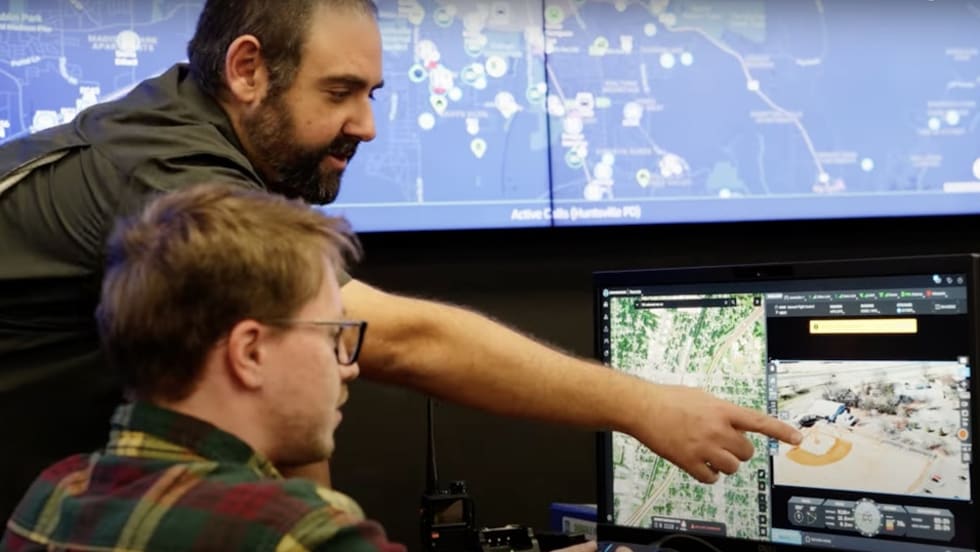
Ohio’s Statewide Drone First Responder Program to Take Flight
Over the next two years, the Ohio DFR Pilot Program will equip municipalities with advanced drone systems, deliver comprehensive training for first responders, and enable FAA-approved Beyond Visual Line of Sight operations.
Read More →
Louisiana Motor Sergeant Dies from Injuries Suffered in June “Intentional” Crash
A motor officer, Sgt. Caleb Eisworth was on his way to participate in a funeral escort when he was struck by another vehicle.
Read More →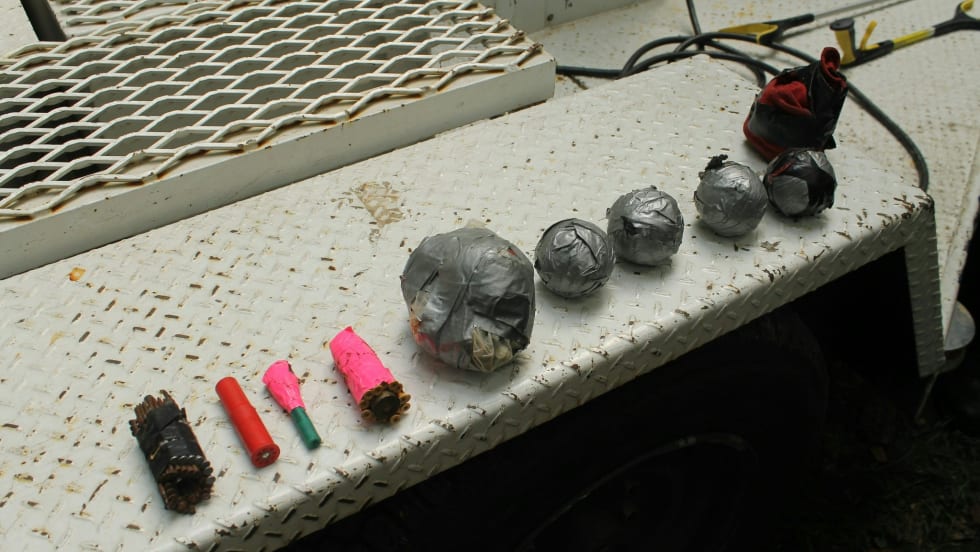
Tennessee Officers Say Man Tried to Detonate IED During Arrest
Inside the bedroom officers found what they believed to be an IED. The officers evacuated the house and called for the Chattanooga Police Bomb Squad and ATF agents.
Read More →
Florida School Officer Dies After On-Duty Medical Emergency
Sergeant Greg Graff was “preparing school leaders for the upcoming year during a safety training program at Clearwater High School,” the school district said.
Read More →
Grenade is Missing from Explosion That Killed 3 LASD Deputies
ATF Special Agent in Charge Kenny Cooper said definitively that only one grenade detonated at the facility on July 18.
Read More →
Los Angeles County Sheriff's Department Names Deputies Lost in Friday Explosion
LASD said Detective Joshua Kelley-Eklund, Detective Victor Lemus, and Detective William Osborn who were all assigned to Special Enforcement Bureau’s Arson Explosives Detail were killed in the incident.
Read More →
Maryland State Police Helicopter Rescues Victim from Overturned Boat in Chesapeake Bay
The Maryland State Police Aviation Command Trooper 7 crew, the MSP helicopter based in California, Maryland, were monitoring the county dispatch radio, overheard the dispatch, and self-launched.
Read More →