



SIG Sauer P250 Modular Pistol
With its new P250, SIG Sauer has embarked upon a completely novel concept in semi-automatic handguns—the modular pistol. The P250 is based upon a polymer grip module and metal frame/fire control assembly. This assembly is in fact the “pistol,” as it bears the serial number, which can be removed and inserted into another grip module.

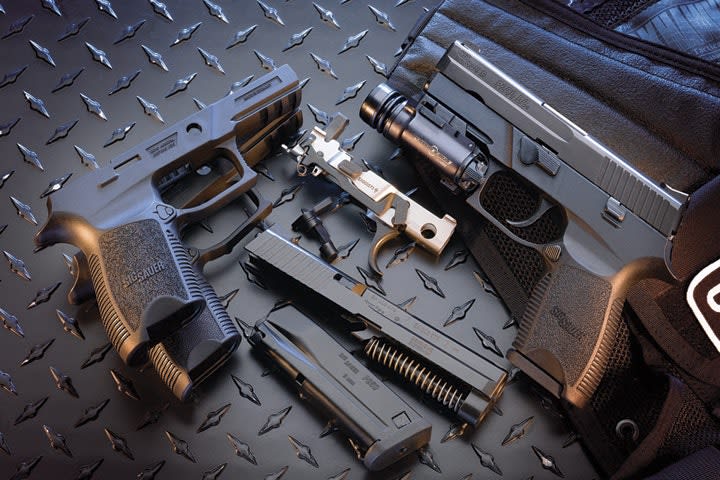
With its new P250, SIG Sauer has embarked upon a completely novel concept in semi-automatic handguns—the modular pistol. The P250 is based upon a polymer grip module and metal frame/fire control assembly. This assembly is in fact the "pistol," as it bears the serial number, which can be removed and inserted into another grip module.
The P250 is available with two different sized grip modules: Small for the 9mm, .357 SIG, and .40 S&W, and large for the .45 ACP. Both are available in Full, Compact, and Subcompact configurations with three different grip circumferences (two on the Subcompact). In fact, the only difference in the grip modules is the length of the grip itself. Any size grip module will accept the Full, Compact, and Subcompact slide assemblies. To further adapt the pistol to a variety of hand sizes, it can be ordered with either a long or short trigger.
This variety of features allows the shooter to assemble an almost unlimited number of configurations. In addition, the SIG P250 uses 30- to 40-percent fewer parts than a traditional semi-automatic pistol, which streamlines maintenance, spare parts costs, and inventory.
For even more adaptability, the SIG P250 comes standard with ambidextrous slide catch levers. Also, the magazine release button can be switched to the right side so as to accommodate the lefties among us.
Switching it Up
Changing the P250's modular frame/fire control assembly from one grip module can be accomplished in a matter of seconds. First, remove the slide assembly; then rotate and pull the takedown lever out of the frame. Pulling up on the front frame rails while drawing the hammer back frees the frame assembly from the grip module.
To reinstall the frame assembly into another grip module, insert the frame locking tab at the rear of the assembly into the matching slot inside the rear of the grip module, pull back on the hammer to move the trigger rearward, and push the unit in the grip module. Reinsert the takedown lever, install the slide assembly (or another one), and the pistol is ready to go.
Assignment Flexibility
For the sake of argument, let's say your agency adopts the Full Size P250 in .40 caliber and each officer has the choice of small, medium, or large grip circumferences with a standard or short trigger. Then, down the road you are given a plainclothes assignment and decide that a smaller pistol would be more practical. In the past, this would mean you would need to be issued an entirely new pistol. Not so with the P250.
All your department armorer has to do is take a Subcompact grip module and slide assembly, remove the frame/fire control assembly from your Full-Size pistol, and install it on the Compact module with the shorter slide and barrel. While you now have a compact handgun, it uses the original frame/fire control assembly with the same serial number, which can greatly reduce paperwork and inventory considerations.
Perhaps your department is one of those that requires you to use the issue pistol for off-duty carry. If that is the case, all you need to do is obtain a Subcompact grip module and slide assembly and install your frame/fire control assembly into it. Voila, you now have an easily concealable, lightweight pistol for off-duty carry.
Wouldn't it be convenient to be able to use inexpensive 9mm ammunition for training purposes? Well if your department uses the P250 all you need to do is purchase 9mm slide assemblies and magazines and install them on your frame/fire control assemblies.
Suppose your agency initiates an "officer's choice" service pistol policy and you decide you would like to carry a .357 instead of a .40. All that is required is to change the barrel and recoil spring. Perhaps you choose to upgrade to a .45 caliber handgun. You obtain a .45 caliber grip module, slide assembly, and magazines, and drop your frame/fire control assembly from your .40 caliber pistol into it and you're ready to go. You can also change your pistol back to any of the previous configurations any time you feel like it.
[PAGEBREAK]
Mechanics
In all its possible variations, the P250's modular frame/fire control assembly contains the trigger mechanism, hammer, ambidextrous slide catch levers, takedown lever, and a steel shaft on which the barrel articulates to unlock from the slide. The slide does not bear upon the grip module at all. Instead it rides on four steel rails that are integral with the frame/fire control assembly.
P250 pistols come standard with a double-action-only (DAO) trigger with a pull of approximately six pounds. This not only allows the same, consistent trigger pull for each shot, but provides the traditional simplicity and safety features of the double action revolver.
I am a big fan of this type of trigger mechanism as I believe simplicity of operation is a major benefit when it comes to training and is of the utmost importance on any handgun intended for police service or defensive purposes. Unlike DAO triggers on some pistols, the P250's allows multiple strikes upon a recalcitrant primer in case of a misfire. As an added bonus, all P250 grip modules come with an integral accessory rail for mounting lights, laser sights, and other types of tactical accessories.
The P250's slide and barrel are locked together by means of the barrel hood moving up into, and bearing against, the front edge of the ejection port. As the slide assembly moves rearward during recoil, the barrel is cammed down, allowing the slide to continue to the rear, extracting and ejecting the spent cartridge case. A captive recoil spring unit, located under the barrel, then pulls the slide forward, picking up a cartridge from the magazine and chambering it. As the slide/barrel assembly go into battery, the barrel is cammed upward, locking the two parts together again.
Range Testing
I asked my friend Paul Brinkman, a former range master with the Riverside County (Calif.) Sheriff's Department, to help me run the SIG through its paces at my gun club. We performed accuracy testing from an MTM Predator pistol rest at 50 feet with four different brands of premium 9mm ammunition. The pistol I evaluated for POLICE had a Compact grip module and a medium width grip fitted with a 9mm Subcompact slide assembly. I experienced a single failure to extract in the first 20 rounds fired, but after that, the P250 proved completely reliable.
Brinkman then ran the SIG through a series of offhand drills at 10 and 15 yards, firing the pistol both supported and unsupported. As had been our experience during the earlier testing, the P250 showed itself to be one of the more accurate out-of-the-box pistols either of us had fired for some time.
Even with the compact grip, recoil control was above average and the SIGLITE sites provided a sharp, clear site image, allowing fast target acquisition and transitioning. The DAO trigger was smooth and consistent with no staging. The results of this expenditure of ammunition were a pair of targets perforated in a manner that I don't believe anyone could complain about.
Can I find anything negative to say about the new SIG? Well, to be honest, no. It functioned as one would wish a service pistol to, it provided above-average accuracy, good ergonomics, and proved 100-percent reliable. What else could you ask for…or need?
Paul Scarlata has served as an auxiliary police officer. He is a widely published North Carolina-based gun writer and a frequent contributor to POLICE Magazine.
More Weapons
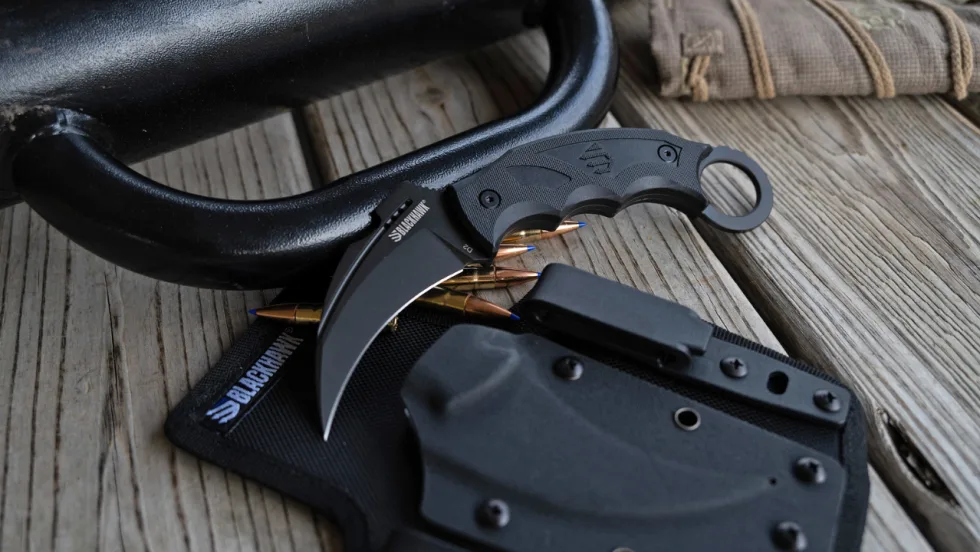
Blackhawk Introduces the Garra Fixed Karambit
The Blackhawk Garra Fixed Karambit is made from D2 steel and features a curved profile that enhances slicing efficiency, plus the full-tang construction ensures strength and durability from tip to handle.
Read More →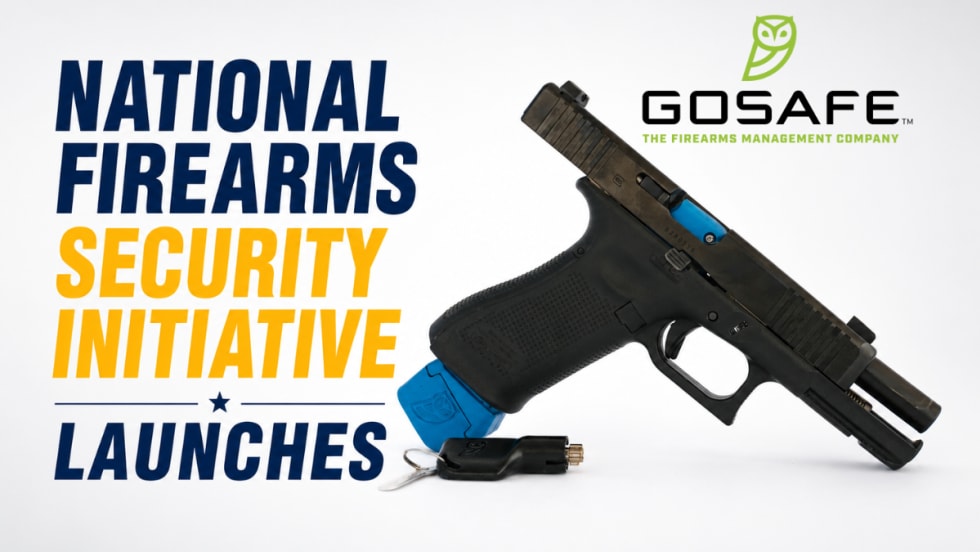
GOSAFE Technology Announces Public Safety Initiative Focused on Firearm Security and Risk Reduction
GOSAFE Technology’s new initiative provides support for agency-level solutions around secure firearm storage, vehicle-storage risks, off-duty firearm security, firearm accountability, and the public safety consequences that may result when firearms are stolen, lost, improperly secured, or diverted from lawful possession.
Read More →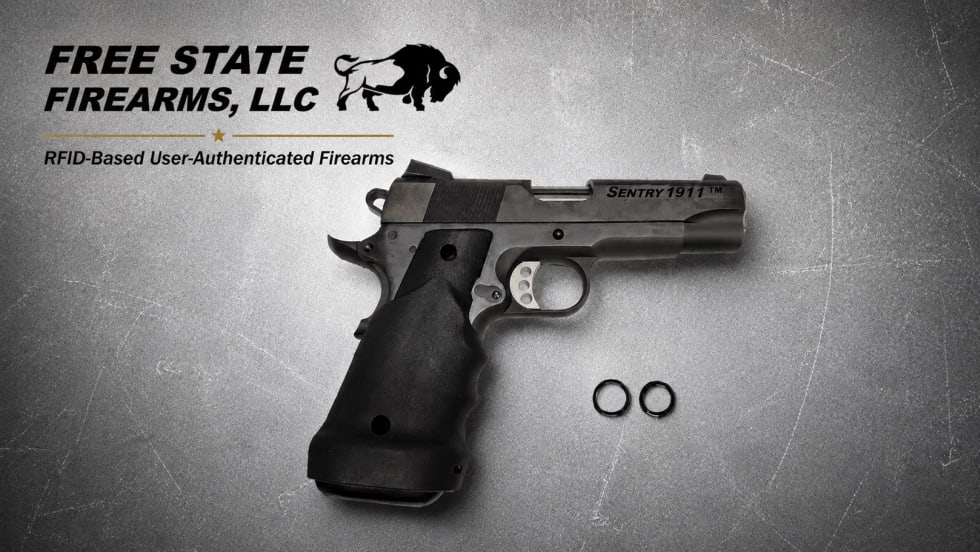
Texas Sheriff’s Office Deploys RFID-Based User-Authenticated Firearm for Prisoner Transport Operations
A sheriff’s office in Texas is now using RFID-based user-authenticated firearms, from Free State Firearms, for prisoner transfer and transport operations.
Read More →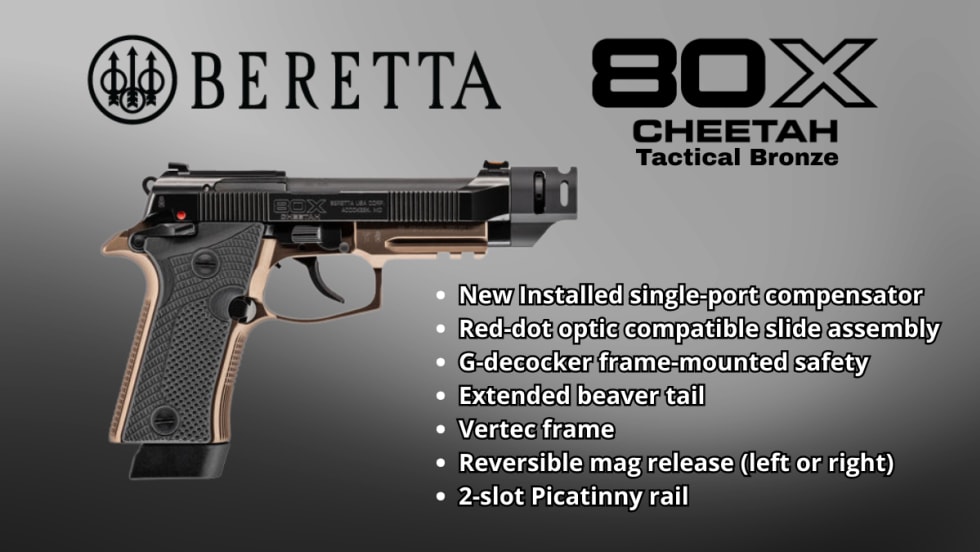
Beretta Introduces the 80X Cheetah Tactical Bronze
Beretta has launched the 80X Cheetah Tactical Bronze, which features a fiber-optic front sight, a serrated rear sight, and a Picatinny rail for accessory mounting, and ships with three 15-round extended magazines.
Read More →
Wrap Raises $5 Million to Restart Domestic Manufacturing & Advance R&D
With new funding, Wrap Technologies will restart domestic manufacturing, advance validated R&D programs into commercialization, and responsibly accelerate early growth initiatives aligned with rising demand for non-lethal response capabilities.
Read More →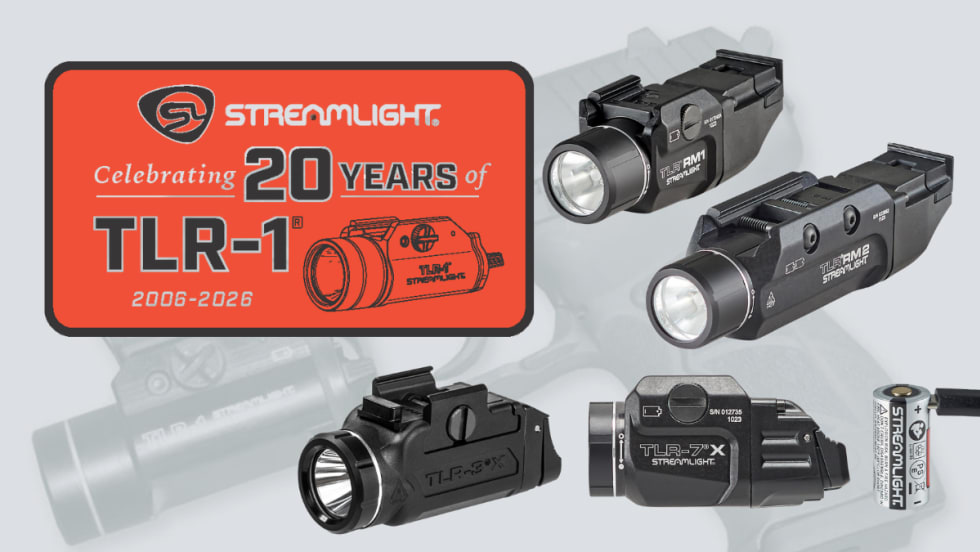
Streamlight Celebrates the 20-Year Anniversary of the TLR Series
This year, Streamlight marks two decades of weapon-mounted lighting innovation with the 20th anniversary of the TLR-1.
Read More →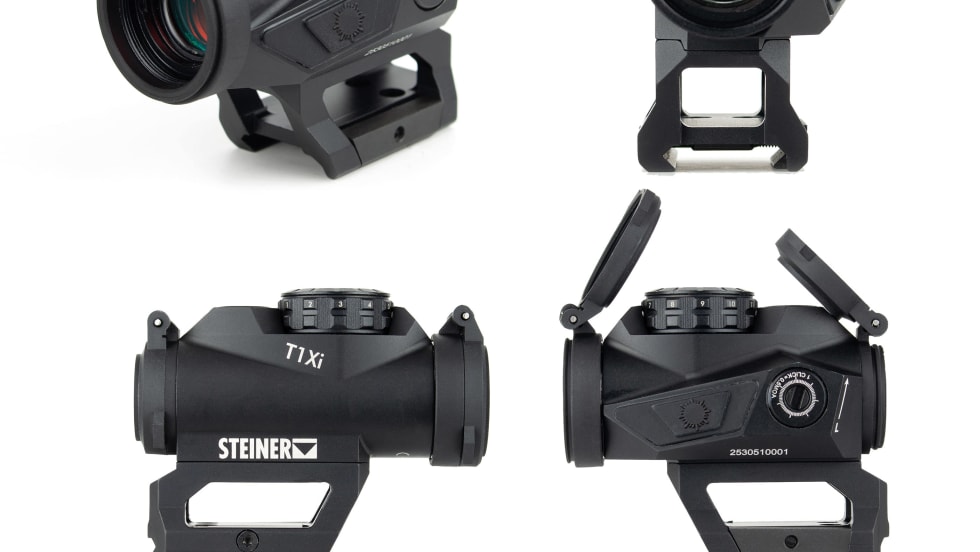
Steiner’s T1Xi Selected as Top Performer in Texas DPS Optic Evaluation
Steiner Optics’ T1Xi was selected as the top-performing red dot in the recent Texas Department of Public Safety optic evaluation.
Read More →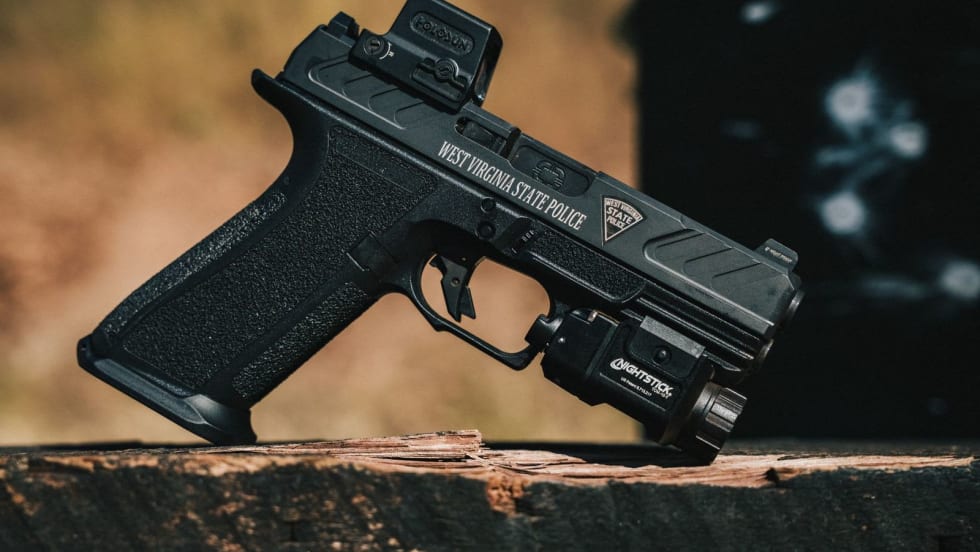
Shadow Systems Selected as Exclusive Pistol Provider for West Virginia State Police
Shadow Systems will provide 700 XR920 crossover pistols for West Virginia State Police troopers and 80 CR920X high-capacity subcompact pistols for the Bureau of Criminal Investigation.
Read More →
Aimpoint Celebrates 50 Years of Innovation and Excellence in Sighting Technology
Aimpoint is marking its 50th anniversary in 2025, celebrating five decades of red dot innovation trusted by military, law enforcement, and tactical professionals worldwide.
Read More →
Streamlight Introduces Long-Range Handgun Light
“Our newest weapon light provides an industry-leading level of candela for handguns, giving users enhanced visibility under low light conditions, such as when searching a dark alley,” said Streamlight President Michael F. Dineen.
Read More →