



Shots Fired #100: Anywhere, USA
For our 100th "Shots Fired" article, I'm going to step outside the normal formula of our concept and talk about some things I've learned and some heroic officers I've had the honor of interviewing.

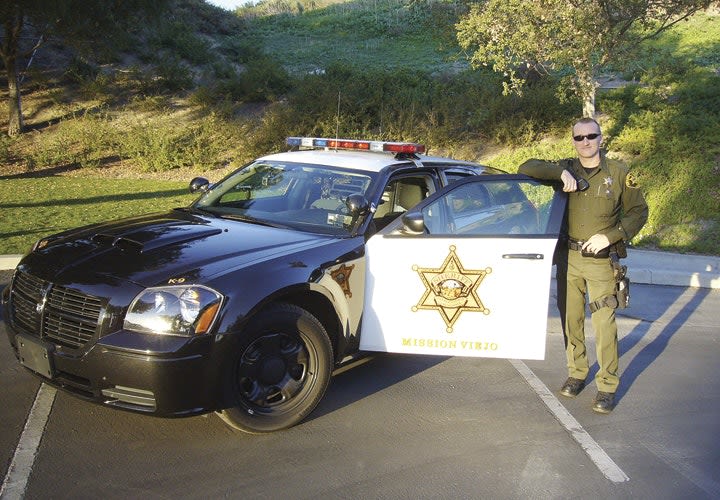
Orange County (Calif.) Sheriff's Dep. Richard Olszynski was featured in October 2010. Photo: POLICE file
The first POLICE Magazine "Shots Fired" article was published in June 2005. I've written one for every issue since. And that makes this our 100th article in the series. So I'm going to step outside the normal formula of our concept and talk about some things I've learned and some heroic officers I've had the honor of interviewing.
Consider the following examples:
Number 13 (June 2006) detailed Rapid City, S.D., Officer Spencer O'Bryan's off-duty confrontation with an armed prowler outside his own home.
Number 37 (June 2009) chronicled how South Congaree, S.C., Officer Jason Pruitt's act of kindness led to a life-or-death struggle with a violent felon who was determined to kill the officer with his own sidearm.
Number 81 (February 2012) featured Skokie, Ill., Officer Tim Gramins' harrowing street shootout with a robbery suspect.
Developing the Concept
Credit where credit is due, this column would not exist without previous works by the likes of Massad Ayoob, Charles Remsberg, and many others who have detailed officer-involved shootings and their lessons.
Adding its own unique twist, "Shots Fired" was envisioned as a forum that allows officers to tell their side of the story while showcasing more than just clinical dissections of the tactical elements. Having heard the candor of war stories told by veteran officers in the field, I knew there would be interest in a column of the same vein—something that would communicate what the officers felt and saw, and allow them to say what they did right and what they might do differently if given the opportunity.
The concept's success hinged on my ability to ask incisive, pointed questions and the courage of the officers to supply candid responses. So I felt that I had to find a way to make the officers comfortable with telling their stories, and I gave them the ability to approve their stories.
Still, a promise ain't what it used to be, and I know that it's hard to trust strangers. So I am perhaps indebted to no one more than Sgt. Randy Wills of the Pueblo (Colo.) Police Department who agreed to be featured in Police's first "Shots Fired" story in June 2005. In becoming the point man in this experiment, Wills exhibited a leap of faith, allowing the story of his Christmas Eve shooting to become the template by which the others followed.
That "Shots Fired" would lead to an abundance of story topics was a given. Unfortunately, there are an awful lot of officers who face the ultimate threat on the job. And thankfully, most of these officers survive and prevail.
Less anticipated were the vagaries of issues that the "Shots Fired" stories would touch upon. While the importance of training and mindset was often in evidence, sometimes the focus shifted to the aftermath of the incident—how it became controverted in the media or the psychological impact that it had on the officer.
Throughout, the one constant has been an emphasis on officer safety. To that end, sidebars have accompanied the articles to pose questions of readers based upon the involved officer's experiences. Online comments posted by many readers have been particularly insightful and empathetic with the officers and their predicaments.
Stories of Heroes
The heroism showcased in "Shots Fired" transcends the obvious. The men and women that we have featured are heroes not only for the actions they took at the time of their shootings, but for how they dealt with the incidents afterward and the candor with which they were willing to share their experiences with their fellow officers.
The benchmark for candor was set by San Bernardino County, Calif., Sheriff's Dep. Jason Hendrix. His courageous honesty in detailing his every effort to save lives during an off-duty shootout in a parking lot covered everything from ballistic intervention to begging for his life when his gun ran dry and his assailant loomed over him for an execution shot—which the man then took.
While Hendrix's collective actions probably saved his life, one reader incredibly characterized Hendrix's conduct as "cowardly." Of all the sentiments ever shared in connection with anything I have ever written, none has outraged me more. Of course this reader showed great courage by posting his comment anonymously.
Fighting Back
Beyond their willingness to talk about their experiences in this and other forums—including training academies, interviews, and podcasts—the officers featured in "Shots Fired" have displayed their heroism with their ability to take initiative and take the fight to their attackers.
In fighting for their lives, as well as the lives of citizens and fellow officers, the "Shots Fired" subjects have called upon a variety of inspirations. Several officers articulated their faith as instrumental to their survival.
Having something to live for also counts a lot, and the impetus for several officers to prevail in their deadly engagements was often thoughts of their loved ones. Thoughts of missing his son's birthday party weighed heavily on Tim Gramins' mind during his firefight and provided him with added incentive to persevere.
"I was about to get off at six for family dinner and birthday cake," recalled Gramins. "There was no way I was not going to go home—on that day especially."
Orange County, Fla., Sheriff's Dep. Jennifer Fulford's determination to attend her own wedding saw her getting the better of two armed suspects in a residential garage, despite suffering multiple gunshots herself. My God, I haven't even had a chance to really experience life, she found herself thinking at the time. I haven't had children yet. I just ordered my wedding dress. But, I will not die here. I will fight with my every strength to see to it that I get out of here alive.
Training and Equipment
Perhaps no factors were more important to an officer surviving a shooting than his or her training and mindset. While all were indebted to the training afforded them by their agencies, more than one appreciated the legacies of prior employers. One carry-over from Orange County, Calif., Sheriff's Dep. Richard Olszynski's experience as a Marine was the importance of aggressiveness in a gunfight (October 2010).
"We were taught to close the distance and engage the enemy," recalls Olszynski. "In one sense, it helped me to be quick. But looking back, once I got between cars (in engaging the suspect), I should have slowed down; still doing a fairly good pace, but slowing down a bit."
Sometimes the tactical training received by the officers was very timely. The "shrimping" technique Montrose, Colo., Police Officer Rodney Ragsdale learned in an officer survival course came into play only two weeks later when he found himself fired upon at a suspect's residence (April 2012). Collapsing his body into a jackknife position then springing his extremities outward, Ragsdale was able to propel himself along the floor and out of the kill zone.
The importance of effective communication was also often a key factor in the way a shooting evolved. And lack of early communication between newly paired officers sometimes complicated their shootings, as the officers were unfamiliar with each other's tactical leanings. Incidents involving officers from neighboring departments or involving state police officers highlighted training and communications tactics that worked well, and those that did not.
Perhaps nothing frustrated officers more than equipment failures, whether it was a "stovepiped" gun, a broken radio, blocked or garbled radio signals, subpar ammunition (that typically was subsequently replaced by the department), or disabled patrol cars.
Sharing Lessons Learned
Still, the heightened drama created by individual setbacks was never eclipsed by the lessons learned by each of the officers, for every "Shots Fired" protagonist had a message to share.
Several officers demonstrated the advantages of using their cars for cover and concealment, and when away from their cars, using the natural or manmade landscape as a protective barrier.
Whether dodging bullets, shielding themselves from shattering glass, chasing suspects, engaging in close combat, or lying disabled on the ground, the ways in which officers returned fire and took the fight to the suspects were as diverse as the officers. They skipped rounds off of the pavement and shot through windshields. They fired point blank at their assailants. And some who were wounded in their strong hands, reloaded and shot back using their weak hands.
Lessons learned came not only in regard to the shootings, but in aftermath considerations.
Many of the wounded officers that we interviewed were deposited in the backseats of radio cars by their comrades for frantic drives to the nearest hospitals. And they ironically found themselves more worried about being killed in collisions on the way to trauma care than dying from their gunshot wounds. Well-intentioned peers who transport wounded warriors for medical treatment should remember to keep their own emotions in check to avoid getting into crashes or needlessly elevating the blood pressures of their bleeding comrades through reckless driving.
The support offered to shooting survivors by fellow officers, both during and after the incidents, was always acknowledged. Similar kudos have been given to rangemasters and officer survival trainers.
After Care
The immediacy of physical and psychological responses to a shooting has always intrigued me. And within these columns is a wealth of insight to the myriad peculiarities that can be experienced while under the stress of a firefight.
While all of the officers expressed candor, some of that candor included regrets and fears that they preferred to not see attributed to them in print. Some of these sentiments have been deferred until now. And I won't identify which officers expressed them.
The most common regret was a belief by the officers that they didn't follow their visceral instincts early in the situation. Several believed that they might have avoided injury—or possibly mitigated the need for a firefight—if they had proceeded upon an alternate course of action that they previously considered. In some cases, it was an unwillingness to request backup for fear of imposing upon another unit. In others, it was the temptation to take action before additional personnel was on scene. More than one acknowledged that these suppressive thoughts were hardly unique and that they'd been indulged on prior occasions without repercussion—but not so on the day of the shooting.
Las Vegas Metro Police Lt. Randy Sutton had already been in four prior shootings the night that he dropped a suspect with a long gun. But he experienced a different dynamic with the "suicide-by-cop" that occurred in January 2008. (May 2012)
"This was different for me because all of the other shootings were me against them in a single combat situation," notes Sutton. "When you're tactical commander, like on a SWAT team, you're making that decision all the time. But when you're a patrol commander, that situation doesn't arise very often. So giving that order, which was tantamount to ordering the death of another human being, is different and it plays differently in your mind than just you making a decision about your own personal combat."
Feedback and Aftermaths
Feedback to "Shots Fired" has largely been favorable. This department of Police Magazine has been recognized by the Western Publishing Association as the best monthly feature and some stories have been tweeted by radio personalities. Many officers say that not only are they fans of "Shots Fired," but it is the first thing that their spouses turn to when they receive their copy in the mail.
More importantly, departments have proven responsive to the experiences of their officers. Many agencies have replaced ammunition or firearms, having concluded that the field performance of their equipment was lacking. Others have adopted the shooting scenarios experienced by their personnel into their tactical training curricula, inviting the officers to speak to academy classes and share their insights with rookies and veterans alike.
Some shootings were more difficult for the officers to deal with than others. Suicide-by-cop situations and those involving the mentally ill often left deep and enduring marks on those involved. But just as often, they acted as catalysts for change.
The Minneapolis Police Department implemented a Crisis Intervention Team to deal with mentally ill suspects after a disturbed woman who attacked officers with a knife was killed in 2000. (September 2009) Officer Bill Palmer, who was forced to kill the woman, now trains other officers in dealing with the mentally ill.
Not all heroes have remained active. Some are no longer in the profession; some have been medically retired.
Sadly, one is no longer with us.
When South Carolina officer Susanne Simonson-Mullis' story was shared in January 2007, she made a point of expressing her disappointment in the lack of support by her agency in the wake of a 2004 on-duty shooting involving her and her partner. Her daughter believes that Simonson-Mullis' subsequent death was largely due to the downward spiral she experienced after her department turned its back on her. Based upon my communications with Simonson-Mullis—both at the time of writing the story, and after—I would not dispute the speculation.
Fortunately, most agencies and communities have been supportive of the officers profiled in "Shots Fired." These heroes have received numerous citations and awards from their departments, their state representatives, and other organizations that recognize outstanding achievement within the profession. It was particularly gratifying when I learned that Sgt. Dave Lawler of the Linn County (Ore.) Sheriff's Office was selected to receive the NRA Office of the Year award in 2009. (October 2009)
On to 101
For the past eight years, POLICE Magazine has featured "Shots Fired" each month, and the stories have been republished on PoliceMag.com. Our Web coverage has included supplemental photo galleries, and oftentimes spirited discussions have taken place within the comments sections that accompanied the articles. In the near future, the magazine plans to have "Shots Fired" podcasts, as well.
Perhaps one day I will chronicle my own on-duty shooting. Not for any dramatic heroics—indeed, how much drama can I milk out of having shot and killed a washer and dryer? (Editor's note: Los Angeles County Sheriff's Dep. Dean Scoville was firing at a gunman behind the washer and dryer. He was wounded during the fight.) What's pertinent about the incident is some of the ancillary matters that came of it, particularly as they relate to the psychological responses of others who were involved in the fight and some who were not.
With today's cultural climate, it appears that officer-involved shootings are not destined to go away. It is my fervent hope that any officer who is involved in a shooting ultimately survives to tell his or her story—to me or to others—and lives well into the future.
Thank you for reading "Shots Fired" for the last 100 issues. And we promise a new story of officers under fire next month.
More Patrol

Adept Armor Introduces Two New Rifle Plates
Adept Armor has launched two new Level IV ballistic plates, the Emperor and the Archon Mark 2, which brings Adept Armor’s new Quatroid ceramic to the high-threat, performance-value center of the range at 5.2 pounds.
Read More →
POLICE Product Test: Benchmade Bailout
The Benchmade Bailout is a slim, lightweight carry knife with a deep-ride pocket clip and comes in a variety of blade steels and scales. Here is a detailed review of the Taiga Green Bailout, released earlier this year.
Read More →
NLEOMF Announces July 2026 Officer of the Month
NLEOMF honored a Michigan deputy sheriff as the July 2026 Officer of the Month for rescuing a trapped driver from a burning vehicle following a Fourth of July crash.
Read More →
Streamlight to Showcase Newest Lighting Products at National Safety Council’s Safety Congress & Expo 2026
Streamlight will showcase its latest lights, including the Portable Scene Light III and the LiteBox 1Million, at the 2026 National Safety Council (NSC) Safety Congress & Expo.
Read More →
The 2027 World Police & Fire Games Set for Perth, Australia
The 2027 World Police & Fire Games (WPFG) will take place in Perth, Western Australia, from Friday, March 12 through Sunday, March 21, 2027.
Read More →
5.11 Partners with National Fallen Firefighters Foundation to Support #ForThe343
5.11 has joined the nationwide movement honoring the 343 New York City Fire Department firefighters lost on Sept. 11, 2001.
Read More →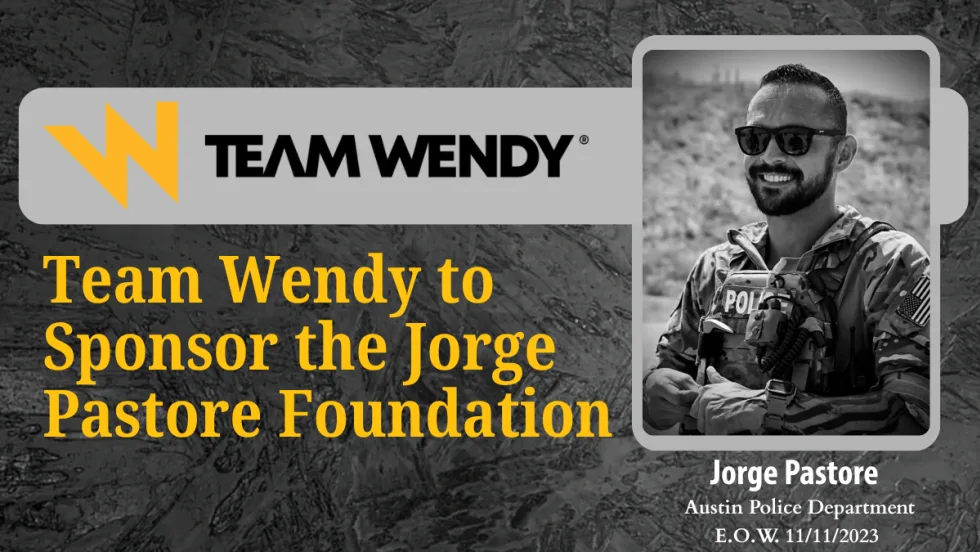
Team Wendy Announces Title Sponsorship of the Jorge Pastore Foundation
Team Wendy’s 3-year partnership with the Jorge Pastore Foundation expands access to programs that strengthen those who serve.
Read More →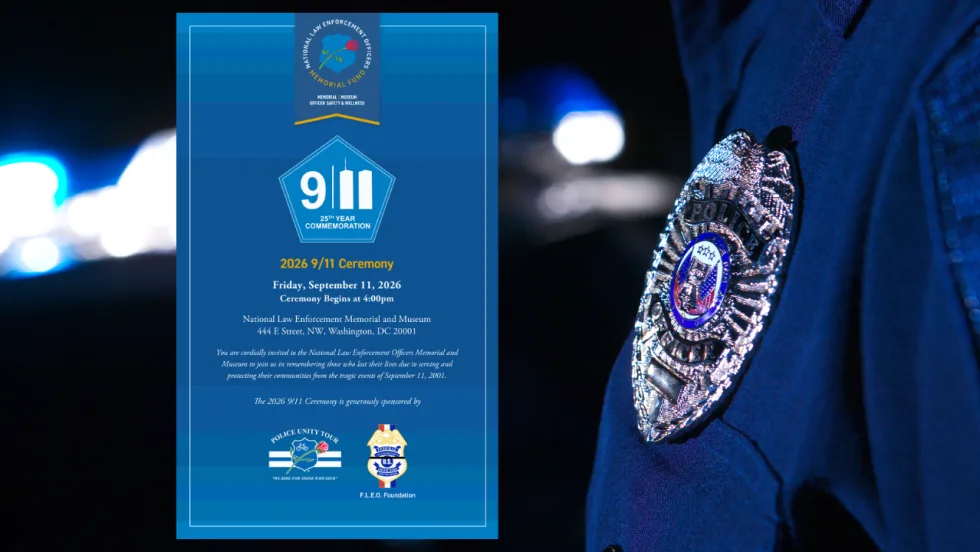
National Law Enforcement Memorial and Museum Hosting 9/11 25th-Year Commemoration Ceremony
The National Law Enforcement Memorial and Museum is hosting a 9/11 25th Year Commemoration Ceremony on Sept. 11 at 4 p.m.
Read More →
National Law Enforcement Officers Memorial Fund Announces June 2026 Officers of the Month
The National Law Enforcement Officers Memorial Fund (NLEOMF) named 15 officers of the Chico Police Department (California) as the Officers of the Month for June 2026 for their roles in responding to an active-shooter incident at a public library.
Read More →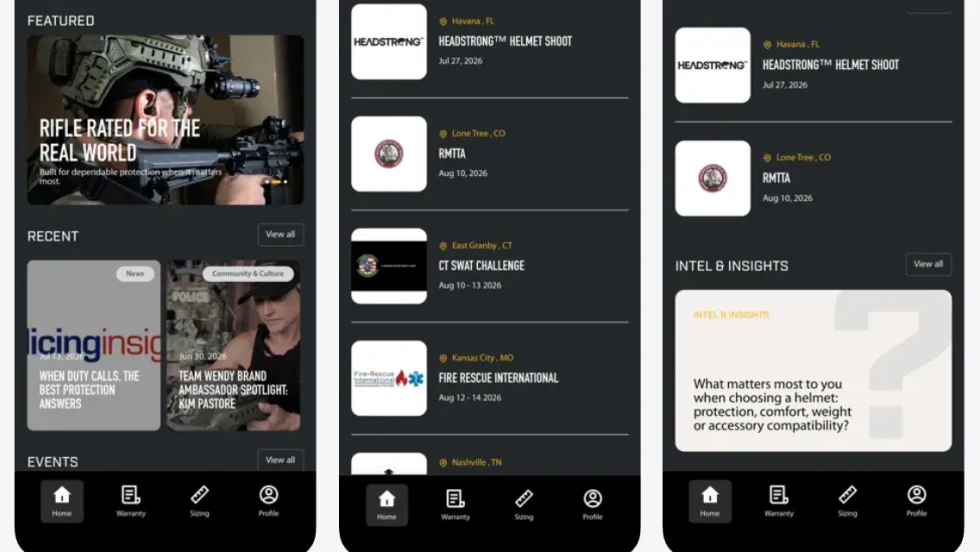
Team Wendy App Creates New Digital Hub for Helmet Owners
The Team Wendy Community App provides one location for warranty registration, size-fit tools, product updates, and community connection. For helmet owners, the new app creates a simpler path to the information and tools that matter most.
Read More →