



Police Suicide: Cop Killer
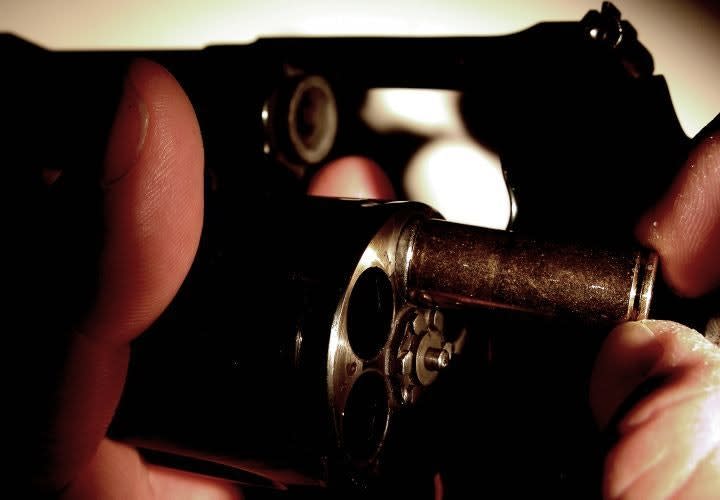
Everything has just gone to hell since the internal affairs investigation. And nothing makes sense anymore. So John takes out his off-duty piece, an old wheel gun. He sits down on the bed, puts one in the cylinder, snaps it shut, and stares down at the blued metal machinery in his hand. The world around him is very quiet as he starts to raise the weapon to his head.

Officer John Jones sets down his glass of scotch on the bedside table. He has been drinking more lately. Having a few at the end of his shift has always been his way to unwind. But now it’s more than a few.
Everything has just gone to hell since the internal affairs investigation. And nothing makes sense anymore. So John takes out his off-duty piece, an old wheel gun. He sits down on the bed, puts one in the cylinder, snaps it shut, and stares down at the blued metal machinery in his hand. The world around him is very quiet as he starts to raise the weapon to his head.
Then the door opens. His four-year-old son walks in. He doesn’t speak. He’s just looking for Dad because he senses something is wrong. John quickly lays the gun aside and covers it with a pillow. Then he lifts the boy onto his lap and holds him tight. He’s found a reason to keep living. At least for tonight.
Officer John Jones and his private hell are a composite. But there are many officers each year who face similar moments of despair and choose to take their own lives. And they don’t always find a reason not to pull the trigger.
Numbers are hard to come by because so many police suicides go unreported and there is no central source of information. But according to statistics collected by the National Police Suicide Foundation, a police officer takes his or her life every 22 hours. If that estimate is accurate, then nearly 400 cops kill themselves each year.
Suicide is a fact of life in law enforcement. If it hasn’t touched your life in some way already, chances are it will.
This is not to say that every police officer is a walking time bomb waiting to kill himself. But the stresses of the job and the long hours spent away from family can take a toll.
Risk Factors
The reasons someone commits suicide can be very complicated, but there are several major causes.
Many of these risk factors are as applicable to the public as they are to law enforcement personnel. For example, people experiencing marital problems are 4.8 times more likely to take their own lives than people who are happily married. And any failing relationship that is meaningful to a person can be a precursor to suicide.
Substance abuse, including drugs or alcohol, is another common factor in suicide. It is not unusual for officers to take their lives while drunk. Part of the reason could be that, as well as being a depressant, alcohol tends to remove inhibitions.
Finally, even someone else’s moment of despair can lead to your own. According to Rev. Robert Douglas of the National Police Suicide Foundation, children of police officers often kill themselves in the first five years after their parent completes the act.
Other risk factors are part of cop culture. It’s been documented that suspended police officers and those under investigation are 6.7 times more likely to kill themselves. Many police officers feel that their lives are over if they can no longer be cops. This is especially true when they haven’t reached retirement and their career is terminated because of a disciplinary matter.
Then there’s the job itself.
Police officers are under a great deal of pressure to perform under traumatic circumstances. But they don’t always feel they can allow themselves to be affected by the situations they encounter on the job. And oftentimes they can’t while they’re in the situation or they wouldn’t be able to do their jobs. That leads to a lot of pent-up emotion, particularly dark emotion.
Emotional Wear and Tear
Chaplain Herb Smith, who works with the San Diego Police Department and the San Diego County Sheriff’s Office, believes that the expectations of administration as well as the public wear on an officer, especially when his or her actions in an officer-involved shooting or other critical incident come under scrutiny.
“With law enforcement, there is a larger measure of the kinds of adversities and stressors that come into one’s life,” Smith says. “Officers get a lot of contradictory messages administratively and publicly. They’re expected to enforce the law in an almost impossible way. [Then they are judged] by managers who are able to spend time developing a political assessment, deliberating what they would have done in the same situation, scrutinizing the decisions a police officer must make in a second or two.”
The “Perfect” Trap
Smith also believes that the type of people who become police officers might be more susceptible to suicide because of the high expectations they put on themselves. A prime example of this is a recent well-publicized case of a Nebraska state trooper.
Mark Zach, 35, of the Nebraska State Patrol shot himself with his sidearm because he apparently believed he hadn’t done all he could do to prevent a massacre at a Norfolk, Neb., bank. Four people were killed in that bank holdup, and reports say Zach blamed himself. He stopped one of the robbery suspects a week before the incident and found a concealed weapon.
The suspect was arrested for a concealed weapon charge and the gun was confiscated, but he posted bond. After the robbery, Zach learned that he made a mistake when checking the serial number. He transposed two digits when feeding the number into a police computer. If he’d input the right information, the gun wouldn’t have come up clean and the suspect could have been arrested for having a stolen gun, and that might have stopped the holdup, which took the lives of three bank employees and a customer.
For armchair psychologists, the easy conclusion is that Trooper Zach couldn’t live with the consequences of his mistake. He’s not alone. An all-encompassing sense of responsibility is part of many cops’ psyches.
Heroic Self Image
Another common denominator in many a cop’s psyche is that he sees himself as a hero. Unfortunately, the public doesn’t always agree and the disconnect can lead to depression and rage.
Police psychologist Carolyn M. Tenerowicz, who works for the Cleveland (Ohio) Police Department, says the new generation of cops is ill equipped to deal with the pressures of police work because they have different expectations than previous generations. “Years ago, police officers would commit suicide as a result of burnout and the tragedy of having given their life and all they had to give with very little in return,” says Tenerowicz. “It was a really helpless exhaustion. Today, they’re not able to tolerate the lack of appreciation that’s presented to police officers. These suicides are a result of anger, not frustration, because they’re not getting outside praise for their efforts.”[PAGEBREAK]
But Smith takes a more sympathetic view of the reasons officers commit suicide. He feels that because they want to continue to do their job, police officers ignore difficulties in their professional or personal lives for fear that acknowledging them could lead to their dismissals.
“Often, police officers feel all they can do is police work. If they’re having problems, they just force it and keep going,” he says.
In addition to all the other difficulties of the job, an officer’s proximity to traumatic experiences can magnify already existent problems, according to John Violanti, a professor at The University of Buffalo Department of Social and Preventative Medicine and a retired New York State trooper.
“Officers have many of the same problems that other people who commit suicide have, but the context of their job exacerbates those conditions and it makes it worse,” Violanti explains. “In that sense they’re more likely to commit suicide than someone in the general working population.”
Fraternity of Pain
But what about other public safety officers? Are they as prone to suicide as cops and for the same reasons?
Again because suicide is such a touchy subject, the numbers are hard to come by. Comparative statistics for police officers, firefighters, and rescue workers are difficult to find, but it’s well known that other public safety workers commit suicide as well.
Robert O’Donnell, the paramedic who rescued “Baby Jessica” McClure from an abandoned well in Midland, Texas, in 1987, killed himself in 1995. He is said to have suffered from post-traumatic stress disorder, a condition that also afflicts many police officers.
“Police officers see a lot of things that other people who are not officers would never see: human misery, traumatic events such as 9/11,” says Violanti. “The exposure that first responders get to these sorts of events are generally very close so that has an impact on their psychological well-being.”
Talking it Out
In Violanti’s research, he has found that law enforcement officers exposed to traumatic events think about suicide much more often than those who are not. But it doesn’t always take a traumatic event to drive someone to the breaking point.
Daniel W. Clark, department psychologist for the Washington State Patrol, believes frequently talking about day-to-day problems can help someone cope better with life in general. “What leads to life-and-death issues,” he says, “is when all the small stuff stacks up on us.”
Unfortunately, law enforcement culture, which puts emphasis on physical and emotional strength, can make it difficult for cops to talk about the small events that cause stress in their lives.
For a cop, even divulging perceived weaknesses to friends can be difficult. Admitting vulnerabilities to a psychologist is even more daunting, and police officers’ mistrust of anyone not in law enforcement makes speaking to mental health professionals even more difficult.
“Police officers are great help-givers, but they’re pretty poor help-seekers,” Clark says. “You have to fight against cops’ fears that something awful is going to happen if they do come forward,” adds Dr. Elizabeth K. White, psychologist with the Los Angeles County Sheriff’s Department.
White says this can be true of law enforcement officers seeking help for their friends, as well. “A colleague might blow it off, and tell himself his friend is just joking or will be OK in the morning, because he’s afraid of the consequences, that he might destroy someone’s career,” she explains. “They don’t want to step in so they hope it’s nothing and pray that they’re right. And then they feel awful if it turns out that it was something.”
Because officers are so reluctant to seek out professional help, some agencies have established peer counseling programs. Fellow police officers are volunteering to take training classes in listening to their colleagues’ concerns and recognizing warning signs so they can refer them to mental health professionals if necessary. Experts say peer counseling is very effective because it’s a way to talk to someone who understands your feelings and concerns as a police officer and won’t tell anyone else what you have said.
Unfortunately, not all police officers are convinced that talking to anyone, not even a peer, is safe. They’ve heard too many stories about officers seeking help and then being passed over for promotions or even being fired for perceived mental instability.
Fighting the Stigma
They have good reason to be concerned. The stigma associated with seeking emotional help is not completely unfounded, and there is a tradition of cutting an agency’s losses by removing an officer from sensitive positions if he or she might possibly be a liability.
But agencies are making an effort to remove these obstacles to counseling, and it seems that the changes are working.
White says there is now less of a stigma attached to seeking help than there used to be. Part of this is generational. “Younger cops are more comfortable asking for assistance,” White says.
Older cops are more skeptical when it comes to counseling. But Sgt. Garry Collins, whose unit deals with suicide prevention at the San Diego Police Departement, believes veteran cops who have seen too many of their friends kill themselves over the years are starting to appreciate the psychological services that are now available to them.
But even if an at-risk police officer is willing to go see a psychologist, he or she doesn’t want to publicize the visit. For this reason, department psychologists are often placed far from department headquarters to protect confidentiality.
Case in point. When the Houston Police Department required employees to visit the department psychologist at an office in the police headquarters building, they were too scared to seek help. But once Houston PD moved its psychological services back to a separate building in another part of town, more officers decided to avail themselves of its services.
Not only are law enforcement officers afraid management might find out they’re seeking help, they don’t want their friends and colleagues to know about it either. And usually they don’t.
“It’s only when a peer counselor or psychologist feels drastic measures need to be taken to ensure an officer’s safety that the department needs to be brought in on what’s going on,” says White.
Clark likens a department’s view of officers seeking help for suicidal thoughts or depression to seeking help for alcoholism. “If you don’t seek help and you get tapped for a DUI early one morning, you’re toast. In all likelihood, they’re going to terminate you or severely reprimand you,” he says. “But if you come forward and say, ‘I have an alcohol problem; I need some help,’ I believe most agencies are going to say, ‘OK, we’ll get you some treatment that will square you away.’”
With suicide, an officer who seeks treatment can often be successfully treated for depression and be back on the job. But you have to seek help to receive help, and an agency has to provide services that an officer feels comfortable using to make a suicide awareness program work.
Still, despite a growing movement among agencies to offer counseling services to officers and educate them on the warning signs and the adverse effects of suicide on everyone involved, officers are still killing themselves. And that leaves everyone they knew with one overriding and ultimately unanswerable question: Why?
What Can You Do?
Know the warning signs of suicide.
Attend classes on depression and suicide if they are offered at your agency to help you identify risks and know how to deal with suicide in case it ever happens at your agency.
Don't be afraid to suggest that friends seek help if you are concerned they may attempt suicide. There are many places where you can receive help anonymously if your friend doesn't want to go through the department.
If your agency doesn't already offer a suicide awareness program, suggest that one be started. Contact local departments and ask them for advice and help in starting your agency's own program. Or talk to other smaller departments about creating a joint program to raise suicide awareness and offer shared psychological services.
Top 10 Reasons for Police Suicide
1. Death of a child or spouse
2. Loss of a child or spouse through divorce
3. Terminal illness
4. Responsibility for partner's death
5. Killing someone out of anger
6. Indictment
7. Feeling all alone
8. Sexual accusation
9. Loss of job due to conviction of a crime
10. Being locked up
Suicide Prevention Resources:
American Foundation for Suicide Prevention
1-888-333-2377
www.afsp.org
National Hopeline Network
1-800-SUICIDE
www.SuicideHotlines.com
National Police Suicide Foundation
(410) 437-3343
www.psf.org
More Patrol

Team Wendy Introduces the EXFIL Endurance Ballistic Helmet, Engineered to Reduce the Burden of Extended Wear
Team Wendy has launched its EXFIL Endurance, a new lightweight ballistic helmet engineered to deliver protection, comfort, and fit during demanding, extended operations.
Read More →
The First Responders Children’s Foundation National First Responders Day Roll Call of Heroes Ceremony Returns to Times Square, NYC
First Responders Children’s Foundation (FRCF), in collaboration with T-Mobile, will host the Roll Call of Heroes ceremony in Times Square to commemorate National First Responders Day on Wednesday, Oct. 28. During the event, FRCF will present 18 Hero Awards.
Read More →
Streamlight to Showcase Newest Lighting Products for Law Enforcement Professionals at IACP 2026
Streamlight will showcase its newest lights for law enforcement at the International Association of Chiefs of Police Annual Conference & Expo. Featured lights will include the TLR-3 X, the PolyTac 1X, and more.
Read More →
Streamlight Portable Scene Light III Wins 2026 OH&S New Product of the Year Award
Streamlight’s Portable Scene Light III has won the 2026 Occupational Health & Safety (OH&S) New Product of the Year Award in the Lighting category.
Read More →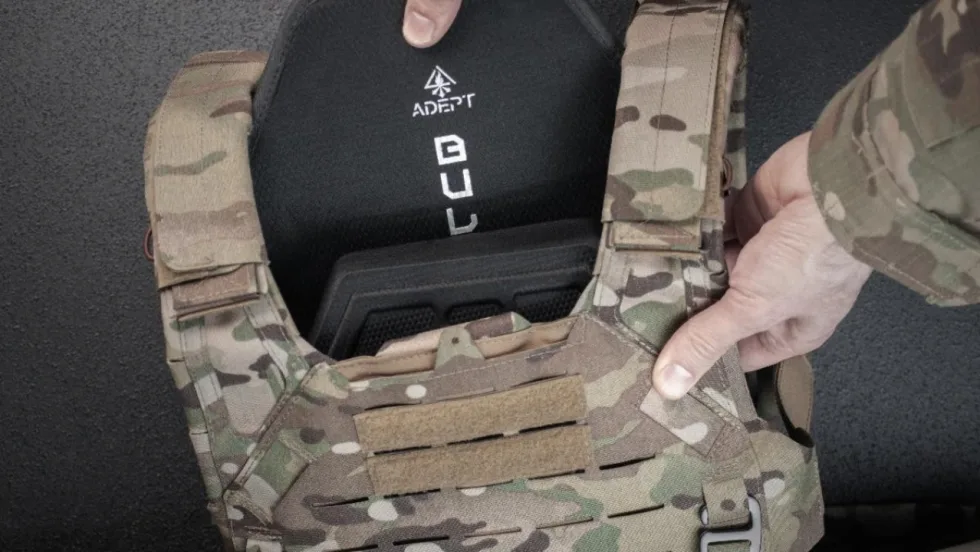
Adept Armor Introduces Two New Rifle Plates
Adept Armor has launched two new Level IV ballistic plates, the Emperor and the Archon Mark 2, which brings Adept Armor’s new Quatroid ceramic to the high-threat, performance-value center of the range at 5.2 pounds.
Read More →
POLICE Product Test: Benchmade Bailout
The Benchmade Bailout is a slim, lightweight carry knife with a deep-ride pocket clip and comes in a variety of blade steels and scales. Here is a detailed review of the Taiga Green Bailout, released earlier this year.
Read More →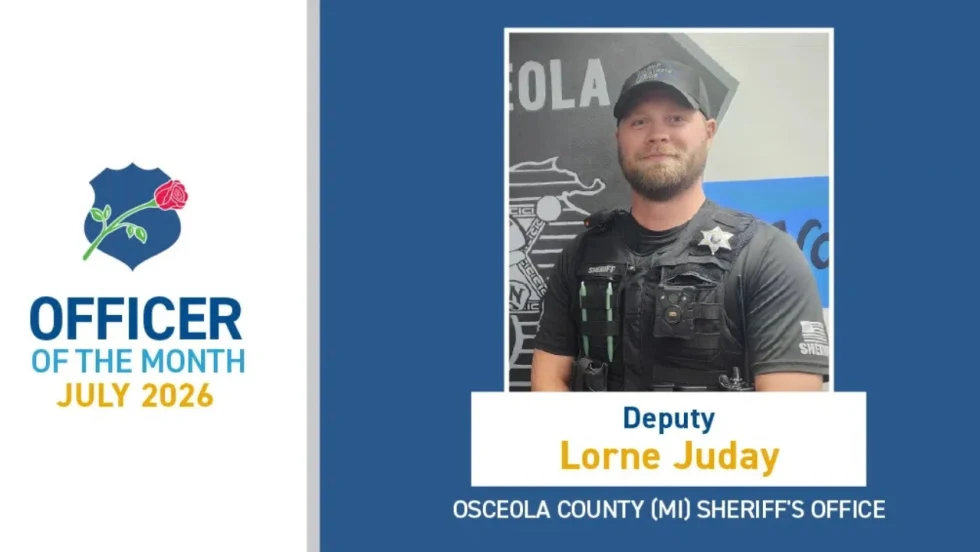
NLEOMF Announces July 2026 Officer of the Month
NLEOMF honored a Michigan deputy sheriff as the July 2026 Officer of the Month for rescuing a trapped driver from a burning vehicle following a Fourth of July crash.
Read More →
Streamlight to Showcase Newest Lighting Products at National Safety Council’s Safety Congress & Expo 2026
Streamlight will showcase its latest lights, including the Portable Scene Light III and the LiteBox 1Million, at the 2026 National Safety Council (NSC) Safety Congress & Expo.
Read More →
The 2027 World Police & Fire Games Set for Perth, Australia
The 2027 World Police & Fire Games (WPFG) will take place in Perth, Western Australia, from Friday, March 12 through Sunday, March 21, 2027.
Read More →
5.11 Partners with National Fallen Firefighters Foundation to Support #ForThe343
5.11 has joined the nationwide movement honoring the 343 New York City Fire Department firefighters lost on Sept. 11, 2001.
Read More →