



Officer Safety Searches
Obviously, no reasonable officer is going to risk his or her personal safety or the public safety in order to satisfy rules regulating the admissibility of evidence in a criminal trial, or even to avoid personal civil liability.

After the Supreme Court created the Fourth Amendment exclusionary rule in Weeks v. U.S. and applied it to the states in Mapp v. Ohio, conflicts developed between evidentiary concerns and officer safety concerns. Obviously, no reasonable officer is going to risk his or her personal safety or the public safety in order to satisfy rules regulating the admissibility of evidence in a criminal trial, or even to avoid personal civil liability.
Recognizing this reality, the court has established a category of officer safety exceptions that allows limited investigative activity without warrants and without probable cause, where it reasonably appears necessary to neutralize threats to officer safety. Law enforcement officers need to be aware of the scope of these rulings, so that proper precautions do not result in unnecessary suppression of evidence or civil liability.
Driver and Passenger Control
When you make a vehicle stop, is it safer to keep the occupants inside, or to order them out? It probably depends on the circumstances, including the reason for the stop, location, number of occupants, number of officers, availability of backup, and kind of vehicle.
Recognizing that a significant percentage of deadly encounters occur when an officer approaches a seated driver or passenger who may be concealing a weapon inside the vehicle, the Supreme Court has held that officers should have the option of ordering people out.
In Pennsylvania v. Mimms, the court said that at any lawful traffic stop, the driver could be ordered out for the reasonable duration of the stop. This act does not require any suspicion or other justification, but can be performed as a matter of safety routine.
In Maryland v. Wilson, the court made a similar ruling regarding passengers, holding that officers can routinely order all occupants of a vehicle to get out (but leaving open the question whether passengers can be detained if they try to walk away). Any evidence seen in plain view as a result of people getting out of the vehicle can be lawfully seized, and admitted in court.
Going Inside Arrestee's Home
Ordinarily, if you arrest someone outside his home, you cannot enter or search his home "incident" to that outdoors arrest. (Vale v. Louisiana; Shipley v. California.) But if the arrested person asks to go back inside (to pick up clothing or bail money, for example), you may accompany him inside to prevent escape, or to make sure he doesn't pick up a gun. In Washington v. Chrisman and again in Illinois v. McArthur, the Supreme Court upheld officer safety entries in such cases, and allowed into evidence contraband seen in plain view by officers who accompanied arrestees inside. This exception does not allow you to go into parts of the house where the arrestee does not go, but it would allow you to check areas into which he is about to reach, to ensure that no weapons are concealed there.
Pat-Down Search During Detentions
One of the most famous Supreme Court rulings on officer safety measures is Terry v. Ohio, in which the court ruled that during a pedestrian detention an officer could pat down the outer clothing of the detainee to check for weapons, if there was a reasonable suspicion that the person was armed and dangerous.
To justify the initial detention, you need reasonable suspicion that the person may be engaged in criminal activity. But not all criminal activity involves weapons or violence. In cases that do not, you also need independent reasonable suspicion that the person you've detained may be armed and dangerous to justify the pat search. Leaving this out of your reports or testimony could result in a finding that your frisk was unlawful, and resulting evidence could be lost.
The rationale of Terry was extended to the passenger compartments of stopped vehicles in Michigan v. Long. There, the court held that once you have made a lawful vehicle stop and have a reasonable suspicion that a weapon may be concealed in the vehicle, you may make a cursory search of the compartments and containers in the passenger compartment that could conceal a weapon, seizing any evidence or contraband that comes into your view in the process. Again, not every vehicle stop justifies this additional intrusion, which must be supported by suspicion pointing to the possible presence of a weapon.
Officer Safety/Public Safety Entry
As you know, warrantless entry into the home is presumed unlawful. To justify entering someone's house without a warrant, you must be able to establish valid consent, legitimate parole or probation conditions permitting entry, or a recognized exigency (such as hot pursuit, preventing the imminent destruction of evidence, preventing escape of a dangerous offender, preventing substantial property damage, or rescuing someone from imminent peril).
In some cases, you may enter where not doing so immediately could jeopardize your safety or the safety of the public. In Warden v. Hayden and Mincey v. Arizona, the court upheld entries to apprehend dangerous offenders (armed robber and murderer) who posed a threat to officers on the scene and to the public, if not immediately apprehended. It was also within the scope of legitimate safety activities to visually check into rooms and places where an assailant might be concealed, or a victim might be found. However, the court said that once the safety of the scene was secured, a warrant or other lawful basis would be needed to search for evidence.
Officer Safety Sweeps
Assuming you properly make entry into a residence and then make a lawful arrest within, the Supreme Court has placed limits on incidental search activities conducted without warrant or other justification. In Chimel v. California, it was held that an arresting officer could look into areas within the arrestee's immediate control (generally including any area where the arrestee might reach or lunge in order to obtain a weapon, the means of escape, or destructible evidence).
The court went even further in Maryland v. Buie, permitting officers to look into immediately adjoining spaces where a potential assailant might be concealed. Buie allows you to look under the bed, in the closet, or behind the door of any room adjoining the room where the arrest occurs (and the seizure of any contraband or evidence in plain view). This "Buie peek" does not require any suspicion that an assailant is present-but it is strictly limited to immediately adjoining spaces and does not permit a sweep through the entire premises.
If you do have a reasonable suspicion that a potential assailant is present in a premises where you are making a lawful arrest, you can make a "Buie sweep" of possible hiding places throughout the premises. Remember that because this sweep requires reasonable suspicion, it cannot be made routinely every time you're inside someone's home, and does not allow searches into places that could not conceal a person.
Document Your Safety Concerns
This line of cases illustrates the court's willingness to accommodate legitimate officer safety concerns. If your safety is at risk in a search or seizure activity, by all means take prudent steps to ensure your survival and well-being. But by all means, document your reasons for taking the particular action you feel is necessary, so that a reviewing court can see that you were justified. This will reduce the risks of suppression of evidence and civil liability, without compromising officer safety.
Attorney Devallis Rutledge, a former police officer and prosecutor, defends officers and agencies at Manning & Marder, Kass, Ellrod, Ramirez.
More Patrol
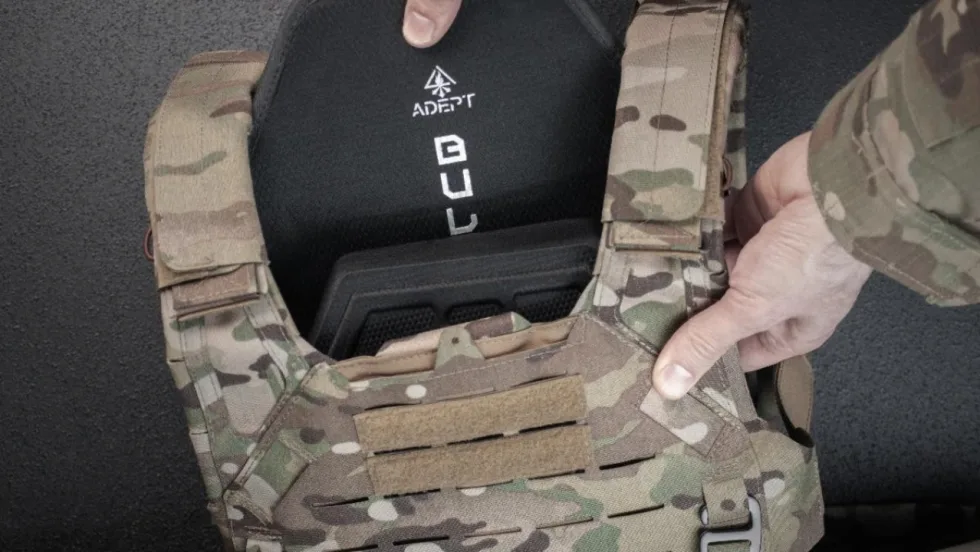
Adept Armor Introduces Two New Rifle Plates
Adept Armor has launched two new Level IV ballistic plates, the Emperor and the Archon Mark 2, which brings Adept Armor’s new Quatroid ceramic to the high-threat, performance-value center of the range at 5.2 pounds.
Read More →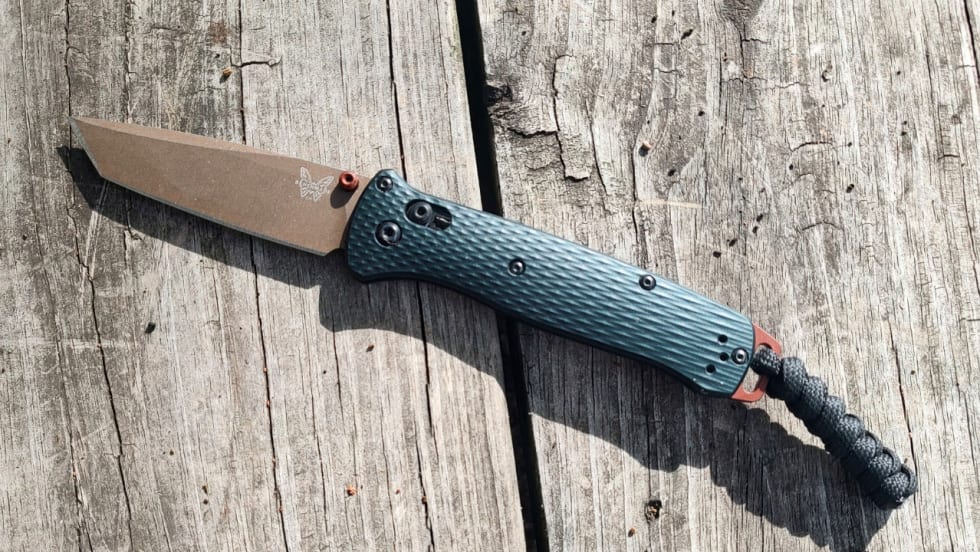
POLICE Product Test: Benchmade Bailout
The Benchmade Bailout is a slim, lightweight carry knife with a deep-ride pocket clip and comes in a variety of blade steels and scales. Here is a detailed review of the Taiga Green Bailout, released earlier this year.
Read More →
NLEOMF Announces July 2026 Officer of the Month
NLEOMF honored a Michigan deputy sheriff as the July 2026 Officer of the Month for rescuing a trapped driver from a burning vehicle following a Fourth of July crash.
Read More →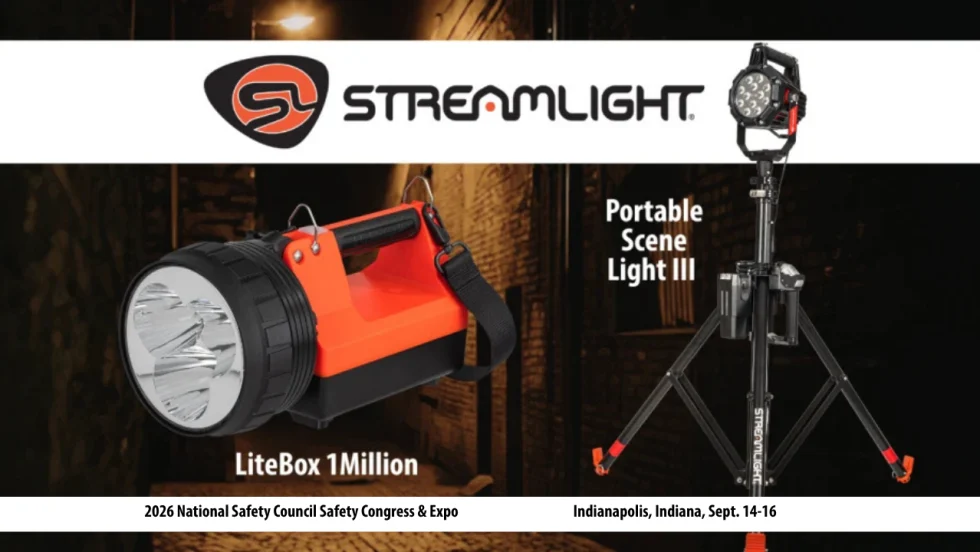
Streamlight to Showcase Newest Lighting Products at National Safety Council’s Safety Congress & Expo 2026
Streamlight will showcase its latest lights, including the Portable Scene Light III and the LiteBox 1Million, at the 2026 National Safety Council (NSC) Safety Congress & Expo.
Read More →
The 2027 World Police & Fire Games Set for Perth, Australia
The 2027 World Police & Fire Games (WPFG) will take place in Perth, Western Australia, from Friday, March 12 through Sunday, March 21, 2027.
Read More →
5.11 Partners with National Fallen Firefighters Foundation to Support #ForThe343
5.11 has joined the nationwide movement honoring the 343 New York City Fire Department firefighters lost on Sept. 11, 2001.
Read More →
Team Wendy Announces Title Sponsorship of the Jorge Pastore Foundation
Team Wendy’s 3-year partnership with the Jorge Pastore Foundation expands access to programs that strengthen those who serve.
Read More →
National Law Enforcement Memorial and Museum Hosting 9/11 25th-Year Commemoration Ceremony
The National Law Enforcement Memorial and Museum is hosting a 9/11 25th Year Commemoration Ceremony on Sept. 11 at 4 p.m.
Read More →
National Law Enforcement Officers Memorial Fund Announces June 2026 Officers of the Month
The National Law Enforcement Officers Memorial Fund (NLEOMF) named 15 officers of the Chico Police Department (California) as the Officers of the Month for June 2026 for their roles in responding to an active-shooter incident at a public library.
Read More →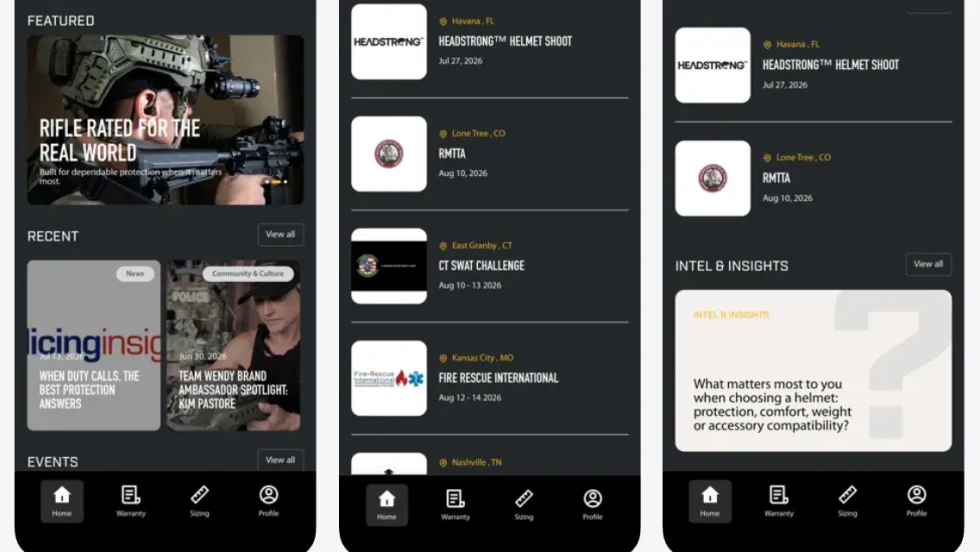
Team Wendy App Creates New Digital Hub for Helmet Owners
The Team Wendy Community App provides one location for warranty registration, size-fit tools, product updates, and community connection. For helmet owners, the new app creates a simpler path to the information and tools that matter most.
Read More →